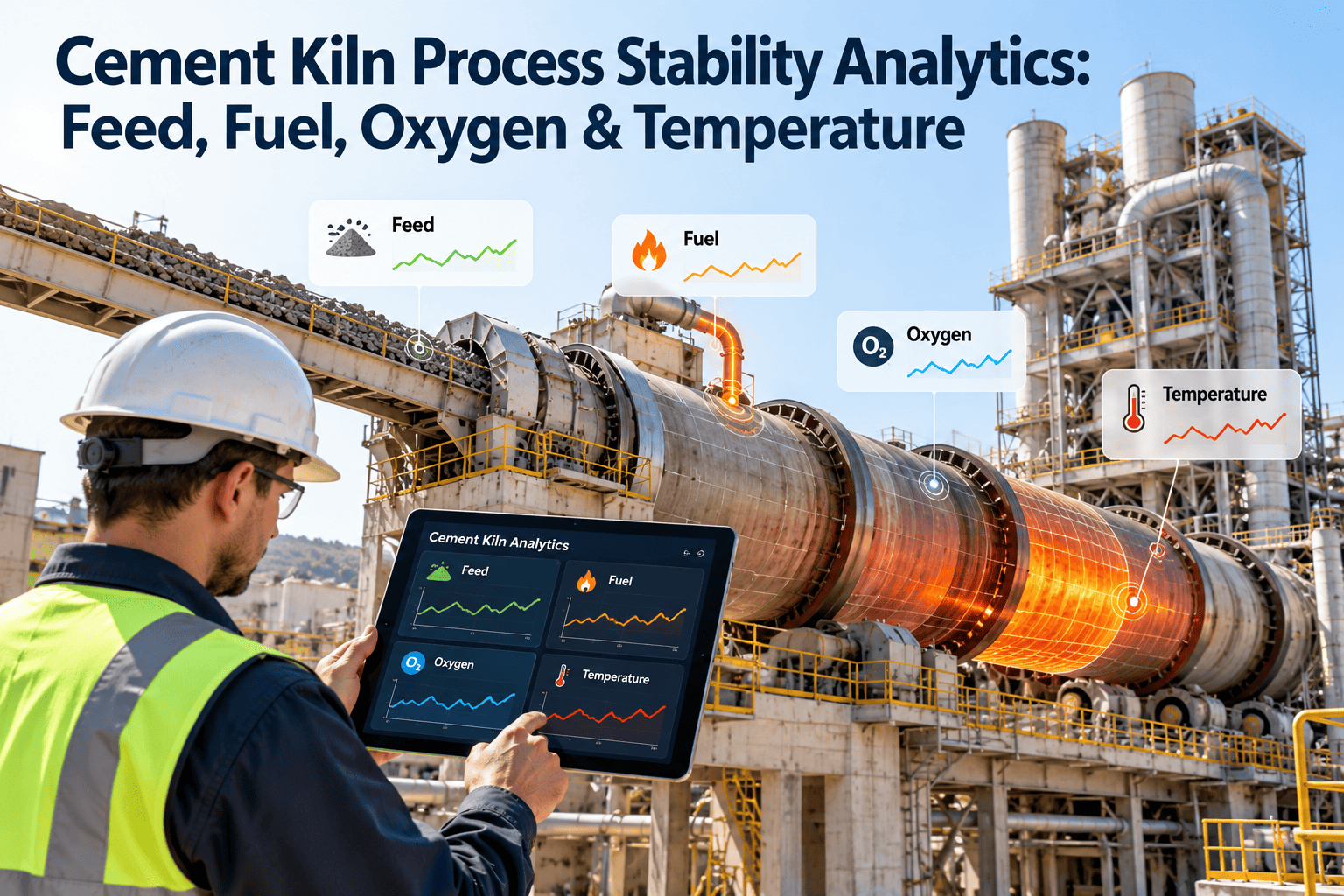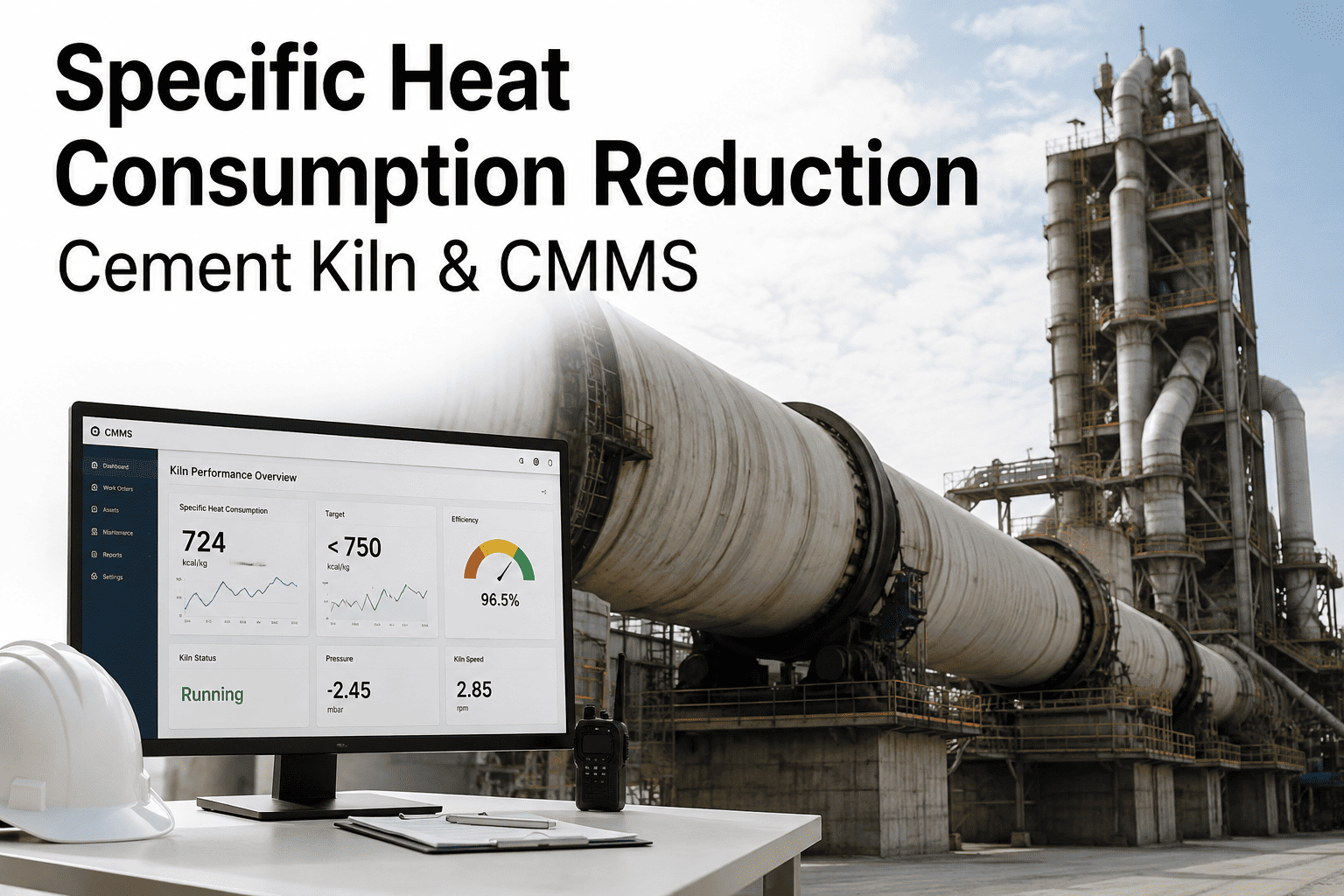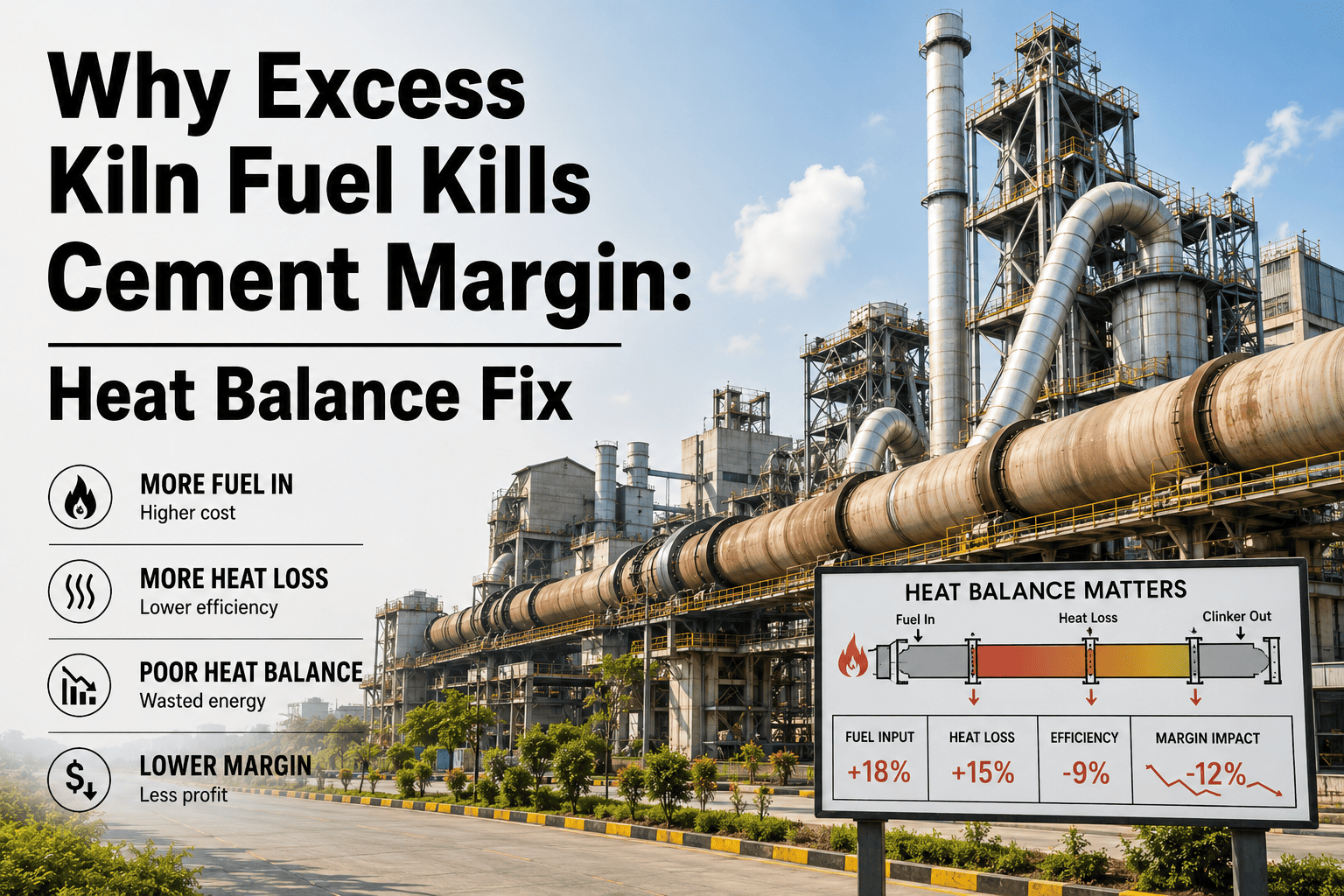
Fuel is the single biggest lever on your cost sheet — it typically eats 30–40% of total cement production cost, and the kiln alone burns over 90% of it. A well-run 5-stage preheater kiln should hold specific heat consumption near 2,900–3,100 MJ per tonne of clinker. Most plants quietly drift 10–15% above that number, and nobody notices until the monthly fuel bill lands. The drift never announces itself as a breakdown; it shows up as a slightly hotter shell, a slightly cooler secondary air stream, a slightly wider O₂ trim — each one small, each one compounding. By the time finance asks why margin slipped, the heat balance has usually been broken for months. This is the gap a connected maintenance system is built to close before it reaches your P&L.
Where Every Kilogram Of Kiln Fuel Actually Goes
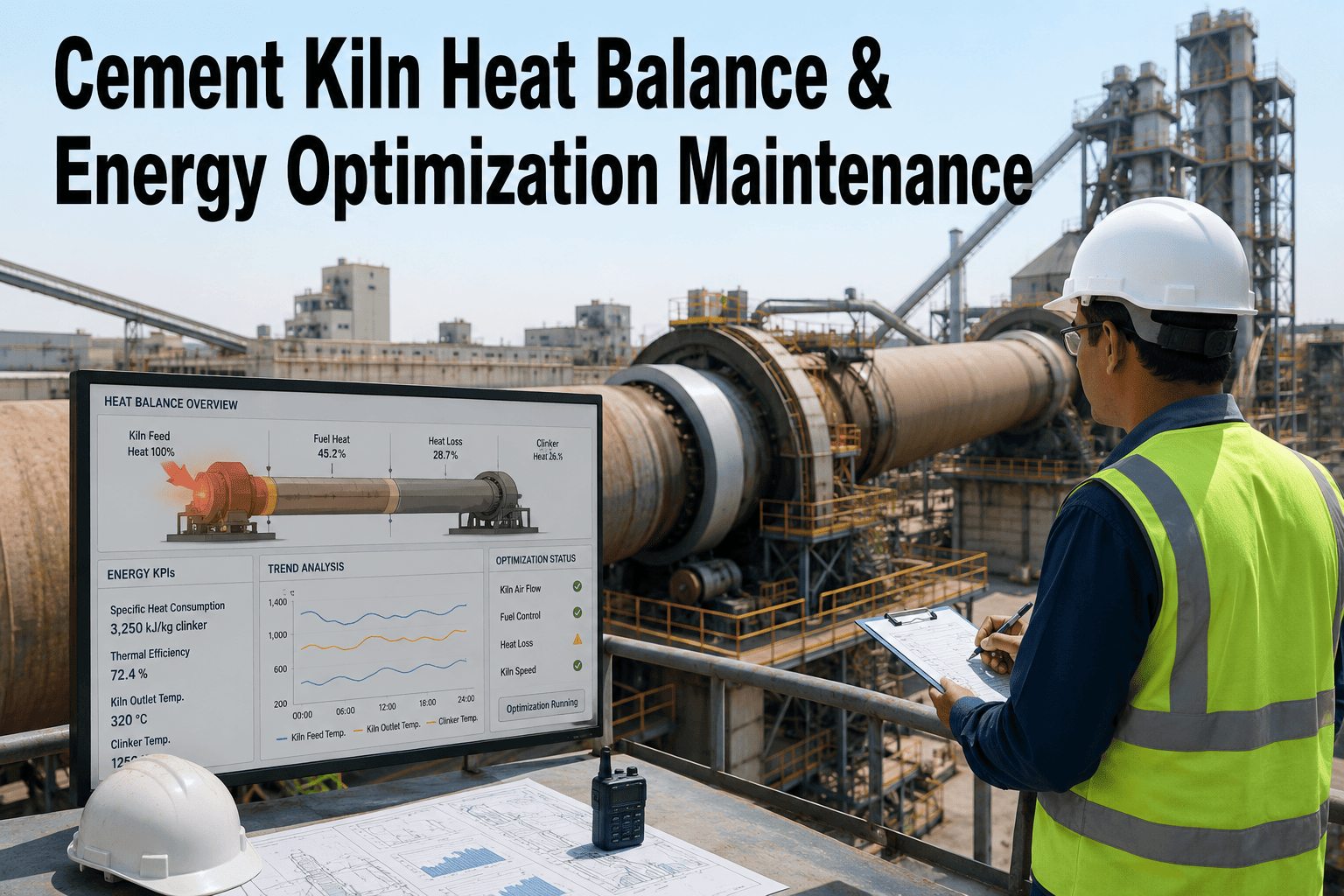
A dry-process kiln heat balance is a fixed pie — every kilocalorie you feed in has to leave somewhere. Roughly half goes into the real chemistry: heating raw meal and driving the endothermic reactions that form clinker. The rest leaks out through five exit points, and maintenance condition decides how big each slice grows.
See Your Own Heat Balance Drift In Minutes
OxMaint pulls kiln inlet O₂, cooler exit temperature, shell scan readings and preheater exit gas temperature into one trend line — so a 2% swing shows up as an alert, not a quarterly surprise.
Five Silent Leaks That Push Your Kiln Off Design
None of these show up as a stoppage. Each one just adds kilocalories per kilogram of clinker, week after week, until the plant is burning fuel it never budgeted for.
Worn seals at the kiln inlet, riser duct and cooler can let unburned, unheated air enter the system — sometimes as much as 10% of total combustion air. Every extra percent of false air is fuel spent heating air that does no useful work.
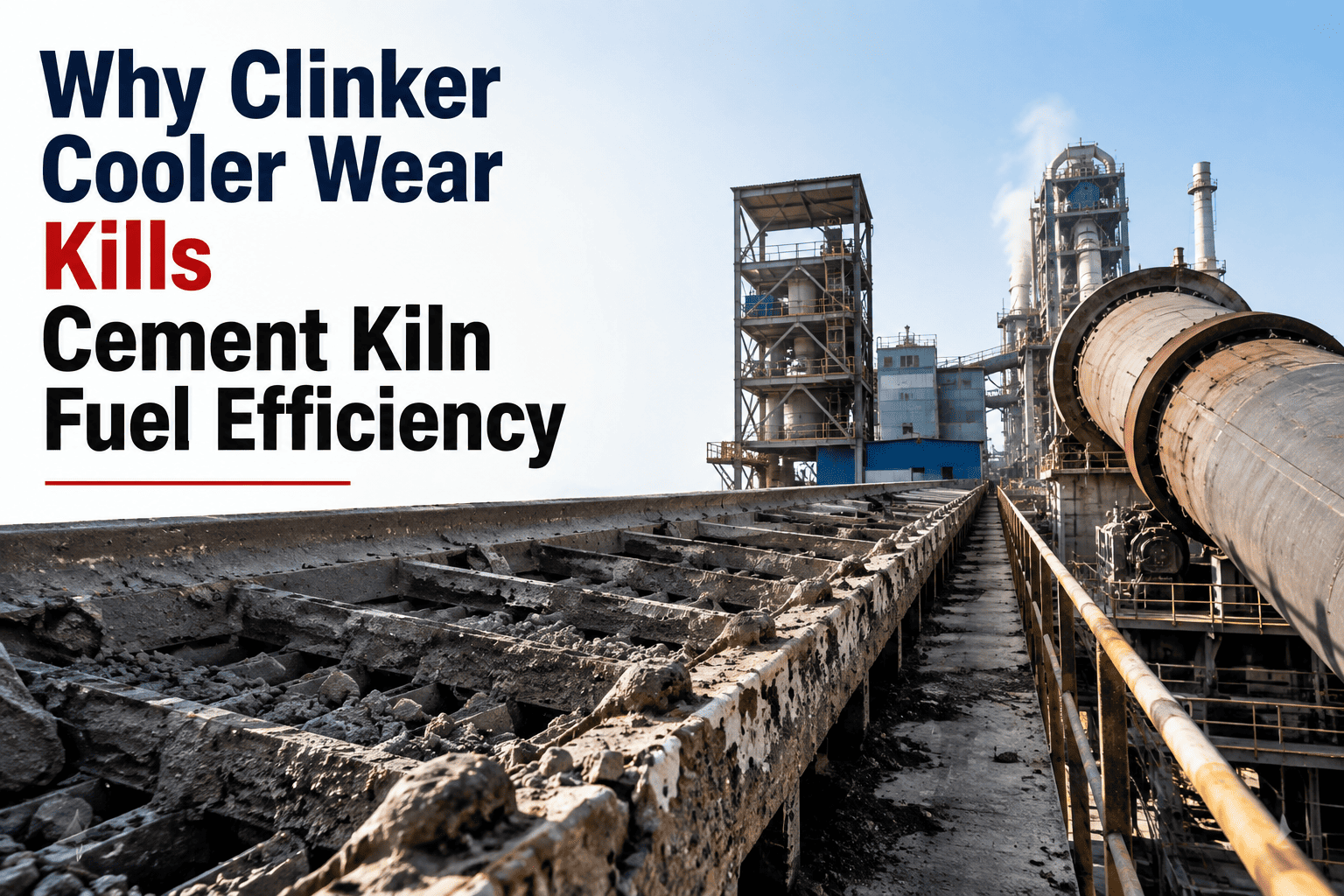
Grate plate wear and damaged air beams drop clinker cooler efficiency, cutting hot secondary air temperature reaching the burner. Each 50°C lost from secondary air adds roughly 8–12 kcal/kg clinker back onto the fuel bill.
Kiln inlet oxygen creeping from an optimal 1.5–2.5% toward 4% or higher means the burner is heating excess air instead of clinker. Pulling O₂ back down is consistently the highest-return maintenance action on the whole thermal budget.
A thinning or spalled lining raises shell surface temperature above the normal band and radiates heat straight into the plant atmosphere. Shell temperature above roughly 350°C is a standing signal that the lining needs attention.
Wet raw meal forces the kiln system to spend extra heat driving off moisture before calcination can even begin, quietly inflating specific heat consumption on days when nobody is watching the weather.
Build-up inside preheater cyclones raises exit gas temperature above target — every 20°C above target represents close to 10 kcal/kg of energy leaving the stack instead of the clinker bed.
Specific Heat Consumption: Where Does Your Kiln Sit?
Specific heat consumption (SHC) is the single number that tells you whether your heat balance is intact. Compare your monthly average against these bands to see how much room — and how much money — is on the table.
| SHC Band (MJ/t clinker) | What It Means | Typical Root Cause | Fuel Cost Impact |
|---|---|---|---|
| 2,800–3,000 | Best-in-class, design condition | Well-sealed, well-calibrated kiln | Baseline — no avoidable loss |
| 3,100–3,400 | Global industry average | Normal wear between overhauls | 8–12% above theoretical minimum |
| 3,400–3,500 | Drift becoming visible | False air, cooler wear, O₂ creep | Meaningful, budget-worthy loss |
| Above 3,500 | Significant optimization potential | Combination of leaks compounding | Six or seven figures a year on a mid-size kiln |
The Margin Math Behind One Percentage Point
Numbers make heat balance drift real. On a plant producing 1.5 million tonnes of clinker a year, closing just a 3% thermal efficiency gap is worth an estimated $1.2–1.8 million in annual fuel spend. Correcting kiln inlet oxygen alone — pulling excess O₂ from around 4% back to the 1.5–2.5% design band — can save 50–70 kcal/kg clinker, which lands near $400,000 a year on a typical 5,000 tonne-per-day kiln at current fuel prices. None of this requires new capital equipment; it requires the discipline of catching the drift while it is still a maintenance item and not yet a line in next quarter's cost report.
Turn Heat Balance Into A Maintenance KPI
Stop waiting for the annual energy audit to find leaks that started months earlier. OxMaint turns O₂ trim, cooler temperature, shell scans and refractory inspections into scheduled work orders your team can actually act on.
Our kiln SHC had climbed from 3,050 to almost 3,400 MJ per tonne over eight months, and nobody flagged it because each inspection looked fine on its own. Once we started trending O₂, cooler exit temperature and shell scans together in one dashboard, the false air source at the kiln inlet seal stood out immediately. Fixing that one seal brought us back under 3,150 within a quarter — worth well over half a million dollars a year at our fuel price.
Frequently Asked Questions
What is a healthy specific heat consumption for a modern kiln?
Best-in-class 5–6 stage preheater kilns with precalciners run 2,800–3,000 MJ per tonne of clinker. Anything consistently above 3,400–3,500 MJ/t signals recoverable loss worth investigating with a connected monitoring workflow.
How much does false air really cost a cement plant?
False air can reach up to 10% of total kiln combustion air when seals and inlet joints wear. Every extra percentage point forces the burner to heat air that never contributes to clinkering, directly raising fuel bills.
Why does secondary air temperature matter so much?
Secondary air carries recovered heat from the clinker cooler back into the burning zone. Each 50°C drop caused by grate plate wear adds roughly 8–12 kcal/kg clinker back onto the fuel account, month after month.
Can an annual energy audit catch this kind of drift?
Rarely in time. Annual audits capture a single snapshot, while heat balance drift builds gradually over weeks. Continuous trending catches the same drift 6–12 months earlier, which is the entire value of a system like this one.
What is the fastest, lowest-cost fix available?
Combustion tuning. Bringing kiln inlet O₂ back to its 1.5–2.5% design band typically needs only calibration and labor, yet recovers 50–70 kcal/kg — often the single highest-return action available. Book a demo to see how it is tracked.
Protect Your Margin Before The Next Fuel Bill
Every month a heat balance drift goes unnoticed is a month of avoidable fuel spend baked into your cost per tonne. OxMaint gives cement plants one connected view of combustion, cooler and refractory health so drift gets caught as a work order, not a quarterly loss.