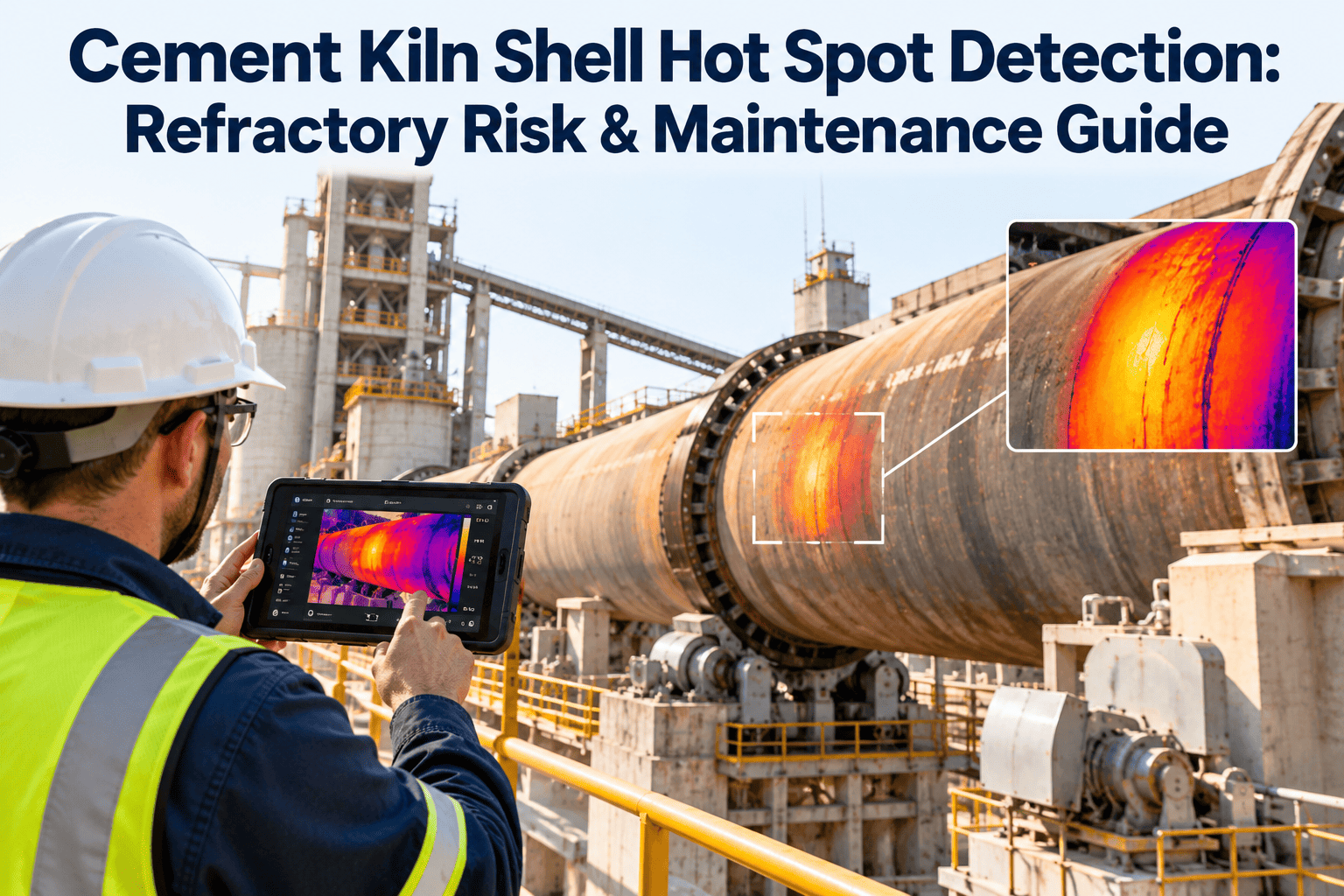
Cement rotary kilns operate at extreme temperatures—flames reaching 2,000°C, burning zones at 1,450°C, and shell surfaces that must never exceed 400°C to avoid permanent steel damage. OxMaint's IoT temperature monitoring system uses infrared scanners, thermal imaging cameras, and wireless sensors to detect hot spots, refractory wear, and coating loss in real-time. Prevent catastrophic shell damage and red kiln incidents with 24/7 predictive thermal intelligence.
Join cement plants using OxMaint to convert kiln thermal data into predictive maintenance workflows that prevent costly shutdowns.
Understanding Critical Monitoring Points
Burning Zone
Most critical for monitoring—where coating loss and refractory failure occur first
Transition Zones
High thermal stress areas prone to brick spalling and thermal shock damage
Tyre Locations
Temperature differences cause shell deformation and mechanical stress
What Happens When Hot Spots Go Undetected
Coating Loss Begins
Clinker coating detaches from refractory bricks—invisible without thermal monitoring
Refractory Thinning
Bricks erode at 0.5mm/day under liquid phase corrosion—shell temperature rises
Hot Spot Forms
Shell temperature exceeds 350°C—visible red glow appears at night
Red Kiln Emergency
Shell temperature above 400°C—steel weakens, permanent warping or burnthrough imminent
Complete Kiln Shell Thermal Intelligence
Infrared Scanners
Full circumferential scanning with single-brick resolution and <0.1°C thermal accuracy
Thermal Imaging Cameras
3.5-4μ wavelength sees through dust and moisture for accurate shell readings
Wireless Temperature Sensors
Battery-powered sensors at tyre locations and support rollers—10-year lifespan
AI Analysis Engine
Predicts coating thickness, brick wear rate, and remaining refractory life
What IoT Temperature Monitoring Detects
Hot Spots
Localized temperature spikes indicating refractory brick failure or coating detachment
Detected weeks in advanceCoating Loss
Gradual temperature increase patterns showing protective clinker coating thinning
Track thickness trendsBrick Failure
Sudden temperature changes when refractory bricks crack, spall, or fall off
Immediate alertsRing Formation
Cool spots indicating excessive material buildup restricting kiln diameter
Prevent blockagesThermal Warp
Temperature-related shell distortion, especially around tyre locations
Structural monitoringTyre Slip
Movement between shell and tyre rings during heat-up and cool-down phases
Prevent damageImpact of Continuous Kiln Temperature Monitoring
Fewer Refractory Failures
Early detection prevents thermal shock and coating collapse
Reduced Unplanned Shutdowns
Schedule repairs during planned outages, not emergencies
Extended Refractory Life
Proactive temperature management prevents premature wear
Lower Maintenance Costs
Predictive maintenance saves vs. reactive repairs
"Our thermal monitoring system detected a developing hot spot in the burning zone at 355°C—well before it became visible. We adjusted flame position and scheduled a partial reline during planned maintenance. Without continuous monitoring, this would have been a red kiln emergency costing us at least 10 days of production."
Works With Your Existing Systems
OxMaint's kiln monitoring platform integrates seamlessly with your plant control systems, existing sensors, and maintenance workflows for unified thermal intelligence.
Protect Your Kiln with 24/7 Thermal Monitoring
Join cement plants using IoT temperature monitoring to prevent red kiln emergencies, extend refractory life, and eliminate costly unplanned shutdowns.
No credit card required • Integrates with existing kiln scanners • ROI typically achieved in first prevented incident
Frequently Asked Questions
What temperature indicates a kiln shell hot spot emergency?
Shell temperatures above 350°C require immediate attention, and temperatures exceeding 400°C are critical emergencies. At 400°C, steel begins to weaken and can permanently warp. Our monitoring system provides graduated alerts—watch at 330°C, alert at 350°C, and critical alarm at 380°C—giving operators time to take corrective action before emergencies occur.
How does IoT monitoring detect coating loss before hot spots form?
Our AI analyzes temperature trends over time, not just current readings. When coating begins thinning, shell temperature in that zone rises gradually—perhaps 2-3°C per day. By tracking these trends and comparing to historical patterns, the system predicts coating loss weeks before temperatures reach alert thresholds, enabling proactive flame adjustment or planned maintenance.
Can the system monitor kilns with obstructions blocking the view?
Yes—our system uses multiple scanner configurations with advanced thermal image recombination to eliminate shadow zones. For kilns with pillars, buildings, or secondary air tubes blocking portions of the shell, we position multiple infrared scanners at different angles. Software stitches the thermal data together to create a complete 360° shell temperature map.
How does this integrate with our existing kiln control systems?
OxMaint integrates with any plant control system—DCS, SCADA, or standalone PLC. Temperature data displays in your existing control room interfaces alongside other process variables. The system also connects to CMMS platforms like SAP PM and Maximo to automatically generate work orders when thermal anomalies are detected.