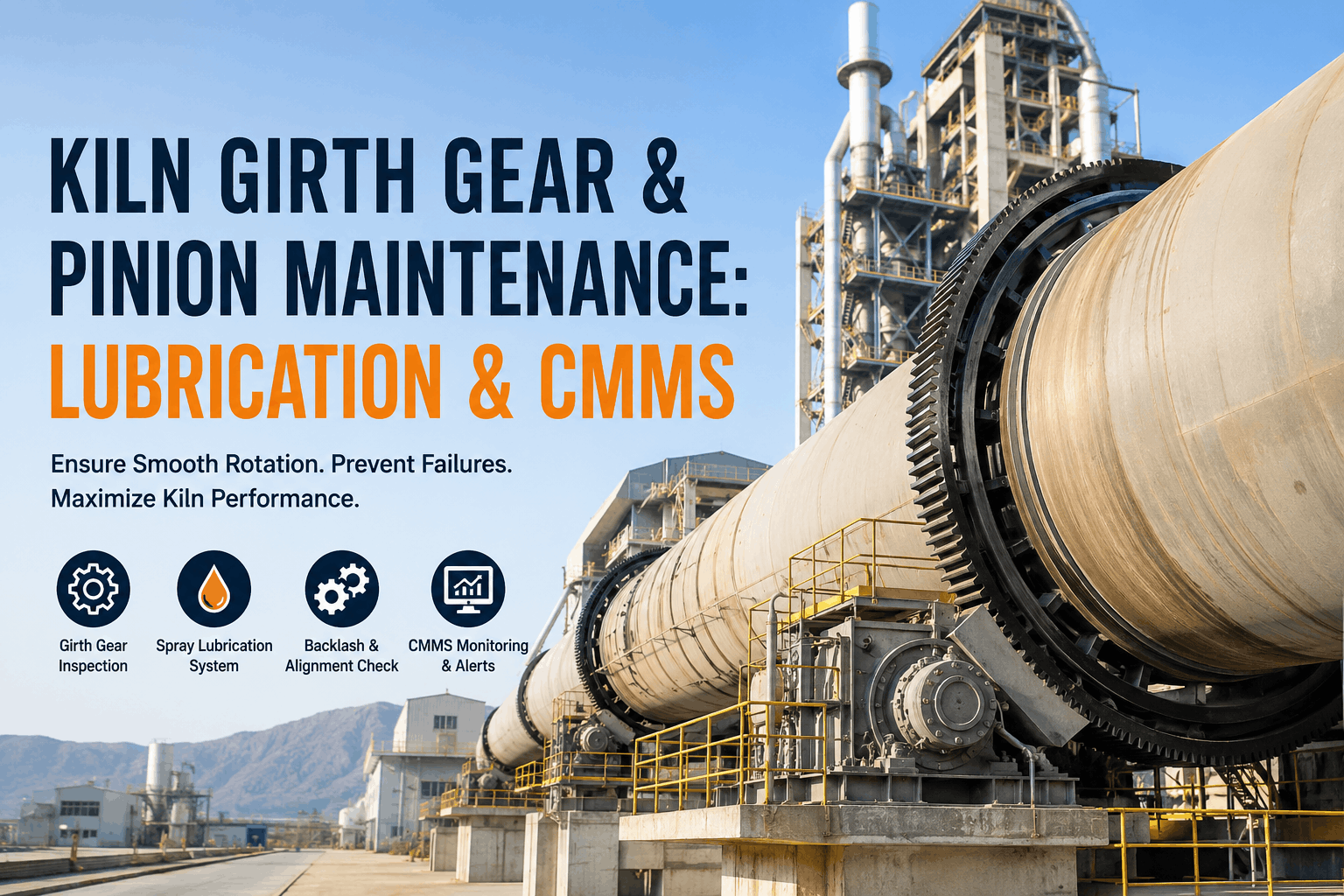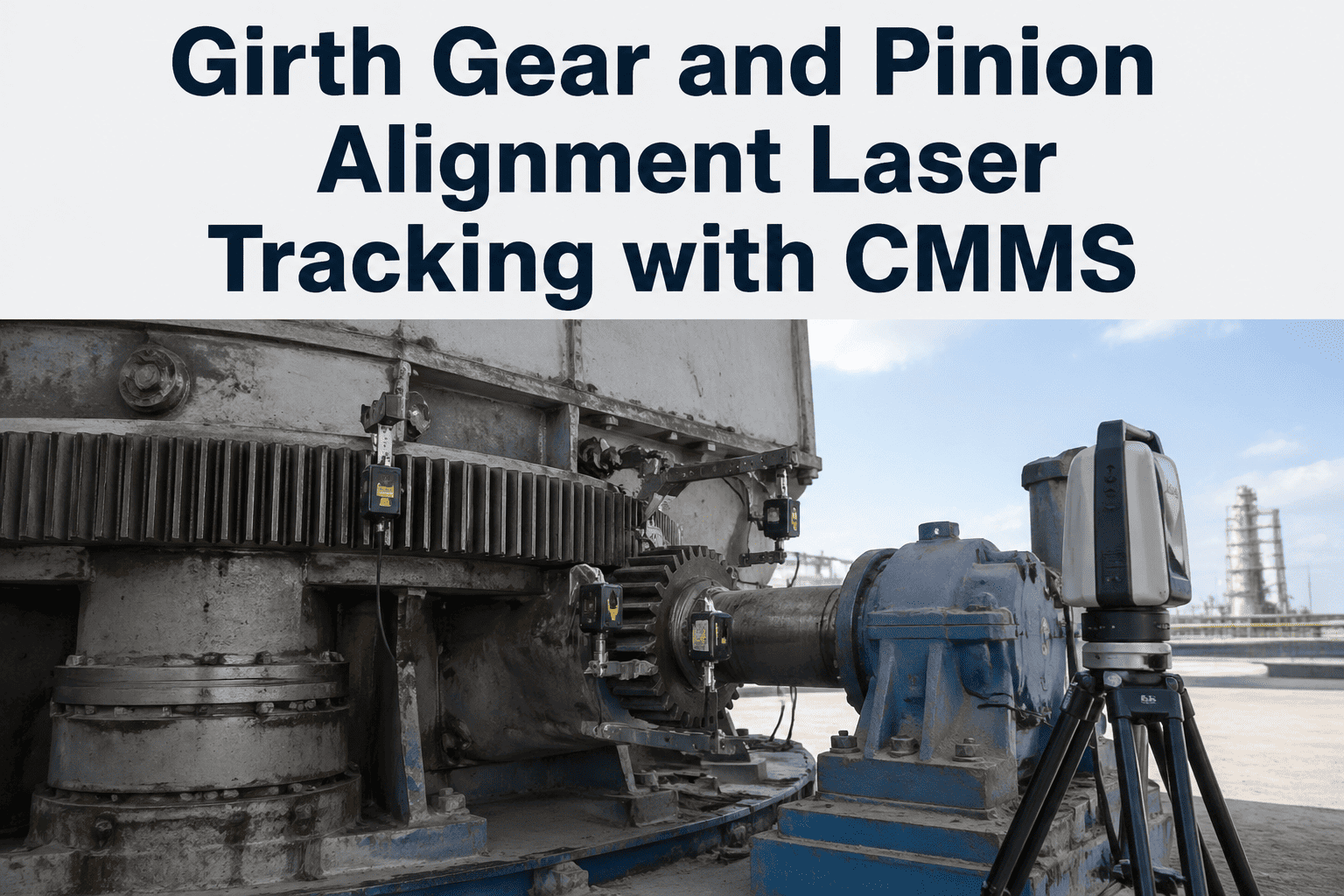
The girth gear and pinion carry every kilogram of torque that turns a rotary kiln, yet they are often inspected only when a noise, a hot spot or a vibration alarm forces the issue. Wear, lubrication breakdown and misalignment rarely arrive alone; they feed each other until a tooth face spalls or a pinion bearing overheats. A failed drive can hold a kiln down for weeks, so prevention is far cheaper than repair. This guide explains the failure modes, the checks that catch them early, and how cement plant maintenance software keeps those checks on schedule.
Kiln Girth Gear and Pinion Failure Prevention Guide
Control gear wear, lubrication and alignment on the kiln drive with a structured inspection and work order routine, so tooth damage is found at the planning stage instead of during an unplanned stop.
Why Kiln Drive Failures Are So Expensive
What the drive does
- Turns a loaded, hot kiln shell continuously at low speed
- Transmits very high torque through a few teeth in contact
- Runs in a dusty, hot, vibration-prone environment
- Has no standby replacement in most plants
What a failure costs
- Clinker production stops, and refractory cools and stresses
- Long lead times for gear segments, pinions and bearings
- Specialist crews and heavy lifting for repair
- Restart risk after a long cold stop
The Three Linked Root Causes
Tooth wear
Lubrication breakdown
Misalignment
Failure Modes and Early Warning Signs
Match what you see, hear or measure to the likely mechanism, then route it to the right work order.
| Failure mode | Early sign | Typical driver | Maintenance response |
|---|---|---|---|
| Abrasive wear | Thinning tooth flanks, rising backlash | Dust ingress, weak lubricant film | Check guard seals, clean and relubricate, measure profile |
| Pitting and spalling | Pits near the pitch line, surface flakes | Overload, edge loading | Inspect contact pattern, correct alignment, grind or reverse |
| Scuffing | Smeared, discoloured flanks | Lubricant starvation | Inspect spray system, verify grease type and cycle |
| Tooth breakage | Sudden impact noise, vibration spike | Advanced cracking, foreign object | Stop and inspect, plan segment repair |
| Pinion bearing damage | Rising bearing temperature | Misalignment, lubricant loss | Trend temperature, inspect, replace bearing |
| Spring plate or bolt loosening | Gear runout change, knocking | Cyclic loading, thermal movement | Torque check, inspect for cracks |
Reading the Contact Pattern
A contact pattern check is the quickest way to judge alignment. Compare the pattern across the tooth face width with what the gear supplier specifies.
Lubrication Management That Actually Holds
Typical reactive routine
- Lubricant level checked when someone remembers
- Spray nozzles cleaned after visible starvation
- Grease grade swapped without a record
- Gear condition judged by sound
Planned routine
- Reservoir level and pump cycle on a recurring task
- Nozzle spray pattern checked every round
- Approved lubricant listed against the asset
- Photos and readings logged each inspection
Follow the gear manufacturer on lubricant type, application interval and quantity. Record any change so a later wear problem can be traced back to its cause.
Inspection Cadence by Interval
Condition Monitoring on the Kiln Drive
A single reading means little. The value comes from the trend, compared across weeks and across the last overhaul.
Alignment and Structural Checks
- Measure gear radial and axial runout and compare with the last record
- Check backlash and tip and root clearance at several positions
- Photograph and document the contact pattern
- Inspect spring plates and fixing bolts for cracks and looseness
- Confirm pinion bearing clearance and foundation bolt torque
- Review kiln shell and support roller position after any adjustment
- Inspect guard seals and clean accumulated dust
Support roller adjustment changes the shell axis, and the shell axis changes the mesh. After any kiln alignment work, repeat the contact pattern check.
Repair Versus Replace Decisions
- Wear is even and within tolerance
- Contact pattern is acceptable
- Lubricant film is stable
- Localised pitting or edge loading
- Rising backlash or vibration
- Possible pinion reversal or regrinding
- Cracks or progressive spalling
- Both flanks worn to limits
- Repeated repair with limited gains
Plan replacement parts early. Gear segments and pinions have long lead times, so a decision made at inspection can protect the next shutdown.
Turn Gear Inspections Into Scheduled Work
Set up recurring kiln drive tasks, readings and photo records in one system, and see overdue checks before they become failures.
How Oxmaint Supports the Kiln Drive Workflow
Spares and Planning for Long-Lead Parts
Linking spare parts to the asset in the inventory record lets planners see what a shutdown task needs before the kiln stops.
KPIs Worth Tracking
Common Mistakes to Avoid
- Relubricating without checking why the film failed
- Skipping contact pattern checks after shell adjustment
- Treating bearing temperature alarms as isolated events
- Keeping gear measurements in personal notebooks
- Ordering parts only after damage is confirmed
Frequently Asked Questions
Protect the Kiln Drive Before It Stops the Plant
Bring gear inspections, lubrication tasks, spares and reliability tracking into one maintenance workflow built for cement plants.