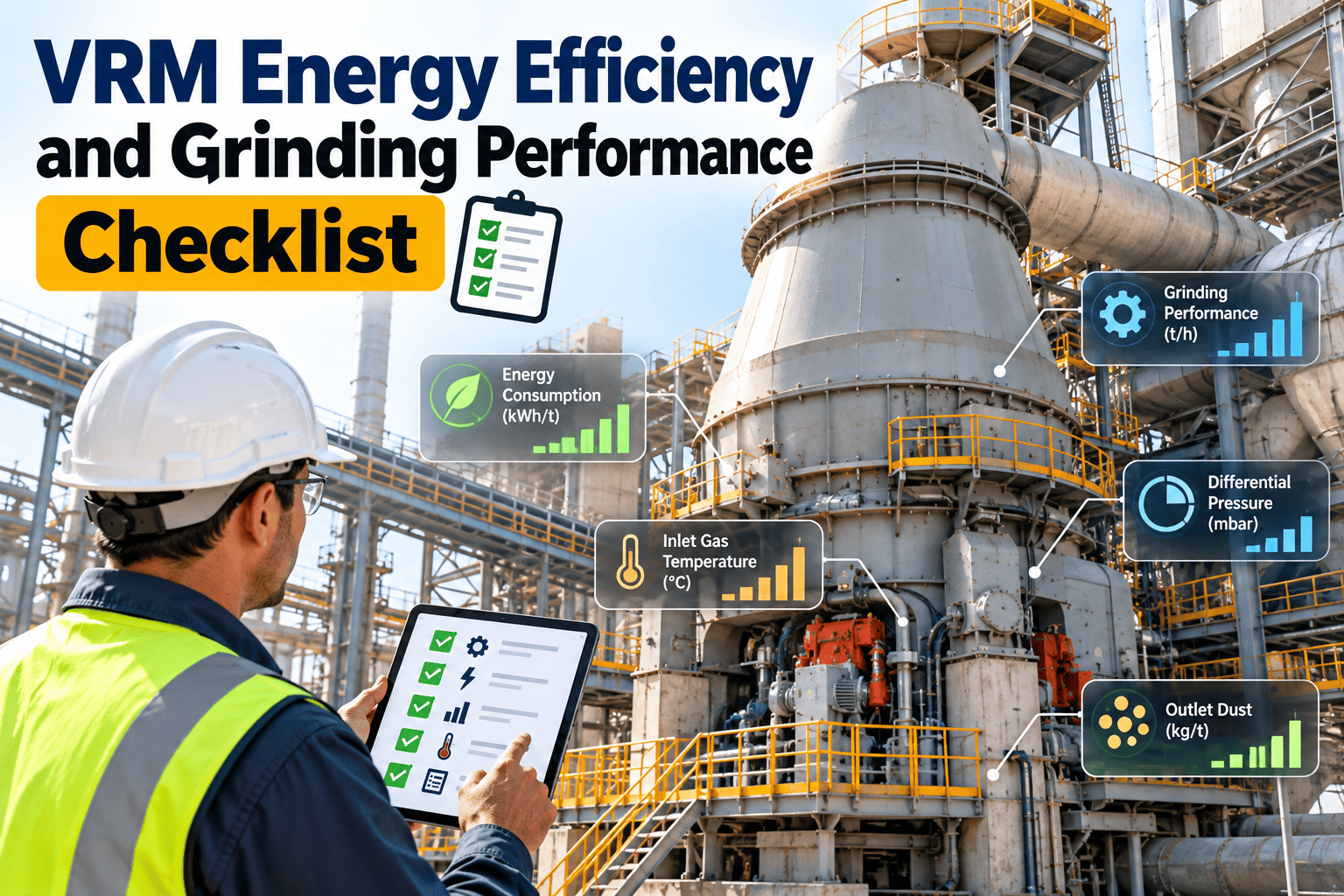
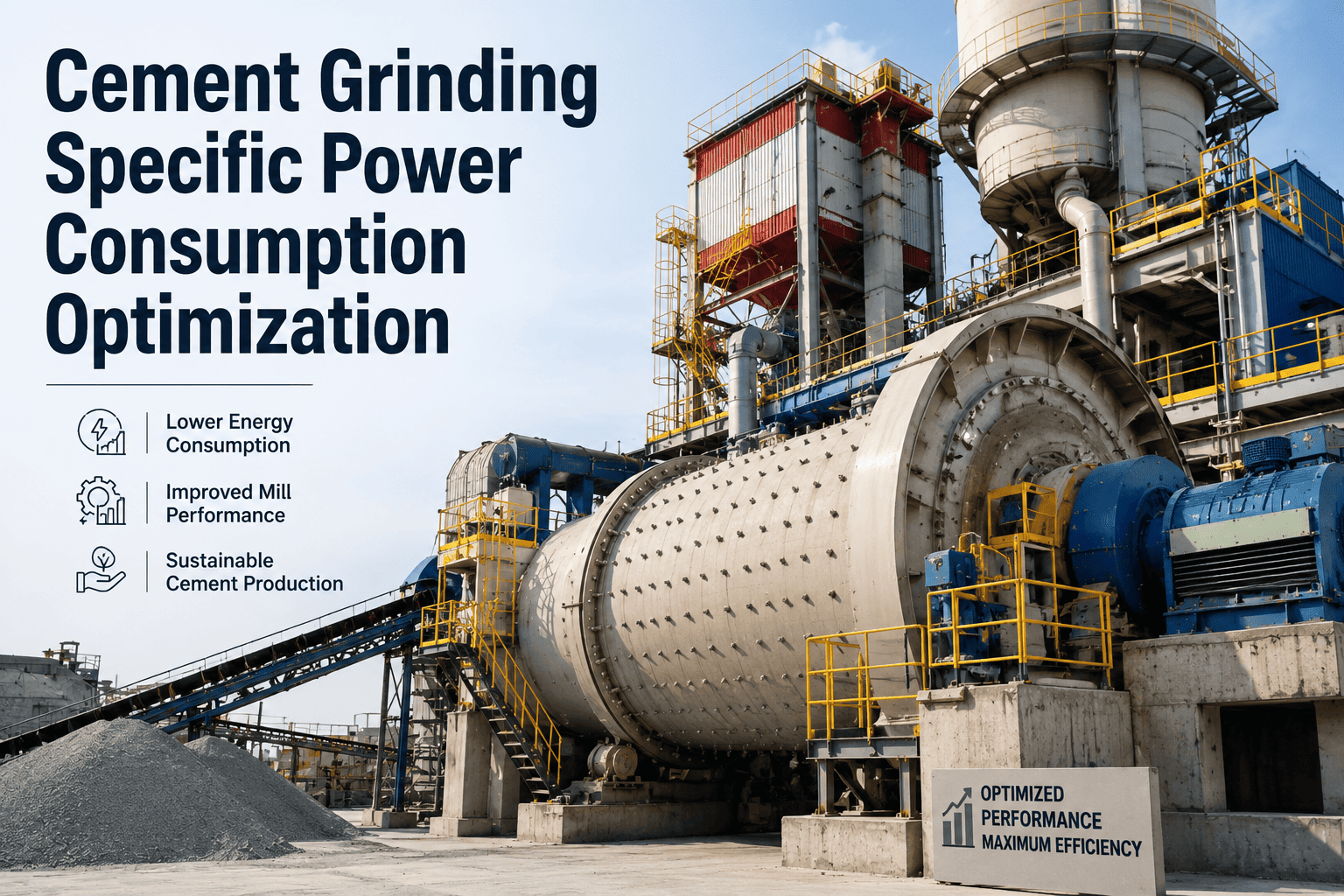
A 3,200 TPD cement plant in South Asia was running two finish mills at 34–38 kWh per tonne — 15% above the regional best-in-class benchmark of 30–32 kWh/tonne. The culprit was not the mill itself. It was the separator: rotor speed running 8% below optimum, bypass fraction elevated to 12.4%, recirculating load at 280% against a target of 180–220%. Every tonne of finished cement was being ground twice in places it only needed to be ground once. Oxmaint's AI optimization layer, integrated with the plant's DCS and condition monitoring network, diagnosed the root cause within 72 hours of go-live, issued corrective setpoint recommendations within a week, and delivered a sustained 14.2% reduction in specific energy consumption — documented across a full 90-day production campaign. This is how it happened.
The Problem: Why the Separator Was Destroying Mill Efficiency
A cement mill separator has one job: send finished-size particles to the product stream and return oversized particles for regrinding. When it does this job poorly — passing coarse material to product or rejecting fine material back to the mill — the entire circuit wastes energy. The plant's operating team knew their kWh/tonne was elevated, but manual monitoring had not isolated the separator as the primary driver. Three compounding problems were found within the first week of AI monitoring.
Separator rotor speed was set by shift operators based on target Blaine and rarely adjusted intra-shift. AI analysis of 18 months of historian data showed rotor speed running 7–9% below the mathematically optimal value for the actual clinker grindability and product mix combination on 64% of operating hours. Each percentage point of rotor speed below optimum increases bypass fraction by approximately 0.8% — adding coarse particles to finished cement and forcing the mill to regrind oversized material that should have been rejected.
Separator fan duct condition monitoring revealed a progressive reduction in actual airflow velocity — down 11% from design spec — caused by partial blockage in the material distribution inlet and fan blade wear not flagged in the existing PM schedule. Reduced airflow reduces the separator's ability to lift and classify fine particles, increasing the proportion of finished-size material returned to the mill with the coarse reject stream. The result is a mill grinding cement that is already at specification — pure energy waste with zero product benefit.
Feed rate to the mill had been increased incrementally over 14 months without corresponding adjustment to separator operating parameters. At 280% circulating load — against a design target of 180–220% — the separator was receiving more material per cubic meter of circulating air than its classification zone could handle. Oversaturation caused turbulent material flow through the classification zone, degrading separation precision and increasing both bypass and coarse-in-product simultaneously. The separator was physically incapable of performing efficiently at the load being applied.
Is Your Separator Running at Design Efficiency Right Now?
Most cement plants cannot answer this question without a 48-hour performance test. Oxmaint AI gives you the answer continuously — circulating load, bypass fraction, rotor speed vs. optimum, and fan airflow trend — updated every 30 seconds from your existing DCS data.
The Intervention: Week-by-Week AI Optimization Deployment
The optimization did not happen in a single configuration change. It followed a structured, data-validated progression — with each phase building on confirmed results from the previous one. Here is the exact sequence, with the KPI impact at each stage.
Oxmaint connected to the plant DCS historian via OPC-UA, ingesting 18 months of mill motor power draw, separator speed and power, fan motor current, feed rate, bucket elevator current, and hourly Blaine measurements from the lab. AI models trained on this historical dataset to establish per-product, per-shift operating baselines and identify the statistical normal ranges for each variable.
AI correlation analysis confirmed separator fan airflow deviation as the primary contributor to recirculating load elevation. Oxmaint automatically generated a Priority 1 maintenance work order for separator fan inspection and inlet duct cleaning — cross-referenced with the previous PM record showing the last separator fan inspection was 14 months prior against a 9-month design interval. A second work order was issued for separator internal inspection to assess rotor blade and guide vane wear condition.
Separator fan inlet duct cleaning removed 340 kg of accumulated material buildup from the distribution inlet — restoring airflow to within 3% of design velocity. Rotor inspection revealed 18% blade wear on six of the twelve rotor blades; three blades were replaced. Guide vane angles were recalibrated to design specification. Post-maintenance airflow measurement confirmed recovery to 97% of design velocity — immediately reducing the separator's structural cause of classification zone saturation.
With the separator mechanically restored, the AI optimization layer began issuing real-time setpoint recommendations every 30 seconds — adjusting rotor speed to match actual clinker grindability (which varies with incoming clinker lot chemistry), feed rate to maintain circulating load within the 185–215% optimal range, and fan damper position to match actual throughput. Operators supervised and confirmed recommendations; override rate dropped from 34% in week 7 to 8% by week 10 as confidence in AI outputs built through shift teams.
AI model adaptation to plant-specific operating patterns continued through weeks 11–16, narrowing the remaining efficiency gap. Rotor speed optimization accounts for clinker lot-to-lot grindability variation in real time — something no manual operator process could replicate at the required frequency. Throughput increased from 87 to 99 TPH as circulating load stabilized at 194% and the mill was no longer constrained by separator return volume. Product Blaine consistency improved measurably, with 28-day strength standard deviation reducing from ±2.8 MPa to ±1.4 MPa.
Before vs. After — Separator Performance Comparison
What the CMMS Integration Added That AI Alone Could Not
The AI optimization identified what was wrong. The Oxmaint CMMS integration is what turned that identification into a structured maintenance response, a documented intervention record, and a continuous condition-monitoring loop that prevents the same degradation from recurring silently over the next 14 months.
Oxmaint generated the separator fan work order when AI analysis confirmed airflow deviation exceeding 7% below baseline — not because a quarterly PM date arrived. The fan had been operating at degraded performance for an estimated 11 weeks before the AI detection. Calendar-based PM would have let it run degraded for another 7 weeks before the next scheduled inspection.
Each maintenance work order in Oxmaint carries the estimated energy impact of the degradation event — in kWh/t and in annualized cost. The separator fan work order was tagged with a $2,100/day energy cost projection based on the measured airflow deficit and current electricity tariff. This made the business case for immediate intervention unambiguous to plant management without a separate analysis.
Following the intervention, Oxmaint reconfigured separator PM triggers from a fixed 9-month calendar interval to a condition-based threshold: fan current draw trending more than 4% above baseline for 72+ consecutive hours triggers an inspection work order. This ensures the next airflow degradation event is detected within days, not months, regardless of when it occurs in the production calendar.
When the AI optimization model detects that separator performance is degrading — bypass fraction trending up, circulating load rising beyond the 215% threshold — it automatically creates an assessment work order before issuing energy alerts to the control room. The maintenance response and the process optimization response are coordinated in the same system, not siloed in separate tools that different teams own.
Frequently Asked Questions
How long does it take for AI optimization to produce measurable results on a cement mill separator?
Does Oxmaint require replacing the existing DCS or control system to implement AI optimization?
What happens to product quality — Blaine fineness and strength — when separator parameters change?
Can Oxmaint optimize both ball mills and vertical roller mills (VRMs) for separator efficiency?
What is the minimum data requirement to start AI separator optimization with Oxmaint?
Your Separator Is the Reason Your kWh/t Is Higher Than It Should Be.
Most cement mills are not inefficient because of old equipment. They are inefficient because separator parameters are set manually, maintained on calendar schedules, and never correlated with real-time clinker grindability or actual airflow conditions. Oxmaint AI optimization and condition-triggered CMMS integration together close that gap — as this case study demonstrates, within a 90-day production campaign. Integration takes 6 weeks. ROI evidence arrives within the first quarter.