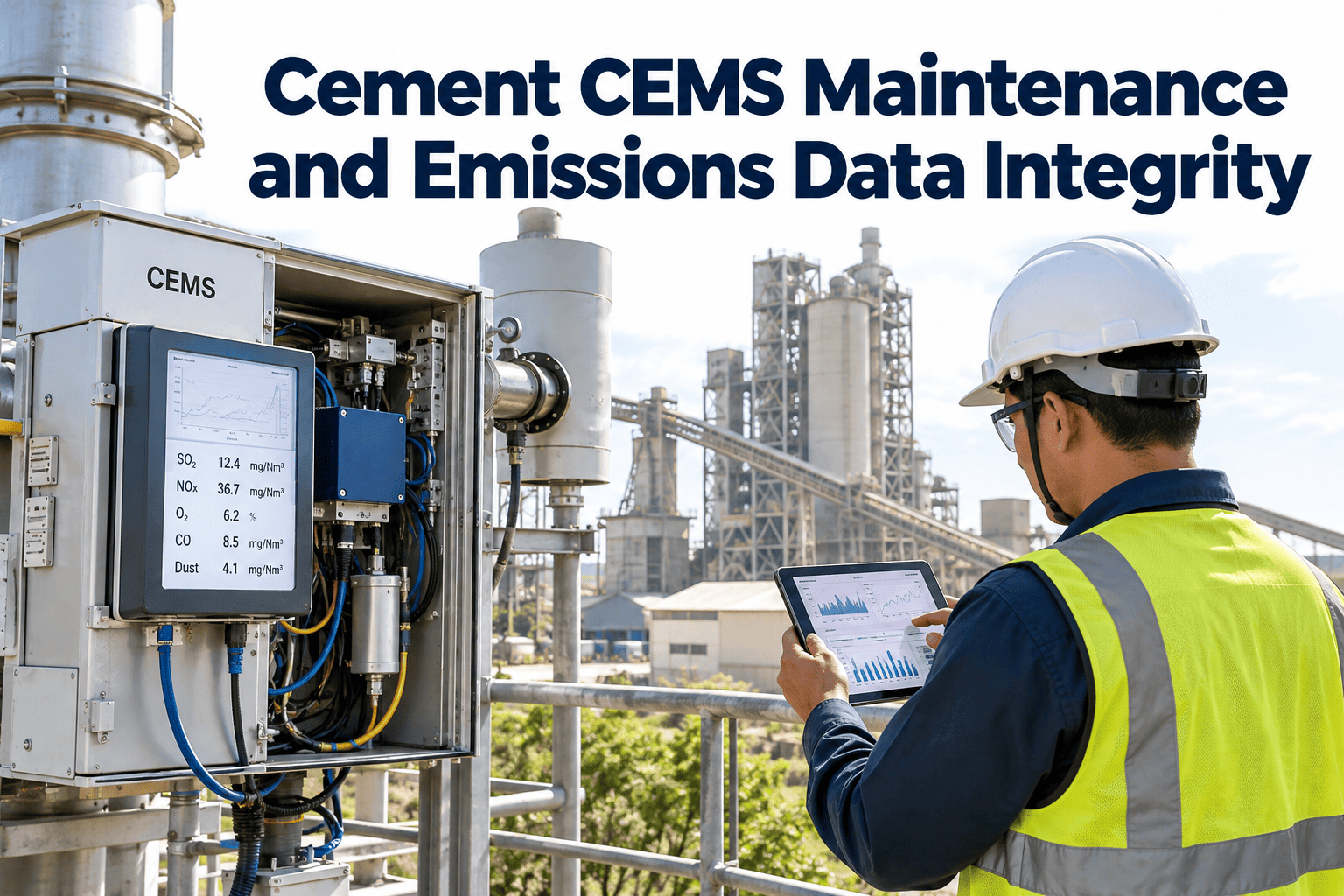
Continuous emissions monitoring systems turn a cement kiln stack into numbers that regulators, communities, and corporate teams rely on. Those numbers are only as good as the probes, sample lines, analyzers, and data systems behind them, and cement dust, heat, and moisture make that equipment hard to keep healthy. Missing or invalid data usually traces back to a maintenance gap rather than a reporting problem. This guide explains how plants can protect CEMS data integrity through disciplined upkeep, and how Oxmaint maintenance software can document the calibration, inspection, and repair work that proves it.
Cement CEMS Maintenance and Emissions Data Integrity
Protect data availability and audit readiness by maintaining every link in the measurement chain, from the stack probe to the reported value.
Why cement stacks are hard on monitoring equipment
Cement kilns combine heavy dust, high temperature, moisture, and corrosive gases. Each factor attacks a different part of the measurement chain.
What a CEMS typically measures at a cement plant
The exact parameter list depends on your permit and local rules. Confirm the requirements that apply to your stack.
| Parameter | Common measurement approach | Typical maintenance concern |
|---|---|---|
| Particulate matter | Optical, light scattering, or similar PM monitors, correlated to manual tests | Window fouling, purge air faults, drift in correlation |
| SO2, NOx, CO | Extractive gas analyzers with sample conditioning, or in-situ cells | Sample line leaks, condensate, converter or cell ageing |
| HCl | Extractive heated systems or optical methods where required | Cold spots that absorb the gas, heated line failure |
| Total hydrocarbons or TOC | Heated flame ionization detection | Fuel and air supply, heated line, flame stability |
| Mercury | Dedicated Hg monitors or sorbent trap methods where permitted | Converter condition, sample path inertness |
| Oxygen | Paramagnetic, zirconia, or electrochemical sensors | Sensor ageing and reference gas supply |
| Flow, temperature, moisture | Ultrasonic, pitot, thermocouple, or hygrometer devices | Probe plugging and calibration drift |
Where data integrity breaks in the measurement chain
Trace every reported value back through the chain. Each link has its own failure modes and its own checks.
Anatomy of a data gap
A gap is rarely a single event. It is a chain of small delays, and each delay is a chance to shorten the outage.
- Fault occursHeated line trips or a cylinder runs out during a check.
- Alarm or flagData is marked invalid. Delays here hide the start time.
- NotificationThe right technician is told, not just the control room.
- DiagnosisSpares, manuals, and history are close at hand.
- RepairThe part is replaced and the system is purged and stabilized.
- RevalidationZero and span checks confirm the data is valid again.
Shorten every CEMS outage with a documented routine
Schedule checks, assign repairs, and store calibration evidence on the same record so audits start with answers, not searches.
Quality assurance frameworks to align with
Requirements differ by country, permit, and parameter. Use these examples as a map and confirm the rules that apply to your plant.
| Framework | Where commonly used | Typical elements |
|---|---|---|
| EN 14181 | European Union and countries following EU practice | Instrument suitability, calibration against reference methods, ongoing drift control, annual surveillance tests |
| US EPA performance specifications and QA procedures | United States, including cement sector rules | Installation checks, relative accuracy testing, daily drift checks, periodic audits |
| National or state online monitoring directions | For example, India's central and state pollution control boards | Online data transmission, calibration records, uptime expectations, exceedance reporting |
| Permit conditions and site procedures | Every plant | Averaging periods, data substitution, notification timelines, record retention |
Inspection routine by interval
Adjust frequencies to your permit, analyzer type, and vendor instructions.
Daily
- Review status flags, alarms, and invalid data periods
- Check zero and span drift where required
- Confirm sample flow, heated line temperature, and cooler dew point
- Inspect shelter temperature and cylinder pressures
Weekly
- Drain condensate and check pump condition
- Inspect particulate monitor windows and purge air
- Compare readings with process behaviour and other analyzers
- Review open CEMS work orders and recurring alarms
Monthly and quarterly
- Replace sample filters and wear parts by schedule
- Perform leak tests on probe and sample path
- Run calibration gas audits where required
- Review data availability against targets
Annual and shutdown
- Vendor service and full calibration or verification
- Reference method comparison or correlation testing
- Probe removal, cleaning, and structural inspection
- Review software configuration and backups
Records auditors and regulators expect to see
A fast, complete evidence package reduces audit stress and shows control of the monitoring program.
Maintenance evidence
- Dated inspection and calibration checklists with technician names
- Corrective work orders with fault, cause, and repair details
- Parts replaced, with serial numbers where relevant
- Vendor service reports attached to the asset
Data evidence
- Calibration gas certificates and expiry dates
- Drift and audit results with acceptance limits
- Invalid and substituted data periods with reasons
- Configuration changes with approval and date
Spares and consumables that prevent long outages
Many CEMS outages last days because a small part was not in stock. Hold the parts that fail most often.
- Sample filters and probe filter elementsFail from dust loading and need frequent replacement.
- Heated line sections and fittingsCold spots cause condensation and biased gas readings.
- Pump heads, diaphragms, and cooler partsWear items in the conditioning system.
- Calibration gases and regulatorsExpired or empty cylinders invalidate checks.
- Sensors, cells, and detector consumablesAge with use and cause drift or noise.
- Purge air filters and blowersProtect optical windows from dust.
Reactive versus controlled CEMS maintenance
The difference shows up in uptime, audit findings, and how calmly the team handles a failure.
Reactive
- Calibrations done when a deadline approaches
- Faults reported only when data turns invalid
- Records in several notebooks and email chains
- Gas cylinder expiry noticed during a check
- Process and environment teams blame each other
Controlled
- Calibrations and audits scheduled in advance
- Alarms trigger work orders with owners
- One asset record holds history and evidence
- Cylinder stock and expiry tracked
- Shared records support joint reviews
Symptom-based troubleshooting for common CEMS problems
When a reading looks wrong, work from the symptom to the likely equipment cause before blaming the process or the analyzer.
| Symptom | Possible equipment causes | First checks |
|---|---|---|
| SO2 or HCl reads unexpectedly low | Cold spot absorbing gas, leaking sample line, wet conditioning | Heated line temperature, leak test, condensate trap |
| Readings are flat or unresponsive | Plugged probe filter, blocked sample line, stuck valve | Sample flow, backpurge, valve operation |
| Noisy or jumping values | Moisture carryover, pump pulsation, unstable power, loose wiring | Dew point, pump condition, grounding and connections |
| Zero or span drift fails | Aged sensor, wrong gas value, regulator leak, temperature swings | Gas certificate, regulator, shelter temperature |
| Dust monitor drifts upward | Window fouling, purge air failure, misalignment | Purge flow, window cleaning, alignment check |
| Values disagree with a reference test | Calibration relationship out of date, sampling position problem, sample path bias | Review correlation records and path integrity |
| Data missing but analyzers appear healthy | Communication fault, logger configuration, clock or status flag error | Network, logger status, configuration log |
Cement process conditions that affect CEMS performance
Maintenance and process teams should review these events together, because they change what the analyzers see.
- Raw mill on and off switchingChanges dust load, temperature, moisture, and acid gas behaviour, so check response after every switch.
- Kiln start-up and shutdownFast transients and low temperatures can condense water in the sample path.
- CO trips of the electrostatic precipitatorSudden gas changes can stress analyzers and trigger alarms that need review.
- Alternative fuel changesNew fuel mixes can alter chlorine, hydrocarbon, and metal emissions, so confirm analyzer ranges.
- Ammonia-based NOx controlReagent injection can affect sample chemistry, so keep the sample path clean.
- Seasonal humidity and temperatureMonsoon and winter conditions affect shelter air conditioning and heated line performance.
Handling invalid data without weakening credibility
How a plant treats bad data matters as much as how it avoids it. Follow your permit rules and document each decision.
- Flag at sourceMark maintenance, calibration, and fault periods automatically.
- Record the reasonLink each gap to a work order or event.
- Apply approved rulesUse only substitution methods your regulator allows.
- Review for patternsLook for repeated causes and timing.
- Approve changesControl edits with named approvers and an audit trail.
- Report on timeDeliver summaries with supporting records.
Roles that keep the program running
CEMS reliability needs shared ownership across instrumentation, environment, and operations.
Instrumentation and maintenance
- Perform inspections, calibrations, and repairs
- Maintain spares and calibration gases
- Close work orders with readings and verification
- Escalate recurring faults for root cause review
Environment and operations
- Review data validity and exceedance alerts
- Inform maintenance of process changes
- Own regulatory reporting and notifications
- Join monthly reviews of availability and faults
Managing change in CEMS hardware and software
Data integrity can be lost through a well-meant change as easily as through a failure. Treat the monitoring system as a controlled asset.
- Analyzer replacementRecord the old and new serial numbers, ranges, and commissioning checks on the asset history.
- Range and scaling changesRequire approval, a test, and a dated entry so reported values stay traceable.
- Logger and software updatesBack up configurations before updates and verify outputs afterwards.
- Probe position or sample path changesConfirm representativeness and repeat required comparison tests.
- Calibration gas supplier changeCheck certificates, concentrations, and uncertainty before first use.
- Technician trainingKeep competency records so each calibration is performed by qualified staff.
Questions to ask in a monthly CEMS review
Use the same short agenda each month so trends become visible and actions do not drift.
- Which analyzers had invalid data, how long did each outage last, and what was the confirmed cause?
- Were any calibration checks late, failed, or repeated, and did the cause sit with equipment or procedure?
- Which spares or calibration gases were short when a fault occurred?
- Did any process change, such as a fuel switch or raw mill mode, coincide with unusual readings?
- Are corrective actions closed, verified, and reflected in the preventive schedule?
KPIs for emissions data integrity
Combine equipment measures with data quality measures so you can see cause and effect.
How Oxmaint supports CEMS maintenance
Oxmaint does not replace your analyzers or data acquisition system. It keeps the maintenance side organized and auditable.
Cement CEMS maintenance FAQs
What most often causes CEMS data gaps in cement plants?
Plugged probes, heated line faults, expired calibration gas, and conditioning failures are common causes. Review your own fault history.
How often should CEMS be calibrated?
It depends on permit rules, analyzer type, and vendor guidance. Many programs combine daily drift checks with periodic audits.
Can a CMMS store calibration evidence?
Yes, checklists, readings, and reports can sit on the asset record. Oxmaint organizes that history for audits.
Does maintenance affect reported emissions values?
Yes. Leaks, drift, and fouling can bias readings, so equipment condition directly affects data credibility.
Where should a plant begin?
List the measurement chain, then schedule checks and spares. Book a demo to map the plan.
Make every reported emission value defensible
Bring CEMS inspections, calibrations, spares, and repairs into one maintenance record that supports compliance and trust.