Cement plants running Siemens SPPA, ABB 800xA, or Honeywell Experion DCS generate thousands of process alarms and equipment events every shift — and most of those signals disappear into a historian log that maintenance teams never see. A direct API integration between your DCS and CMMS converts every relevant process alarm into a structured work order with the asset context, fault code, and equipment history already attached. This case study walks through how that integration is architected, what it takes to deploy, and what operational change it produces on the plant floor. Book a demo with Oxmaint to walk through the integration approach for your specific DCS platform, or start a free trial and connect your first data source.
CMMS API Integration with SCADA and DCS for Cement Plants
From process alarm to work order in under 60 seconds — without a technician in the loop. Here is how cement plants wire their DCS into CMMS via REST API and OPC-UA.
The Problem: Process Alarms That Maintenance Teams Never See
DCS alarm floods are a known problem in cement plants — high alarm rates cause technicians and operators to normalize and dismiss alerts that indicate genuine equipment deterioration. Without a CMMS integration, maintenance planning is disconnected from real-time process data.
Integration Architecture: How DCS Connects to CMMS
The integration between a cement plant DCS and cloud CMMS follows a well-established pattern that preserves OT network isolation while enabling real-time data flow into maintenance workflows.
Your Siemens SPPA-T3000, ABB 800xA, or Honeywell Experion DCS generates real-time process data and alarms. The DCS exposes this data via OPC-UA server (native in modern DCS platforms) or via proprietary data export formats. This layer stays fully isolated from the internet.
A lightweight integration server on the IT-side DMZ reads process values from the OPC-UA server via a read-only connection. This server applies alarm filtering rules (severity, equipment tag, duration thresholds) and formats qualifying alarms as CMMS work order payloads via REST API calls to the cloud CMMS.
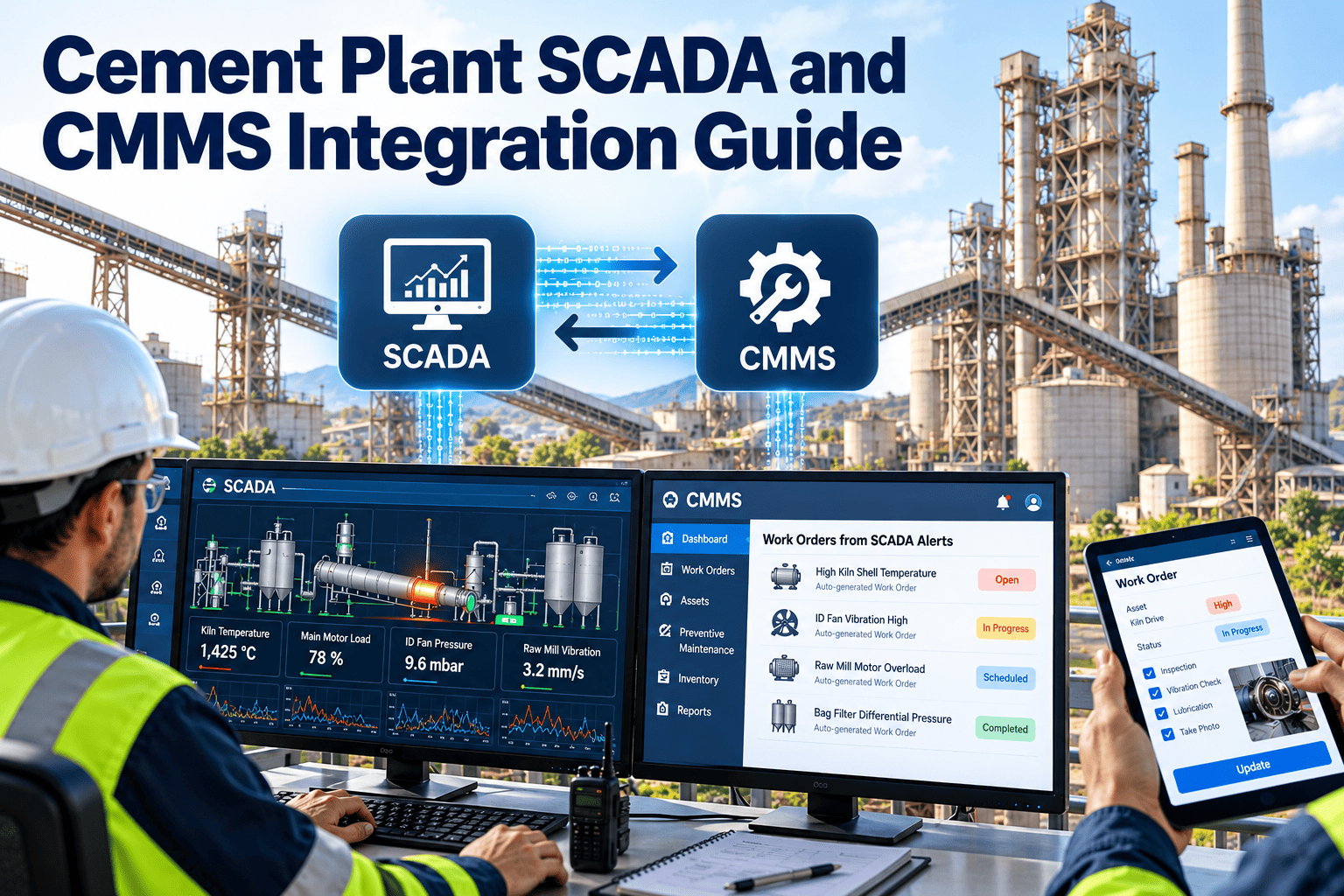
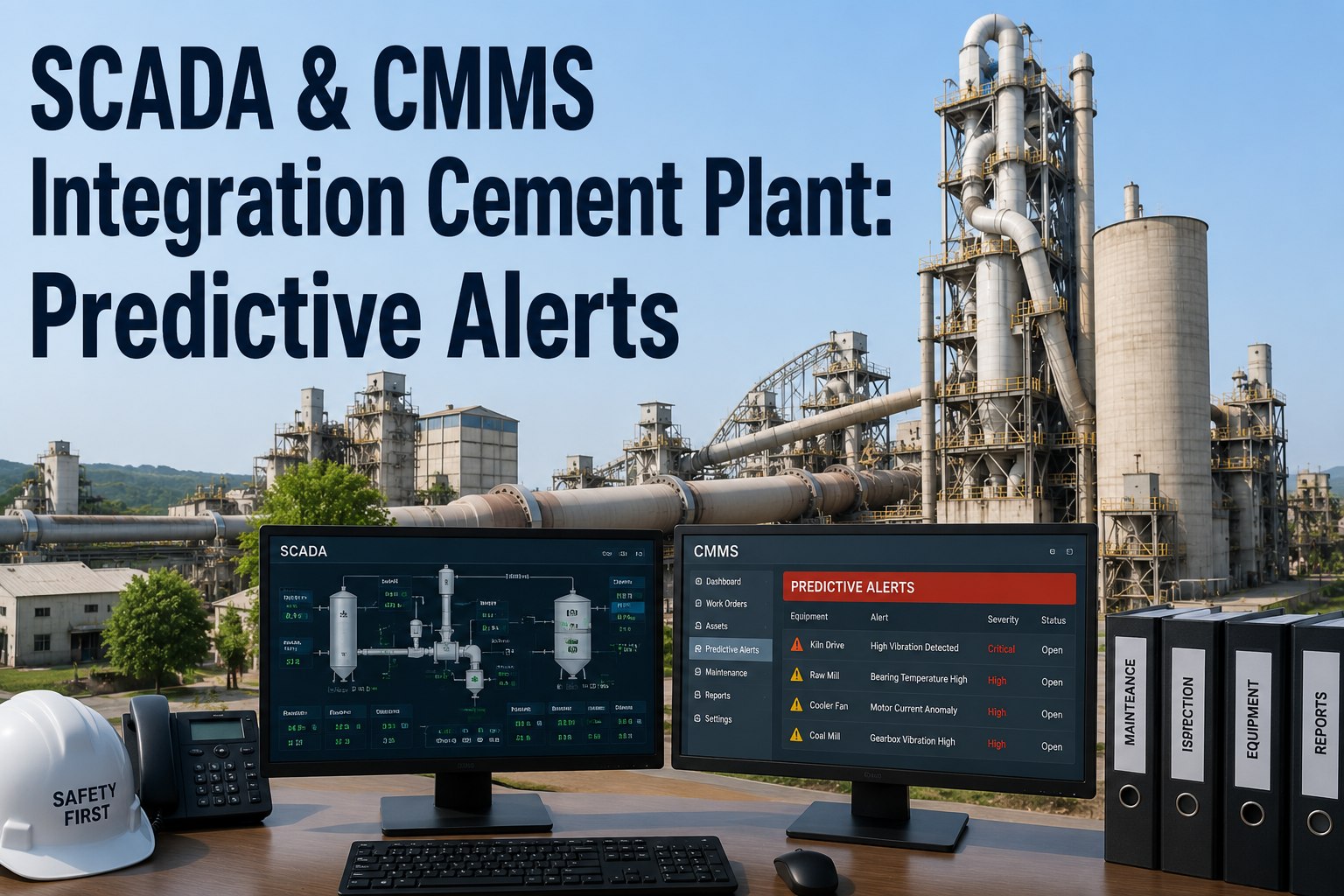
The CMMS API receives the alarm payload, maps the equipment tag to the correct asset record, populates the work order with fault description, process values at time of alarm, and routes to the correct maintenance crew. The technician receives a push notification with full asset context — no manual lookup required.
What Changes on the Plant Floor After Integration
Plants report 35–55% reduction in time from DCS alarm to technician on-site after CMMS integration removes the manual escalation chain entirely.
Every DCS alarm that meets threshold criteria generates a work order. Every work order closes with a completion record. Audit trail is complete by design, not by effort.
Technicians arrive with the process values at time of alarm — bearing temperature, vibration amplitude, motor current — already in the work order. Diagnosis starts before the first measurement is taken.
Frequently Asked Questions
Oxmaint's integration team has deployed DCS-to-CMMS connections across Siemens, ABB, and Honeywell platforms. Book a 30-minute technical session and walk through the integration architecture for your specific plant.