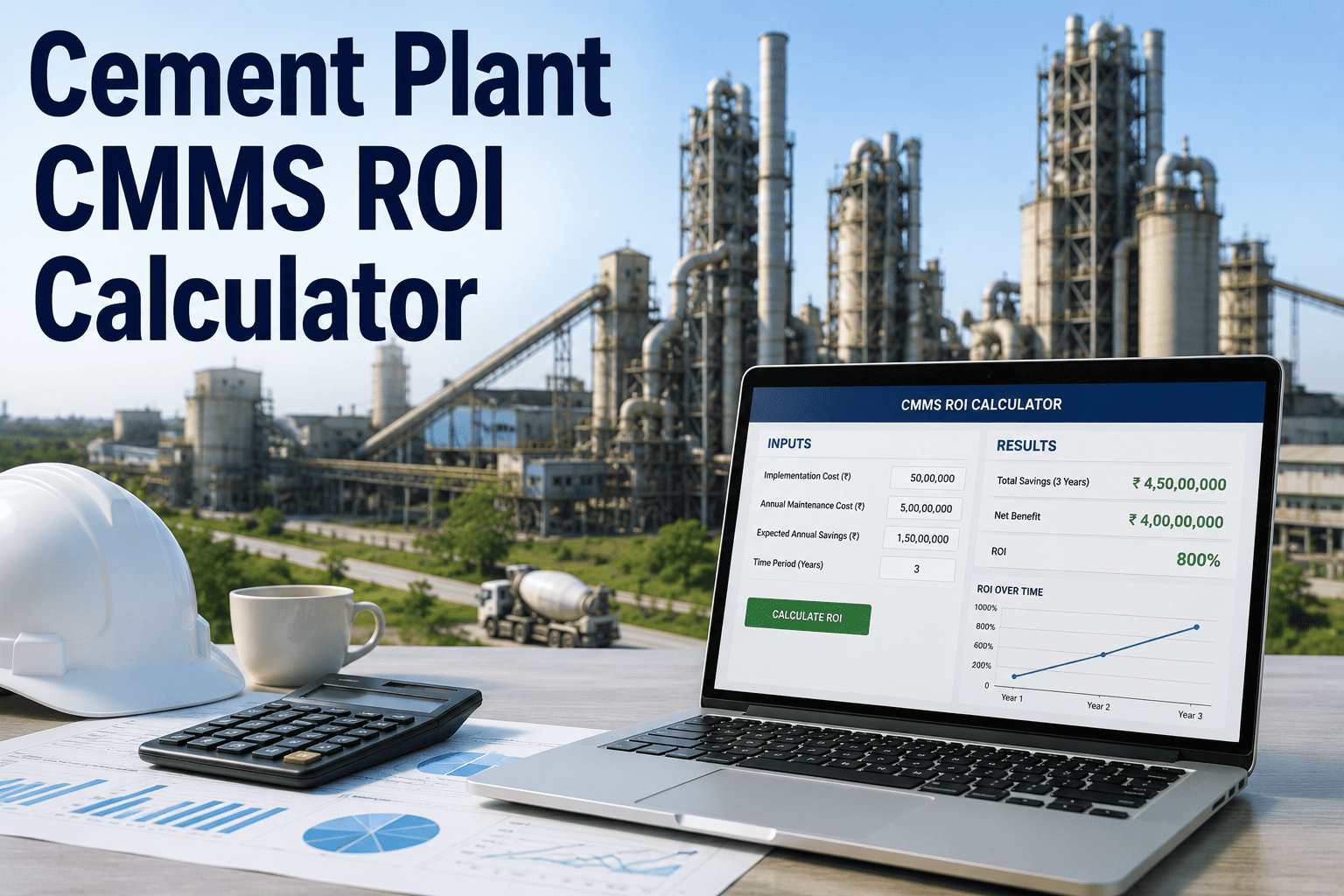
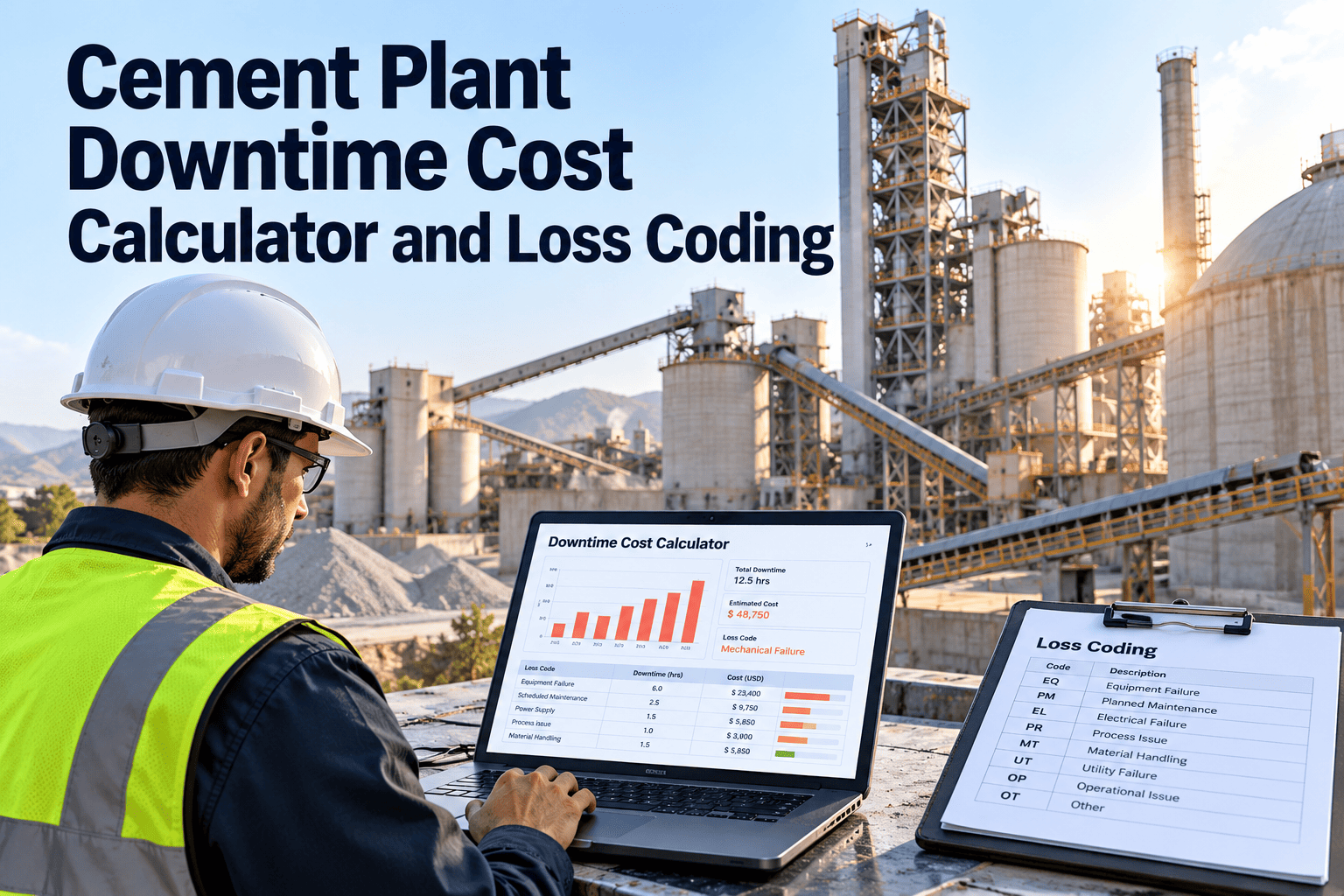
Every cement plant maintenance manager knows the gut feeling: too much reactive work, parts replaced before their time, work orders closed days after the job is done. What most cannot answer in a board meeting is what that costs in real numbers. This ROI calculator is built from actual deployment data across cement plants ranging from 1.5 MTPA to 6 MTPA. Enter your plant's baseline numbers and see what a structured CMMS deployment with OxMaint changes on each line. Start a free trial to map these savings against your specific asset count and shift structure.
Your Estimated Annual Savings
Based on OxMaint deployment benchmarks for cement plants
Downtime reduction savings
$0
23% average reduction in unplanned downtime hours
Parts waste elimination
$0
12% reduction in premature part replacement
Labor efficiency gain
$0
18% less time on paper, transcription, and rework
Faster WO close-out value
$0
Average WO closure drops from 8+ days to under 2.5
Estimated payback period:
— months
Where the Savings Come From
The Four Cost Drivers OxMaint Moves in Cement Plants
ROI in a CMMS deployment does not come from the software. It comes from four operational changes the software makes possible. Each line below reflects actual measured outcomes from cement plant deployments, not vendor estimates.
01
Unplanned Downtime Cost
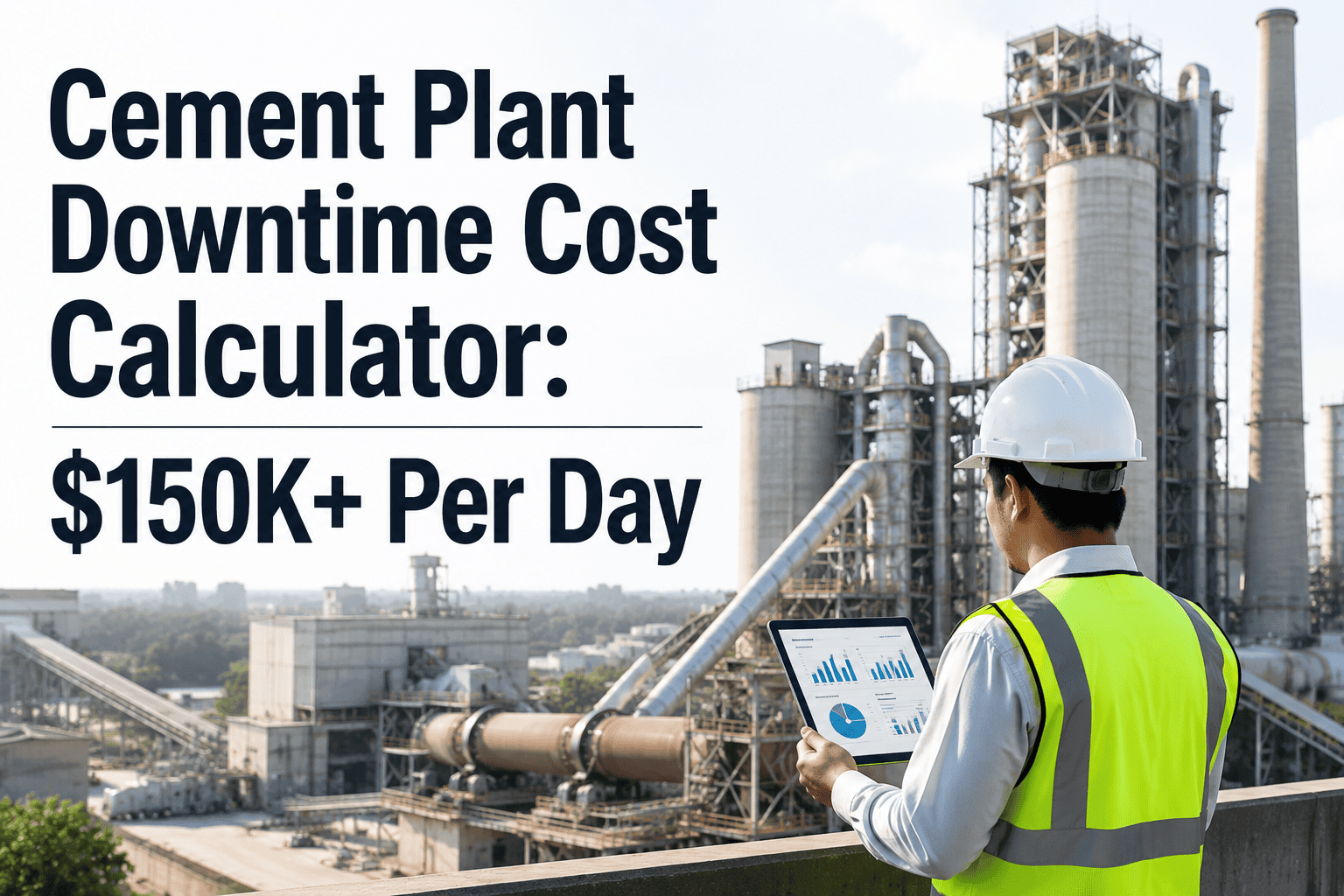
A 3,500 TPD kiln losing one shift to an unplanned bearing failure costs roughly $133,000 in lost production at $38 per ton. OxMaint customers report 23% average reduction in unplanned downtime events within 90 days of go-live, driven by PM compliance improvement and early condition alerts.
02
Premature Parts Replacement
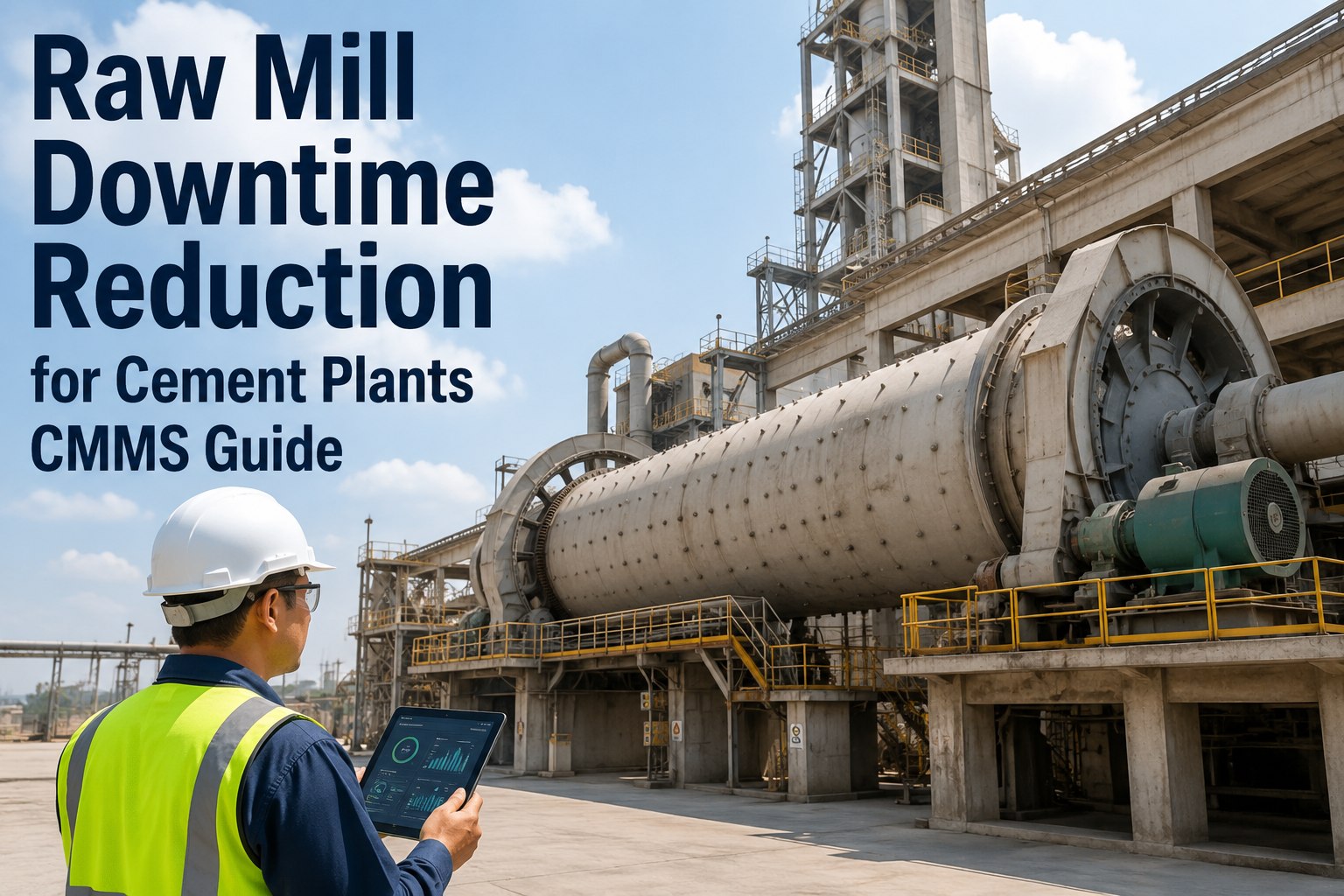
Time-based PM with no condition data replaces parts at OEM intervals regardless of actual wear state. For high-cost items like VRM grinding rollers, kiln tyre pads, and girth gear segments, condition-based deferral averages 12% reduction in annual parts spend. At a $2.4M maintenance budget, that is $288,000 recovered per year.
03
Labor Time on Non-Productive Work
In plants without mobile CMMS, technicians spend 18 to 22% of their shift time on paper work orders, end-of-shift transcription, and hunting for asset history. With mobile execution and QR-tag check-ins, that time returns to actual maintenance work. For a 28-person team, the productivity recovery is equivalent to adding 5 technicians without hiring.
04
Work Order Close-Out Delay
Every day a work order sits open is a day the asset record is incomplete and the next scheduled task may be incorrectly timed. Slow WO closure also delays invoice processing and spare parts reconciliation. OxMaint cement plant deployments average a drop from 8.4 days to 2.3 days for work order closure, reducing downstream administrative cost and improving asset history accuracy.
Validate your numbers with a real conversation
Your plant's ROI case is built from your actual asset count and downtime data
The calculator above uses industry benchmark rates. The OxMaint onboarding team will work through your specific kiln capacity, PM library size, and current compliance rate to build a defensible ROI model your plant manager can take to leadership.
Industry Benchmarks
Cement Plant Maintenance KPIs: Where the Industry Sits vs Where OxMaint Plants Land
These benchmarks are drawn from published industry data and aggregated OxMaint deployment results. They give every plant a realistic target range to measure against before and after CMMS implementation.
| KPI |
Industry Average |
Bottom Quartile |
OxMaint Cement Plants (90 days) |
| PM Compliance Rate |
61% |
38% |
88% |
| Planned vs Reactive Ratio |
55:45 |
30:70 |
74:26 |
| Work Order Close-out (days) |
6.8 |
12+ |
2.3 |
| Unplanned Downtime (hrs/year) |
220 |
400+ |
Under 170 |
| Technician Mobile Adoption |
42% |
Under 10% |
91% |
| Maintenance Cost as % of RAV |
3.1% |
4.8% |
2.4% |
RAV = Replacement Asset Value. Industry averages sourced from Maintworld, Plant Engineering, and Reliability Web annual benchmarking surveys.
Expert Review
How Cement Plant Finance and Maintenance Teams Evaluate CMMS ROI
We spoke with maintenance managers and plant controllers who have led CMMS investment approvals in cement manufacturing. Their perspective shapes how to frame the ROI case for leadership.
The CFO does not care about PM compliance as a metric. He cares about production availability and maintenance cost per ton. When I translated our OxMaint results into those two numbers, the conversation took fifteen minutes. Availability went from 91.2% to 94.6%. Maintenance cost per ton dropped by $0.41. That is the ROI case.
Plant Controller
2.8 MTPA integrated plant, three years post OxMaint deployment
We had been budgeting for a major kiln drive overhaul every 36 months. After 18 months on OxMaint with continuous vibration monitoring on the main bearing, our reliability engineer pushed the interval to 48 months based on actual condition data. That single decision deferred $380,000 in overhaul cost. The CMMS paid for itself on that one asset.
Maintenance Manager
4.5 MTPA cement plant, OxMaint user since 2022
Frequently Asked Questions
ROI Questions from Cement Maintenance and Finance Teams
How long does it realistically take to see measurable ROI after a CMMS go-live in a cement plant?
Most cement plants see the first measurable ROI signal within 30 to 45 days of go-live, typically through faster work order closure and reduced paper handling time. PM compliance improvement, which drives downtime reduction, takes 60 to 90 days to stabilize at a new level. Parts spend reduction from condition-based deferral is typically visible at the first quarterly parts review after go-live. The OxMaint 75-day structured rollout is specifically designed to deliver a Day-90 KPI review that shows real numbers to plant leadership.
Book a demo to walk through a realistic 90-day ROI timeline for your plant size.
What data does the plant need to collect before making a CMMS ROI case to senior leadership?
The minimum data set for a credible ROI case is four numbers: current PM compliance rate, total unplanned downtime hours in the last 12 months, current average work order close-out time, and annual maintenance budget. These four figures feed the downtime cost, parts waste, and labor efficiency calculations that form the core of the business case. Plants that do not track these currently can use the OxMaint benchmark defaults as conservative starting assumptions, then refine the model as real data becomes available after deployment.
Start a free trial and access the ROI baseline template built for cement plants.
Does the ROI calculator account for the cost of the CMMS itself and implementation time?
The calculator shows gross savings from operational improvements. To calculate net ROI, subtract your OxMaint subscription cost and internal implementation time, which typically runs to 75 days of part-time effort from a six-person team as detailed in OxMaint's structured rollout framework. For most cement plants above 2 MTPA capacity, the gross savings identified in the calculator exceed total first-year OxMaint cost within 90 days of go-live. The OxMaint team will provide a detailed net ROI model including all software and onboarding costs during a scoping call.
Book a scoping call to receive a plant-specific net ROI breakdown.
Can OxMaint generate the ROI reports needed for CAPEX approval in cement parent companies?
Yes. OxMaint includes a reporting module that generates maintenance KPI reports formatted for corporate review, covering PM compliance, planned-to-reactive ratio, work order backlog, downtime hours, and maintenance cost trends. These reports can be scheduled automatically for weekly or monthly delivery to plant managers and corporate reliability teams. For parent companies that require SAP-formatted data, OxMaint supports SAP PM integration for work order and cost center data synchronisation. The reporting templates are pre-built and do not require custom configuration to be useful from Day 1.
Turn calculator estimates into a real business case
Book 30 minutes with the OxMaint team to build your plant-specific ROI model
Bring your current downtime hours, PM compliance rate, and maintenance budget. The OxMaint team will walk you through the exact savings model used in cement plant deployments and give you a number you can defend in a board meeting.