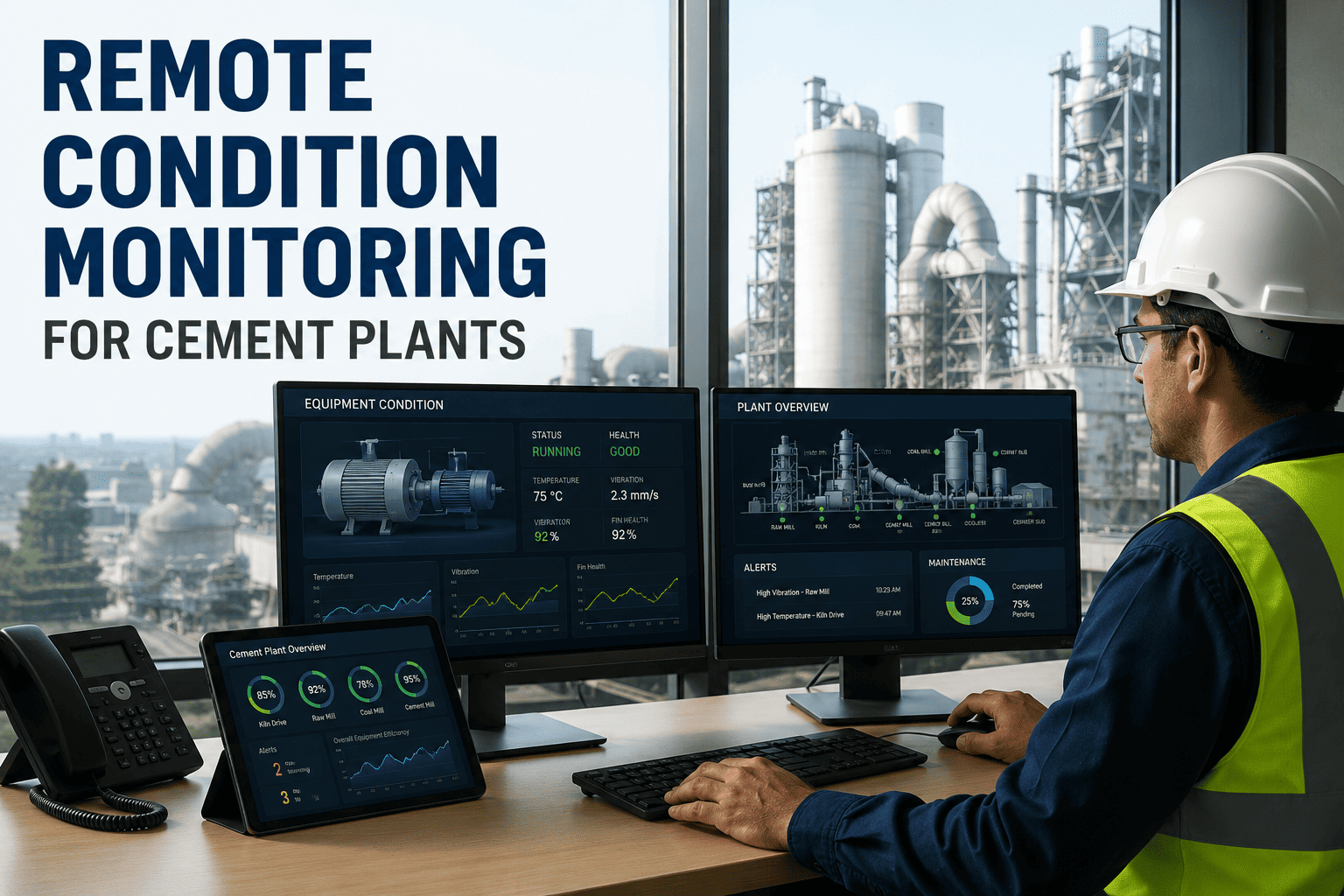
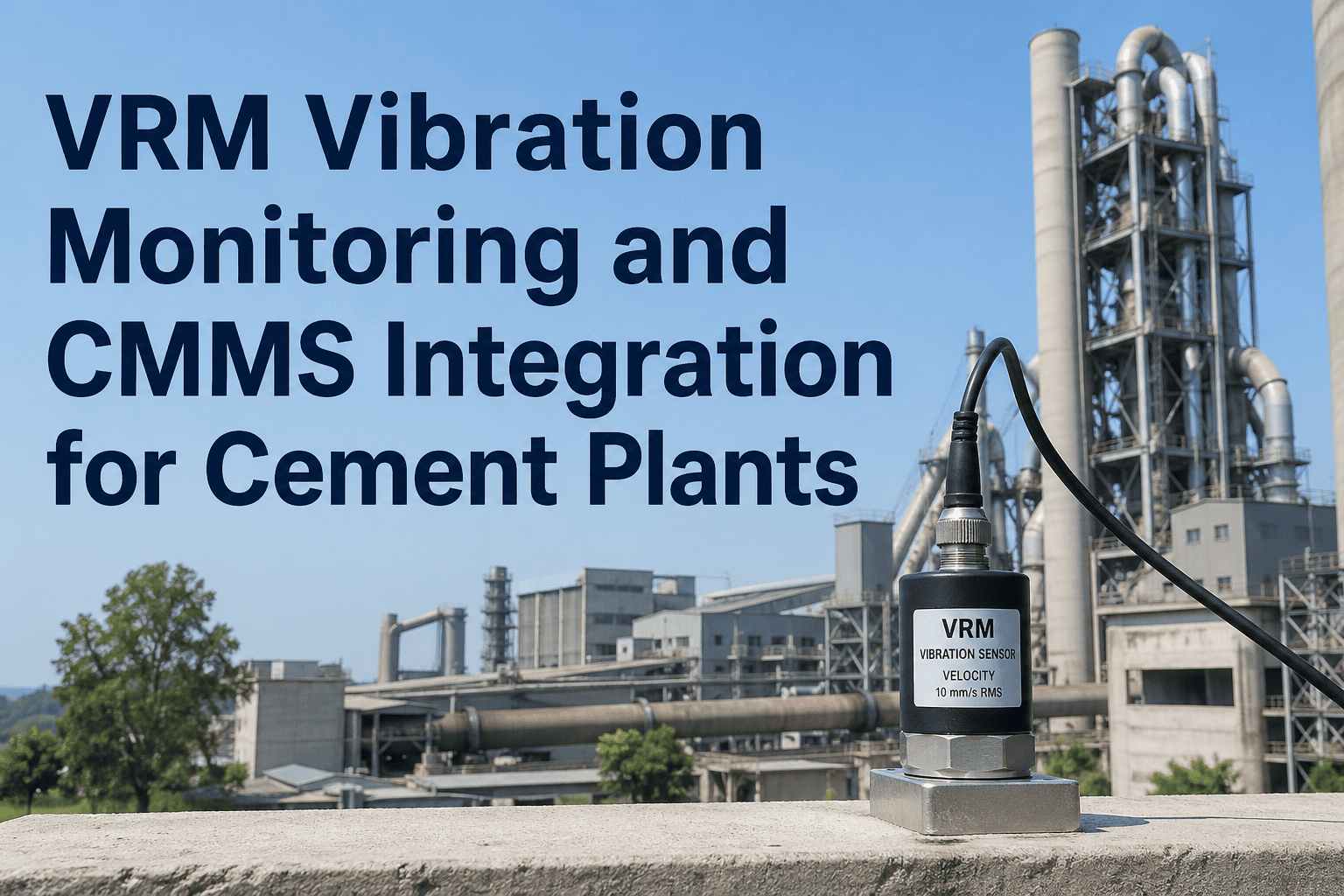
Cement plants relying on fixed-interval schedules lose 12% to 18% of available kiln production hours to unplanned stoppages that condition monitoring would have predicted 4 to 8 weeks in advance. Vibration analysis, thermal imaging, and oil analysis are established diagnostic instruments that — when integrated with a CMMS — convert sensor signals into scheduled work orders before failure occurs. Book a demo to see how Oxmaint integrates multi-sensor condition data across your plant.
average advance warning before critical kiln bearing failure from continuous vibration monitoring
3.4x
lower cost per repair event for condition-triggered versus reactive emergency maintenance
68%
reduction in unplanned kiln stops within 12 months of integrated condition monitoring
$240K
average annual saving from condition-based maintenance replacing calendar-based overhaul schedules
Three Condition Monitoring Techniques Every Cement Plant Needs
Each technique detects different failure modes. No single technique covers all critical assets — the highest-performing plants deploy all three connected to one CMMS.
Vibration on trunnions and drive gearbox. Thermal scanning of shell for refractory hot zones. Oil analysis on main gear unit quarterly.
Lead time: 4–8 weeks
Ball Mill
VibrationOil
Vibration on trunnion bearings and girth gear pinion. Oil analysis on lube system. Girth gear backlash trending from spectrum data.
Lead time: 3–6 weeks
Vertical Roller Mill
VibrationOil
Vibration on main gearbox and separator bearings. Oil analysis on gearbox lube. Roller hydraulic pressure as secondary indicator.
Lead time: 3–5 weeks
ID & Cooler Fans
VibrationThermal
Vibration on bearing housings and drive motor. Thermal on motor windings. Blade buildup imbalance is the primary fault mode.
Lead time: 2–4 weeks
Preheater Cyclones
Thermal
Thermal imaging of cyclone bodies and riser ducts for buildup and blockage prediction. Acoustic sensors on cone discharge as complementary technique.
Lead time: 1–3 weeks
Drive Motors & Switchgear
VibrationThermal
Vibration on motor bearings and coupling. Thermal on motor frame and switchgear panels for electrical fault detection.
Lead time: 2–5 weeks
From Sensor Signal to Work Order: The Integration Gap
The operational gap is not sensor coverage — it is the manual process of translating readings into work orders. Data outside the CMMS creates 3 to 6 week delays between anomaly detection and intervention — long enough for a developing fault to become critical.
1
Sensor Data Captured
Vibration spectra, thermal images, or oil counts recorded — by continuous sensor, portable instrument, or lab sample.
→
2
Threshold Comparison
Reading compared against asset-specific thresholds in Oxmaint — ISO 10816 vibration limits, thermal delta-T, and oil particle limits.
→
3
Automatic Work Order Created
Oxmaint creates a condition-triggered work order assigned to the correct technician, linked to asset history — no manual translation required.
→
4
Intervention Planned & Executed
Technician receives the work order with full asset context and prior condition readings — planned maintenance executed before failure.
Condition Monitoring KPIs: Without vs With CMMS Integration
Metric
Integrated with Oxmaint
Unintegrated Monitoring
Time: anomaly to work order
Under 1 hour — threshold breach triggers automatic work order with asset context.
3 to 6 weeks — analyst reviews data, creates report, team manually creates work order.
Condition trend visibility
All readings stored against the asset record. Trend lines visible across months of data on the CMMS dashboard.
Readings in separate software. Trend analysis requires manual export. No link to maintenance history.
Multi-technique correlation
Vibration, thermal, and oil data on the same asset record. Cross-technique patterns visible to any technician.
Each technique in separate system. Correlation requires manual comparison by a specialist.
Data present but not actioned fast enough. Failures occur between review cycles.
Maintenance cost per asset
3.4x lower cost per event. Planned interventions use scheduled windows and pre-staged parts.
Emergency premiums on unplanned events. Short-notice parts. Overtime labour common.
Implementing Condition Monitoring: Four Steps to Full Coverage
1
Map Critical Assets and Failure Modes
Start with assets whose failure creates the longest downtime — kiln, ball mill, preheater ID fan. Set initial alarm thresholds based on ISO 10816 for vibration and OEM specs for oil. Book a demo to see Oxmaint threshold configuration.
2
Establish Baselines Across All Three Techniques
Collect 60 to 90 days of readings in known-good condition. Oxmaint stores baseline data against the asset record and calculates deviation thresholds automatically as the dataset matures.
3
Connect Sensor Data to Oxmaint Work Order Engine
Oxmaint integrates with vibration systems via OPC-UA, thermal cameras via API, and accepts manual oil analysis entries. Threshold breaches automatically generate condition work orders — eliminating the manual translation step that delays most cement plant interventions.
4
Review Trending Data Monthly and Refine Thresholds
Monthly review of condition trends against repair findings refines thresholds to each asset's specific characteristics — reducing false alarms and improving detection accuracy. Book a demo to see the condition trending dashboard.
12-Month Performance Results
Reduction in unplanned kiln stops within 12 months of integrated condition monitoring68%
Reduction in time from anomaly detection to work order creation74%
Reduction in emergency repair premiums versus pre-monitoring baseline61%
Of condition-triggered work orders completed before equipment failure occurred82%
QWhat vibration measurement points are most critical on a rotary kiln?
The four highest-value points are the two trunnion bearing housings per support station, the drive gearbox output shaft bearing, and the pinion shaft bearing. Radial and axial measurements differentiate misalignment, imbalance, and bearing fault signatures. Book a demo to see Oxmaint's kiln vibration configuration.
QHow often should oil samples be taken on cement plant gearboxes?
High-criticality gearboxes — kiln main gear unit, ball mill trunnion lubrication, VRM gearbox — require quarterly minimum, monthly during the first 12 months or after an overhaul. Oxmaint tracks sample due dates as PM tasks and stores lab results for trend analysis.
QCan Oxmaint accept data from existing vibration monitoring hardware?
Yes. Oxmaint integrates via OPC-UA and REST API with online systems, and accepts manual readings from portable instruments on mobile work orders. All data routes to the same asset condition record. Book a demo to confirm compatibility.
QWhat alarm thresholds should be used for kiln trunnion bearing vibration?
ISO 10816-3 is the standard framework. For kiln trunnions at 1 to 5 RPM, 2.8 mm/s RMS alert and 4.5 mm/s RMS alarm are typical starting points — refined against the specific kiln's baseline, which Oxmaint captures automatically during the initial monitoring period.
QHow does thermal imaging detect refractory wear on a rotary kiln?
Shell surface temperature directly reflects refractory thickness. A hot spot above 320°C indicates reduced brick thickness. Continuous scanning generates a temperature profile stored in Oxmaint — threshold breaches automatically trigger a refractory inspection work order.
Oxmaint connects vibration, thermal, and oil data to asset records and generates condition-triggered work orders automatically — across your full equipment hierarchy. Book a 30-minute demo for your plant's asset register.