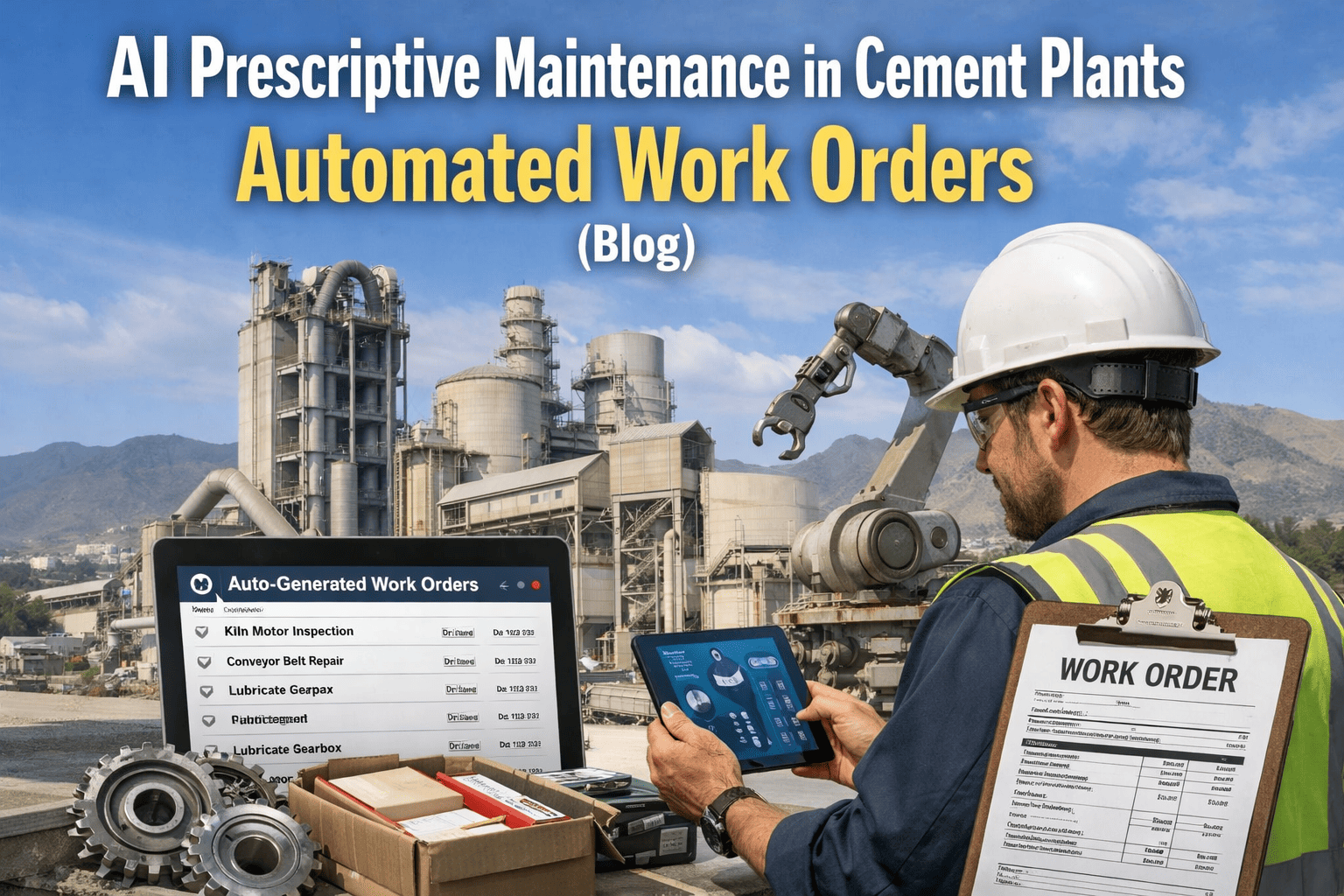
Cement plants that depend on corrective and time-based maintenance lose between $180,000 and $340,000 per unplanned kiln stop — costs that compound across 8 to 15 unplanned events per year in facilities without AI-driven failure prediction. The shift from reactive to prescriptive maintenance is not a technology upgrade: it is a fundamental change in how plant operations teams use equipment data, closing the gap between a degrading girth gear and a shutdown decision from weeks to hours. Book a demo to see how Oxmaint's AI prediction engine and NLP work order system operate against your cement plant's actual equipment failure history.
AI Maintenance Technology Compliance by Region
AI-driven maintenance documentation and predictive maintenance records are increasingly recognised by regulatory frameworks as valid evidence of due diligence in equipment risk management. Oxmaint generates compliant AI-assisted maintenance records automatically — timestamped, asset-linked, and audit-ready without any manual reconstruction.
| Region | Key Frameworks | Oxmaint AI Coverage |
|---|---|---|
| USA | OSHA 29 CFR 1910.147, MSHA predictive maintenance guidance, EPA equipment monitoring requirements | AI-generated work orders with full audit trail, automated failure prediction records, digital PM compliance evidence |
| UAE | OSHAD-SF equipment risk management, Civil Defence predictive inspection acceptance, SASO digital records | AI condition alerts linked to asset records, automated inspection scheduling, multi-site AI dashboard |
| India | Factories Act 1948 Schedule III, BIS IS 14489 condition monitoring guidance, DGMS technology adoption directives | AI-assisted statutory inspection registers, predictive maintenance logs, automated work order generation from sensor alerts |
| Germany | BetrSichV risk-based inspection, DIN EN 13306 predictive maintenance definitions, TUV condition assessment | AI risk scoring per DIN standards, automated inspection scheduling, condition trend archives per asset |
| UK | PUWER 1998 risk-based maintenance, BS EN 13306 predictive maintenance, HSE condition monitoring guidance | AI-flagged inspection triggers, digital condition records, automated PUWER compliance scheduling |
| Canada | CSA Z1000 maintenance management, Provincial OHS condition monitoring Acts, NRCan energy efficiency directives | AI-driven PM optimisation, automated compliance reporting, portfolio-level predictive analytics dashboard |
Oxmaint delivers AI-generated maintenance documentation that satisfies inspection evidence requirements across all six regions — predictive alerts, automated work orders, and condition trend records produced in real time from live sensor and equipment data without any manual transcription. Book a demo to see how the Oxmaint AI prediction engine maps to your plant's compliance framework and equipment risk register.
The Four AI Maintenance Modes: Reactive to Prescriptive
Most cement plants operate between reactive and preventive maintenance — repairing after failure or following fixed-interval schedules regardless of actual equipment condition. AI maintenance technology adds two higher capability tiers that eliminate the guesswork between last inspection and next failure event. Book a demo to see where your current maintenance programme sits on this maturity scale and what moving to the next tier delivers in cement plant ROI.
Predictive Maintenance
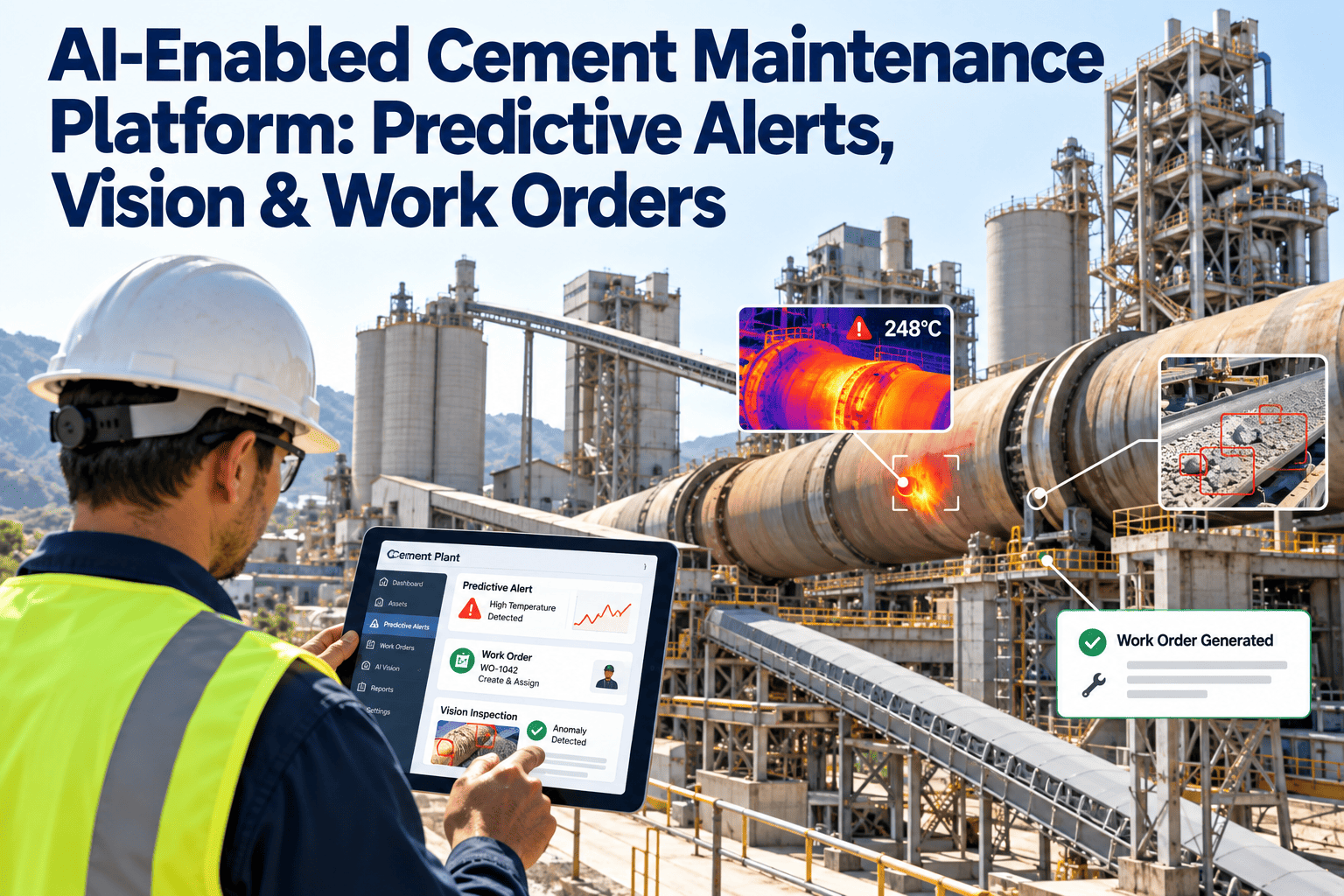
Sensor data from kiln drives, girth gear assemblies, ball mill motors, and preheater fan bearings feeds the Oxmaint AI model continuously. The model identifies developing failure signatures — rising vibration harmonics, thermal anomaly progression, motor current deviation — 3 to 8 weeks before a critical event occurs. Maintenance teams receive an alert with a predicted failure window, recommended action, and required parts list before the technician leaves the office.
Prescriptive Maintenance
Prescriptive maintenance goes further than prediction — it tells maintenance teams exactly what to do, when to do it, and which sequence of interventions produces the lowest total cost outcome. Oxmaint's prescriptive engine analyses failure probability curves, shutdown windows, production schedules, and spare parts availability to generate a ranked action plan. The system eliminates the interpretive step between a sensor alert and a maintenance decision.
NLP Work Order Generation
Natural Language Processing converts technician field notes, inspection observations, and sensor alert descriptions into structured work orders automatically. A technician recording "high-pitched noise from kiln tyre A retaining ring, intermittent at low speed" generates a work order with asset linkage, fault code classification, recommended corrective action, required parts, and priority assignment — all without manual data entry. NLP closes the gap between observation and CMMS record in under 60 seconds.
Digital Twin Integration
A digital twin replicates the full physical behaviour of a rotary kiln, ball mill, or preheater system in a virtual model that updates in real time from live sensor feeds. Oxmaint integrates with digital twin outputs to compare virtual-versus-actual equipment behaviour, surface anomalies that physical sensor readings alone would miss, and simulate the outcome of maintenance interventions before committing resources. Digital twins reduce cement plant shutdown scope surprises by 34%.
See Oxmaint AI Running Against Your Plant's Failure History
Oxmaint configures AI prediction models against your plant's specific equipment classes, sensor feeds, and historical failure records — not a generic industry template. Book a demo to see the prediction engine calibrated to your kiln, mill, and cooler failure modes in a live demonstration environment.
Four Reactive Maintenance Failures Costing Cement Plants Millions Annually
Girth Gear Failures Consuming 40% of Annual Maintenance Budget
Cement plant girth gear assemblies fail without warning in reactive maintenance environments because the early vibration and thermal signatures of developing damage go undetected. A single girth gear failure event costs $180,000 to $420,000 in parts, specialist labour, and production loss. Plants with AI vibration trend monitoring catch mesh deterioration 4 to 6 weeks early, reducing repair scope from full replacement to targeted tooth surface correction. Book a demo to see Oxmaint AI applied to your plant's girth gear monitoring configuration.
Refractory Lining Replacement Driven by Visual Inspection Gaps
Reactive refractory management replaces kiln lining sections based on fixed-interval schedules and visual spot checks during planned shutdowns, missing thermal hotspot development between inspection windows. Undetected refractory failure causes kiln shell overheating, forced emergency stops, and shell deformation requiring $600,000 to $1.2 million in structural repairs. Continuous thermal monitoring with AI anomaly detection identifies hotspot development 2 to 4 weeks before critical temperature thresholds are breached.
Preheater Cyclone Blockages Causing Unplanned Production Stops
Preheater cyclone blockages are the leading cause of unplanned kiln stoppages globally, typically developing over 6 to 12 hours before causing a full production stop that costs $90,000 to $160,000 per event. Without AI differential pressure trend analysis, blockage development is invisible until gas velocity drops and material build-up reaches the point of complete obstruction. Plants monitoring pressure differentials with AI threshold alerting identify blockage risk 4 to 8 hours before a forced stop event.
Ball Mill Bearing Failures Disrupting Grinding Circuit Availability
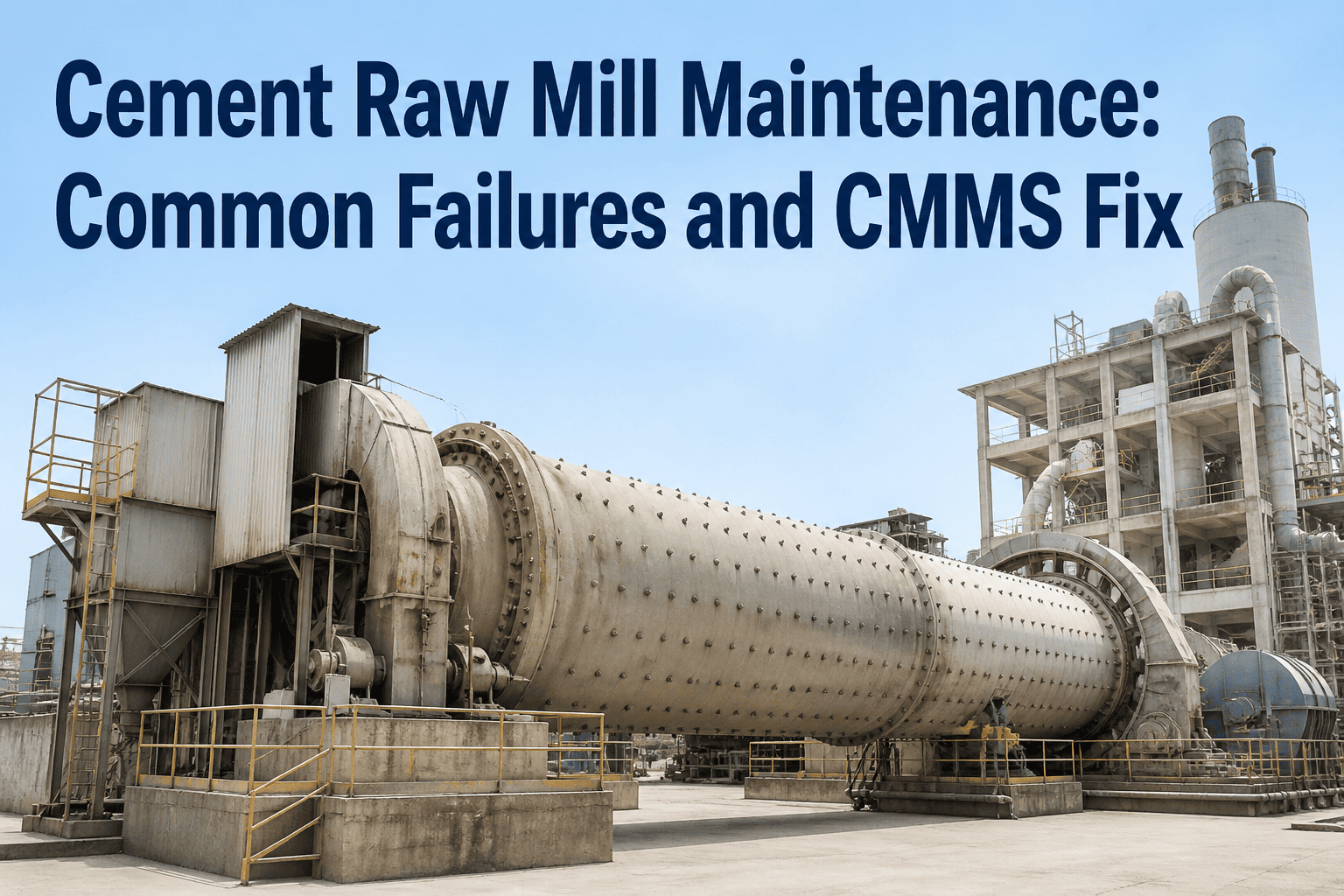
Ball mill trunnion bearing failures are the single most common cause of grinding circuit downtime in cement operations, with an average replacement and installation cost of $85,000 to $130,000 per event excluding production loss. Reactive maintenance approaches cannot detect the subsurface fatigue damage that precedes bearing failure. AI vibration analysis identifies the specific harmonic frequencies associated with trunnion bearing race deterioration 3 to 5 weeks before failure, converting a $130,000 emergency event into a $22,000 planned replacement during a scheduled shutdown window. Book a demo to see Oxmaint AI bearing failure prediction applied to your grinding circuit equipment register.
How Oxmaint Delivers AI-Prescriptive Maintenance for Cement Plants
Oxmaint's AI maintenance platform integrates sensor data, work order history, and equipment performance records into a single prediction and prescription engine that tells cement plant maintenance teams exactly what to do and when to do it — without requiring data science expertise on the plant side. Book a demo to walk through the AI configuration process for your plant's equipment hierarchy and sensor architecture.
Oxmaint AI Module Capabilities for Cement Plant Operations
Each Oxmaint AI module targets a specific failure or inefficiency pattern in cement plant maintenance. Together they build a continuous intelligence layer from raw sensor data through to prescriptive work order execution and outcome learning. Book a demo to see each module mapped to your plant's equipment classes, sensor coverage, and current maintenance capability gaps.
Deploy AI Maintenance Intelligence Across Your Cement Plant
Oxmaint AI prediction and prescriptive modules integrate with your existing sensor infrastructure and CMMS data within the first 6 weeks of deployment — no rip-and-replace, no production downtime, no data science team required on the plant side. Book a demo to see the AI configuration process mapped to your plant's sensor coverage and equipment failure history.
Reactive vs AI-Prescriptive Maintenance: Cement Plant Performance Comparison
The operational and financial gap between reactive and AI-prescriptive maintenance is measurable at every level of cement plant operations — from individual equipment events to annual capital budget accuracy and workforce productivity. Book a demo to see how these performance differences apply to your plant's current maintenance cost structure and production targets.
| Performance Factor | AI-Prescriptive with Oxmaint | Reactive Maintenance |
|---|---|---|
| Kiln Failure Warning Time | AI prediction engine provides 3 to 8 weeks advance warning for developing kiln drive, girth gear, and trunnion bearing failures. Maintenance team has time to plan intervention, source parts, and align with production schedule — no emergency response required. | Zero advance warning. Failure events occur without prediction, triggering emergency response protocols at 4.8x the cost of planned intervention. Average unplanned kiln stop costs $180,000 to $340,000 per event in combined repair and production loss. |
| Work Order Creation Speed | NLP engine converts field observations and sensor alerts to structured work orders in under 60 seconds. Asset linkage, fault code, corrective action, and parts list populated automatically. Zero manual CMMS data entry for routine work order creation across the full maintenance team. | Work orders created manually at desktop, typically 2 to 6 hours after the field observation. Missing asset linkage, incomplete fault codes, and absent parts data are common. CMMS records reflect a simplified version of what technicians actually observed at the equipment. |
| Refractory Management Cost | Continuous thermal AI monitoring identifies kiln shell hotspot development 2 to 4 weeks before critical threshold breach. Targeted refractory repair during the next scheduled window costs $40,000 to $80,000 versus $600,000 to $1.2 million for emergency shell deformation repair after undetected failure. | Refractory managed by fixed-interval replacement and visual inspection. Hotspot development between inspection windows is invisible. Emergency shell deformation events occur on average every 3 to 4 years per kiln in plants without continuous thermal monitoring and AI anomaly detection. |
| CapEx Planning Accuracy | AI-driven Remaining Useful Life calculations per component feed directly into CapEx forecasting dashboards. Capital budget variance falls to below 7%. Refurbish-versus-replace decisions informed by actual degradation rate data rather than age-based assumptions or vendor lifecycle estimates. | Capital plans built from equipment age, fixed replacement schedules, and informal engineering judgement. Budget variance of 18% to 25% is common. Premature replacement of serviceable assets and delayed replacement of genuinely end-of-life equipment both inflate CapEx spend by an average of 19%. |
| Maintenance Backlog Growth | Prescriptive engine prioritises work orders by failure risk, production impact, and available resources. Planned maintenance ratio reaches above 82% within 6 months. Maintenance backlog shrinks because AI-identified interventions are completed in planned windows rather than accumulating as deferred reactive tasks. | Reactive events continuously displace planned work, growing the maintenance backlog by 8% to 12% per quarter. Deferred preventive tasks compound into larger corrective events. Planned-versus-reactive ratio in reactive maintenance environments averages 45% to 55% planned — the inverse of industry benchmark targets. |
| Technician Diagnostic Time | Technicians arrive at equipment with AI-generated fault diagnosis, recommended corrective action, required parts, and prior repair history all visible on mobile device. Diagnostic time reduces by 67%. High-experience knowledge embedded in AI model means junior technicians perform at near-senior level from day one of deployment. | Technicians diagnose without prior failure pattern context. Average diagnostic time of 90 to 140 minutes per complex fault event. Knowledge gaps between experienced and junior technicians result in inconsistent repair quality and repeat failure events on the same asset within 6 months. |
AI Maintenance ROI Results: 12-Month Benchmarks from Cement Plant Deployments
These performance benchmarks represent measured outcomes from cement plants that deployed Oxmaint AI prediction and prescriptive maintenance modules across their full equipment hierarchy over a 12-month measurement period following go-live.
AI Maintenance Technology Investment: Costs Against Returns
Each Oxmaint AI module is included in the platform — no separate AI licensing, no additional analytics fees. The table below outlines implementation effort, annual value generated in cement plant operations, and the typical payback period calculated from avoided downtime, emergency repair reduction, and CapEx planning improvements. Book a demo to build a site-specific ROI model for your plant's equipment profile and annual maintenance spend.
| AI Module | Implementation Effort | Annual Value Delivered | Payback Period |
|---|---|---|---|
| Failure Prediction Engine | 6 weeks with sensor integration and model training | Avoid 6 to 10 unplanned stops per year $260,000 annual saving per plant |
Under 2 months |
| NLP Work Order Engine | 2 weeks configuration and technician onboarding | 58% reduction in work order creation time $48,000 annual labour efficiency saving |
Under 1 month |
| Prescriptive Action Generator | 4 weeks with production schedule integration | Planned maintenance ratio above 82% $140,000 annual emergency repair reduction |
2 months |
| Digital Twin Interface | 8 weeks with existing digital twin connection | 34% shutdown scope surprise reduction $380,000 per capital cycle in avoidable scope overrun |
4 months |
| Vibration Trend Analysis | 4 weeks with vibration sensor connection | Girth gear and bearing failures predicted 3 to 8 weeks early $190,000 annual in avoided emergency replacements |
3 months |
| Remaining Useful Life Calculator | 5 weeks with asset degradation data import | CapEx variance below 7% versus 22% baseline $320,000 per cycle in avoided premature replacement |
5 months |
Frequently Asked Questions: AI Maintenance for Cement Plants
QWhat sensor infrastructure does Oxmaint AI require to operate at a cement plant?
QHow long before Oxmaint AI prediction accuracy reaches a reliable operational level?
QDoes AI maintenance documentation satisfy regulatory inspection requirements globally?
QCan technicians without data science knowledge operate the Oxmaint AI system effectively?
QHow does the Oxmaint AI prescriptive engine handle competing maintenance priorities?
QWhat is the implementation timeline for Oxmaint AI at an operating cement plant?
Continue Reading: Trending Technology Resources for Cement Plants
These resources extend the AI maintenance conversation into the broader technology landscape — from the smart plant trends driving Industry 4.0 adoption through to condition monitoring infrastructure and workforce knowledge management programmes that determine how effectively AI tools are deployed and sustained.
Put AI Maintenance Intelligence to Work Across Your Cement Plant
Oxmaint AI prediction, NLP work orders, and prescriptive maintenance modules deploy across your full asset hierarchy within 6 weeks — no production downtime, no data science team required, no rip-and-replace of existing sensor infrastructure. Book a 30-minute demo to see the AI prediction engine calibrated to your plant's equipment failure history and sensor coverage in a live demonstration environment.