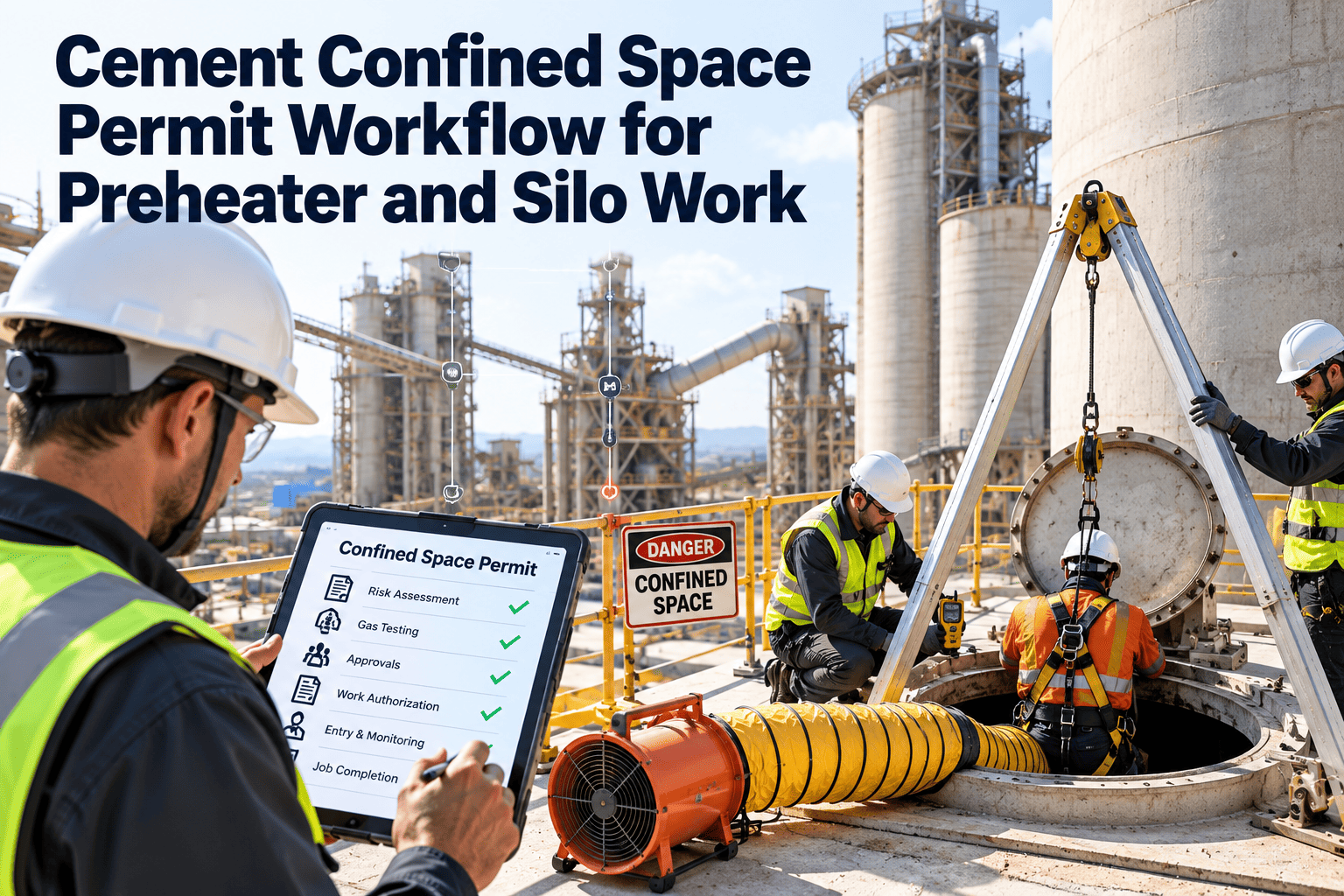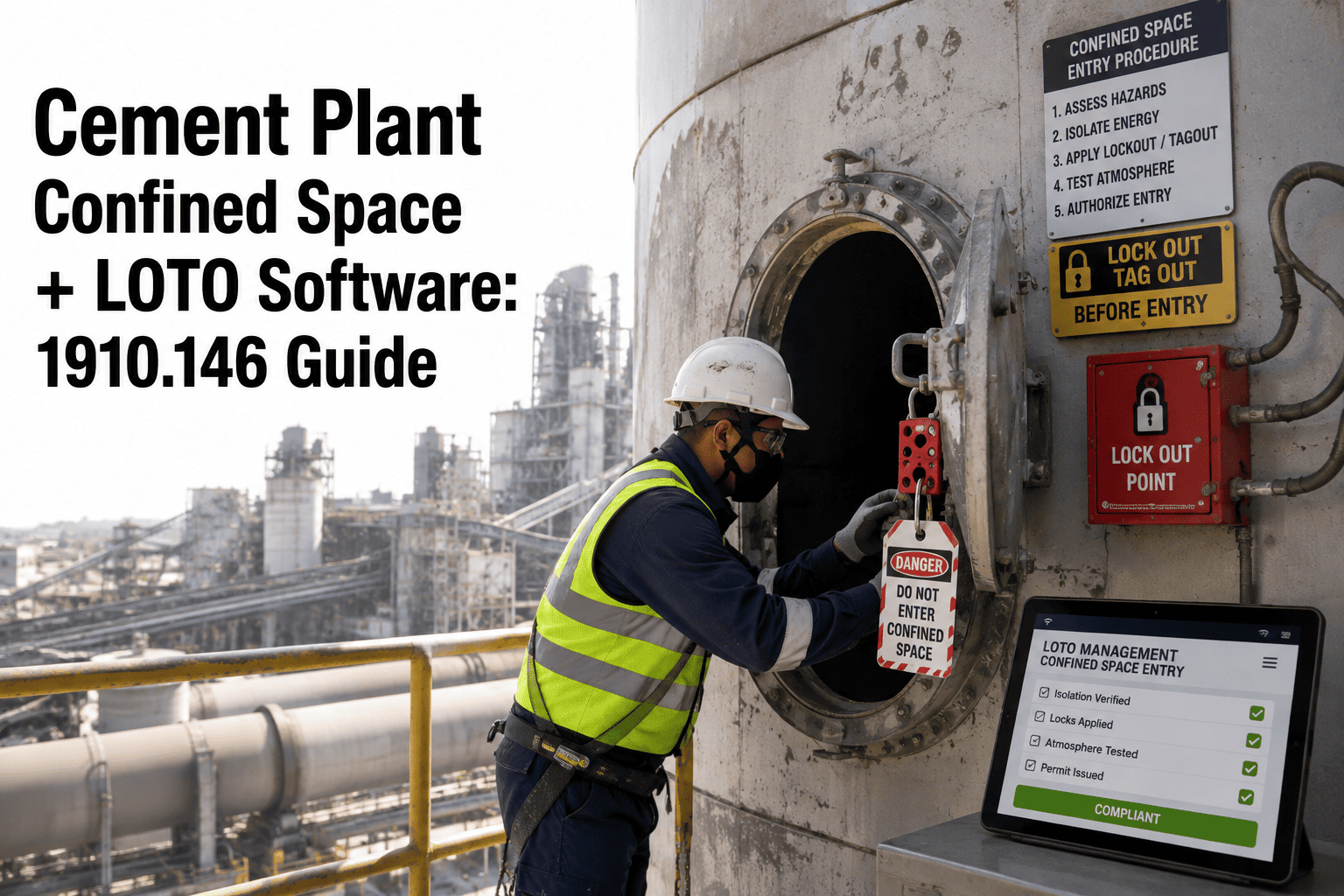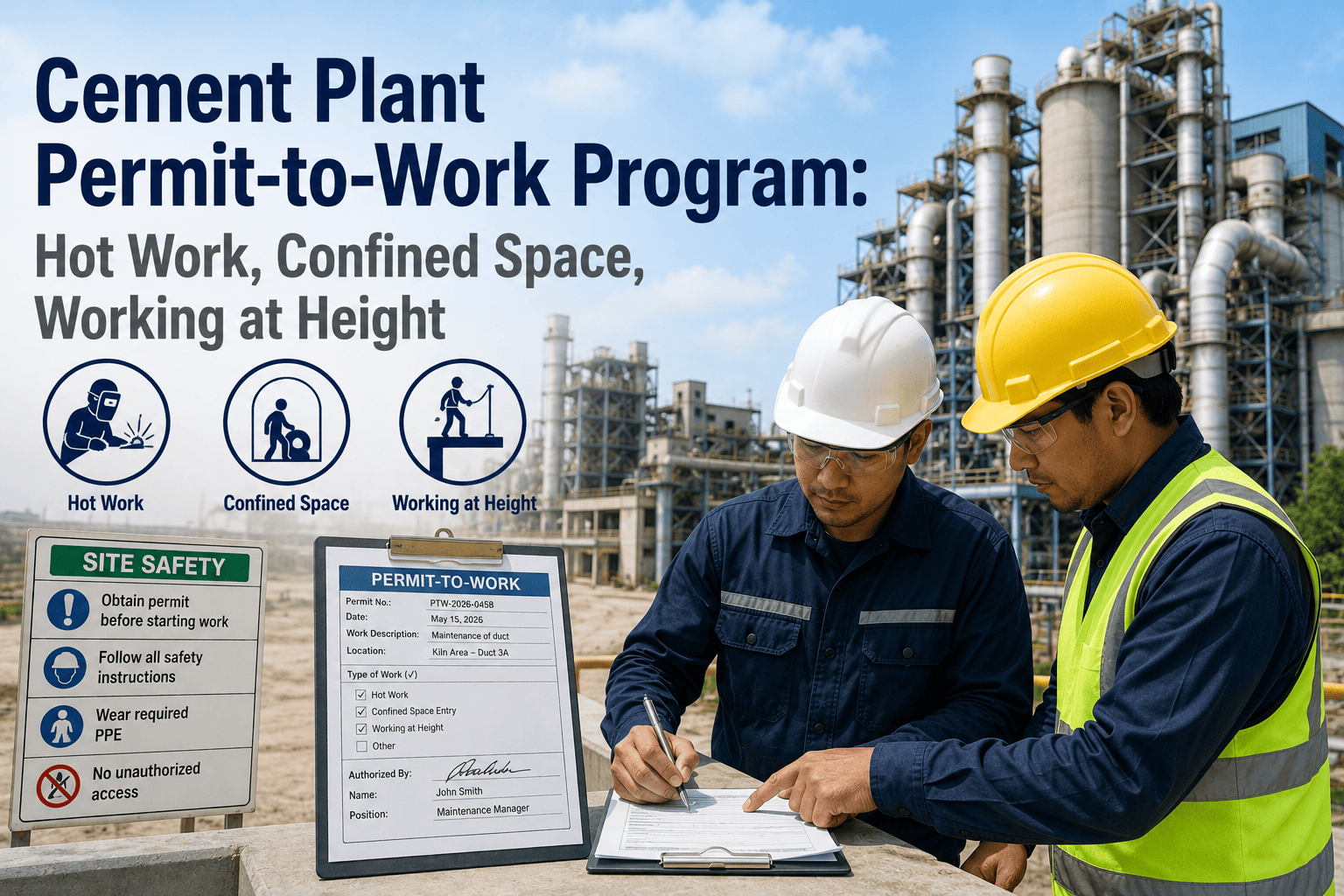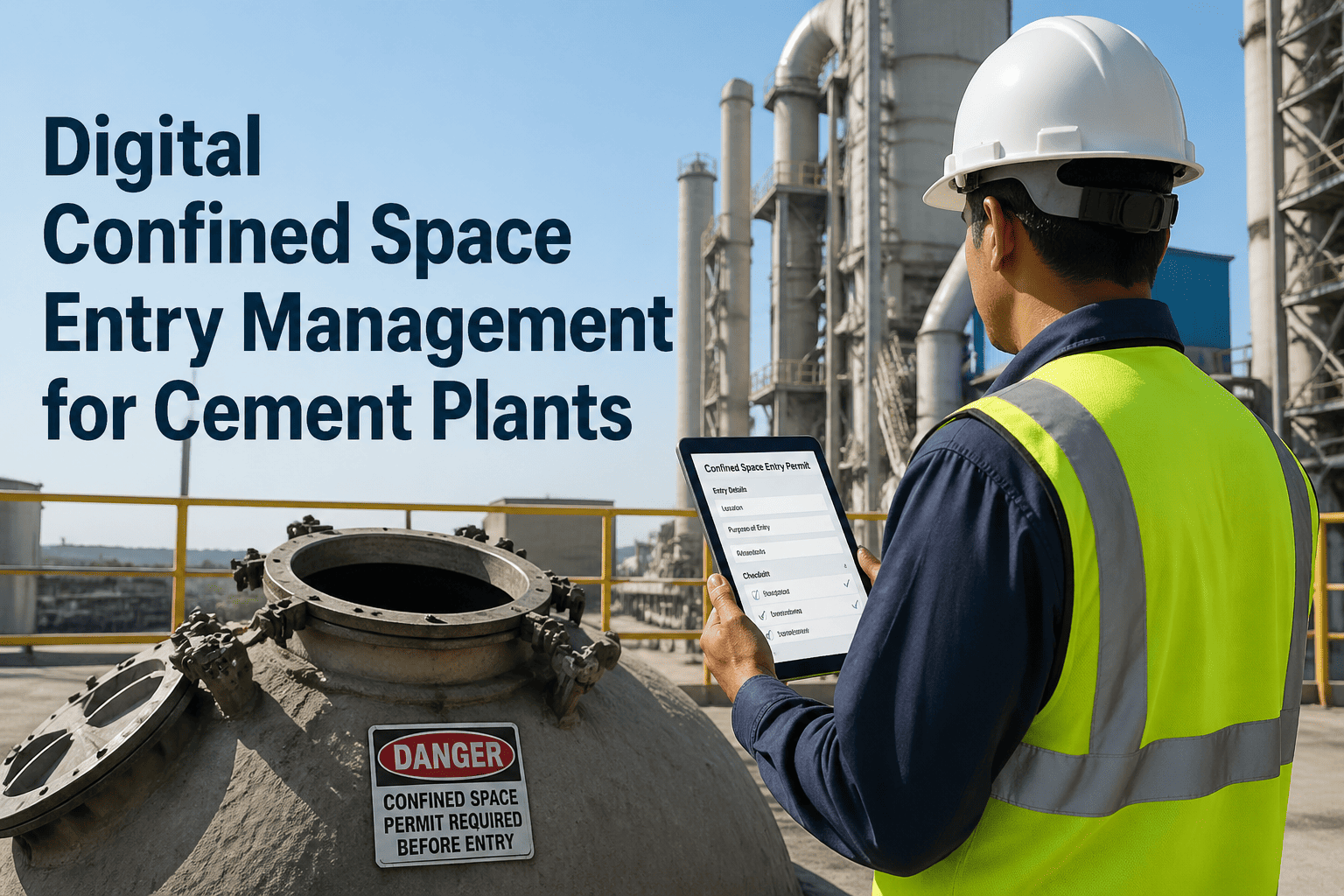
Confined space entry in a cement plant is among the most controlled activities in industrial safety — and for good reason. Cement plants contain hundreds of permit-required confined spaces: kiln hoods, preheater cyclones, silos and bins, ball mill drums, clinker cooler plenums, dust collector hoppers, and raw meal blending vessels. These spaces combine atmospheric hazards (oxygen deficiency, carbon monoxide from incomplete combustion, hydrogen sulfide in waste-derived fuel systems) with physical hazards (engulfment risk from stored powder, elevated temperature, and restricted rescue access) in ways that make standardized entry procedures non-negotiable. OSHA 1910.146 establishes the minimum program requirements, but a permit template that reflects the specific atmospheric and physical hazards found in cement plant confined spaces is what keeps entrants safe during actual entry. Maintenance teams that have moved from paper permit binders to digital permit workflows in OxMaint's CMMS consistently report cleaner atmospheric test records, faster entry authorization, and complete audit trails that satisfy regulatory inspectors without the week of record-hunting that paper-based programs require.
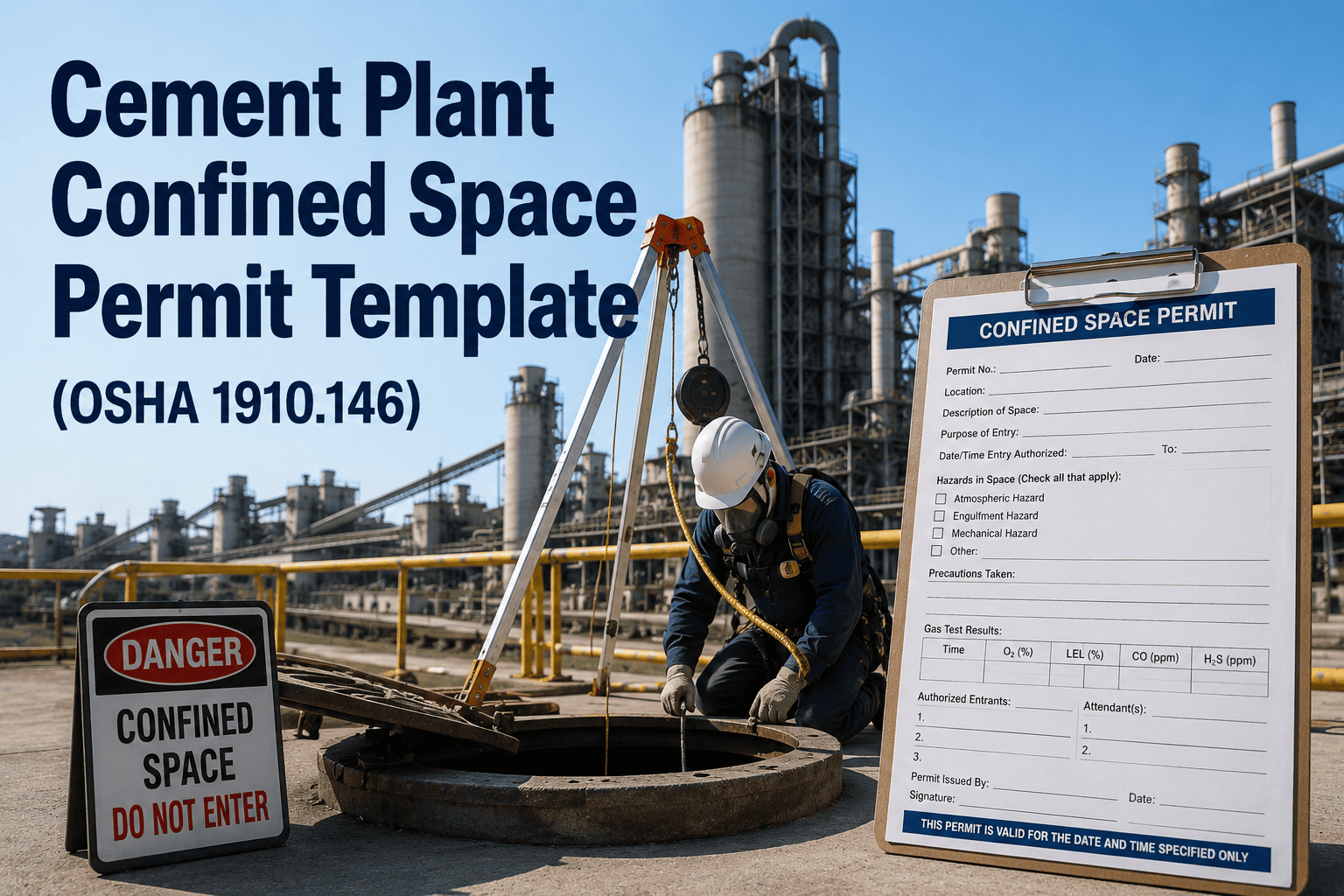
Cement Plant Confined Space Permit Template (OSHA 1910.146)
Free editable confined space entry permit for cement plant operations — covering atmospheric testing, attendant duties, rescue plan, and CMMS-linked sign-off. Available in Excel, Word, and PDF.
Cement Plant Confined Spaces — Hazard Classification Map
Refractory dust, residual CO, limited rescue access from ends only
Powder engulfment is the leading fatal hazard; bridging and rat-holing create sudden collapse risk
Process gas entrapment; thermal injury risk from residual heat in refractory
Accumulated filter dust can flow like liquid; oxygen displacement by CO2 from smoldering
Ball charge shift during entry; limited egress at trunnion openings; grinding media removal required before entry
Residual hot clinker on grates; CO from incomplete combustion; overhead clinker fall hazard through grate gaps
Confined Space Permit Template — All Required OSHA 1910.146 Fields
The permit covers all mandatory elements of OSHA 1910.146(f). No field is optional for permit-required confined spaces. The template supports multi-entrant groups and includes a rescue plan attachment block.
OxMaint's digital confined space permit captures atmospheric test readings, entrant sign-in/sign-out, and attendant confirmation on mobile. Permits are auto-filed against the work order and the space's asset record. Entry log is always available for audit — no paper register to reconstruct.
Attendant Duties — What OSHA 1910.146 Requires and How Digital Permits Enforce It
The attendant is the entrant's primary safety link. Paper programs frequently fail at attendant duty compliance — distractions, shift changes, and undocumented absence create gaps that are only discovered after an incident.
| Attendant Duty (OSHA 1910.146) | Paper Permit Gap | OxMaint Digital Enforcement |
|---|---|---|
| Remain outside permit space during entry | Not verifiable — no record of attendant location | Attendant check-in required on mobile at entry start and every 30 minutes |
| Communicate with entrants at defined intervals | Interval requirement often not documented in paper permits | Communication interval recorded in permit log with timestamps |
| Track entrant count at all times | Manual sign-in sheet; gaps at shift change | Real-time entrant count in digital permit; alerts on sign-in discrepancy |
| Initiate rescue if conditions change | Alarm procedure described in paper but not tested | Emergency escalation button on mobile permit with direct contact to rescue team |
| Deny unauthorized entry | No access control on paper permit binder | Permit active status visible on mobile; unauthorized entry cannot be logged |
Atmospheric Testing Standards for Cement Plant Confined Space Entry
Atmospheric testing requirements differ between general industry guidelines and the specific conditions in cement plant spaces. The permit template includes test parameters for each cement plant space type.
Kiln interiors and preheater spaces are primary O2-deficient risk areas due to combustion gas displacement. Test at all levels — top, middle, and bottom of the space.
Clinker coolers, kiln outlets, and preheater cyclones carry residual CO from incomplete combustion. CO testing is mandatory before and during entry in these spaces.
Coal-associated confined spaces (mill housing, coal storage tunnels) require LEL testing with instrument calibrated for coal dust. Propane-calibrated meters are not adequate.
Relevant in plants using alternative fuels or waste-derived fuel with organic content. Biogas accumulation in covered fuel storage areas has produced fatal H2S concentrations.
Frequently Asked Questions
Run Confined Space Entry With a Permit System That Leaves No Gap in Attendant Coverage, Atmospheric Records, or Rescue Planning
OxMaint gives cement plant safety and maintenance teams a digital PRCS permit workflow with OSHA 1910.146 structure, atmospheric test logging, entrant tracking, attendant check-in, and automatic record filing. Download the free template and see how the digital version eliminates every paper permit failure point.