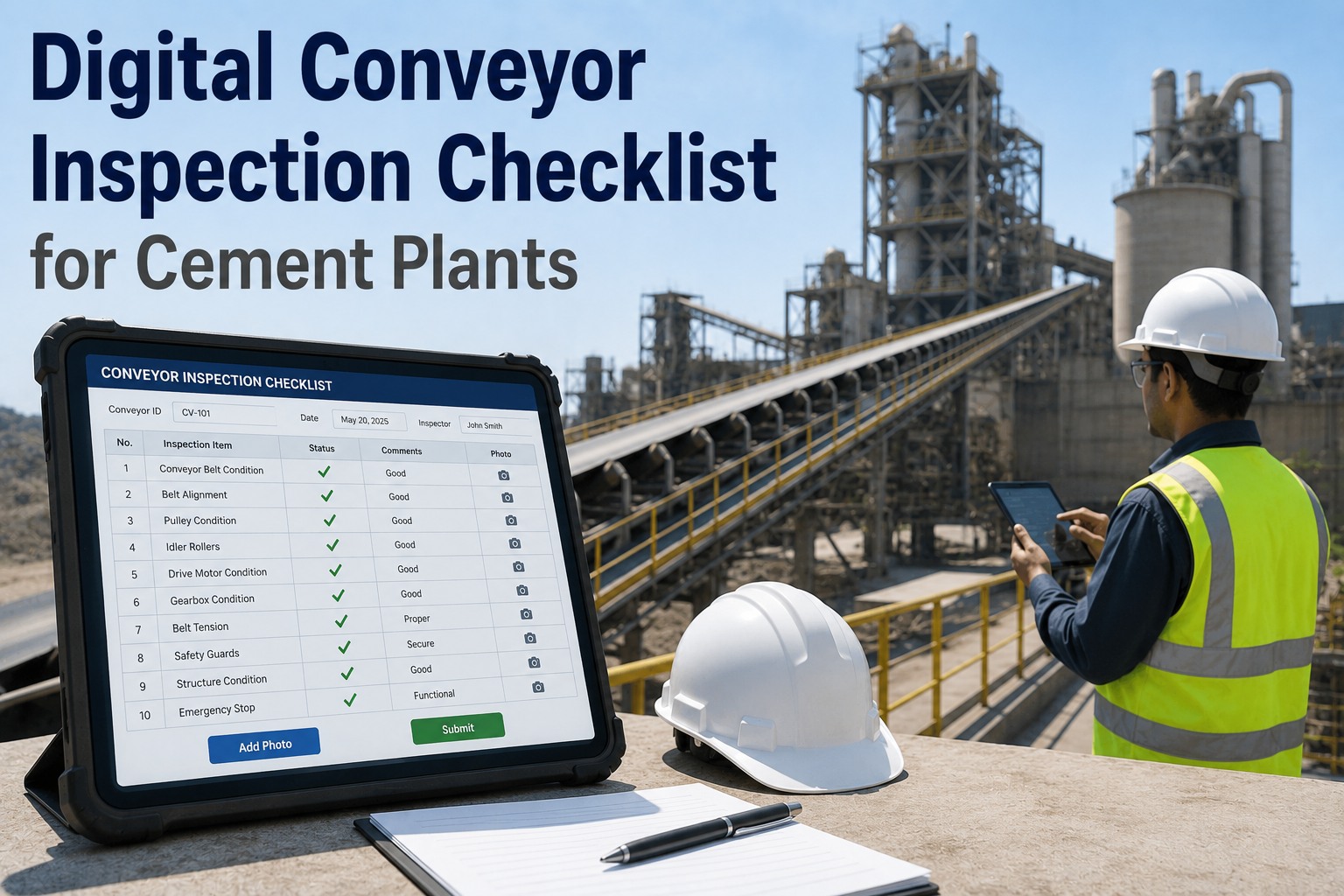
Somewhere in every cement plant there is a filing cabinet, a stack of clipboards, or a shared folder of scanned sheets that nobody has opened in months — until an auditor asks for proof that an inspection happened on a specific date. Paper inspection records can confirm a box was checked, but they rarely prove what condition the asset was actually in, who saw it, or when. Retiring paper for a photo-first, timestamped digital inspection process closes that accountability gap without adding extra work for your team. This guide walks through what changes when inspections go digital and how to plan the switch — start a free trial to see the workflow on your own plant.
CMMS Reliability Guide · Cement Plants
Could you prove, right now, what condition an asset was in six months ago?
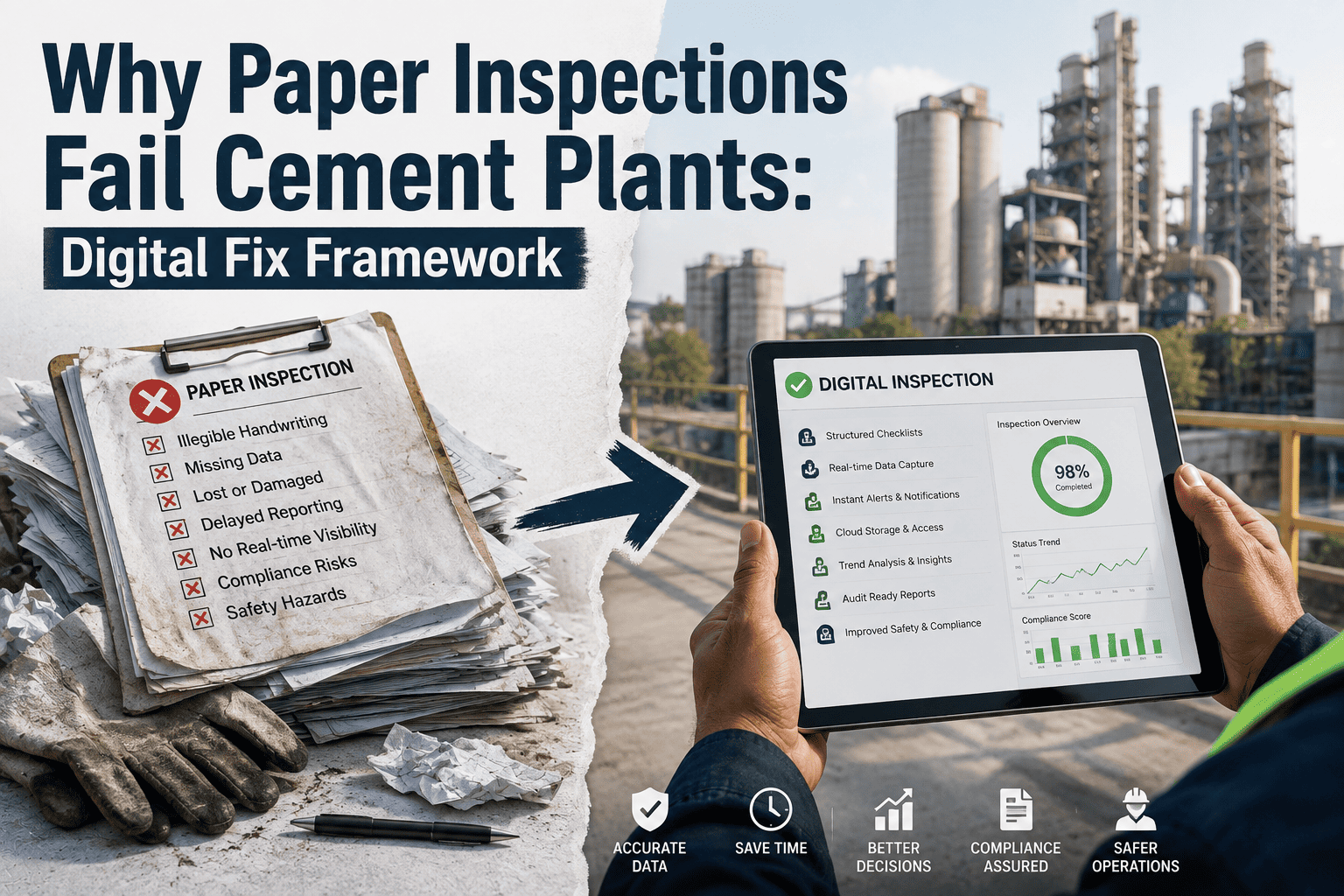
Paper inspection sheets record that a check happened. They rarely record proof — a photo, a timestamp, a GPS location — of what the technician actually found. Digital inspection software builds that proof into every entry automatically.
The Cost of Paper
What paper inspection sheets quietly cost you
Paper isn't free — it just hides its cost in re-work, disputed audits, and defects that were "checked" but never actually fixed.
What Changes
Paper checklist vs. photo-first inspection
The value of a digital inspection isn't the app — it's the accountability layer that paper simply cannot deliver.
Retirement Plan
Four stages to retire paper without disrupting shifts
Plants that switch successfully don't flip every checklist at once. They move stage by stage, starting with the assets where a missed defect costs the most.
Pick the pilot route
Choose one high-criticality inspection route — kiln, mill, or conveyor line — and rebuild its checklist as structured digital fields with required photos.
Run parallel for two weeks
Technicians complete both paper and digital in parallel briefly, so supervisors can confirm nothing gets missed before paper is dropped entirely.
Retire the paper route
Once compliance and accuracy match or beat the paper baseline, the route goes fully digital and the paper form is archived, not printed again.
Scale plant-wide
Repeat the same pilot-then-retire pattern across remaining routes, using the first route's compliance data to justify the rollout to plant leadership.
Turn every inspection into timestamped proof
oxmaint replaces paper checklists with photo-first digital inspections, searchable records, and compliance reports built for every OSHA and MSHA review.
FAQ
Retiring paper inspections, answered
Do we need new hardware to go digital?
No — technicians can run inspections from a phone or tablet they already carry, and the app works in offline mode for areas with weak signal, syncing once reconnected.
Will technicians resist switching from paper?
Resistance usually drops fast once technicians see the app is faster than writing, since fields are structured and photos replace long written notes.
How long does a full plant rollout take?
A staged rollout across every inspection route typically completes in eight to twelve weeks. Book a demo to scope a timeline for your route count.
Can auditors access digital inspection records directly?
Yes, compliance reports can be generated and exported in minutes, filtered by asset, date range, or inspection type for any audit request.
What happens to our old paper records?
Historical paper sheets can be scanned and attached to the relevant asset record in oxmaint, so history isn't lost during the transition.
Retire the clipboard. Keep the accountability.
Move every inspection route to photo-first digital checklists that prove condition, location, and time — built for kiln decks, mill floors, and remote silos.
Free 14-day trial · No credit card