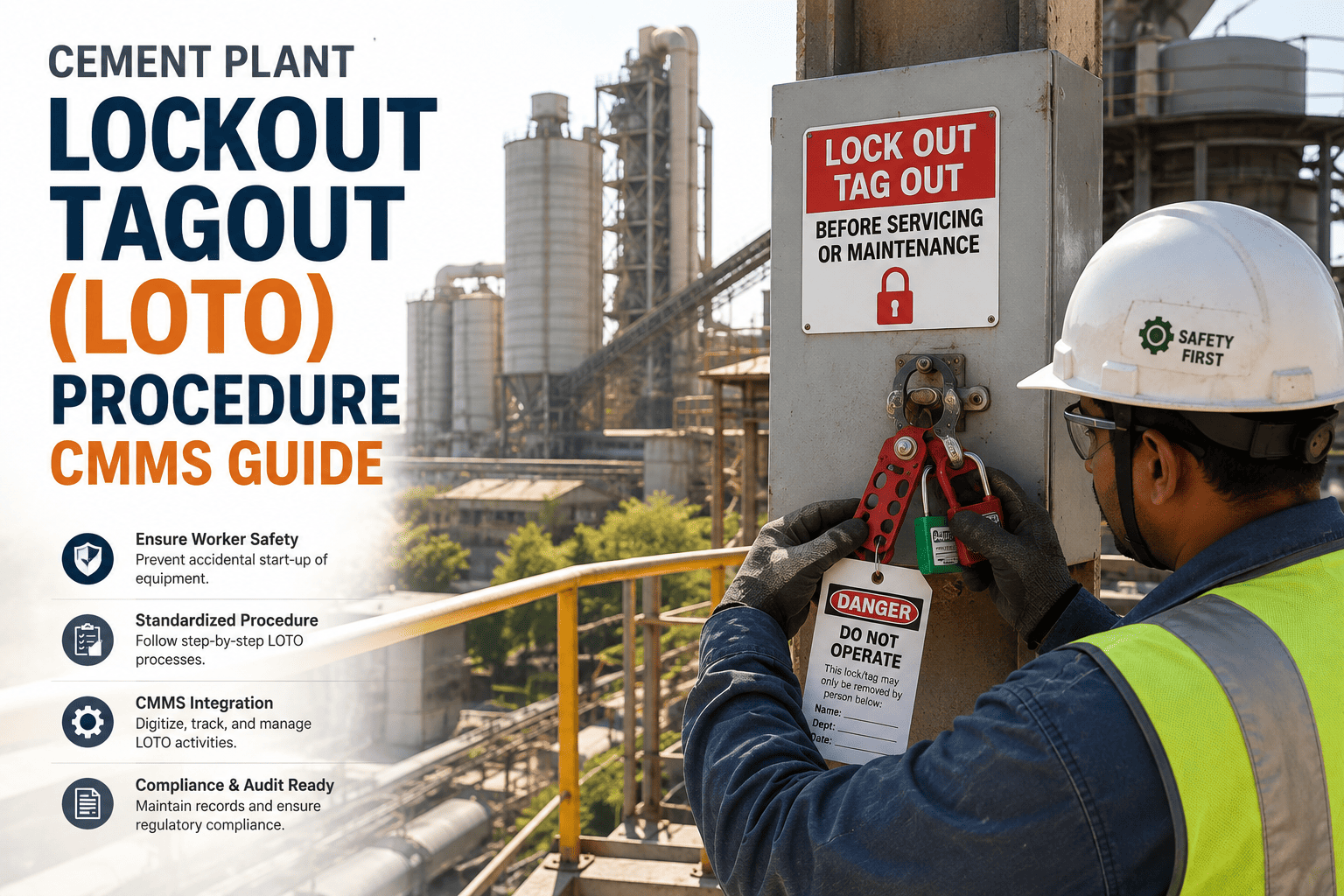
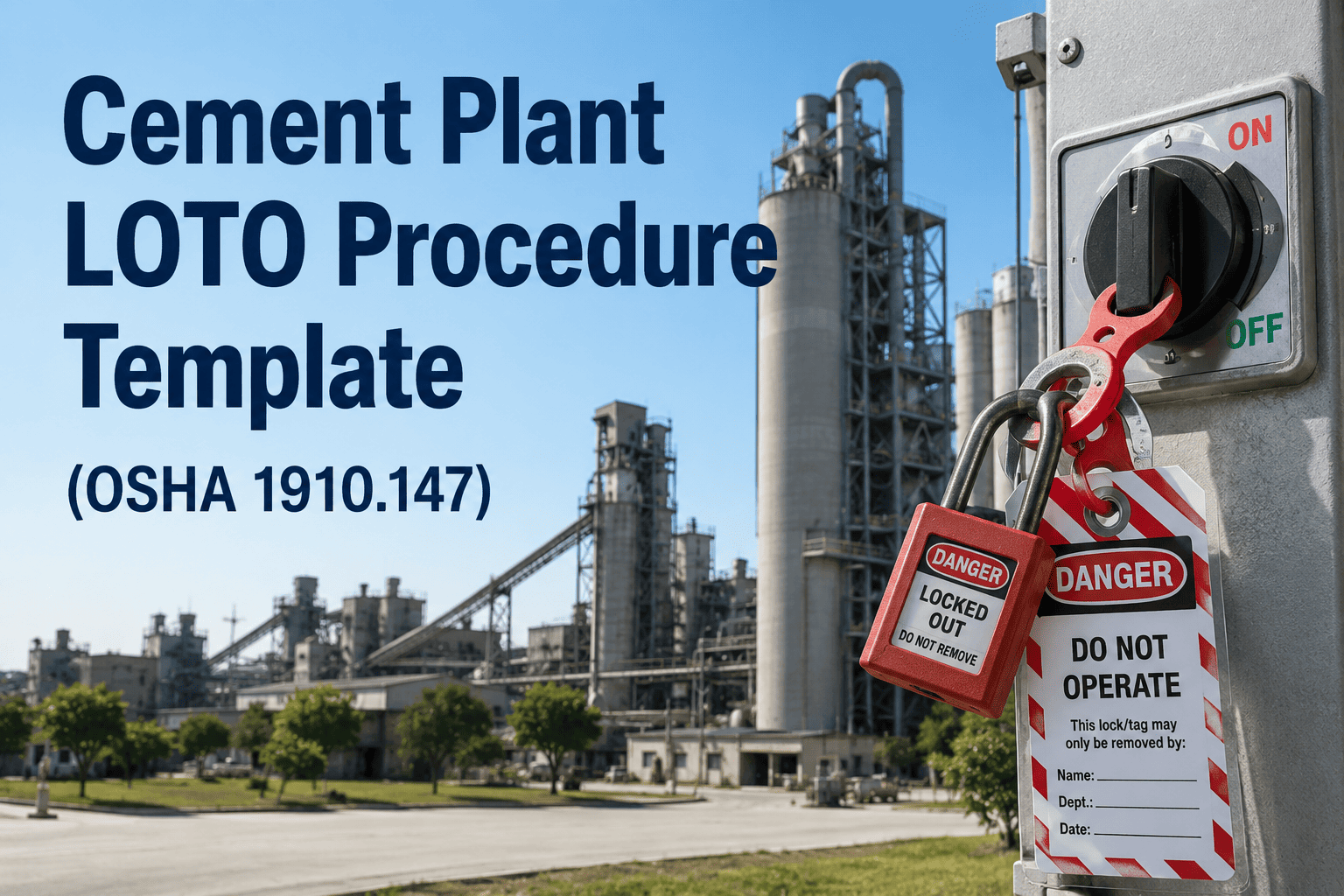
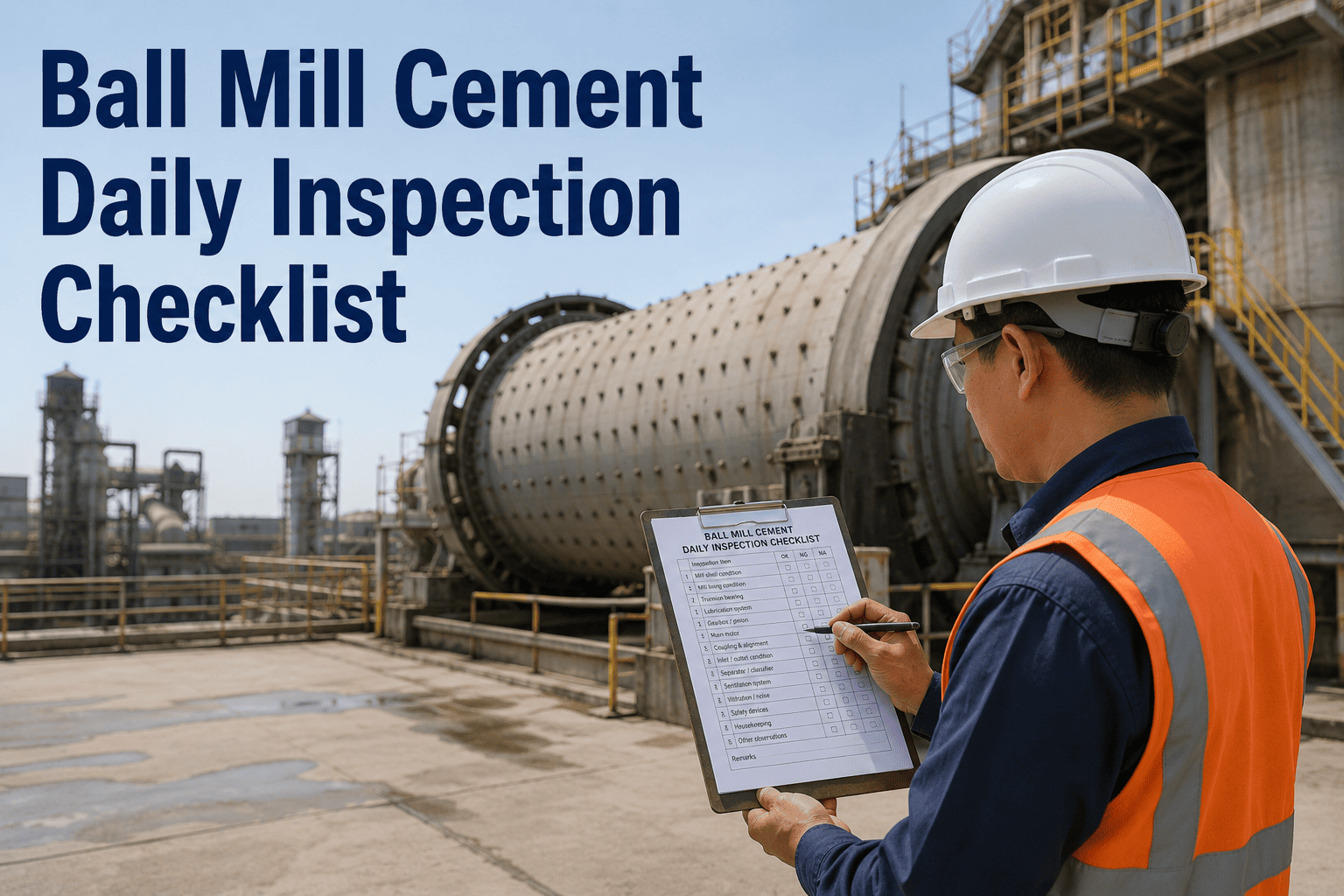
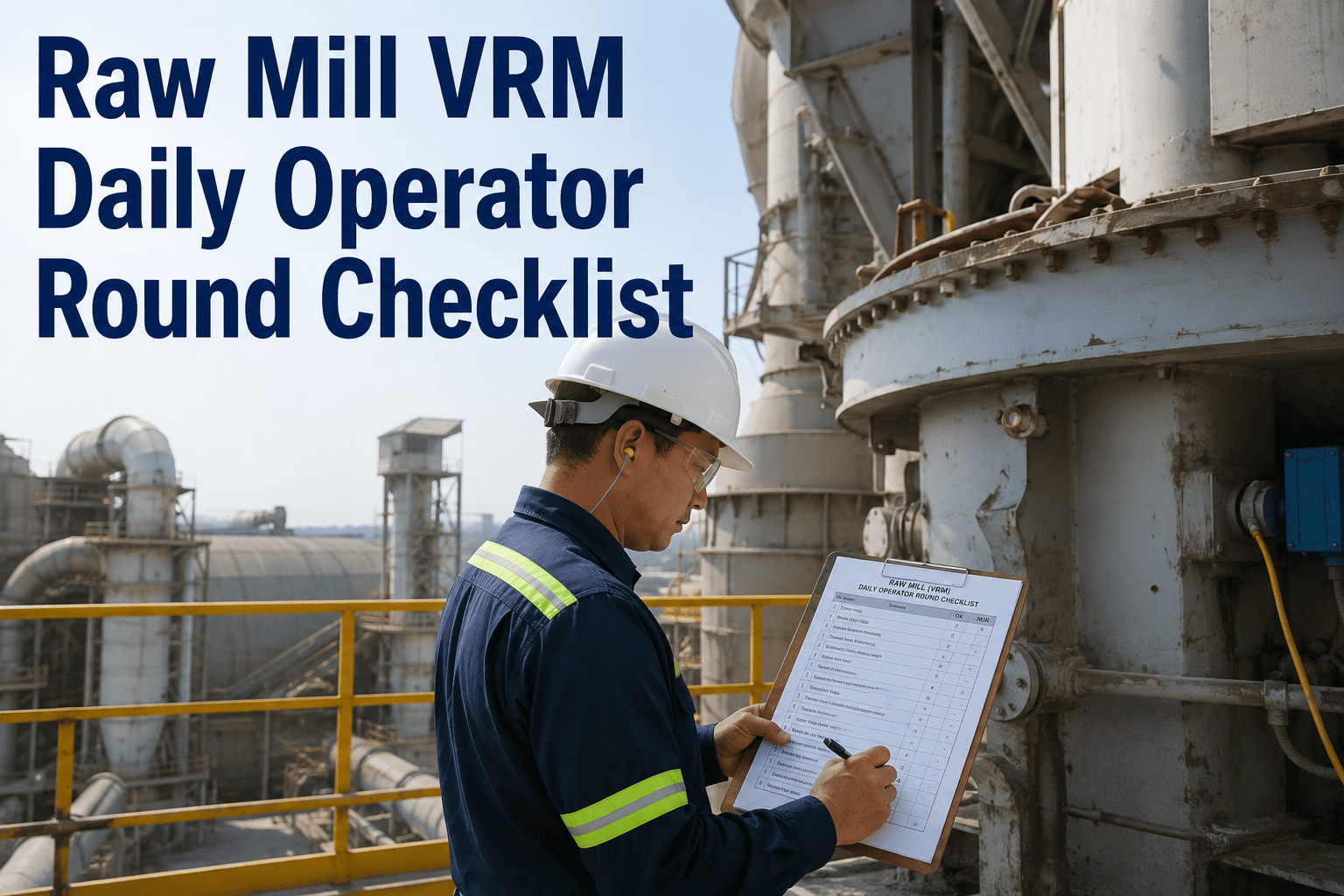
Every cement plant operates with rotating kilns, high-voltage drives, bulk conveyors, and pressurized systems that can release stored energy in an instant — making Lockout/Tagout (LOTO) one of the highest-stakes compliance obligations under OSHA 1910.147. A single missed isolation step or an unauthorized re-energization can result in a life-altering injury, a six-figure OSHA citation, and weeks of forced downtime. Plants that run LOTO on paper checklists, verbal authorizations, or memory are one audit away from a critical failure. Digital LOTO authorization tracking through a CMMS transforms this from a daily liability into a documented, verifiable, and audit-ready process — from permit issuance to lockout verification to energy re-introduction sign-off. OxMaint's CMMS brings every LOTO step, every authorized employee, and every permit record into a single searchable system. Start your free trial and digitize your cement plant LOTO program in under 60 minutes.
OSHA 1910.147 Compliance · Cement Plant Safety · OxMaint
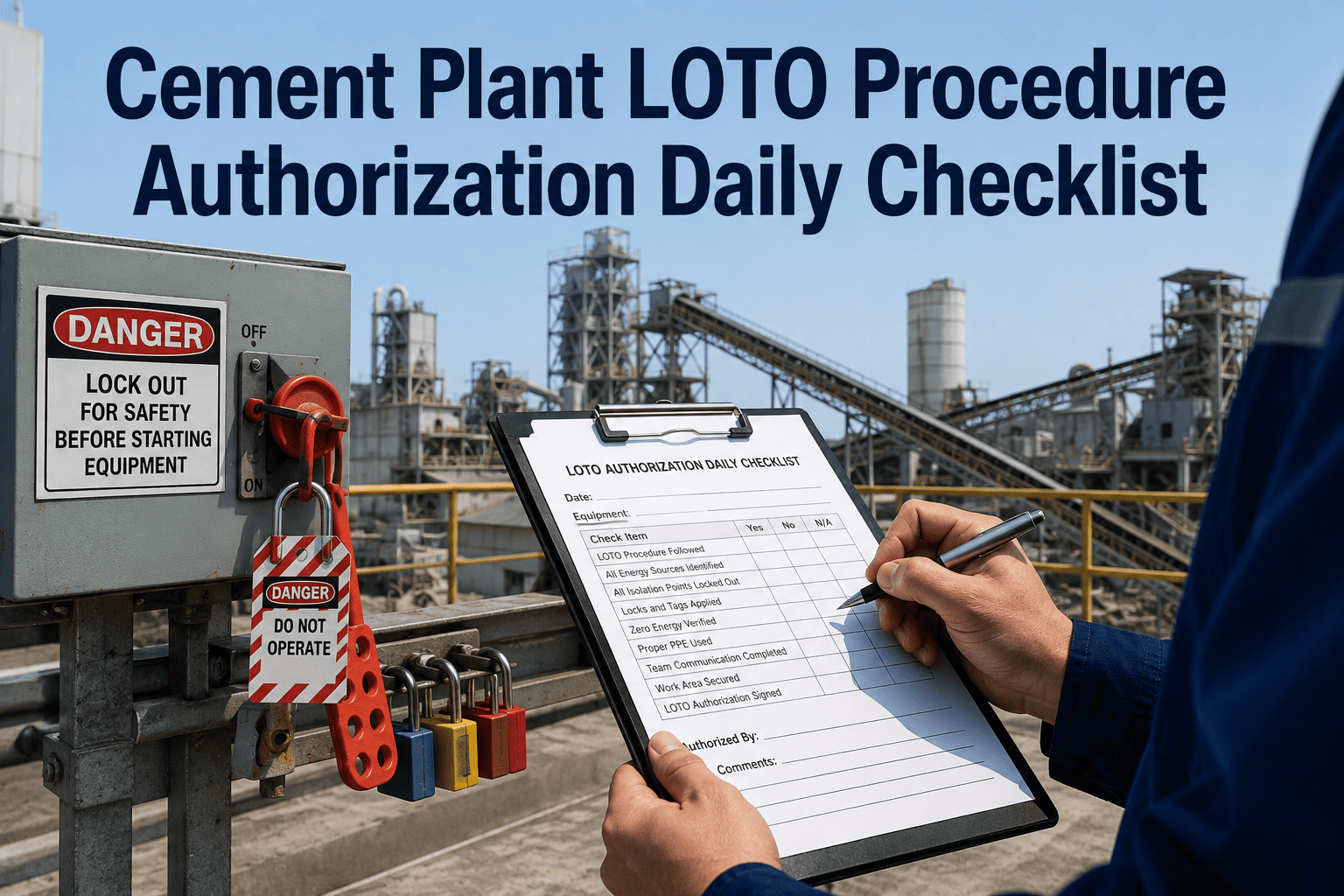
Cement Plant LOTO Procedure Authorization Daily Checklist
A step-by-step lockout/tagout authorization framework built for cement plant equipment — kiln drives, ball mill motors, raw mill fans, clinker conveyors, and high-voltage panels. Every permit. Every isolation. Every sign-off. Tracked and traceable.
1,800+
OSHA LOTO violations cited annually in manufacturing
$15,625
Maximum OSHA penalty per LOTO violation per instance
120+
Worker fatalities per year attributed to uncontrolled energy releases
82%
of LOTO incidents involve inadequate procedure or missing authorization records
Daily Authorization Checklist
OSHA 1910.147 LOTO Authorization: Step-by-Step Cement Plant Procedure
This checklist mirrors the sequence required under OSHA 1910.147 and is structured for cement plant-specific equipment taxonomy — from raw material intake to clinker discharge. Each phase must be completed in order, documented, and verified by an authorized employee before work begins.
Phase 1
Pre-Authorization Setup
Authorized employee name, badge number, and certification level recorded in CMMS work order
Equipment ID and asset tag confirmed against plant asset register (kiln, mill, fan, conveyor, or HV panel)
Written LOTO procedure retrieved and reviewed — procedure specific to this asset, not generic
All energy types identified: electrical, pneumatic, hydraulic, gravitational, thermal, chemical
Affected employees notified — production, maintenance, contractor crews within the work area
Shift supervisor sign-off on permit issuance logged in CMMS with timestamp
Phase 2
Energy Isolation & Lockout Application
Machine / equipment shut down using established stop procedure — not emergency stop
Each energy isolation point actuated — breaker open, valve closed, pneumatic bled, pin inserted
Personal lock applied to each isolation point by authorized employee — no group lock until individual locks confirmed
Tagout tag affixed at each isolation point with employee name, date, work order number
Number of locks applied recorded and matches isolation point count in written procedure
Stored energy dissipated or restrained — capacitors discharged, springs compressed/extended, gravity blocks installed
Phase 3
Verification — Zero Energy State
Test voltage absence at each electrical isolation point using calibrated tester — result recorded
Attempt to start machine using normal start controls — confirms zero energy state before any work begins
Pressure gauges confirm zero on all pneumatic and hydraulic circuits — gauge readings logged
Thermal surfaces cooled to safe working temperature — verified with contact thermometer if applicable
Second authorized employee counter-verification signature obtained and recorded in permit
Phase 4
Work Execution & Active Permit Monitoring
Work order active in CMMS — permit number linked, work scope defined, estimated duration logged
Permit expiry time set — no work beyond permit window without re-authorization
All personnel in work zone have confirmed awareness of active LOTO — sign-in log maintained
No additional energy sources introduced during work — verified at each shift change handover
Shift handover recorded in CMMS — outgoing and incoming technician names, lock status confirmed
Phase 5
Restore & Release Authorization
Work area inspected — all tools, materials, and personnel clear before any lock removal begins
Each personal lock removed only by the authorized employee who applied it — no proxy removal
Affected employees notified that energy is being restored — verbal and CMMS notification logged
Energy sources re-introduced in reverse isolation sequence per written procedure
Post-restoration test run witnessed by authorized employee — equipment returned to operational status confirmed
Permit closed in CMMS — completion timestamp, authorized employee sign-off, work order linked and archived
Phase 6
Post-Work Documentation & Audit Trail
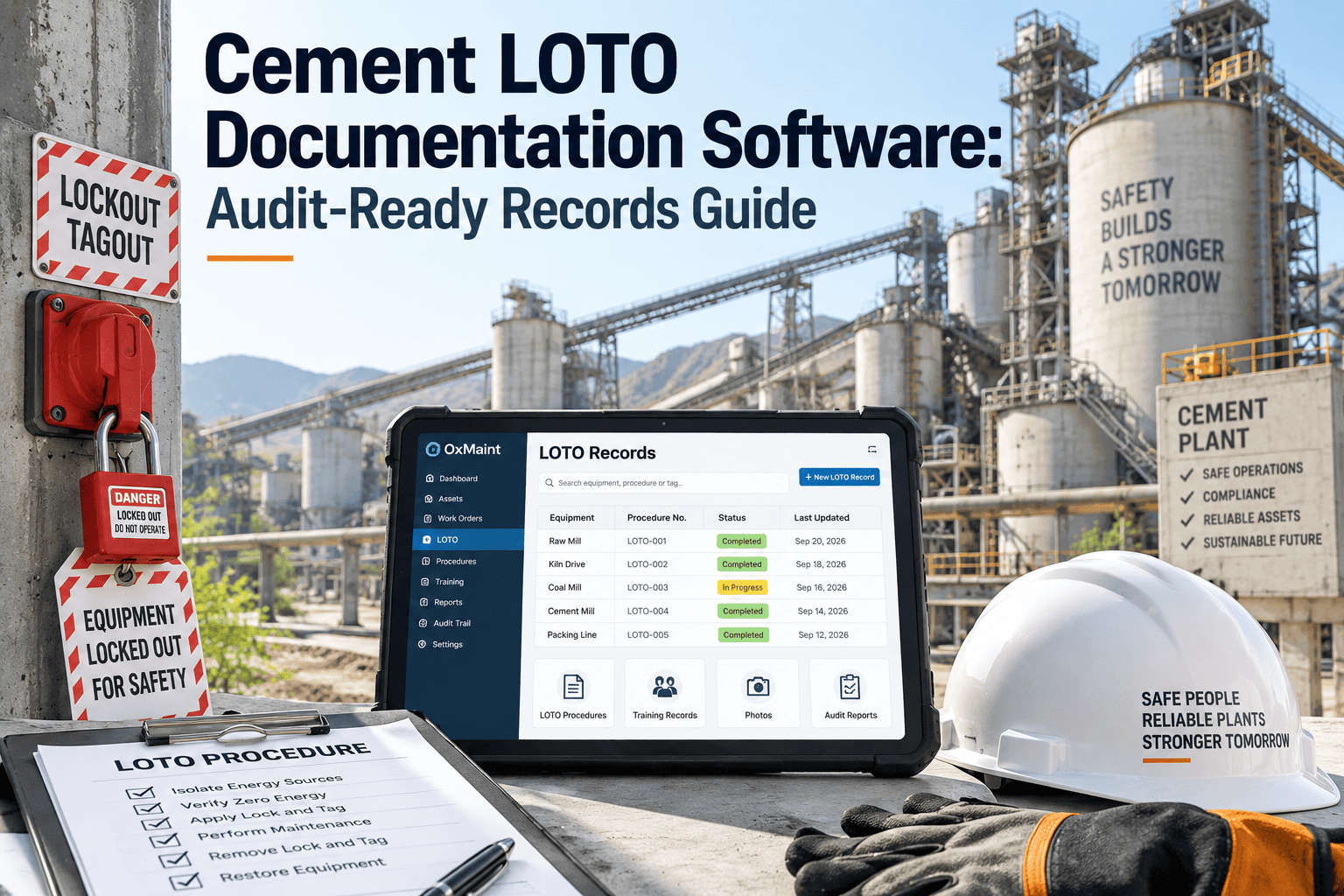
Completed LOTO permit record retained in CMMS — minimum 3 years per OSHA 1910.147 recordkeeping requirements
Deviations from standard procedure documented — corrective action initiated if any step was skipped or modified
Annual LOTO procedure review date updated — procedure confirmed accurate for current equipment configuration
Authorized employee training record reviewed — no expired certifications among personnel who executed this permit
Equipment Coverage
Cement Plant Equipment Requiring Dedicated LOTO Procedures
Generic LOTO procedures fail OSHA inspections. OSHA 1910.147 requires machine-specific written procedures for equipment with more than one energy source or that cannot be locked out with a single lockout device. Every item below qualifies.
Pyroprocessing
Rotary kiln main drive motor (HV)
Kiln tyre and riding ring lubrication system
Preheater tower fans and dampers
Cooler grate drive and fans
Kiln burner platform and fuel supply isolation
Grinding
Ball mill main drive (ring gear, pinion, motor)
Vertical roller mill (VRM) hydraulic tension system
Separator drives and classifier motors
Raw mill reject conveyor and bucket elevator
Cement mill cooling water system
Material Handling
Apron feeders and belt conveyors (all drive stations)
Bucket elevators — kiln feed and finished cement
Screw conveyors and air slides
Clinker breaker and hammer crusher
Packing machine and truck loading spout
Utilities & HV
11kV and 33kV switchgear panels
Compressed air station and distribution headers
Dust collector (baghouse) fans and rotary valves
Hydraulic power packs for crusher and press
Water treatment and cooling tower pumps
Paper LOTO logs fail audits. Digital CMMS permits pass them.
OxMaint logs every authorization, every isolation, every sign-off — searchable and audit-ready in seconds. No missing records. No unauthorized re-energizations. No citation risk.
Common LOTO Failures
Why Cement Plants Fail OSHA 1910.147 Inspections — And How CMMS Tracking Closes Every Gap
| OSHA Finding |
Root Cause in Cement Plants |
CMMS-Based Resolution |
Penalty Risk |
| No written LOTO procedure for specific equipment |
Generic plant-wide procedure used for HV kiln drive |
Asset-linked procedure in CMMS, mandatory before permit issuance |
Up to $15,625 |
| Expired or missing authorized employee training records |
Paper training logs lost after HR system migration |
CMMS blocks permit issuance for employees with expired certification |
Up to $15,625 |
| No verification of zero energy state documented |
Verbal confirmation accepted, not recorded |
Mandatory digital verification field in CMMS permit form — cannot be skipped |
Up to $7,000 |
| Shift handover without LOTO continuity record |
Incoming technician assumed lock was valid without checking |
CMMS shift handover checklist requires LOTO status confirmation before sign-off |
Up to $7,000 |
| Permit record not retained (minimum 3 years) |
Paper permits discarded after work completed |
All permits auto-archived in CMMS — retrievable by date, asset, or employee name |
Recordkeeping citation |
Common Questions
Cement Plant LOTO Authorization — What Maintenance Teams Ask Most
Does OSHA 1910.147 require a separate written procedure for every cement plant machine?
Yes, where equipment has more than one energy source or cannot be isolated with a single lockout device — which describes virtually every major cement plant asset. OSHA inspectors routinely cite plants that use a single blanket LOTO procedure. Equipment-specific procedures stored and issued through OxMaint's CMMS satisfy this requirement automatically.
Book a demo to see how OxMaint manages equipment-specific LOTO procedures.
Can a supervisor remove a lock if the authorized employee is unavailable?
OSHA 1910.147 requires a documented employer procedure for removing another employee's lock, including attempts to contact the employee and management authorization. Proxy removal without documentation is a direct violation. OxMaint's CMMS tracks lock removal requests, supervisor authorization, and contact attempt records in a single auditable entry.
How long must cement plants retain completed LOTO permit records?
OSHA 1910.147 does not specify a minimum permit retention period, but OSHA 1904 injury recordkeeping requirements and general inspection readiness standards recommend a minimum of three to five years. OxMaint archives all permit records indefinitely and makes them searchable by asset, employee, date range, or permit number.
Start your free trial to see the CMMS permit archive in action.
What is the OSHA requirement for annual LOTO procedure revalidation in cement plants?
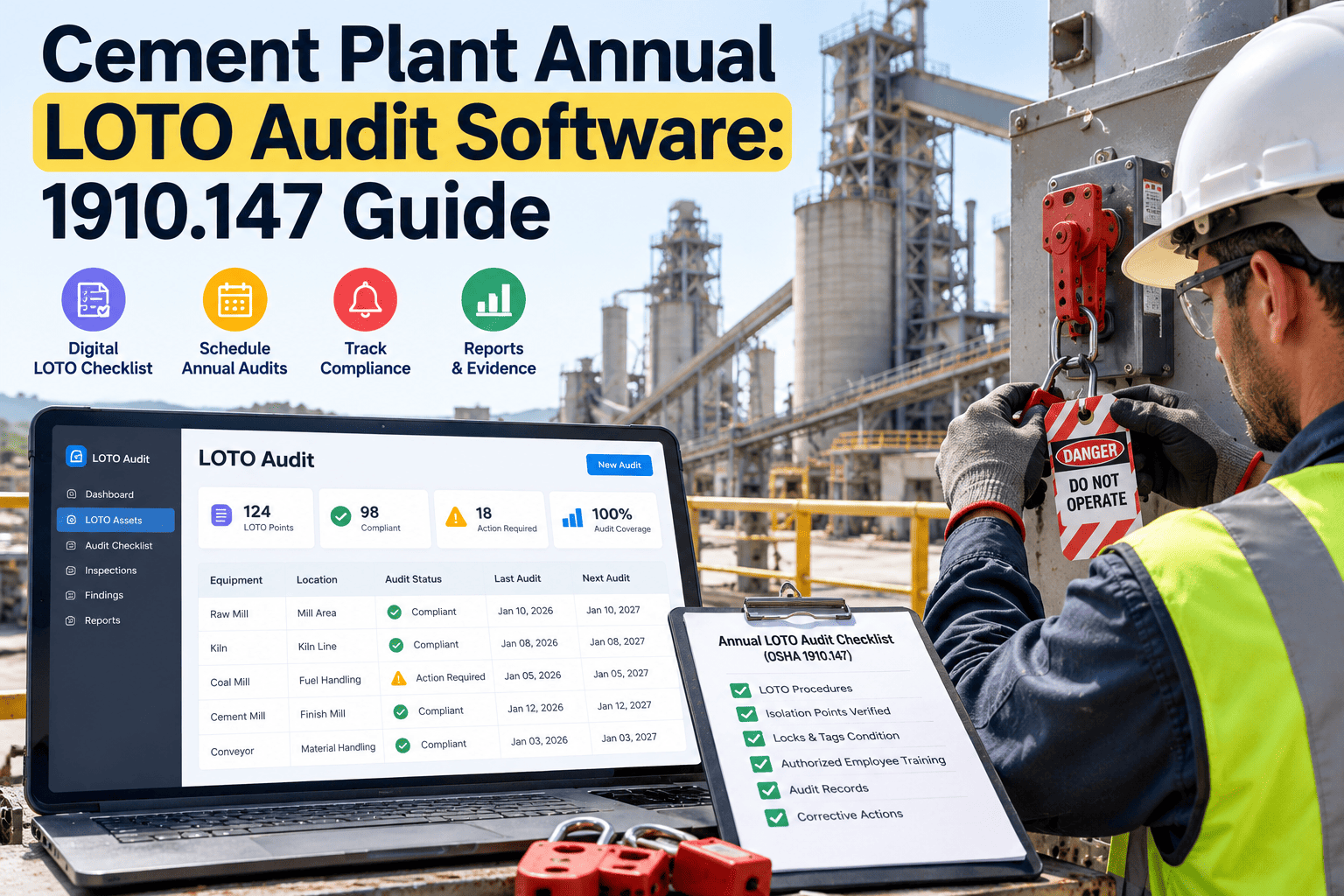
OSHA 1910.147(c)(6) requires an annual periodic inspection of the energy control procedure for each machine or equipment — including a certification that it was performed, the date, the equipment inspected, and the names of employees involved. OxMaint automates the scheduling, documentation, and certification of annual LOTO revalidations.
How does a CMMS improve LOTO compliance beyond a paper-based system?
A CMMS eliminates the four most common paper LOTO failure modes: lost records, expired certifications going undetected, skipped verification steps, and inconsistent shift handovers. OxMaint enforces the correct sequence digitally, blocks non-compliant permit issuance, and generates audit-ready reports on demand.
Book a demo to see the full LOTO workflow in OxMaint.
OSHA 1910.147 · Cement Plant LOTO · CMMS-Tracked Compliance
Every LOTO Permit. Every Isolation. Every Sign-Off. Tracked Automatically.
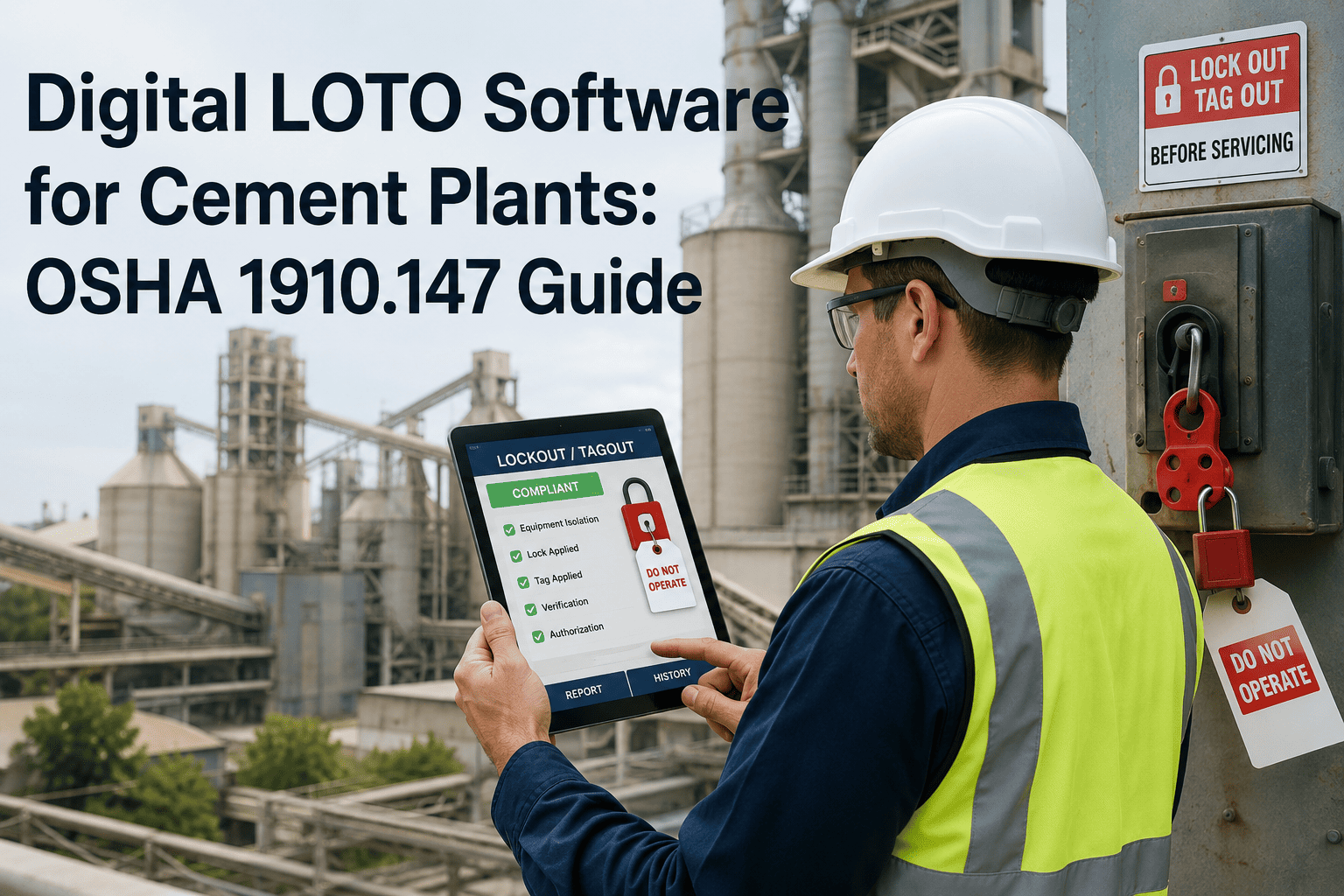
OxMaint's CMMS enforces OSHA-compliant LOTO sequences digitally, archives every permit for instant audit retrieval, blocks expired-certification employees from issuing permits, and generates LOTO compliance reports in minutes. No paper. No missing records. No citation risk.