An operations director at a cement plant is responsible for one number above all others: clinker tonnes produced per unit of cost. Every unplanned kiln shutdown, every maintenance overspend, every asset running at degraded capacity is a direct charge against that number. Most CMMS platforms were built for maintenance managers — they track work orders and parts inventory. What operations directors actually need is a layer above that: real-time kiln availability visibility, maintenance-to-production cost ratio tracking, and cross-plant benchmarking that makes under-performing assets impossible to miss. If you are evaluating CMMS for your cement operations, book a 30-minute conversation with an OxMaint cement specialist or explore the operations dashboard directly.
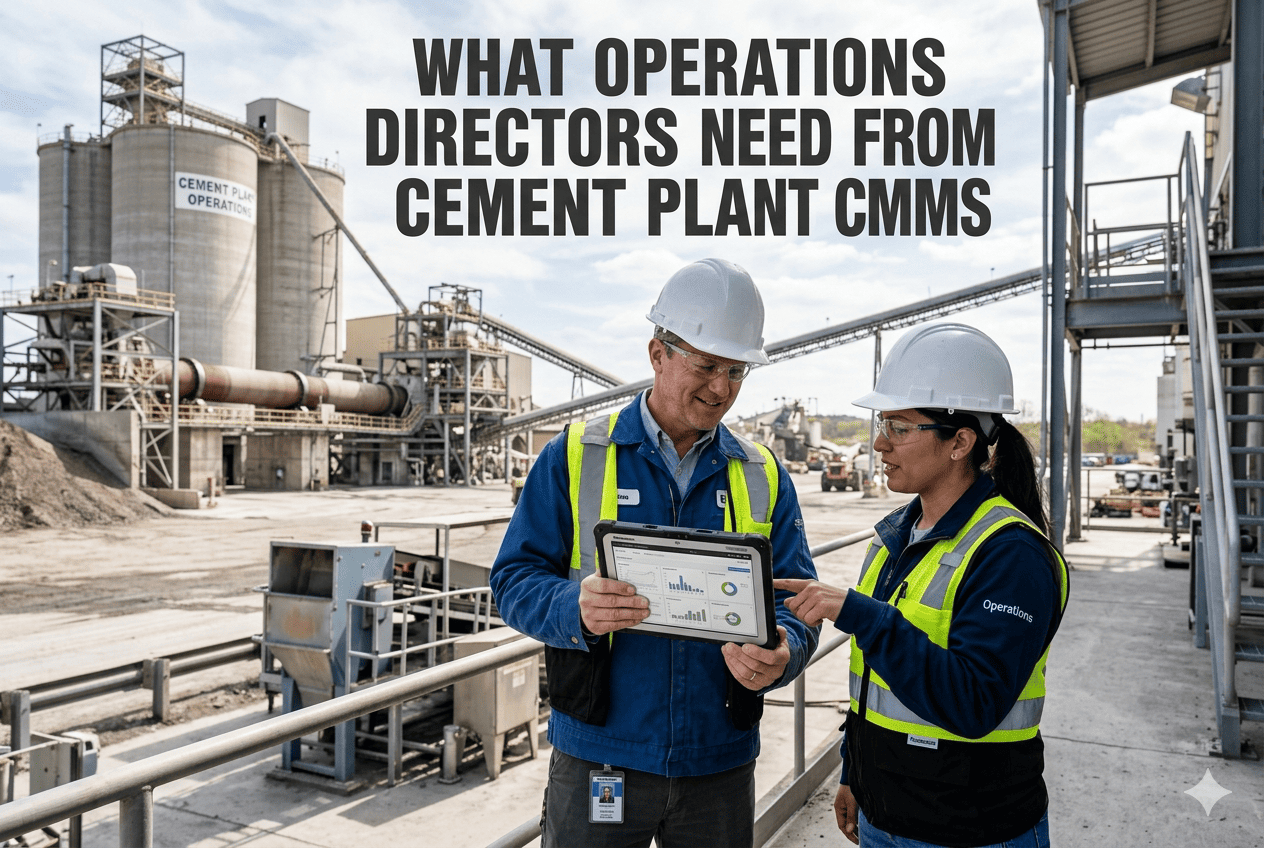
What Operations Directors Need from Cement Plant CMMS
The CMMS capabilities that move the needle on clinker cost per tonne — and why most maintenance software fails at the operations director level before it is even configured.
The Problem: CMMS Built for Technicians, Used by Operations Directors
Most CMMS platforms are designed from the bottom up: a technician creates a work order, a planner schedules it, a supervisor signs it off. The data exists — but it is stored in a structure that serves the person doing the work, not the person accountable for the outcome. An operations director logging into a standard CMMS sees a list of work orders. What they need to see is kiln availability this week versus the production plan, maintenance spend as a percentage of replacement asset value, and which assets are generating the most reactive work. The gap between what CMMS stores and what operations directors can actually use is where cement plants lose millions.
- Work order status (open / closed)
- Parts consumed per job
- Technician hours logged
- Planned vs completed PM tasks
- Equipment history by asset ID
- Kiln availability % vs production target
- Maintenance cost per tonne of clinker
- Reactive vs planned maintenance ratio trend
- Top 5 assets by downtime contribution
- Cross-plant KPI benchmarks
The 5 CMMS Capabilities That Matter at Operations Director Level
These are not nice-to-have features. Each one maps directly to a decision that an operations director makes every week — staffing levels, capital allocation, production scheduling, and maintenance contractor performance management.
See the Operations Director Dashboard in OxMaint
Kiln availability, maintenance cost per tonne, and reactive ratio — live, in one view. Built for the decisions operations directors make every week.
KPI Framework: What to Measure and at What Frequency
The following framework is designed for operations directors managing single-site or multi-site cement operations. Each KPI has an owner, a review frequency, and a target range based on industry benchmarks for integrated cement plants with kilns above 3,000 TPD.
| KPI | Target Range | Review Frequency | Owner | CMMS Source |
|---|---|---|---|---|
| Kiln Availability | 92–96% | Daily | Operations Director | Downtime event logs |
| Maintenance Cost / Tonne Clinker | $2.50–$4.50 USD | Weekly | Operations Director | WO cost + production data |
| Reactive Maintenance Ratio | <25% reactive | Weekly | Maintenance Manager | WO type classification |
| PM Compliance Rate | >90% | Monthly | Maintenance Manager | Scheduled vs completed PMs |
| MTTR (Mean Time to Repair) | Plant-specific baseline | Monthly | Maintenance Manager | Downtime duration logs |
| Maintenance Backlog (weeks) | 4–6 weeks | Monthly | Operations Director | Open WO aging report |
| Spare Parts Availability Rate | >95% | Monthly | Procurement / Maintenance | Inventory stockout events |
Implementation: How to Deploy CMMS at Operations Director Level Without Disrupting the Maintenance Team
The most common failure mode in cement CMMS deployments is a system built for the maintenance team that cannot answer the operations director's questions. The second most common failure is a system built for the operations director that the maintenance team does not use consistently — producing unreliable data. Avoiding both requires a phased deployment that establishes data quality at the maintenance level before building the operations layer on top of it.
Frequently Asked Questions
Operations Directors Who See Maintenance Data Clearly Make Better Production Decisions.
OxMaint gives cement operations directors the kiln availability visibility, cost-per-tonne tracking, and cross-plant benchmarking they need to drive clinker output at lower maintenance cost — without relying on the maintenance team to generate weekly reports.