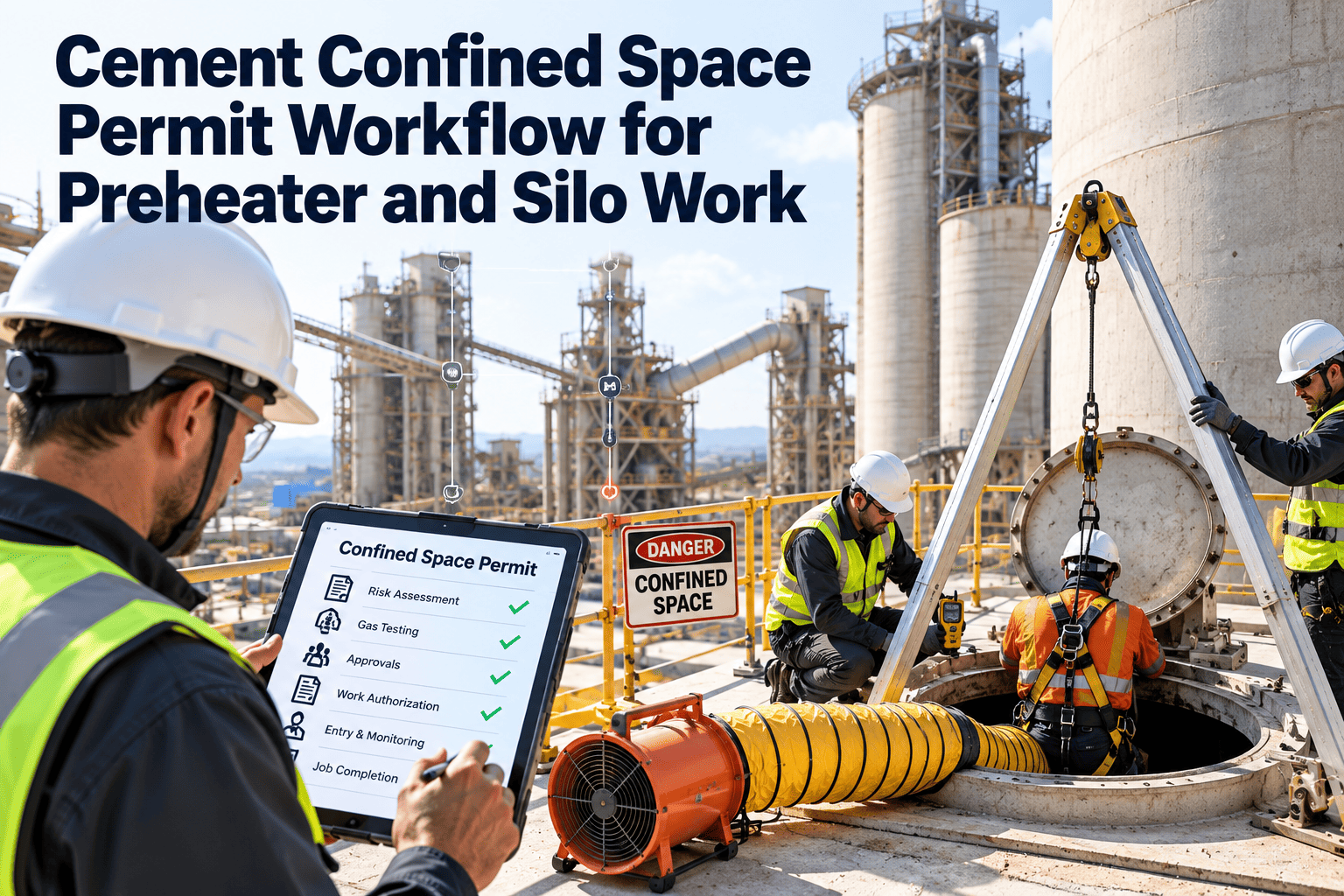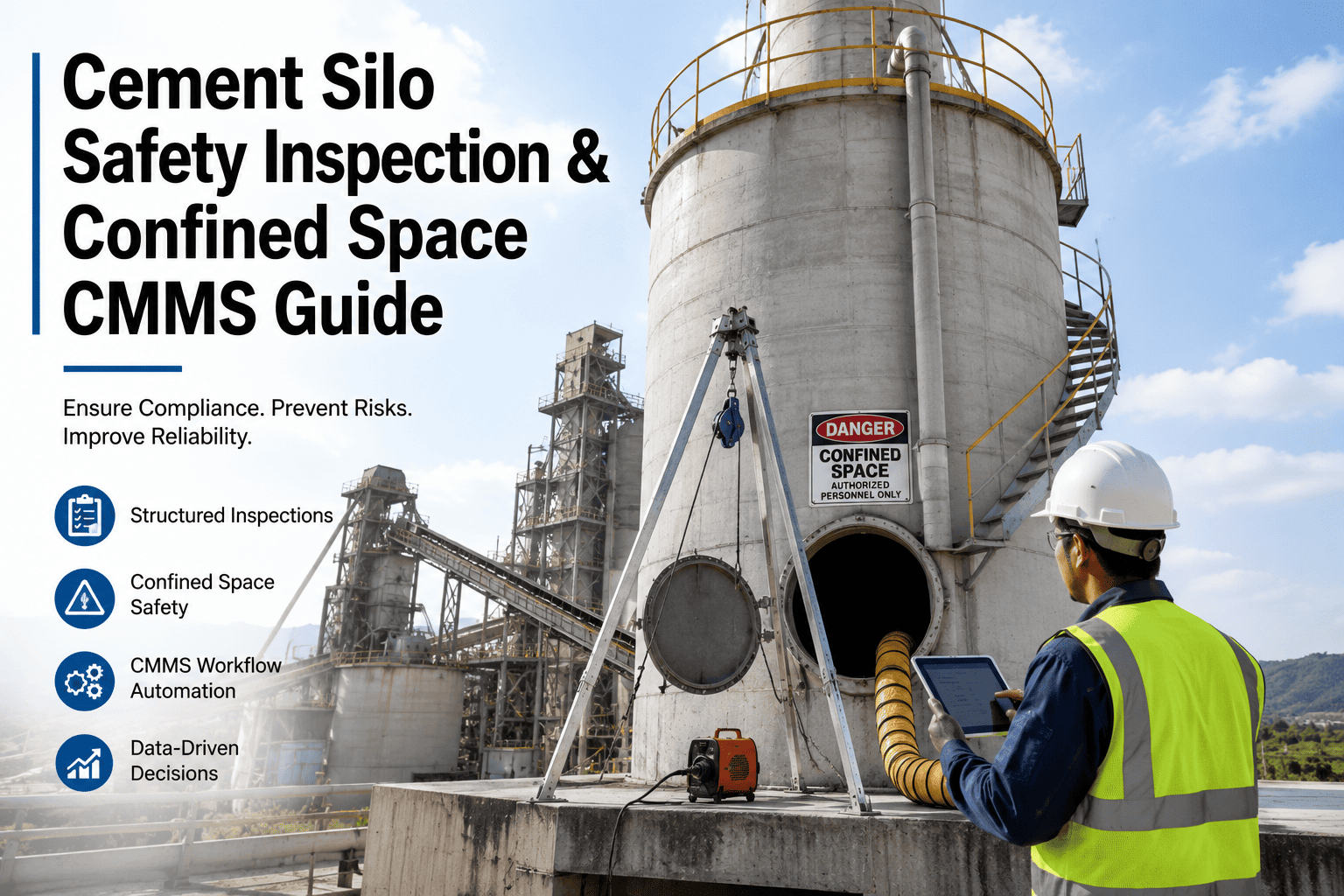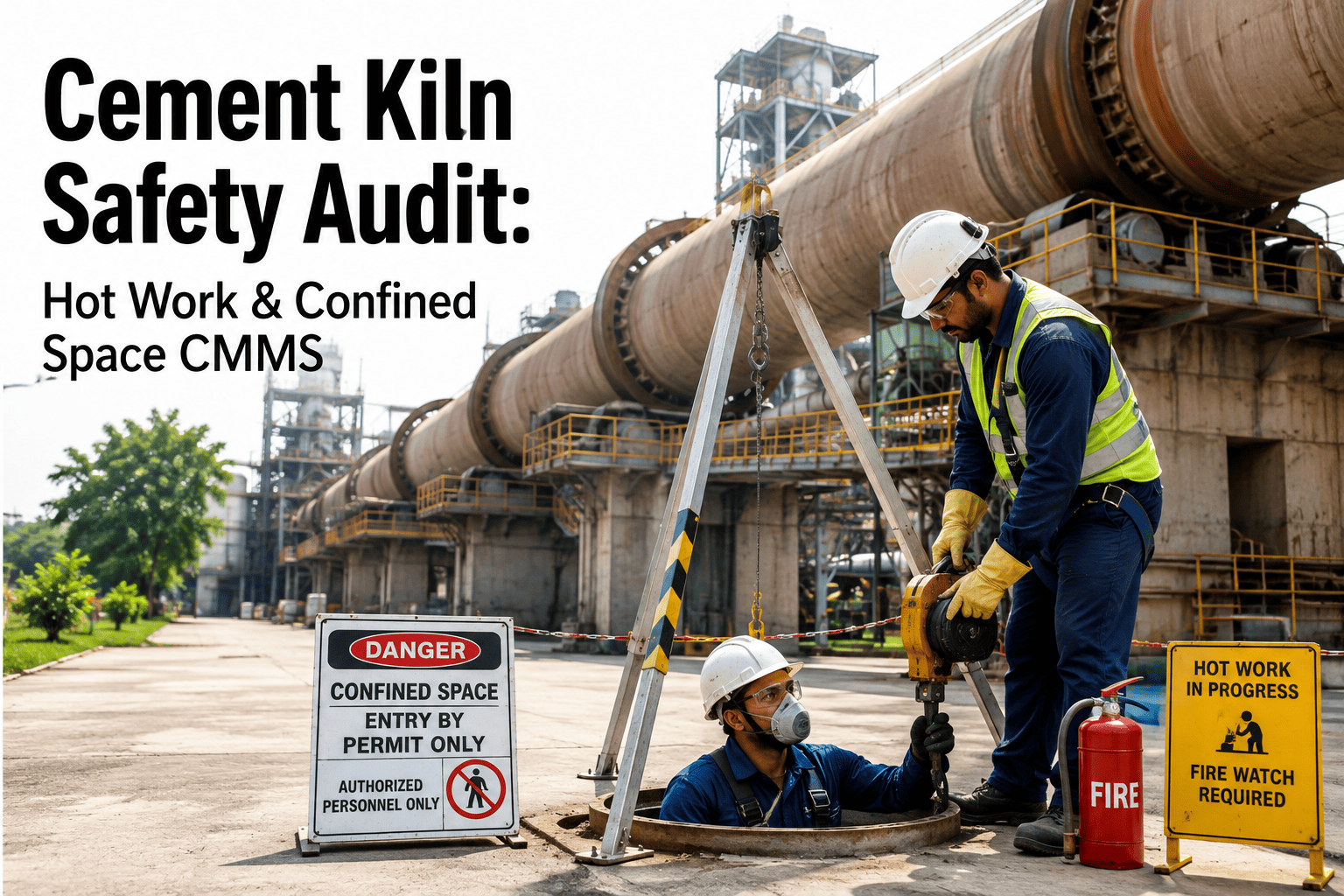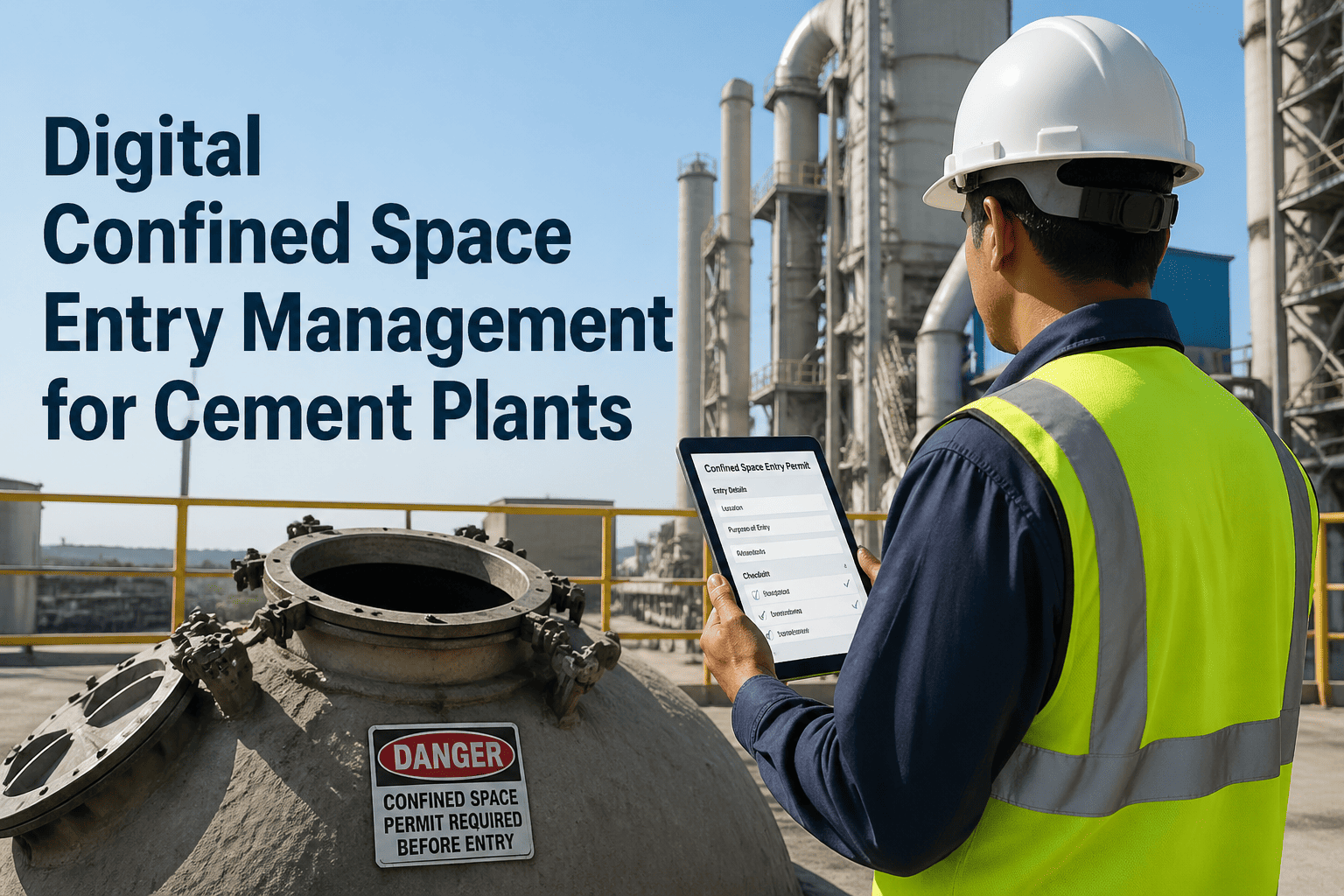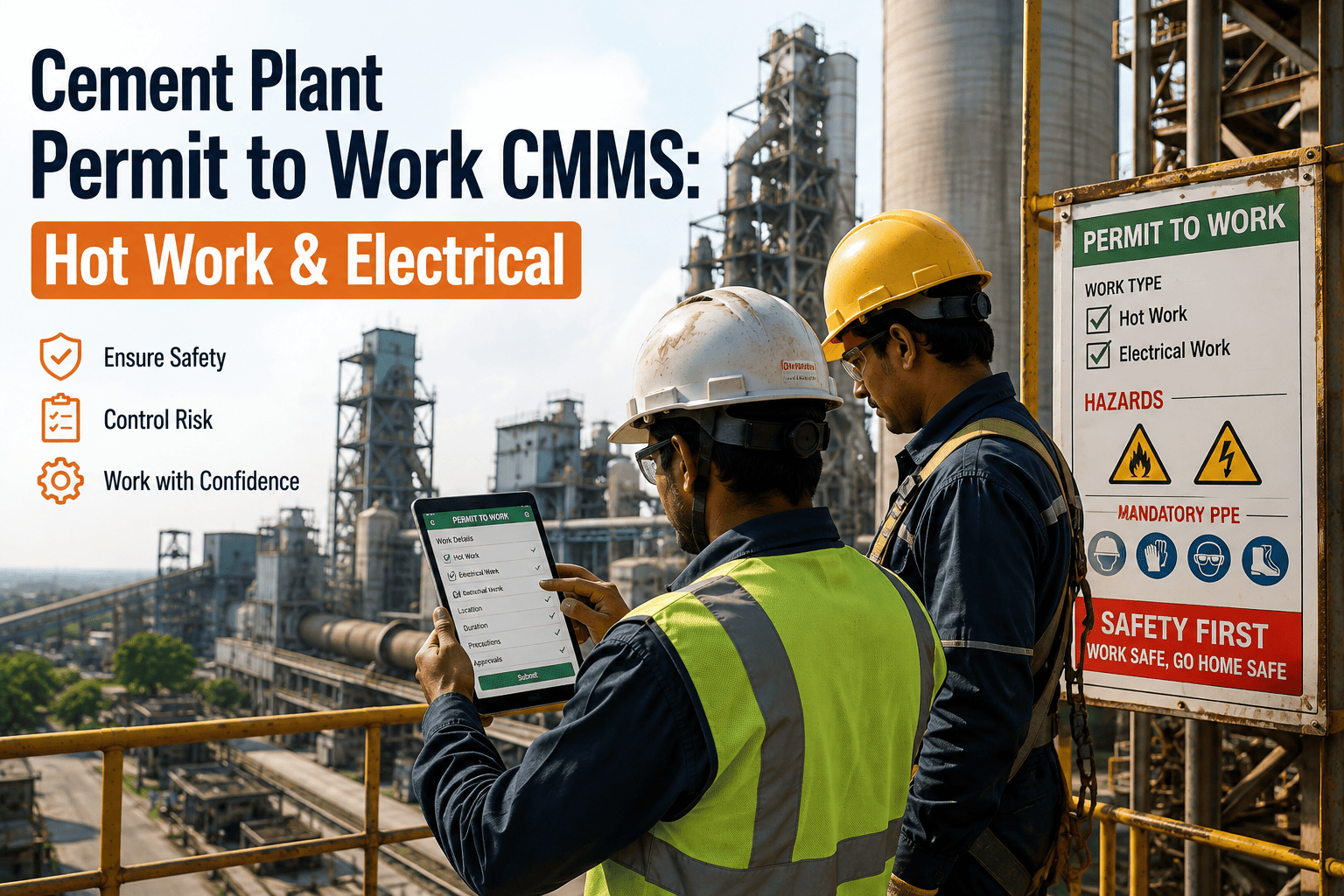
Permit-to-work discipline is what separates a controlled cement maintenance outage from a recordable incident — every hot tap near a kiln shell, every silo entry, every breaker isolation lives or dies on the quality of the permit behind it. In a typical integrated cement plant running 3,500–5,000 tpd, maintenance crews execute between 40 and 120 permits per week, and the failure modes are well known: unsigned isolations, stale gas-test readings, permits closed before work is physically complete. A CMMS-integrated permit-to-work system turns each permit into a live safety control — linked to the asset, the isolation list, the gas-test log, and the work order — rather than a paper form stapled to a clipboard. Start Free Trial to see how Oxmaint digitizes the full PTW lifecycle for cement operations.
PERMIT-TO-WORK FOR CEMENT OPERATIONS
One missed isolation. One unsigned permit. One fatality.
In cement plants, 70% of maintenance incidents trace back to permit failures — not bad luck. A CMMS-driven PTW system links every hot-work, electrical and confined-space permit to the live asset register, the verified isolation list, and the work-order closure step.
THE FOUR PERMIT CLASSES
Every permit in a cement plant falls into one of four risk classes
A 4,500 tpd plant typically raises 2,000–4,500 permits per year. Each one carries a different residual-energy profile — and a different approval depth.
Cutting, welding, grinding, or open flame within 10 m of a kiln, raw mill, coal mill, or conveyor gallery. Requires combustible-gas clearance, spark-watch, and fire-blanket placement logged before authorization.
Lockout-tagout on medium-voltage crushers (6.6 kV), mill motor feeders, and conveyor drives. LOOTO verified by a try-start step, with each padlock and tag recorded against the asset ID in the CMMS.
Entry into raw-meal, cement, or clinker silos, cyclone chambers, and grate-cooler internals. Continuous atmospheric monitoring (O₂ 19.5–23.5%, <10% LEL, <25 ppm CO), stand-by attendant, and rescue retrieval line required.
Work above 1.8 m on preheater platforms (up to 120 m), roof repairs, and crane lifts over live equipment. Requires engineered lift plan, fall-arrest anchor inspection, and exclusion-zone barricading.
PERMIT TYPES AT A GLANCE
Permit risk profile by class — cement plant reference matrix
Built from typical integrated-plant permit registers. Use it to size your approval workflow and isolation verification depth.
| Permit Class | Approval Level | Isolation Verification | Valid Period | Typical Annual Volume |
|---|---|---|---|---|
| Hot Work | Shift Manager + Fire Watch | Gas test + spark-control check | Single shift (8–12 h) | 800–1,400 |
| Electrical | Authorized Electrical Person | LOOTO + try-start + voltage test | Up to 72 h (renewed daily) | 600–1,200 |
| Confined Space | Plant Safety Officer + Entry Supervisor | Continuous gas monitoring + attendant | Single shift (4–8 h) | 150–400 |
| Height & Heavy Lift | Maintenance Manager + Rigger | Anchor / lift plan / exclusion zone | Single shift (8–12 h) | 200–500 |
STEP-BY-STEP APPROVAL WORKFLOW
From request to closure — the 6-stage PTW workflow in a CMMS
Each stage is timestamped, geo-stamped, and tied to the work order. Skipping any stage blocks the next — that is what turns a permit into a control, not a form.
Technician raises the permit from the CMMS work order on mobile. Asset, location, task scope, and crew auto-populate from the asset register — no manual retyping, no asset-name typos.
JHA pulled from the asset's last 5 permits. Residual-energy checklist auto-includes kiln shell temp, silo material level, and stored pressure values. Average completion: 8 minutes vs. 25 on paper.
Each isolation point (breaker, valve, blank) is scanned or tapped against the asset ID. LOOTO try-start confirmation and voltage test readings captured as photo + value before approval.
Digital signature from the authorized person — Shift Manager for hot work, Authorized Electrical Person for isolation. CMMS validates competency currency before accepting the signature.
Permit is live in the CMMS dashboard. Gas-test renewals trigger every 2 hours for confined space, every 4 hours for hot work. Overdue renewals escalate to the Shift Manager in 90 seconds.
Isolations removed, area inspected, tools counted, fire watch maintained for 60 min post-hot-work. Closure cannot complete until every checklist item is signed — the work order stays open otherwise.
HOT WORK NEAR KILNS & MILLS
The permit controls that stop kiln-side fires
Coal-dust and alternative-fuel environments make hot work the highest-frequency permit in cement — and the one with the thinnest margin for error.
- Combustible-gas test <10% LEL within 3 m of work zone
- Coal-dust accumulation cleaned within 10 m radius
- Fire blankets placed on conveyor belts & hydraulic lines
- Pressurized fire extinguisher (min 9 kg) within arm's reach
- Adjacent equipment identified and barricaded
- Shift Manager authorization signature captured in CMMS
- Dedicated fire watch present for the entire duration
- Gas-test renewal logged every 4 hours or on shift change
- Spark-control barrier inspected every 30 minutes
- Weather/wind change triggers reassessment of spark drift
- Stop-work authority briefed to fire watch before start
- Permit QR visible at the work location for audit
- Continuous fire watch maintained for 60 minutes post-work
- All tools, electrodes, and consumables removed and counted
- Hot-spot thermal scan of work area before permit closure
- Isolation points verified removed and equipment released
- Closure photo uploaded to the CMMS permit record
- Work order auto-closed only after permit returns to "Closed"
A 2.5 MTPA plant in central India cut hot-work near-miss reports by 64% in one quarter after linking gas-test renewal timers to the CMMS — overdue readings auto-paused the permit and notified the Shift Manager.
ELECTRICAL ISOLATION & CONFINED SPACE
The two highest-consequence permits in cement — and how the CMMS enforces them
Electrical isolation and confined space together account for roughly 55% of permit-related fatalities in heavy process industry. The CMMS makes the verification step non-optional.
- Each isolation point scanned against asset ID — no generic "all breakers off"
- Try-start step logged with witness signature before work begins
- Voltage-absence test captured as photo + numeric reading
- Each padlock serial recorded against the technician's competency profile
- Group lock-box verified when multiple crafts are on the same isolation
- Isolation removal sequence enforced in reverse order of application
- Pre-entry gas test: O₂ 19.5–23.5%, CO <25 ppm, LEL <10%, H₂S <10 ppm
- Continuous monitoring with readings pushed to CMMS every 2 minutes
- Stand-by attendant logged with active competency and contact number
- Rescue retrieval line anchored and inspected before entry
- Material bridging risk assessed for cement and raw-meal silos
- Permit auto-suspends if gas reading breaches threshold for >30 seconds
CMMS PERMIT STRUCTURE
What a permit record must contain to be a real safety control
A permit that lives inside the CMMS is not just a digital form — it is a structured record linked to the asset, the isolation list, the work order, and the crew competency matrix.
Before digitizing, this plant ran 2,800 paper permits per year with a 12% audit-failure rate — mostly unsigned isolations and stale gas tests. After implementing CMMS-linked PTW: permit issue time dropped from 28 minutes to 7, audit failures fell to 1.4%, and a near-miss on a silo entry was prevented when the CMMS auto-suspended the permit after an O₂ reading dropped to 18.9%. The plant estimates $58K/year in avoided incident costs and reclaimed ~1,400 technician-hours of permit administration time.
Turn permit-to-work from paperwork into a live safety control
Stop chasing signatures on clipboards. Link every permit to the asset, the isolation, and the work order — and close the gap between "permit issued" and "work actually safe."
FREQUENTLY ASKED
Permit-to-work CMMS for cement plants — what teams ask first
The permit is linked to the kiln or coal-mill asset ID, pulling the last five JHAs and the current combustible-dust status. Gas-test renewals are timed every 4 hours, the fire-watch identity is verified against the competency matrix, and spark-control barriers are photographed before authorization. If a renewal is missed, the CMMS pauses the permit and escalates to the Shift Manager within 90 seconds — the work order stays open and the crew is notified on their mobile devices.
Yes. Each isolation point — breaker, disconnect, or blank — is scanned against the asset ID in the CMMS. The try-start step and voltage-absence test are captured as photo plus numeric reading before the authorized electrical person signs. Padlock serials are recorded against each technician's competency profile, and group lock-box verification is enforced when multiple crafts share the isolation. You can Start Free Trial to configure your isolation templates in under an hour.
The gas monitor pushes readings to the CMMS every 2 minutes. If O₂ falls below 19.5%, CO exceeds 25 ppm, LEL exceeds 10%, or H₂S exceeds 10 ppm for more than 30 seconds, the permit auto-suspends, the entry attendant receives an evacuation alert, and the Shift Manager is notified. The permit cannot reactivate until a fresh gas test confirms safe atmosphere and the Entry Supervisor re-authorizes in the system.
A single-line integrated plant with 200–400 assets goes live in 3–5 weeks: week one for asset register import, week two for permit templates and isolation lists, week three for competency matrix and approval routing, and weeks four to five for pilot on one kiln line before plant-wide rollout. Most plants see full adoption within 60 days of go-live. Book a Demo to get a deployment plan tailored to your plant.
Yes — the permit record is linked bidirectionally to the work order and the asset register. A permit cannot be authorized unless the parent work order is in "In Progress" status, and the work order cannot close until the permit returns to "Closed." This eliminates the most common audit failure: work orders closed while permits are still technically open. Integration is via REST API and supports standard ERP and EAM connectors used in cement operations.
Every permit signed. Every isolation verified. Every shift safer.
Join cement plants using Oxmaint to turn permit-to-work from a clipboard exercise into a real-time safety control — linked to assets, isolations, and work orders.
Free 14-day trial · No credit card