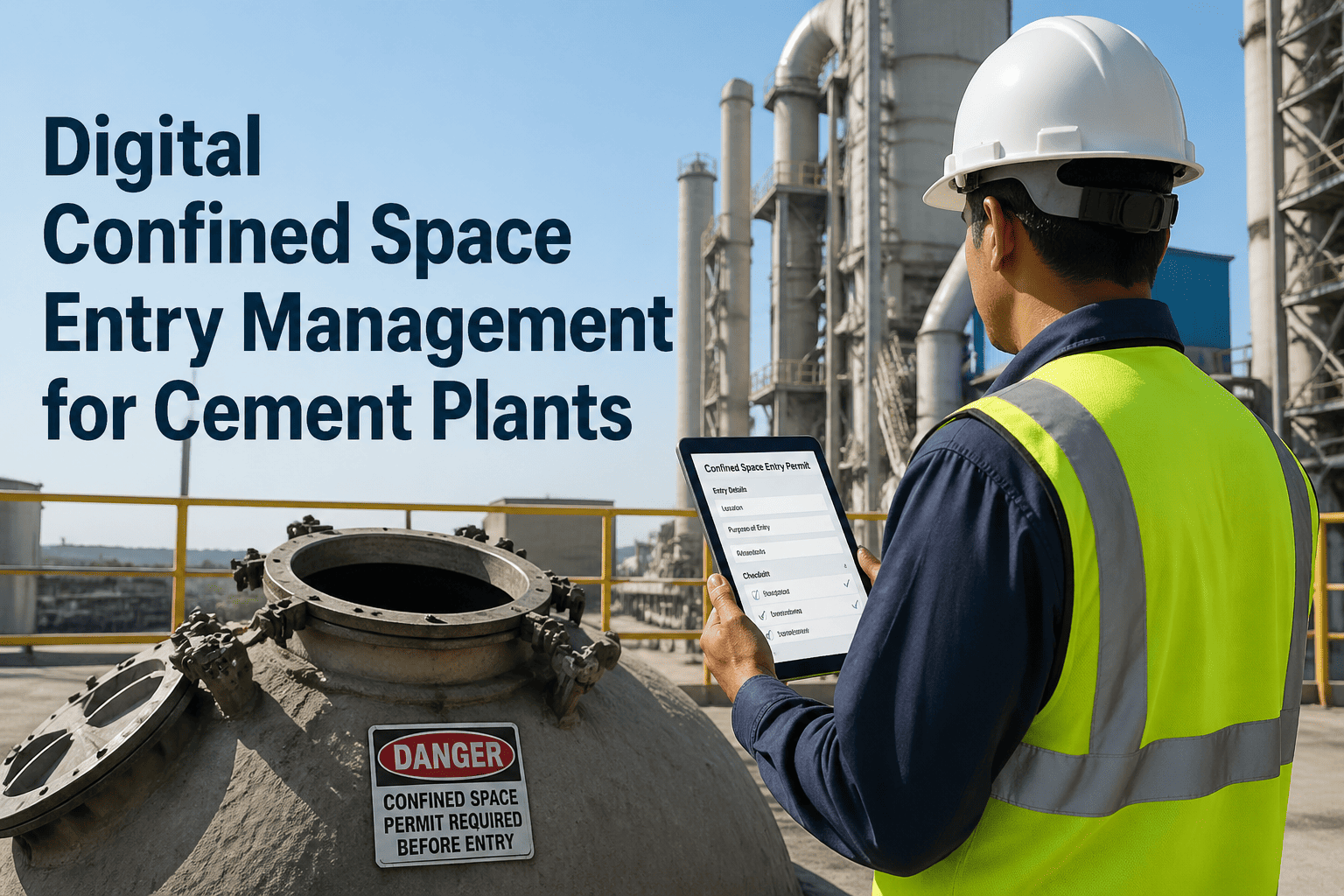
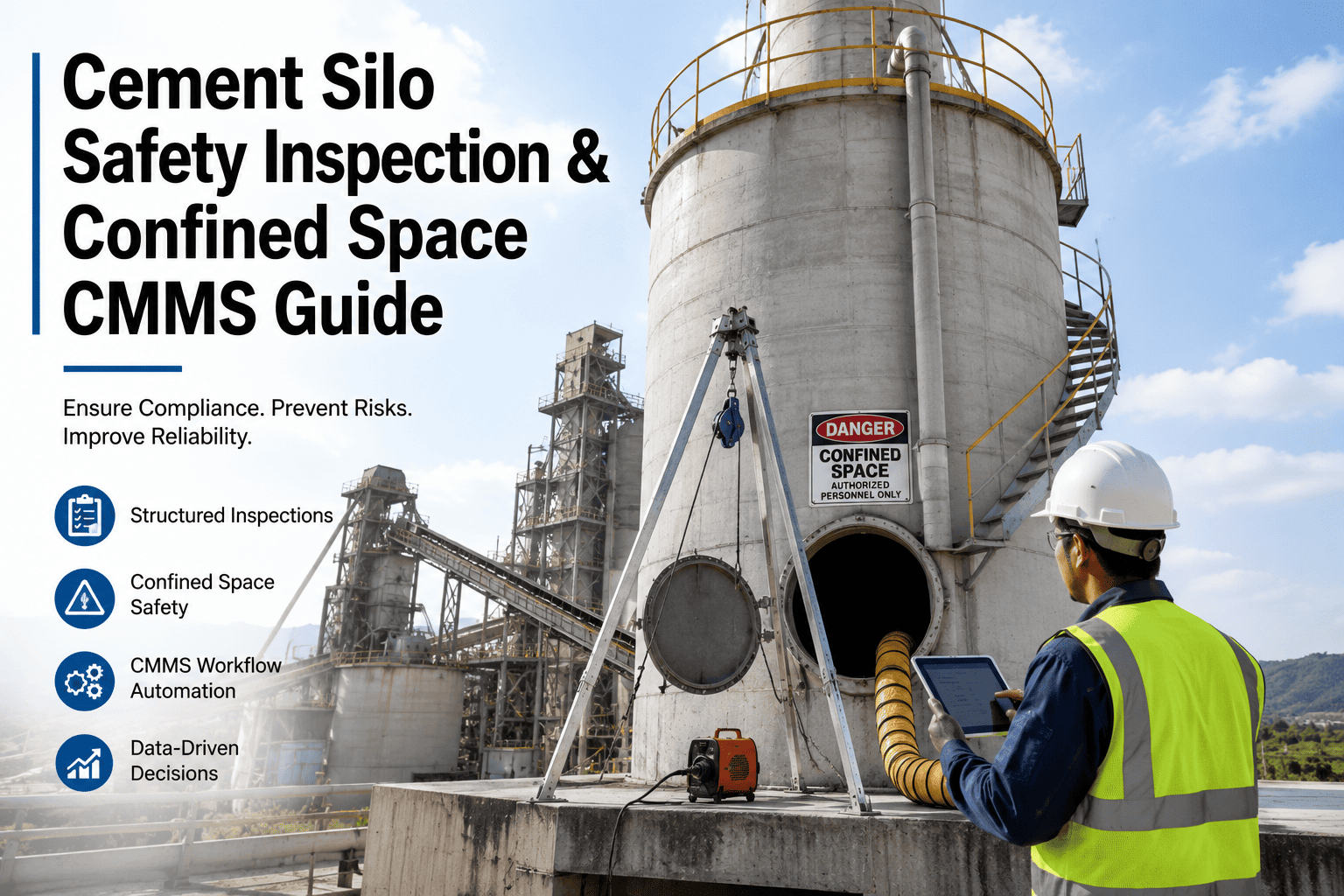
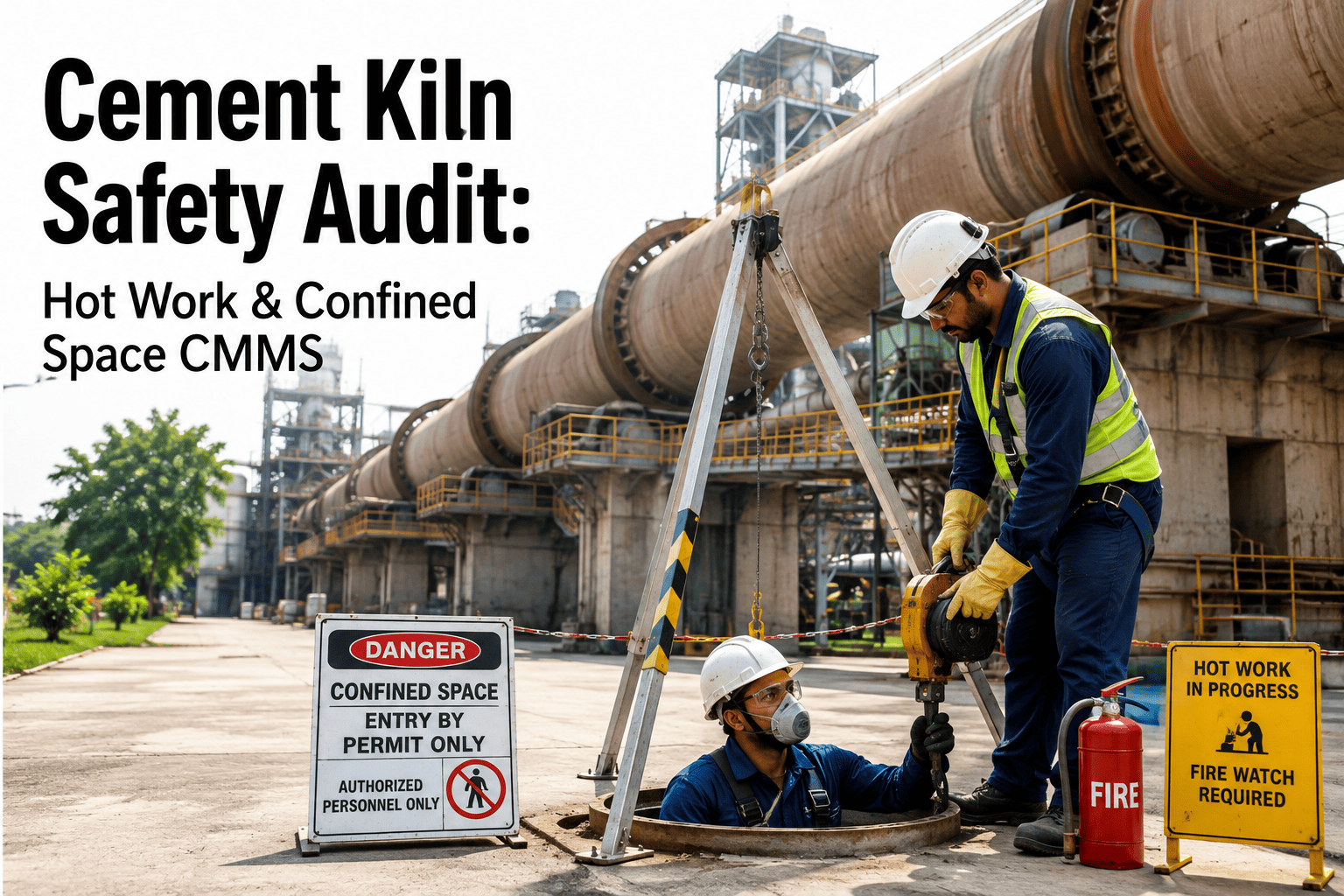
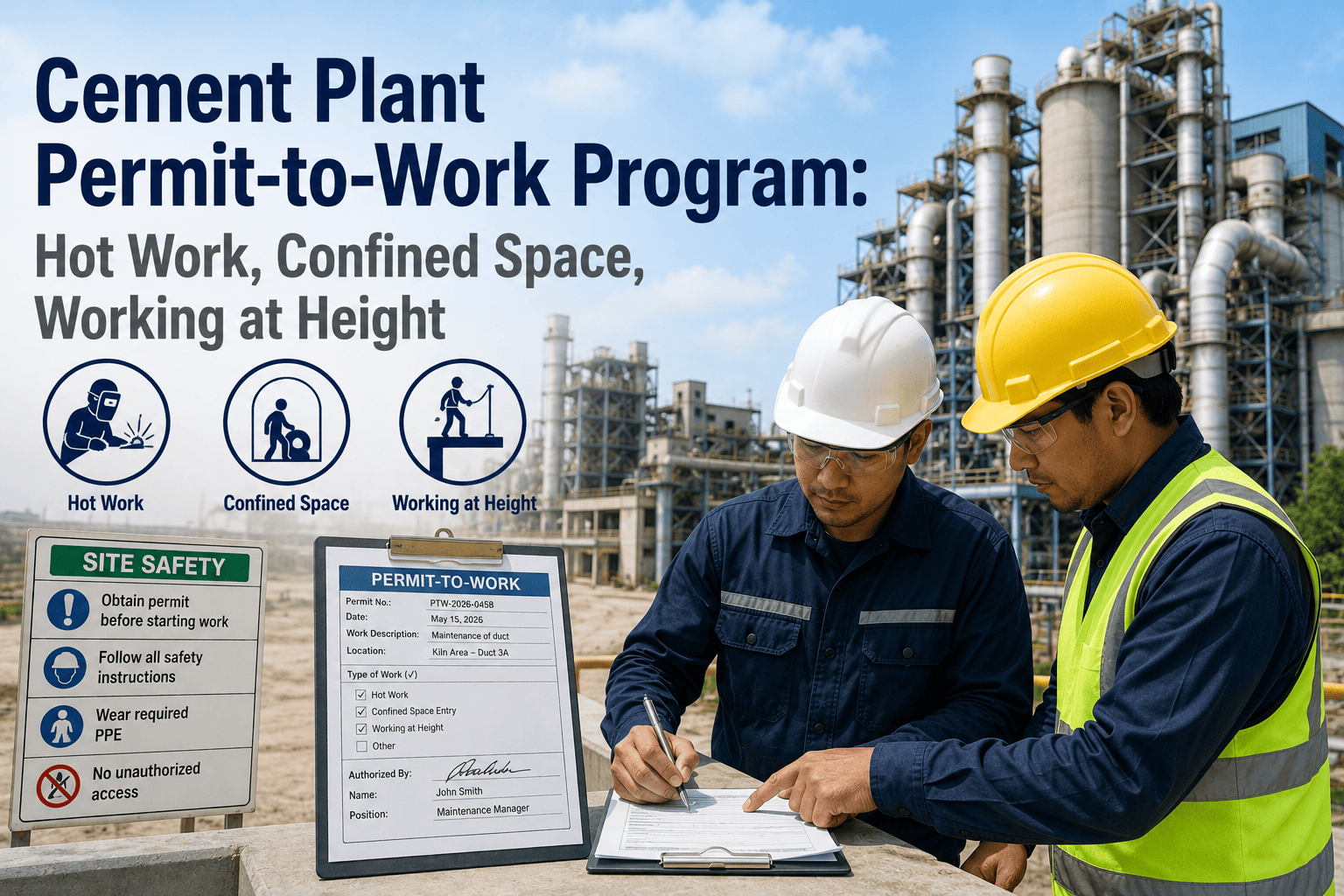
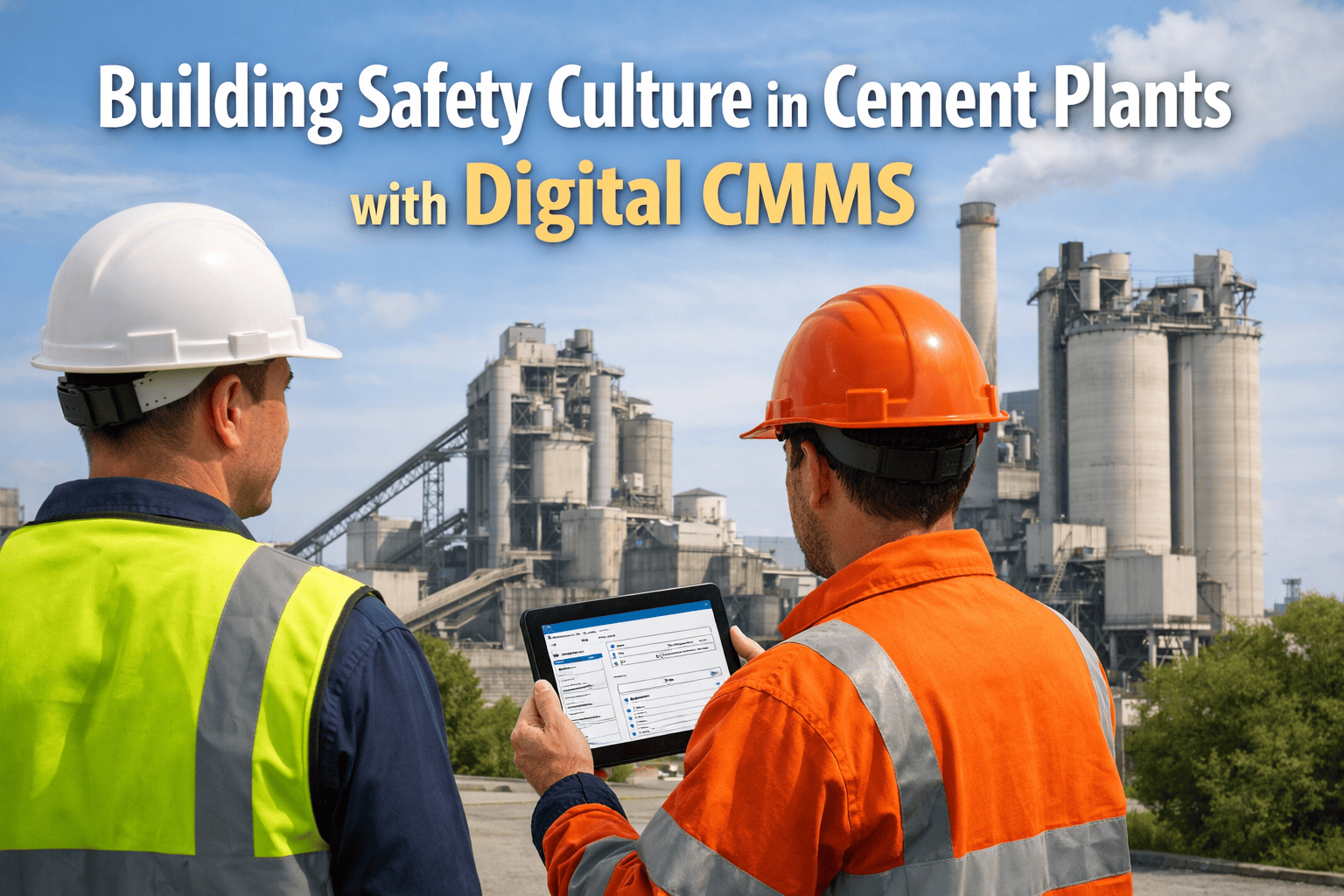
A cement plant contains more confined spaces per square meter than almost any other industrial facility — preheater cyclones, raw meal silos, clinker silos, cement storage domes, ball mill interiors, kiln shells, cooler compartments, coal hoppers, bag filter housings, underground tunnels, and process vessels. Each one is capable of killing a worker within minutes. The failure pattern is always the same: atmospheric testing done too early, a permit that expired overnight, an isolation list copied from the last entry without verifying current connections, and a rescue standby that means calling the fire brigade. In the cement industry, confined space incidents account for approximately 15% of all workplace fatalities — and for every worker who dies inside a confined space, 1.5 additional workers die in rescue attempts. Digital confined space permit management integrated with CMMS eliminates the paper permit gaps that create these tragedies, enforces atmospheric re-testing automatically, and generates complete audit trails that protect both workers and the operating licence of the plant. Oxmaint's permit-to-work system enforces every pre-condition before a permit can be approved — and every expiry before a space can be re-entered.
Where Paper Permit Systems Break Down — And When It Matters Most
A permit-to-work system exists to enforce a sequence of safety conditions before a worker enters a hazardous space. Paper systems enforce that sequence in theory. In practice, they fail at the exact moments that matter most — during handovers, during night shifts, during rushed shutdowns, and when multiple permits are active simultaneously across a 50-hectare plant site.
The Seven Paper Permit Failure Points in Cement Plant Operations
01
Atmospheric test completed hours before entry — not within the 30-minute requirement
Paper cannot enforce a time relationship between a gas test and entry. A test done at 6 AM is documented as "completed" even when the worker enters at 10 AM after a raw meal release has displaced oxygen overnight.
02
Isolation list copied from a previous entry without verifying current connections
Process modifications between entries — new pipework, reconnected circuits, changed energy sources — are invisible to a copied isolation list. Paper has no way to cross-reference against current plant state.
03
Permit expires at shift change — replacement crew re-enters on the expired document
A permit binder at the control room cannot alert a night shift supervisor that the permit covering an active space entry expired at 6 PM. Nobody checks unless something goes wrong.
04
Rescue plan is theoretical — no confirmed standby capability at point of entry
"A rescue plan exists" and "a trained rescue team is physically present at the entry point" are two entirely different safety states. Paper records the former. Only a digital system with named, confirmed rescue standby personnel can enforce the latter.
05
Multiple permits active simultaneously with no cross-check for conflicting work
In a cement plant shutdown with 40–60 work orders active simultaneously, two permit-required entries in the same gas zone can create mutual atmospheric hazards. Paper binders in different supervisors' hands cannot detect this conflict.
06
Gas detector calibration records not linked to the permit — undetected instrument failure
An uncalibrated gas detector can read safe atmospheres as safe when they are lethal. Paper permits record that a test was done but cannot verify the instrument used was within calibration window.
07
No complete audit trail for regulatory inspection — records across multiple paper binders
74% of OSHA inspections at cement facilities found at least one permit-required confined space documentation failure. Most cited plants had permits — but not in a form that proved the pre-conditions were met at the actual time of entry.
The Cement Plant Confined Space Map — What Requires a Permit and Why
Not every enclosed area at a cement plant carries the same risk profile. Understanding which spaces present which hazard types is the starting point for building a permit system that protects people — not one that simply generates paperwork. Oxmaint pre-loads the confined space register with cement plant asset classifications, so every space is already categorized before the first work order is issued.
Highest Risk
Preheater Cyclones and Kiln Interior
CO accumulation from combustion gases — odorless, fatal
Oxygen depletion from hot gas residue pockets
Material collapse from built-up clinker and raw meal
Extreme residual heat — refractory surfaces retain temperature hours after shutdown
Atmospheric re-test required every 30 minutes of occupancy. Any work cessation requires fresh test before re-entry.
Highest Risk
Raw Meal, Clinker, and Cement Silos
Engulfment by material collapse — death within seconds once engulfed
CO₂ release from stored limestone and raw meal
Oxygen displacement in sealed silo headspace
Bridged material that can release unpredictably under foot traffic
Entry requires minimum two-person team plus dedicated external attendant. Material flow isolation verified independently before permit approval.
High Risk
Ball Mill and VRM Interiors
Silica dust at lethal concentrations from liner and grinding media residue
Mechanical hazard from unsecured grinding media
Limited egress through mill end and access hatches
Full LOTO required with verified zero-energy state before any personnel entry. Respiratory protection mandatory from point of entry.
High Risk
Coal Hoppers and Fuel Storage Vessels
Explosive dust atmosphere from coal fines at LEL concentrations
CO accumulation from coal self-heating
Hot work prohibited — any ignition source is catastrophic
Continuous LEL monitoring required throughout entry. All ignition sources — including non-intrinsically safe equipment — prohibited.
Elevated Risk
Bag Filter Housings and Process Ducts
Silica and cement dust — respiratory hazard and surface accumulation
Limited access and egress points
Dust ignition risk during hot work near filter media
Permit required for any entry. Dust suppression or wetting required before personnel entry in actively used housings.
Elevated Risk
Underground Tunnels and Cable Pits
CO₂ pooling in low-lying areas — heavier than air
Limited ventilation and egress in extended runs
Water ingress risk during wet seasons in below-grade pits
CO₂ test at floor level required in addition to standard atmospheric battery. Forced ventilation established before entry.
Every Confined Space at Your Plant Can Be Pre-Loaded Into Oxmaint
Oxmaint deploys with cement plant confined space register templates pre-configured — including hazard classifications, atmospheric testing requirements, and permit approval workflows for each space type. Your team starts with a complete system, not a blank setup.
Atmospheric Hazards in Cement Plant Confined Spaces — The Testing Requirements
Atmospheric testing is the most time-sensitive and consequence-critical step in any confined space entry. Testing too early, testing in the wrong location within the space, or using an uncalibrated instrument all create the same outcome: a worker who believes the space is safe when it is not. Digital permit systems enforce testing requirements in a way paper never can.
Required Atmospheric Tests — Limits and Digital Enforcement
Digital enforcement requirement: Oxmaint blocks permit approval until atmospheric test results are entered against the specific permit and timestamp. If re-entry is required after a 30-minute gap, fresh test results must be submitted before the permit is re-validated.
How Digital Permit Management Closes Every Gap
The critical difference between a paper permit system and a digital one is enforcement, not documentation. Paper documents what was planned. A digital permit system enforces what must be done before entry is permitted — and what must happen continuously while personnel are inside.
Step 1
Work Order Classification Triggers Permit Requirement
When a work order is created against a confined space asset, Oxmaint automatically classifies the entry type and attaches the required permit template. No planner can schedule the work without a permit being initiated — the system enforces it before the work order reaches the technician's queue.
Step 2
Pre-Condition Checklist Must Be Completed in Full
Isolation verification, atmospheric testing with instrument serial number, rescue standby confirmation with named personnel, and entrant training currency — each is a required field with a mandatory evidence attachment. The permit cannot advance to approval until every pre-condition has a timestamped completion record.
Step 3
Time-Limited Permit with Automatic Expiry Alert
Every confined space permit in Oxmaint carries a hard expiry time — typically one shift maximum. As the expiry approaches, alerts go to the permit issuer, the site safety officer, and the authorized entrant. An expired permit cannot be marked as active. Re-entry requires a new permit with fresh pre-conditions.
Step 4
Active Entry Tracking — Personnel In and Out
From permit activation, the system tracks authorized entrants against the permit. If personnel are still recorded as inside when the permit approaches expiry, escalation alerts fire automatically. No space closure is possible without all entrants accounted for — closing the rescue gap that exists in paper systems.
Step 5
Immutable Audit Trail for Regulatory Review
Every permit — issued, active, expired, or cancelled — is stored with its complete pre-condition history, timestamp chain, personnel records, and gas test results. OSHA requires one-year retention of confined space permits. Oxmaint stores the complete audit trail indefinitely, with one-click export for any inspection cycle.
15%
Of all cement plant fatalities involve confined space incidents
74%
Of OSHA cement plant inspections find confined space documentation failures
$156K
Average OSHA citation for a single confined space documentation violation
1.5x
Rescuers who die for every worker killed in a confined space — due to failed rescue protocols
Frequently Asked Questions
How does digital permit management prevent re-entry on expired permits?
Oxmaint assigns a hard expiry time to every confined space permit at issuance. Once that time passes, the permit status automatically changes to expired and cannot be reactivated. Any attempt to use an expired permit generates an immediate alert to the safety supervisor. Re-entry requires a new permit with fresh atmospheric testing — the system blocks any workaround.
Can the system handle multiple simultaneous confined space entries during a kiln shutdown?
Yes. Oxmaint provides a live permit dashboard that shows every active confined space permit across the plant in real time — with space location, entrant count, expiry time, and rescue standby status. Safety supervisors managing 20–30 simultaneous permits during a shutdown have a single view instead of 30 paper binders in circulation.
How does the system link gas detector calibration records to individual permits?
Each gas detector is registered as an asset in Oxmaint with its calibration date and certificate. When an atmospheric test is logged against a permit, the system requires the instrument asset ID to be selected — and automatically validates that the instrument is within its calibration window. If it is not, the pre-condition cannot be marked as complete.
Does the digital system replace the need for a physical permit posted at the entry point?
Regulatory requirements in most jurisdictions require a copy of the permit to be posted or available at the point of entry. Oxmaint generates a printable permit from the digital record — so the field requirement is met while the enforcement and audit trail remain digital. The two complement each other rather than compete.
What happens to confined space permit records after a project or shutdown is complete?
Every permit is retained in the Oxmaint system indefinitely and linked to the specific asset (silo, cyclone, mill) where the entry occurred. OSHA requires minimum one-year retention. For plants under multi-year investigation windows or union environments with extended record-keeping obligations, the complete historical record is always searchable and exportable on demand.
Paper Permits Cannot Protect the People Paper Cannot Reach
Every confined space fatality in a cement plant follows a paper permit failure somewhere in the chain — a test done too early, a permit nobody knew had expired, a rescue team that existed on paper but not on site. Oxmaint enforces the entire permit sequence digitally, so the conditions required to keep workers safe are enforced at the moment they matter — not documented after the fact. Start with your confined space register pre-loaded, or walk through a live demo of how the permit system works in a cement plant shutdown scenario.