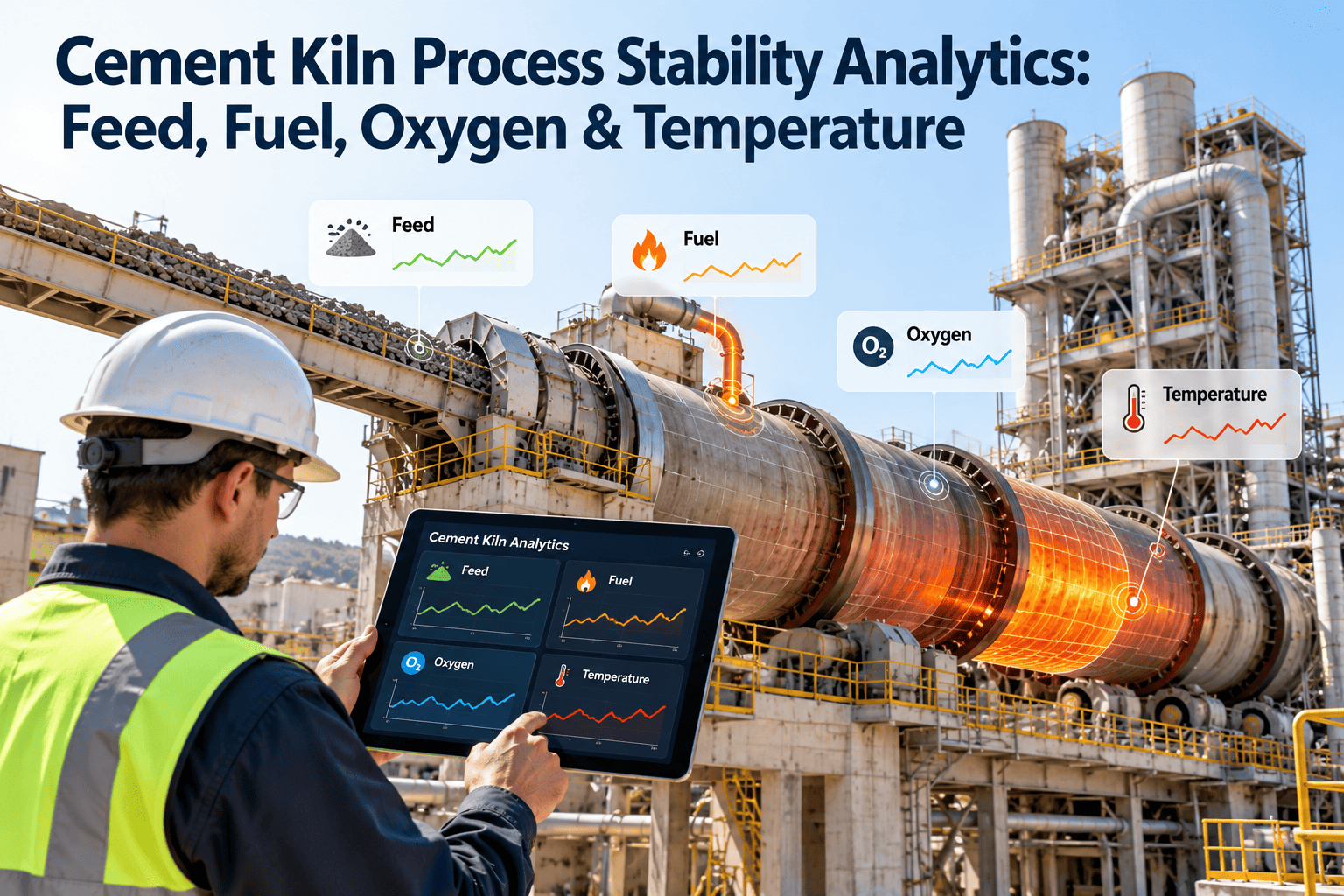
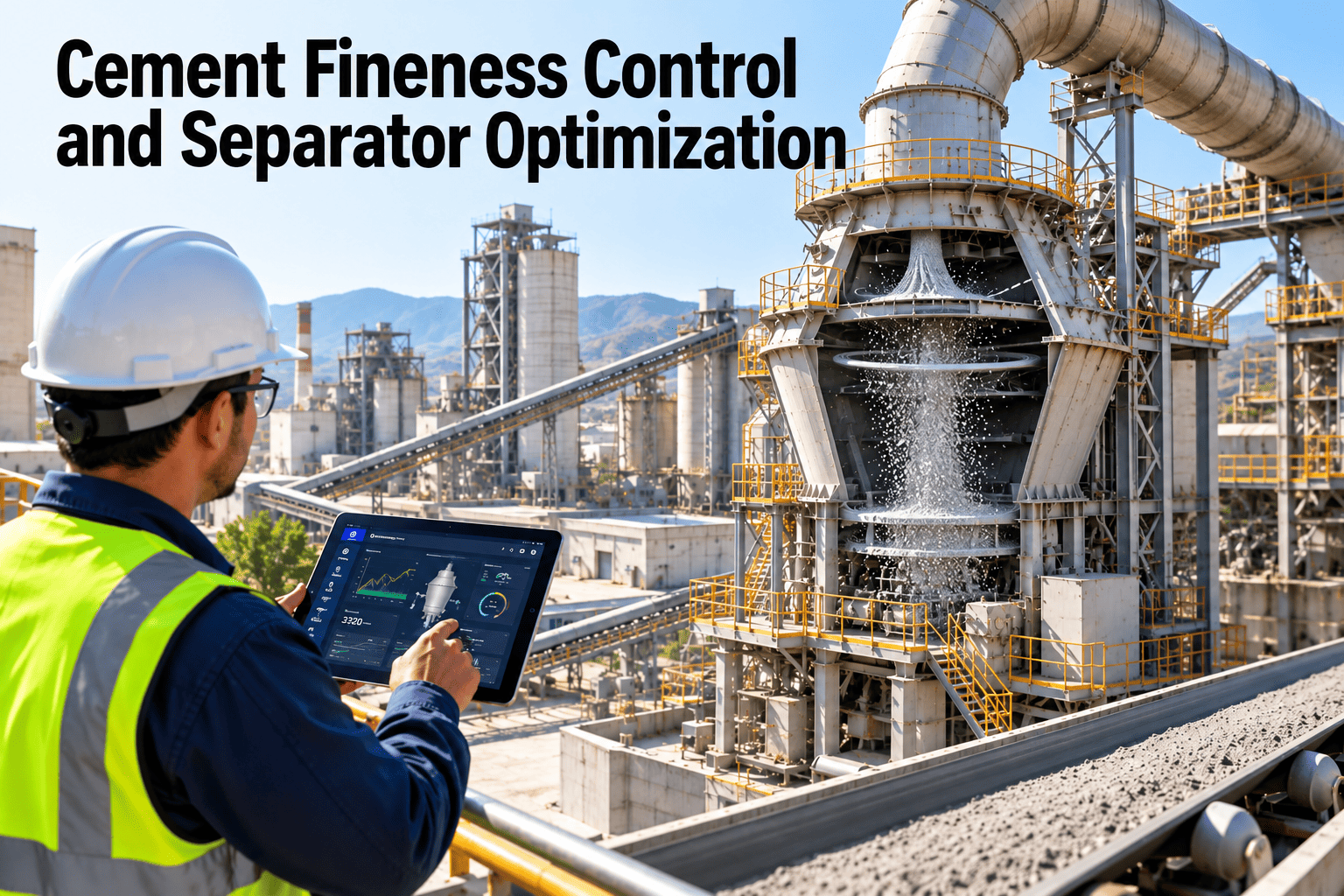
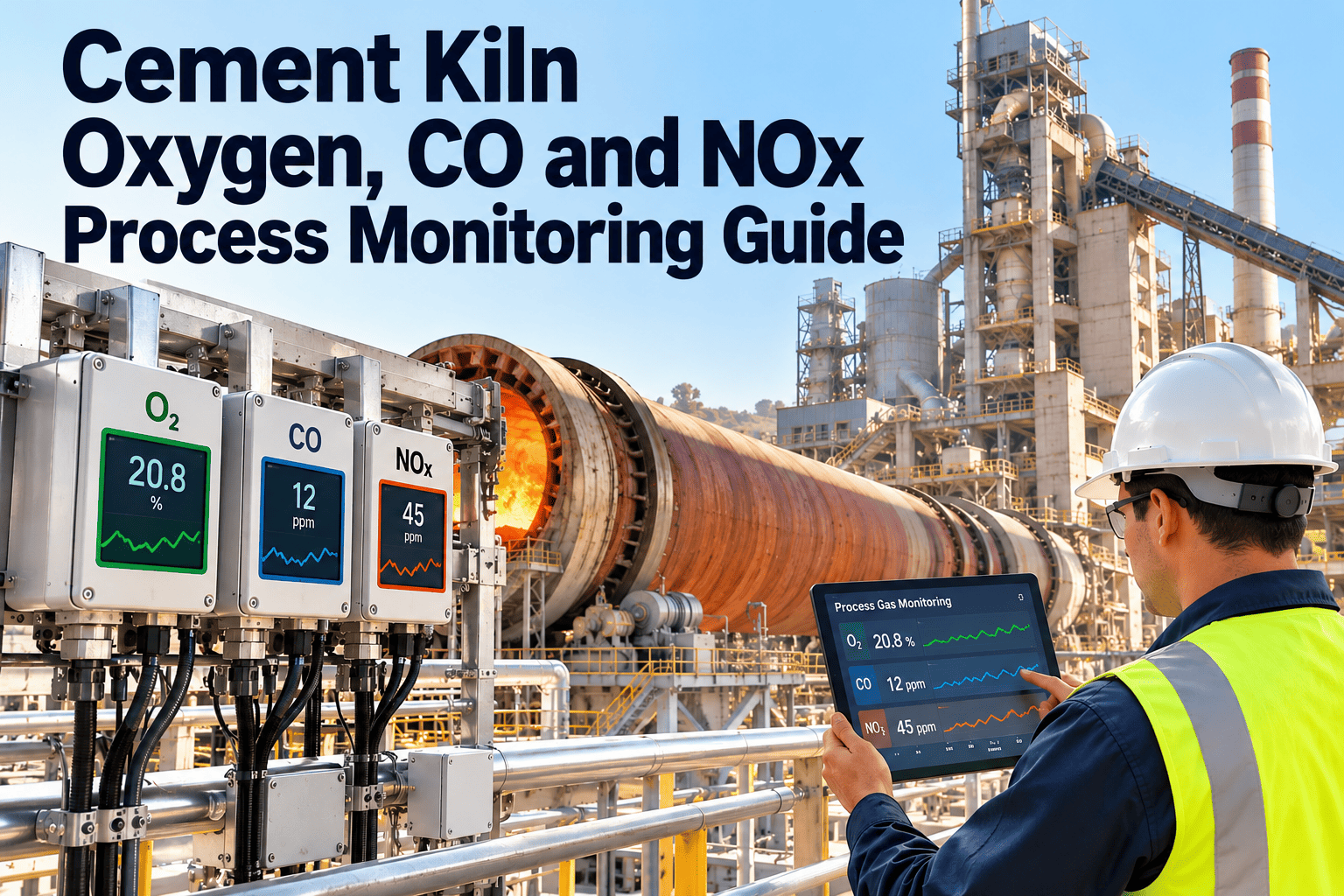
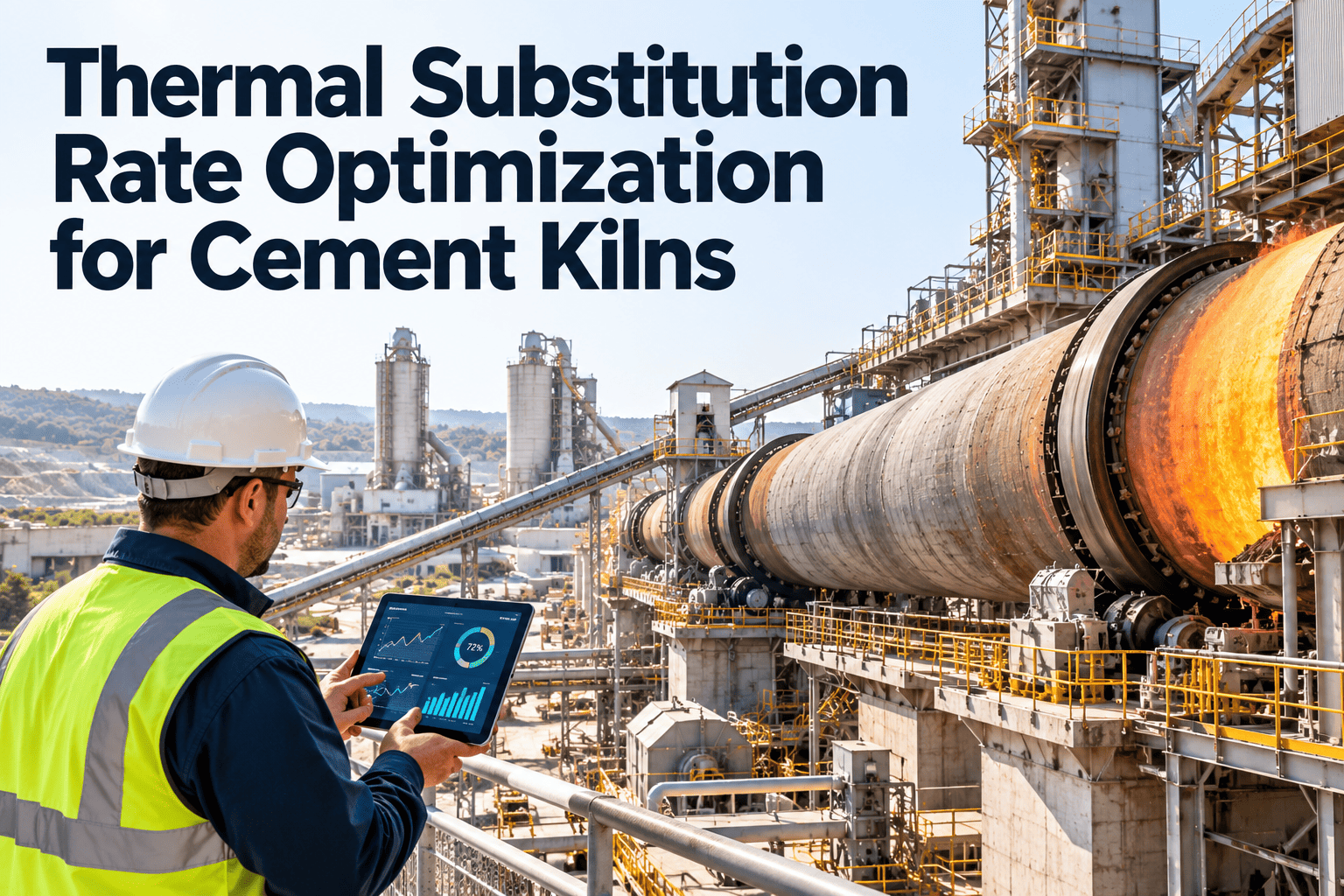
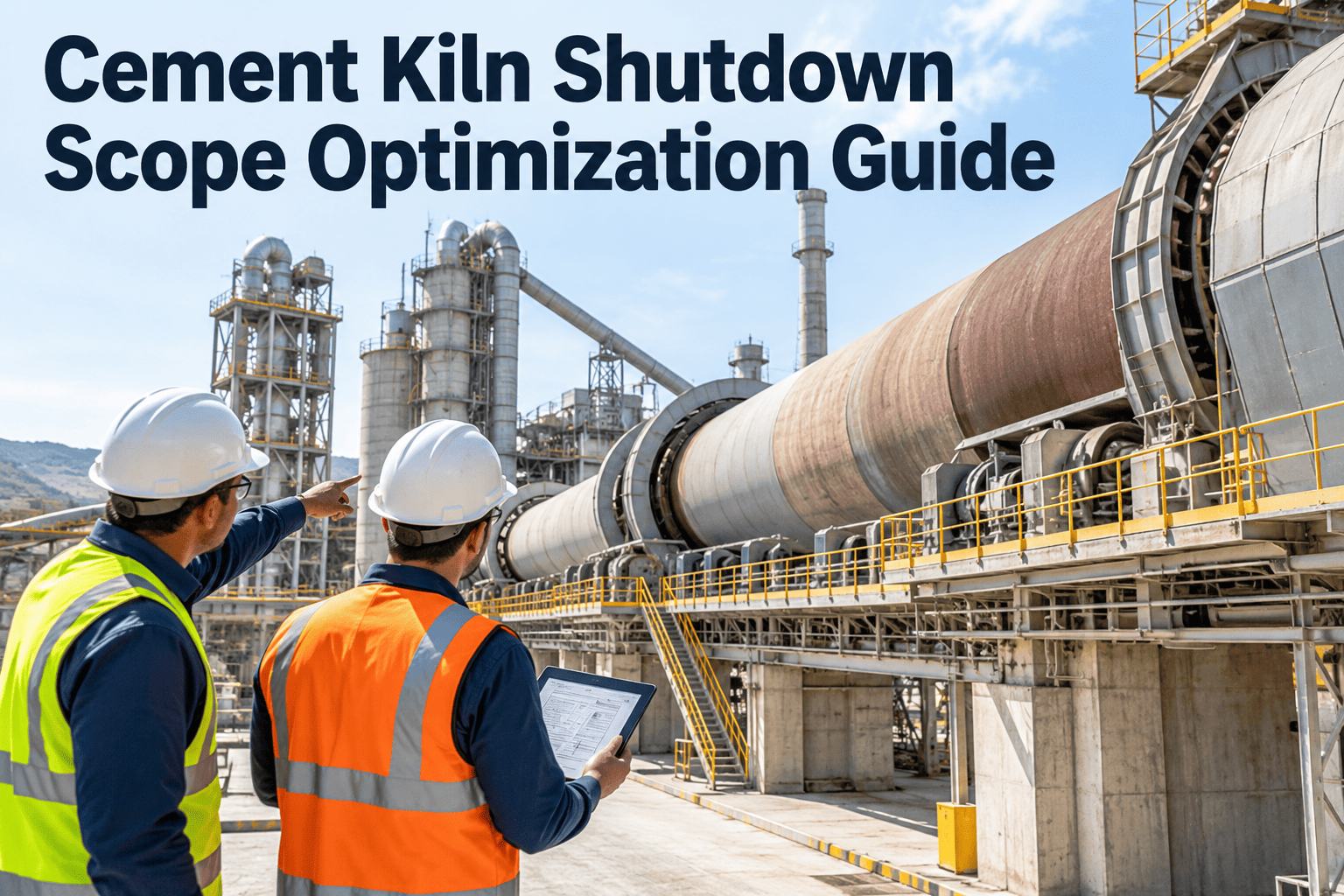
Advanced Process Control (APC) and expert systems have transformed cement manufacturing from reactive operator-dependent operations to predictive, self-optimizing production environments. Modern cement plants implementing APC solutions document 6-15% reductions in specific heat consumption, with kiln expert systems reducing manual operator interventions by up to 70% while simultaneously improving clinker quality consistency. The July 2024 release of FLSmidth's ECS/ProcessExpert v9.1 and ABB's partnership with Carbon Re for AI-enhanced optimization represent the industry's shift toward machine learning augmentation of traditional rule-based expert systems. For a typical 5,000 TPD cement plant spending $4 million annually on kiln fuel, AI-driven process control delivers $400,000-$600,000 in annual savings—achieving full payback within 4-8 months. Edge AI technology now enables 2-second response times versus 30 seconds for cloud-based systems, eliminating the control latency that previously limited optimization effectiveness. Sign up for Oxmaint to integrate process control data with maintenance workflows for comprehensive plant optimization.
Process Optimization Technology
Cement Plant Process Control: APC and Expert Systems
Transform kiln operations with advanced process control, AI-driven optimization, and intelligent expert systems for maximum efficiency and quality
6-15%
Heat Consumption Reduction
70%
Fewer Manual Interventions
4-8 Mo
ROI Payback Period
2 Sec
Edge AI Response Time
Evolution of Cement Process Control Technology
Process control in cement manufacturing has evolved through distinct technological generations, each delivering incremental improvements in stability, efficiency, and quality. Traditional PID loops provided basic regulatory control but struggled with the complex, non-linear interactions between kiln variables. Expert systems introduced rule-based decision logic that captured operator knowledge, enabling automated responses to common process disturbances. Modern AI and machine learning systems transcend rule-based limitations by continuously learning from thousands of process variables, discovering optimization patterns that even experienced operators cannot perceive.
1970s-1990s
Basic regulatory control using proportional-integral-derivative loops. Single-variable focus with limited interaction handling.
Temperature loops
Flow control
Pressure regulation
Limitation: Cannot handle process delays, coupling, or non-linear dynamics
1990s-2015
Rule-based knowledge systems encoding operator expertise. IF-THEN logic handles common disturbances automatically.
Fuzzy logic
Knowledge bases
Model predictive
Limitation: Static rules cannot adapt to changing conditions
2015-Present
Machine learning models continuously trained on process data. Neural networks discover non-obvious optimization patterns.
Deep learning
Digital twins
Reinforcement learning
Current State-of-Art
The transition from expert systems to AI-augmented control does not eliminate rule-based logic—it layers adaptive optimization on top of proven control strategies. ABB's 2024 partnership with Carbon Re exemplifies this approach, integrating machine learning models with the established Expert Optimizer platform to automatically adjust combustion targets based on ever-changing plant conditions. Book a demo to explore how modern process control integrates with maintenance management systems.
Process Control Zones in Cement Manufacturing
Effective APC implementation requires zone-specific control strategies tailored to the unique dynamics of each production area. Kiln operations involve extreme temperatures and slow thermal responses, demanding predictive control that anticipates changes minutes before they impact clinker quality. Grinding circuits operate with faster dynamics but complex load interactions. Raw material preparation requires adaptive control that compensates for feed variability. Each zone presents distinct control challenges requiring specialized algorithms and sensor configurations. Request a demo to see zone-specific control optimization in action.
K
Kiln and Pyroprocessing
Burning Zone Temp1,400-1,450°C
Free Lime Target0.8-1.5%
O₂ Post-Combustion1.5-3.0%
Kiln Speed2.5-4.0 RPM
APC Benefit: 3-7% fuel reduction, consistent clinker quality
P
Preheater and Calciner
Calciner Temp850-900°C
Cyclone Efficiency>85%
Tertiary Air Split55-65%
Fuel DistributionMulti-fuel
APC Benefit: Enables 50%+ alternative fuel substitution
C
Clinker Cooler
Clinker Exit Temp<100°C + ambient
Secondary Air Temp900-1,100°C
Heat Recovery>70%
Grate SpeedAuto-adjust
APC Benefit: Optimized heat recovery, reduced thermal stress
M
Cement Mill
Product Fineness3,000-4,500 cm²/g
Mill LoadingOptimized
Separator SpeedAuto-tuned
Power DrawkWh/t minimized
APC Benefit: 5-8% power reduction, quality consistency
Expert System Architecture and Components
Modern cement expert systems combine multiple AI technologies in a layered architecture that separates real-time control from strategic optimization. The base layer interfaces with DCS/PLC infrastructure through OPC-UA and Modbus protocols, requiring no replacement of existing control hardware. Model predictive control algorithms handle multi-variable optimization with constraint awareness. Knowledge-based rules encode process expertise for handling abnormal situations. Machine learning models continuously refine predictions based on accumulating operational data.
Layer 4: Strategic Optimization
Production Planning
Energy Management
Quality Targets
Layer 3: AI/ML Optimization
Neural Networks
Digital Twins
Predictive Models
Layer 2: Expert Control
Rule Engine
Fuzzy Logic
MPC Controller
Layer 1: Process Interface
DCS/PLC
OPC-UA
Sensors/Actuators
The layered architecture enables gradual deployment—plants can begin with supervisory advisory mode, allowing operators to accept or reject APC recommendations before transitioning to closed-loop automatic control. This approach builds operator confidence while the system learns plant-specific operating patterns. Schedule a demo to understand how CMMS integration enhances APC effectiveness through equipment condition awareness.
Integrate Process Control with Maintenance Intelligence
Connect APC performance data with equipment health monitoring, work order management, and predictive maintenance workflows for comprehensive plant optimization.
Key Performance Indicators for APC Systems
Measuring APC effectiveness requires tracking both direct process improvements and indirect benefits across quality, energy, and equipment performance. Specific energy consumption (SEC) provides the primary efficiency metric, with best-in-class kilns achieving 2,800-3,000 MJ/t clinker compared to the 3,100-3,400 MJ/t industry average. Free lime variability indicates burning consistency, while alternative fuel substitution rate demonstrates the system's ability to maintain stability with variable fuel properties. Operator intervention frequency reveals how effectively automation handles routine disturbances.
Specific Heat Consumption
Target: <3,000 MJ/t clinker
APC Impact: 3-7% reduction typical
Mill Specific Power
Target: <30 kWh/t cement
APC Impact: 5-8% reduction typical
Heat Recovery Rate
Target: >70% cooler efficiency
APC Impact: Optimized airflow distribution
Free Lime Variability
Target: σ <0.3%
APC Impact: 40-60% reduction in variance
Kiln Stability Index
Target: >95% time in control
APC Impact: Near-continuous stable operation
Alternative Fuel Rate
Target: >40% thermal substitution
APC Impact: Enables 50%+ with stability
Implementation Roadmap and ROI Analysis
APC deployment follows a structured methodology that minimizes operational risk while demonstrating value at each stage. Phase 1 establishes baseline performance through data collection and sensor validation. Phase 2 deploys advisory mode control with operator oversight. Phase 3 transitions proven subsystems to closed-loop automatic control. Phase 4 extends optimization across the full production line and integrates with enterprise systems. Most cement plants achieve full payback within 4-8 months based on fuel savings alone, with first-year ROI exceeding 300% when factoring in quality improvements and reduced maintenance costs.
Phase 1
Assessment
4-6 Weeks
Energy audit and baseline SEC
Sensor gap analysis
Historical data collection
DCS/PLC connectivity verification
Phase 2
Advisory Mode
8-12 Weeks
Model training on plant data
Operator recommendation display
Performance validation
Exception handling tuning
Phase 3
Closed-Loop
6-10 Weeks
Automatic control activation
Operator override protocols
ROI validation vs baseline
Model continuous learning
Phase 4
Enterprise Scale
Ongoing
Multi-line deployment
CMMS integration
Corporate reporting
Continuous optimization
Annual Fuel Cost
$4,000,000
APC Fuel Savings (10-15%)
$400,000-$600,000
Typical Investment
$305,000-$780,000
Payback Period
4-8 Months
AI kiln optimization platforms connect to existing DCS, PLC, and SCADA infrastructure through standard industrial protocols—no equipment replacement required. The system operates in advisory mode before transitioning to closed-loop control, ensuring operator confidence before full automation. Sign up free to explore how maintenance data integration enhances process control effectiveness.
Integration with CMMS and Maintenance Systems
Process control effectiveness depends directly on equipment condition—a degraded burner tip, worn grate plates, or fouled cyclones all impact APC ability to maintain optimal operation. Integrating APC with computerized maintenance management systems creates a feedback loop where process performance deviations trigger predictive maintenance alerts, while equipment condition data informs control system expectations. This integration transforms maintenance from reactive response to proactive optimization support, preventing the equipment degradation that undermines APC performance.
APC → CMMS Data Flow
Process deviation alerts trigger inspection work orders
Equipment efficiency degradation flags maintenance
Sensor anomalies initiate calibration tasks
Energy variance reports link to equipment history
CMMS → APC Data Flow
Equipment condition informs control targets
Maintenance schedules adjust optimization limits
Spare parts availability affects operating strategy
Historical failure data trains predictive models
Optimize Process Control with Maintenance Intelligence
Connect your APC system performance data with Oxmaint's equipment tracking, work order management, and predictive analytics for truly integrated plant optimization.
Frequently Asked Questions
What is the difference between expert systems and AI/ML process control in cement plants?
Expert systems use pre-programmed IF-THEN rules encoding human operator knowledge—effective for known scenarios but unable to adapt to changing conditions. AI/ML systems continuously learn from process data, discovering optimization patterns that static rules cannot capture. Modern implementations layer AI optimization on top of expert system foundations, combining proven rule-based stability with adaptive machine learning. The 2024 ABB-Carbon Re partnership exemplifies this hybrid approach.
Does APC require replacing existing DCS or PLC infrastructure?
No. Modern APC platforms connect to existing DCS, PLC, and SCADA systems through standard industrial communication protocols including OPC-UA and Modbus. The APC functions as a supervisory layer that reads process data and writes optimized setpoints back to your current control system. No major capital equipment changes are needed, and systems can operate in advisory mode before transitioning to closed-loop control.
What ROI can cement plants expect from APC implementation?
Most cement plants achieve full payback within 4-8 months based on fuel savings alone. A 5,000 TPD plant spending $4 million annually on kiln fuel can expect $400,000-$600,000 in annual savings from 10-15% fuel reduction. When factoring in extended refractory life, fewer unplanned stoppages, improved clinker quality reducing grinding energy, and higher alternative fuel utilization, first-year ROI often exceeds 300%.
How does APC enable higher alternative fuel substitution rates?
Alternative fuels like refuse-derived fuel, biomass, and tires introduce combustion variability that manual control handles poorly—causing most plants to cap substitution rates conservatively. APC continuously adapts kiln parameters in real-time as fuel properties change between loads, automatically adjusting combustion settings to maintain thermal stability, clinker quality, and emissions compliance at higher substitution rates. Plants with APC routinely achieve 50%+ thermal substitution versus 20-30% with manual control.
What is Edge AI and how does it improve process control response time?
Edge AI deploys machine learning models directly on local hardware at the plant rather than processing data in remote cloud servers. This eliminates network latency, enabling 2-second response times versus 20-30 seconds for cloud-based systems. For kiln operations where temperature fluctuations can waste significant fuel within seconds, Edge AI's real-time optimization prevents efficiency losses before they compound.
How should cement plants integrate APC with maintenance management systems?
Integration creates bidirectional data flow: APC process deviation alerts trigger inspection work orders in CMMS, while equipment condition data from maintenance records informs control system operating limits. This feedback loop enables predictive maintenance based on process performance degradation and allows APC to adjust targets when equipment condition affects achievable optimization. Modern CMMS platforms offer OPC-UA connectivity and API integration for seamless data exchange.
What are the leading APC solutions for cement manufacturing?
Major APC platforms include ABB Ability Expert Optimizer (with 2024 Carbon Re AI enhancement), FLSmidth ECS/ProcessExpert v9.1 (released July 2024), and Siemens Sicement IT MCO. Each offers kiln optimization, mill control, and quality prediction capabilities. Selection depends on existing DCS vendor relationships, specific plant requirements, and integration needs. Most vendors offer risk-free pilot programs to demonstrate ROI before full commitment.