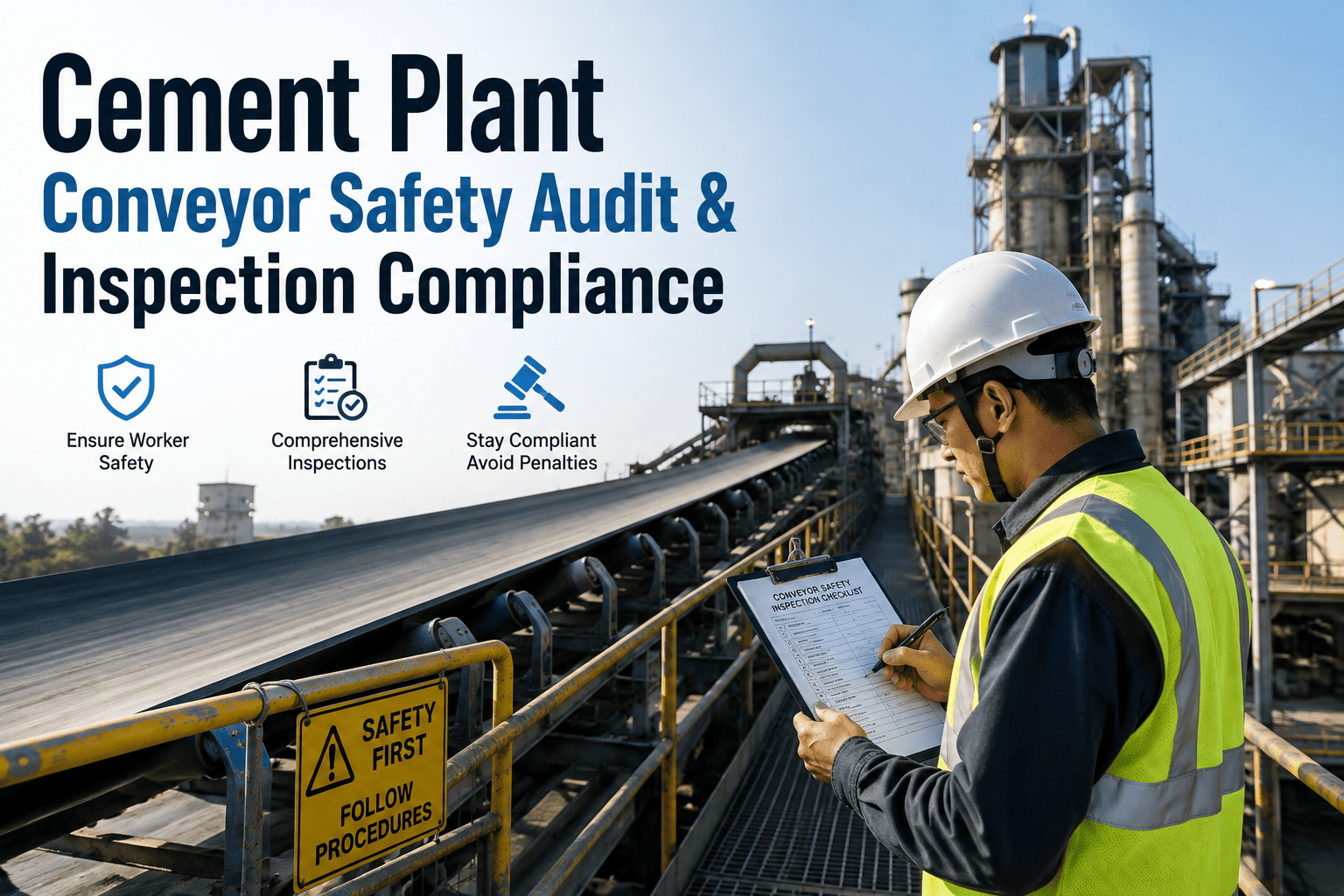
Cement manufacturing is one of the most heavily regulated industries on the planet. A single plant may face simultaneous oversight from environmental agencies, occupational safety bodies, mining regulators, and quality standards authorities — each with different reporting timelines, documentation requirements, and penalty structures. Non-compliance doesn't just mean fines; it means production shutdowns, permit revocations, and reputational damage that can take years to recover.
This pillar guide maps the complete regulatory landscape for cement plants and provides a digital compliance management framework that transforms audit preparation from a scramble into a continuous, automated process. Digitize your compliance program today.
Cement Plant Regulatory Compliance Management: Complete Guide
From reactive audit scrambles to always-ready compliance — automate documentation, track corrective actions, and eliminate regulatory risk with digital CMMS integration
Cement plants operate at the intersection of heavy industry, mining, chemical processing, and energy production — subjecting them to an extraordinary regulatory burden. The average integrated cement plant must comply with 15–25 distinct regulatory frameworks simultaneously. Managing this with paper-based systems and spreadsheets is not just inefficient — it's a ticking time bomb. Assess your compliance readiness.
$2.8M
Avg Penalty Exposure
Annual fine risk for a mid-size cement plant with compliance gaps
15–25
Regulatory Frameworks
Number of simultaneous regulations a typical cement plant must meet
340+
Annual Filing Items
Reports, permits, inspections, and certifications due per year
72 Hrs
Avg Audit Prep Time
Staff hours spent scrambling before each regulatory inspection
The Hidden Cost: Beyond fines, compliance failures trigger production shutdowns (costing $50K–$150K/day), increase insurance premiums by 15–30%, damage community relations, and can result in personal liability for plant managers and directors. The real question isn't whether you can afford a digital compliance system — it's whether you can afford not to have one.
Cement plants face a multi-layered regulatory environment spanning environmental emissions, workplace safety, mining operations, product quality, and waste management. Each area has its own reporting cadence, inspection triggers, and penalty scales. Map your regulatory obligations with OxMaint.
EPA / CPCB / State Environment Boards
Cement kilns are major sources of PM, SO₂, NOₓ, mercury, and dioxins. Plants must comply with National Emission Standards for Hazardous Air Pollutants (NESHAP) or equivalent local standards, including continuous emissions monitoring (CEMS).
□ Continuous Emissions Monitoring System (CEMS) — real-time stack data
□ Quarterly excess emission reports
□ Annual compliance certification to EPA/CPCB
□ Opacity monitoring and bag filter efficiency records
□ Kiln operating parameter limits (temperature, feed rate, O₂)
Penalty Range: $10,000–$100,000+ per day of violation. Repeat violations can trigger consent decrees costing $10M–$50M+.
OSHA / DGMS / State Labour Departments
Cement plants present high-risk environments: confined spaces (silos, preheaters), rotating equipment, electrical hazards, dust exposure, thermal burns, and fall risks. Comprehensive safety programs are legally mandated.
□ Lockout/Tagout (LOTO) programs for all energy-isolation points
□ Confined Space Entry permits and rescue plans
□ Respirable crystalline silica exposure monitoring (PEL: 50 µg/m³)
□ Fall protection plans for kiln, preheater, and silo work
□ Machine guarding audits — conveyors, mills, fans
□ Emergency action and fire prevention plans
Penalty Range: $16,131 per serious violation (OSHA). Willful violations: $161,323 each. Fatalities trigger criminal investigation.
EPA / State PCBs / Water Authorities
Cement plants require multiple environmental permits covering air, water, and land use. Stormwater runoff from quarry operations, process water from cooling systems, and dust suppression water must meet discharge standards.
□ Title V Air Permit — annual compliance certification
□ NPDES/Stormwater permits — quarterly sampling, annual reports
□ Groundwater monitoring at quarry and waste disposal areas
□ Dust management plans — fugitive emissions from stockpiles, roads
□ Environmental Impact Assessment (EIA) renewals
Penalty Range: $25,000–$50,000 per day for permit violations. Permit revocation halts all operations.
MSHA / DGMS / State Mining Departments
Integrated cement plants with captive quarries must comply with mine safety regulations covering blasting, slope stability, haul road standards, and equipment safety for mobile mining fleet.
□ Mine Safety and Health Administration (MSHA) — Part 56 compliance
□ Blasting plans with seismic and noise monitoring records
□ Slope stability assessments and bench height compliance
□ Mobile equipment pre-shift inspection records
□ Quarry rehabilitation and progressive reclamation plans
Penalty Range: $5,000–$250,000+ per citation under MSHA. "Flagrant" violations: $329,000 per violation.
BIS / ASTM / EN Standards Bodies
Cement must meet national and international quality standards. Quality management systems (ISO 9001) and product certifications (BIS marks, CE marking) require documented testing, calibration records, and traceability.
□ ISO 9001 Quality Management System — annual surveillance audits
□ BIS/ASTM product testing — daily/shift sampling records
□ Laboratory equipment calibration logs and certificates
□ Raw material quality tracking and supplier qualification
□ Non-conformance reports with corrective action documentation
Penalty Range: Product certification withdrawal stops sales. ISO decertification loses major contracts. Defective product liability is unlimited.
EPA / State PCBs / Hazardous Waste Authorities
Plants co-processing alternative fuels (tires, plastics, solvents, waste oil) face additional RCRA/hazardous waste regulations. Kiln dust (CKD) disposal, used refractory management, and oil/chemical storage all require documented compliance.
□ RCRA hazardous waste generator status and manifests
□ Alternative fuel feed quality testing and emission impact records
□ Cement Kiln Dust (CKD) disposal or beneficial reuse documentation
□ Used oil and chemical storage inspections (weekly)
□ Spill Prevention, Control & Countermeasure (SPCC) plans
Penalty Range: $70,000+ per day per violation under RCRA. Criminal penalties for knowing violations include imprisonment.
One missed deadline can trigger a cascade. A single overlooked permit renewal or late emission report can result in Notices of Violation, production shutdowns, and escalating penalties. OxMaint's compliance calendar ensures nothing falls through the cracks.
A digital compliance management system transforms regulatory obligations from scattered spreadsheets and filing cabinets into a centralized, automated, and auditable platform. Here's the four-pillar framework that ensures always-ready compliance. Explore the compliance platform.
Purpose: A single source of truth for every regulatory obligation — what's due, when, to whom, and who's responsible.
CMMS Capabilities:
□ Master register of all permits, licenses, certifications with expiry dates
□ Automated reminders: 90-day, 60-day, 30-day, and 7-day alerts before deadlines
□ Assignment of compliance owners with escalation chains
□ Regulatory change tracking — flag when new rules affect your plant
□ Dashboard view: all upcoming obligations by category and deadline
Purpose: Digitize recurring inspections, transform checklists into data, and automatically flag non-conformances for corrective action.
CMMS Capabilities:
□ Pre-built inspection templates: LOTO audits, confined space permits, equipment guards, SPCC, fire systems
□ Mobile completion with photo evidence, GPS stamps, and digital signatures
□ Auto-generation of corrective action work orders when "fail" items detected
□ Historical inspection data for trend analysis and repeat non-conformance tracking
□ Inspection schedule auto-generated from compliance calendar
Purpose: Ensure every finding from inspections, audits, and incidents is tracked to closure with root cause analysis and verification.
CMMS Capabilities:
□ CAPA register linked to source (inspection finding, audit observation, incident report)
□ Root cause analysis templates (5 Why, fishbone) with documentation
□ Assignment, priority, and due date tracking with escalation alerts
□ Verification step: responsible person confirms fix, re-inspects, uploads evidence
□ Aging report: open CAPAs by category, age, and responsible department
Purpose: Maintain an always-current, audit-ready documentation repository with automated report generation.
CMMS Capabilities:
□ Document management: permits, SOPs, training records, calibration certs — all version-controlled
□ Automated regulatory report generation from inspection and work order data
□ Audit trail: every action timestamped, every change logged, every approval recorded
□ One-click audit package: generate complete documentation set for any regulatory area
□ Export to regulatory formats: EPA, OSHA, MSHA, ISO reporting templates
From 72 hours of audit prep to 15 minutes. OxMaint's one-click audit package pulls all inspection records, CAPA closures, training documentation, and equipment maintenance history into a single compliance report — ready for any inspector.
When a regulatory inspector calls to schedule a visit, the clock starts ticking. Plants with digital compliance systems are ready immediately. Plants without them enter crisis mode. Here's the timeline — and what should happen at each stage. Get your audit readiness assessment.
!
Audit Notification Received
Day 0 — Immediate Response Required
Inspector announces visit (could be 24 hours to 30 days notice — or unannounced). With OxMaint, your compliance status is already visible in the dashboard. No scramble needed.
Digital Plant: Generate one-click audit package. Review open CAPAs. Confirm all inspections current.
Paper Plant: Panic. Pull team off production. Start hunting for files in cabinets and email inboxes.
2
Pre-Audit Review & Gap Analysis
Day 1–3 — Internal Verification
Internal compliance team reviews documentation completeness for the specific regulatory area being audited. Identifies any gaps and initiates rapid corrective actions.
Digital Plant: Run compliance score dashboard for the target area. Flag items below threshold. Assign rapid closures.
Paper Plant: Realize training records are missing for 3 operators. Discover last SPCC inspection wasn't documented. Backdate signatures (risk of fraud).
3
Inspector On-Site — Walkaround & Document Review
Audit Day — Full Transparency
Inspector tours the plant, checks equipment conditions, reviews documentation, and interviews employees. First impressions matter enormously — organized documentation signals a well-managed plant.
Digital Plant: Pull up any record on tablet in seconds. Show inspection history, CAPA closures, training certs — all with timestamps and photo evidence.
Paper Plant: Send runner to find the binder. Hope the inspector doesn't ask for records from 2 years ago. Explain why some signatures are missing.
✓
Post-Audit Response & Corrective Actions
Day 1–30 Post-Audit — Formal Response
Address any findings, submit formal responses, and implement corrective actions within required timeframes. Digital tracking ensures nothing is missed and provides documented evidence of compliance.
Digital Plant: Inspector findings entered as CAPAs with auto-assigned owners, deadlines, and escalation. Progress tracked to closure with verification evidence.
Paper Plant: Assign findings verbally in a meeting. Hope people follow through. No systematic tracking. Risk repeat findings at next audit.
Each compliance area requires specific, recurring inspections with documented evidence. Below are the critical inspection categories that cement plants must digitize to maintain always-ready compliance. Deploy pre-built compliance checklists with OxMaint.
The difference between paper-based compliance management and a digital CMMS-powered system is the difference between hoping you're compliant and knowing you are. See the transformation for your plant.
Audit Preparation
72+ hours of frantic file-hunting across departments. Missing records discovered during the audit. Inconsistent documentation quality.
Audit Preparation
15-minute one-click audit package generation. All records centralized, timestamped, and complete. Always audit-ready.
Deadline Management
Relies on individual memory, outlook reminders, or wall calendars. Deadlines missed when key staff on leave or turnover occurs.
Deadline Management
Automated compliance calendar with cascading alerts. Escalation to management if deadlines approach without action. Zero reliance on individual memory.
Corrective Actions
Assigned verbally or via email. No systematic tracking. Same findings repeat audit after audit. No accountability trail.
Corrective Actions
CAPA system with owner, deadline, root cause, and verification steps. Aging reports flag overdue items. Recurrence tracking identifies systemic issues.
Evidence Quality
Handwritten forms, illegible signatures, undated entries. No photos. Questionable authenticity. Inspectors skeptical of records.
Evidence Quality
Digital records with timestamps, GPS coordinates, photo evidence, and biometric signatures. Tamper-proof audit trail. Inspector confidence high.
Annual Compliance Risk Exposure:
$2.8M+
+ Production shutdowns + Reputation damage
→
Digital Compliance System:
95%+
Compliance Score + Zero Missed Deadlines
Don't wait for an audit to find out if you're compliant. A Compliance Health Score (CHS) provides a real-time, quantified view of your plant's regulatory posture — measured daily, not annually. Automate your compliance scoring with OxMaint.
Permits & Licenses (25%)
100 = All current, renewals filed on time
75 = One permit within 30 days of expiry, renewal in progress
50 = Permit expired, renewal pending
0 = Operating without valid permit
Inspections Completed (25%)
100 = All recurring inspections completed on schedule
75 = 90%+ completion rate, minor delays
50 = 75–89% completion, some overdue
0 = Critical inspections overdue by >30 days
CAPA Closure Rate (20%)
100 = All CAPAs closed within deadline, verified
75 = 90%+ closed, few aging items
50 = Significant open items >30 days old
0 = Critical CAPAs unaddressed >60 days
Training Currency (15%)
100 = All employees current on required training
75 = 95%+ current, renewals scheduled
50 = 10%+ of workforce with expired certifications
0 = Systematic training gaps across departments
Documentation Completeness (15%)
100 = All SOPs current, records complete, versions controlled
75 = Minor gaps, documents under review
50 = Significant missing records or outdated SOPs
0 = No documentation system in place
CHS Readiness Levels
90–100
Audit-Ready
Inspector can arrive tomorrow. Complete documentation, all actions current, zero overdue items.
70–89
Manageable Gaps
Minor items to address. 1–2 day preparation needed. No critical findings expected.
50–69
At Risk
Significant compliance gaps. High probability of findings. Immediate action plan required.
<50
Critical Exposure
Multiple compliance failures. Production shutdown risk. Executive intervention needed immediately.
See your Compliance Health Score in real time. OxMaint's compliance dashboard calculates CHS automatically from your inspection data, CAPA status, permit dates, and training records — updated every day, visible plant-wide.
Transitioning from paper-based compliance to a fully digital system is a phased process. Start with the highest-risk areas, prove the value, then expand across all regulatory domains. Get your implementation plan.
Audit & Register: Inventory all permits, licenses, certifications, and recurring inspection requirements. Assign owners. Load into CMMS compliance calendar with all deadlines and alert chains.
Deliverable: Complete obligation register with automated alerts
Success Metric: 100% of regulatory deadlines tracked digitally
Digitize High-Risk: Deploy digital checklists for safety inspections (LOTO, confined space, machine guarding), environmental inspections (CEMS, bag filters, stormwater), and equipment certifications. Train inspectors on mobile app.
Deliverable: Top 10 inspection types fully digitized
Success Metric: 95%+ on-time inspection completion
Close the Loop: Implement CAPA tracking system linked to inspections and incidents. Digitize document management — SOPs, permits, training records, calibration certificates. Enable one-click audit package generation.
Deliverable: Full CAPA system + digital document repository
Success Metric: 90%+ CAPA closure rate within deadline
Always-Ready: Activate Compliance Health Score dashboard. Implement regulatory change monitoring. Launch management review cycles with compliance trend reporting. Achieve always-ready audit posture.
Deliverable: Real-time CHS dashboard + management reporting
Success Metric: CHS >90 maintained continuously.
Start your compliance journey
Executive Challenge
Company received 3 Notices of Violation (NOVs) in 18 months — one for a missed CEMS quarterly report, one for expired confined space rescue equipment certification, and one for incomplete stormwater sampling. Total penalties: $340,000. Insurance premiums increased 22%. CEO demanded a zero-NOV target within 12 months. Compliance was managed across 14 different spreadsheets with no centralized visibility.
Solution Implemented
Deployed OxMaint CMMS with compliance module across all 3 plants • Mapped 68 active permits and 340+ recurring inspection requirements into compliance calendar • Digitized 45 inspection checklist types with mobile completion and photo evidence • Implemented CAPA tracking system with automatic escalation • Created one-click audit packages for EPA, OSHA, and MSHA • Established real-time Compliance Health Score dashboards visible to plant managers and corporate leadership • Trained 85 inspectors and 12 compliance coordinators on digital workflows
Results (12 Months)
Notices of Violation:
3 → 0
Zero NOVs in 12 months
Audit Prep Time:
72 → 2 hrs
One-click audit package generation
CAPA Closure:
94%
Closed within deadline (was 45%)
Compliance Score:
CHS: 93
Audit-ready across all 3 plants
"Before OxMaint, compliance was a person-dependent nightmare. When our environmental coordinator went on medical leave, we nearly missed an EPA filing — that's when we knew we couldn't rely on spreadsheets and memory anymore. Today, every permit deadline has automated alerts, every inspection generates digital evidence, and I can see the compliance posture of all three plants from my phone. The $340K in penalties we paid last year? That alone justified the entire investment. But the real value is sleeping at night knowing we're always ready." — VP of Operations
Regulatory compliance in cement manufacturing isn't optional — and it's getting more complex every year. New emission standards, evolving safety regulations, and increasing scrutiny on environmental impact mean that the compliance burden will only grow. Plants that continue to manage this with paper, spreadsheets, and individual memory are not just inefficient — they're exposed.
The path from reactive compliance to always-ready compliance is clear: digitize your obligations, automate your inspections, track your corrective actions, and measure your compliance health continuously. Every regulatory dollar saved is a dollar that stays in production. Schedule your compliance transformation briefing or start building your digital compliance foundation today.
OxMaint CMMS delivers the complete digital compliance platform — obligation tracking, automated inspections, CAPA management, document control, and real-time Compliance Health Scoring — purpose-built for the regulatory complexity of cement manufacturing.
For Plant Managers & Compliance Officers: Free compliance gap assessment + Obligation mapping included with briefing