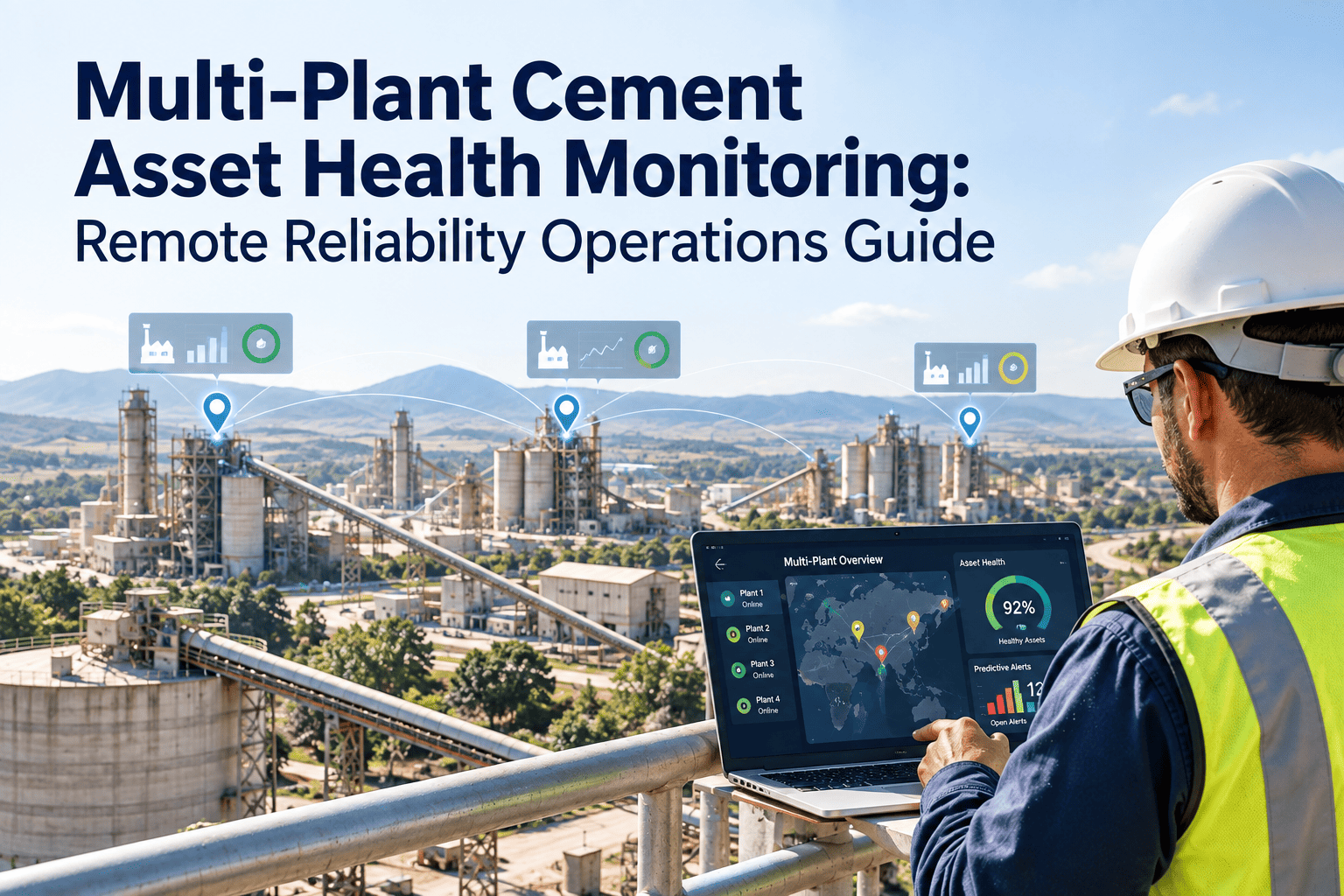
A cement plant never pauses for a shift change. The kiln, raw mill, cement mill and fans keep running while one crew leaves and another takes over, and everything the outgoing operators noticed on their rounds must travel with them. When that knowledge sits in memory, loose notebooks or a rushed conversation at the control room desk, small abnormalities get repeated, rediscovered or lost. This guide explains how to turn operator inspection data into a structured handover the next crew can act on within minutes. If you want to test it on your own rounds, you can set up a free Oxmaint account and build your first handover checklist.
Cement Plant Shift Handover from Operator Inspection Data
Replace the end-of-shift chat with a handover brief built from what operators actually recorded: readings, abnormalities, photos and open work across the kiln, mills, fans, coolers and packing.
Rounds recorded
Exceptions flagged
Brief compiled
Brief acknowledged
Why handovers lose information in a continuous process plant
Verbal and paper handover
- Operators summarise from memory under time pressure
- Abnormalities mentioned once, never tracked to closure
- Notebook entries differ by person and cannot be searched
- No link between what was seen and the work order raised
- Night shift issues are explained second-hand at day shift
- Trends are invisible because each shift sees only its own hours
Inspection-driven handover
- Brief is generated from recorded rounds, not recollection
- Every flagged item carries an owner and a status
- Standard checklists make entries comparable across crews
- Findings convert to work orders in the same workflow
- Photos and readings stay attached to the asset record
- Trends across shifts become visible to supervisors and planners
The information that disappears most often
- Equipment running with a known defect and a workaround in place
- Temporary process settings changed to compensate for a weak asset
- Lubrication, cleaning or adjustment work started but not finished
- Isolations, permits and locked-out equipment still open
- Gradual drift in temperatures, vibration, motor current or pressure
- Spare parts promised or ordered but not yet received
What operator inspection data contains, and what the next shift needs from it
| Area | Typical round observation | Why it matters at handover | Handover action |
|---|---|---|---|
| Kiln shell and tyres | Shell hot spots, tyre creep, support roller noise | Refractory or mechanical damage can escalate quickly | Re-check at set intervals; escalate on change |
| Preheater cyclones and ducts | Build-up, poke-hole findings, air cannon condition | Blockages disturb draft and kiln feed | Confirm cleaning plan and access status |
| Raw mill and cement mill | Vibration, bearing and oil temperature, lubrication state | Grinding units are heavy energy users and hard to restart | Carry forward any rising trend with the reading |
| ID fan and kiln fans | Bearing temperature, vibration, damper behaviour, dust build-up | Fan trouble limits kiln output and can force a stop | Note the last stable value and alarm limit |
| Clinker cooler | Grate drive condition, fan status, clinker bed behaviour | Cooler issues affect clinker temperature and heat recovery | List open defects and any reduced-load operation |
| Fuel feeding | Feeder condition, blockages, safety device status | Unsteady fuel feed upsets burning conditions | Record manual interventions and their cause |
| Packing and dispatch | Spout wear, dust collectors, conveyor condition | Failures here delay deliveries even when production is healthy | Hand over cleaning, wear and spares status |
Five steps from round sheet to handover brief
Standardise the round
Define routes, asset points and acceptable ranges for each area so every operator records the same things the same way.
Capture at the asset
Enter readings, short notes and photos on a mobile device while standing at the equipment, not from memory at the end of the shift.
Separate exceptions from normal
Normal checks stay in the record. Out-of-range values, abnormal notes and repeated findings move to the front of the brief.
Link findings to work
Each exception either closes during the shift, becomes a work order, or stays on watch with a clear review time.
Walk the brief together
Outgoing and incoming supervisors review the ranked list at the control room, and the incoming crew acknowledges every item.
A priority matrix for ranking handover items
Give every crew the same starting picture
The last hour of a shift: a practical timeline
Complete final round
Close or classify exceptions
Review the compiled brief
Walk the plant, not just the screen
Confirm ownership
What a good handover entry must contain
Every entry
- Asset name and location in the plant
- What was observed, with the reading or photo
- When it was first seen and whether it is changing
- Action taken and action still required
- Owner, priority and next review time
Safety and status items
- Open permits, isolations and lockout points
- Guards or interlocks bypassed or removed
- Areas with restricted access or hot work
- Equipment running in manual or reduced mode
- Environmental alarms or dust and emission concerns
Resource items
- Spare parts required and their delivery status
- Planned maintenance windows and crew availability
- Contractor work in progress and where
- Lubricant, consumable and tool shortages
- Pending approvals that block repair work
Protecting the quality of inspection data
Measuring whether handovers are improving
How Oxmaint supports inspection-based handover
| Handover need | Oxmaint capability | Practical result |
|---|---|---|
| Consistent rounds | Configurable inspection checklists and schedules | Same points checked in the same way each shift |
| Capture on the floor | Mobile workflows with readings, notes and photos | Evidence recorded at the asset, not rewritten later |
| Know the equipment | Asset management with history and hierarchy | Findings viewed against past repairs and failures |
| Act on findings | Corrective work orders raised from inspections | Defects tracked from observation to closure |
| Prevent repeat issues | Preventive maintenance scheduling | Recurring problems turned into planned tasks |
| Prepare for repairs | Inventory and spare parts visibility | Parts status visible when planning the next window |
| Review and audit | Reports, dashboards and compliance records | Supervisors see completion, backlog and repeat items |
A 30-day rollout that crews will accept
Pick one area
Run in parallel
Switch the brief
Review and extend
Special cases: breakdowns, stops and restarts
Breakdown in progress
- What failed, when and what was observed
- Actions already taken and results
- Isolations, permits and people in the area
- Parts on site, ordered or still needed
- Next decision point and who makes it
Planned stop or restart
- Stage of the shutdown or heat-up plan
- Work completed, outstanding and added
- Equipment checks required before start
- Safety controls still in place
- Restart conditions that must be confirmed
What each role needs from the handover
| Role | Main interest | Useful view of the data |
|---|---|---|
| Control room operator | Process stability and equipment limits | Abnormalities that affect running conditions |
| Field operator | Where to look and what changed | Round route with flagged points highlighted |
| Shift supervisor | Priorities, safety and resources | Ranked brief with owners and open permits |
| Maintenance technician | Faults to investigate or fix | Findings with photos, readings and asset history |
| Maintenance planner | Work to schedule and parts to order | Findings converted to work orders with priority |
| Plant manager | Risk and reliability trends | Summary of repeat issues and overdue items |