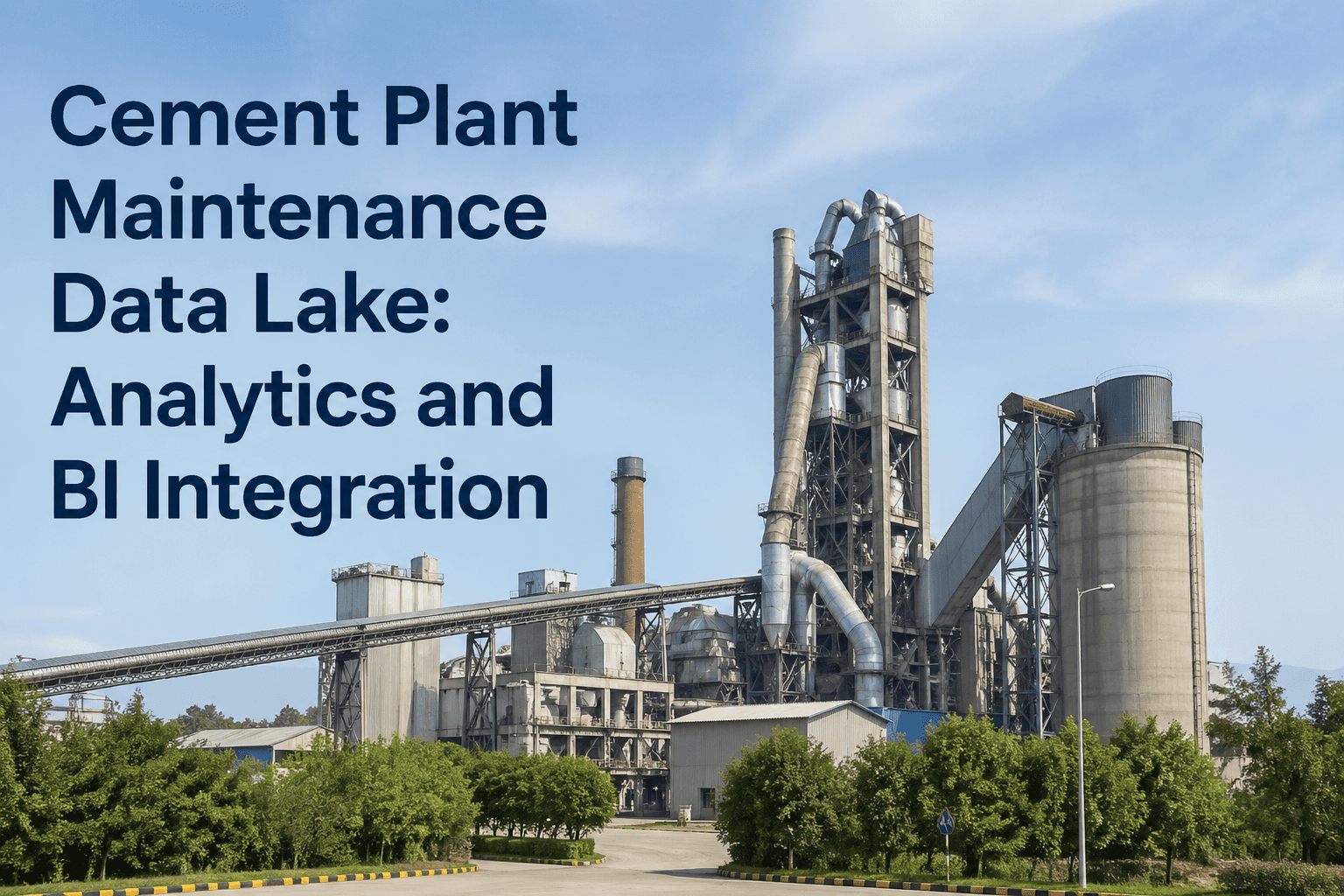
A 6,500 TPD cement plant was running at 68% OEE — 17 full points below the world-class benchmark of 85%. Monthly reports arrived too late for action. Shift supervisors made decisions on gut feel while the kiln stopped three times per month for unplanned maintenance. The real problem was not equipment age or workforce skill — it was invisible bottlenecks migrating between the raw mill, kiln, and cement mills that nobody could track in real time. Research published in early 2025 confirms this is an industry-wide pattern: the average cement plant OEE sits at just 65–70%, meaning one-third of theoretical production capacity vanishes into downtime, speed losses, and quality defects every single day. Manufacturing bottlenecks can slash productivity by up to 40%. The difference between profitable cement operations and struggling ones comes down to one capability — identifying where the constraint is right now and resolving it before the next shift starts. See how Oxmaint tracks production bottlenecks — request a demo.
Find Where Production Stops. Fix It Before It Costs You.
Bottlenecks in cement production are not static — they migrate. The kiln may be the constraint during normal operation, but when the raw mill trips, the bottleneck instantly shifts to raw meal supply. When the cement mill can't keep up with clinker output, the constraint moves downstream. Understanding this dynamic behavior is the key to systematic debottlenecking. Book a demo to see how Oxmaint maps active constraints in real time.
The Five Bottleneck Zones in Cement Production
Every cement production line has five potential constraint points. At any given moment, one of them is the active bottleneck limiting total plant output. The challenge is that the constraint shifts constantly based on equipment condition, feed quality, ambient temperature, and maintenance events. Identifying which zone holds the constraint right now — not last week — is the foundation of effective debottlenecking.
Crushing & Raw Material Handling
Limestone crusher capacity, clay feeder rates, and stacker-reclaimer availability determine the maximum raw material throughput. Crusher downtime or inconsistent feed quality creates a starved raw mill.
Raw Grinding & Homogenization
Vertical roller mill or ball mill capacity sets the raw meal feed rate to the kiln. This is the most frequent bottleneck in plants with undersized mills or inconsistent raw material moisture content.
Pyroprocessing (Kiln System)
Preheater, calciner, rotary kiln, and clinker cooler form the thermal heart of the plant. The kiln is the designed bottleneck in most plants — and any issue here cascades across the entire production line.
Cement Grinding
Ball mills, vertical mills, or roller press systems grind clinker with gypsum and additives to final fineness. Grinding capacity often becomes the constraint when the kiln is running well but downstream can't consume clinker fast enough.
Packing & Dispatch
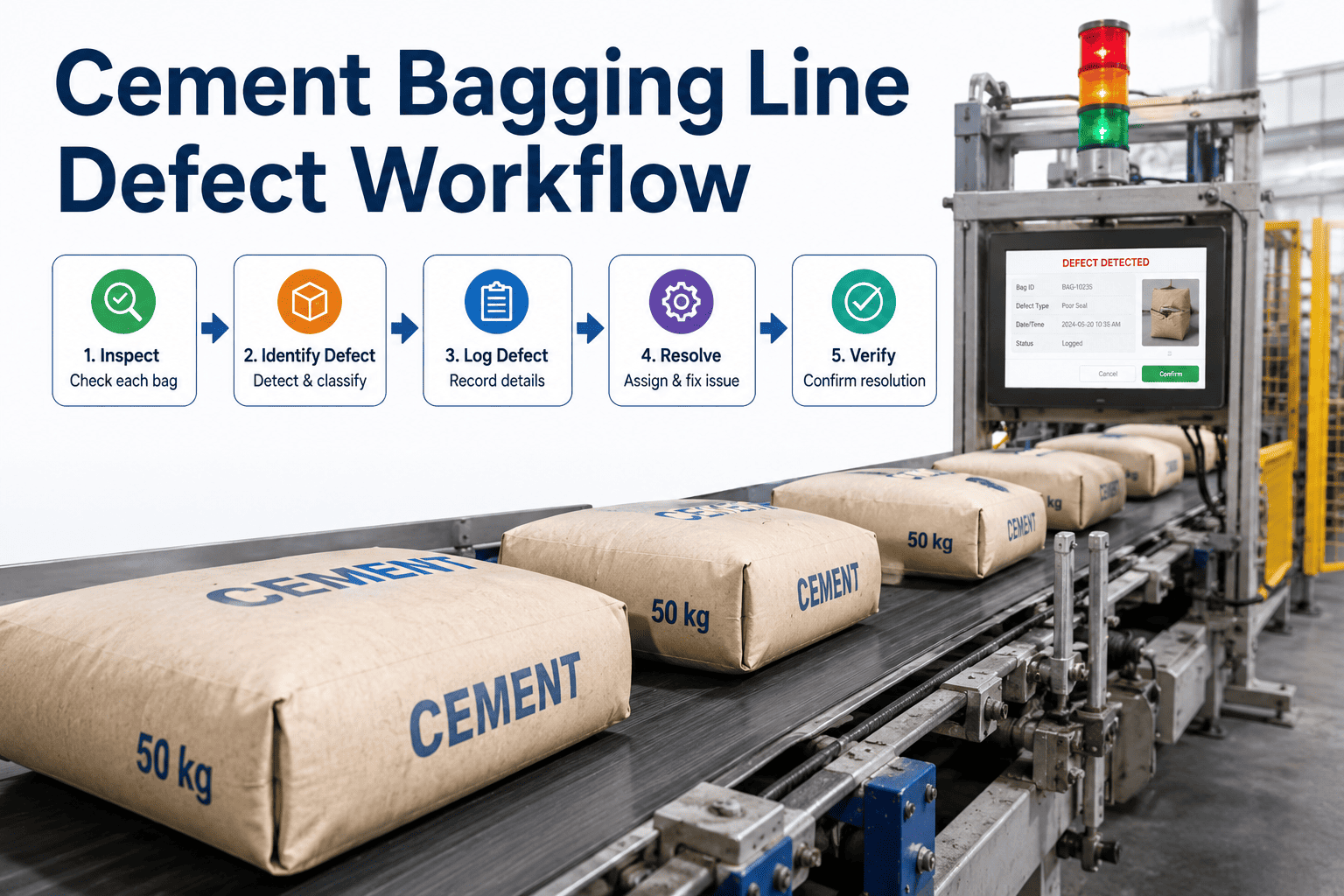
Packing machines, palletizers, bulk loading, and truck dispatch must match grinding output. A packing line bottleneck fills cement silos to capacity, forcing the cement mill to shut down — cascading back through the entire line.
See Your Bottlenecks in Real-Time
Oxmaint connects to your SCADA, DCS, and quality systems to map exactly which equipment is constraining production at this moment — not last week. Maintenance teams get automated work orders targeting the active bottleneck.
How to Identify the Active Bottleneck: A 5-Step Framework
Most cement plants know they have bottlenecks. The problem is that traditional methods — monthly production reports, shift supervisor observations, and spreadsheet analysis — identify the constraint weeks after it formed. By then, the bottleneck has already migrated. This five-step systematic framework pinpoints the active constraint in hours, not weeks.
Root Causes Behind Cement Production Bottlenecks
Once you identify where the bottleneck is, the next question is why. These are the most common root causes at each production stage, ranked by frequency and impact. Understanding these patterns lets maintenance teams target the highest-value interventions first.
Resolution Strategies: From Quick Wins to Capital Projects
Not every bottleneck requires a capital investment. The strategies below are organized from fastest/cheapest (implement this week) to slowest/most expensive (budget for next year) — so your team can start improving throughput immediately while planning larger interventions. Get a demo of Oxmaint's maintenance scheduling that powers these strategies.
Quick Wins — Implement This Week
Maintenance-Driven — 1 to 3 Months
Capital Investments — 6 to 18 Months
Turn Bottleneck Data Into Production Gains
Oxmaint gives maintenance and production teams a shared platform to track OEE by section, correlate downtime with root causes, and schedule maintenance around the active constraint — not around convenience.
Measuring Debottlenecking Success: KPIs That Matter
You cannot improve what you don't measure. These six KPIs form the scoreboard for any debottlenecking initiative. Track them weekly at minimum — daily at the bottleneck — and display them on dashboards visible to every shift team.
OEE by Section
Availability x Performance x Quality calculated per production stage. The section with the lowest OEE is your primary target.
MTBF (Mean Time Between Failures)
Average operating hours between breakdowns per equipment type. Rising MTBF confirms your maintenance program is working.
MTTR (Mean Time to Repair)
Average repair duration from failure detection to restored operation. Lower MTTR means faster recovery from bottleneck events.
Throughput Variance
Standard deviation of hourly production rate. Lower variance = more predictable output = fewer bottleneck-driven losses.
PM Compliance Rate
Percentage of scheduled preventive tasks completed on time. The leading indicator that predicts future bottleneck frequency.
Constraint Location Stability
Tracks how often the bottleneck migrates between sections. Decreasing migration = improving systemic balance across the line.
Frequently Asked Questions
What is the most common bottleneck in a cement production line?
The active bottleneck varies by plant, but the three most common locations are the raw mill (capacity limited by moisture, feed inconsistency, or fan efficiency), the rotary kiln (limited by refractory condition, flame stability, or cooler performance), and the cement mills (limited by grinding media wear, separator efficiency, or downstream dispatch constraints). The key insight is that the bottleneck migrates — it is rarely static at one location.
How do you identify a bottleneck in cement production?
The systematic approach involves five steps: map actual throughput versus design capacity at each stage, analyze WIP accumulation patterns (inventory builds before the bottleneck and starves after it), classify downtime by production section, calculate section-level OEE, and validate by tracking constraint location over a 30-day period. A CMMS automates steps 3–5 using data from existing SCADA and DCS systems.
What is a good OEE benchmark for cement plants?
The world-class benchmark is 85% OEE. However, recent 2025 industry research shows the average cement plant OEE sits at just 65–70%, meaning most plants have 15–20 percentage points of improvement available. Even a 5-point OEE improvement on a 4,500 TPD plant translates to roughly 225 additional tons of clinker per day — significant revenue at current cement prices.
How does a CMMS help resolve production bottlenecks?
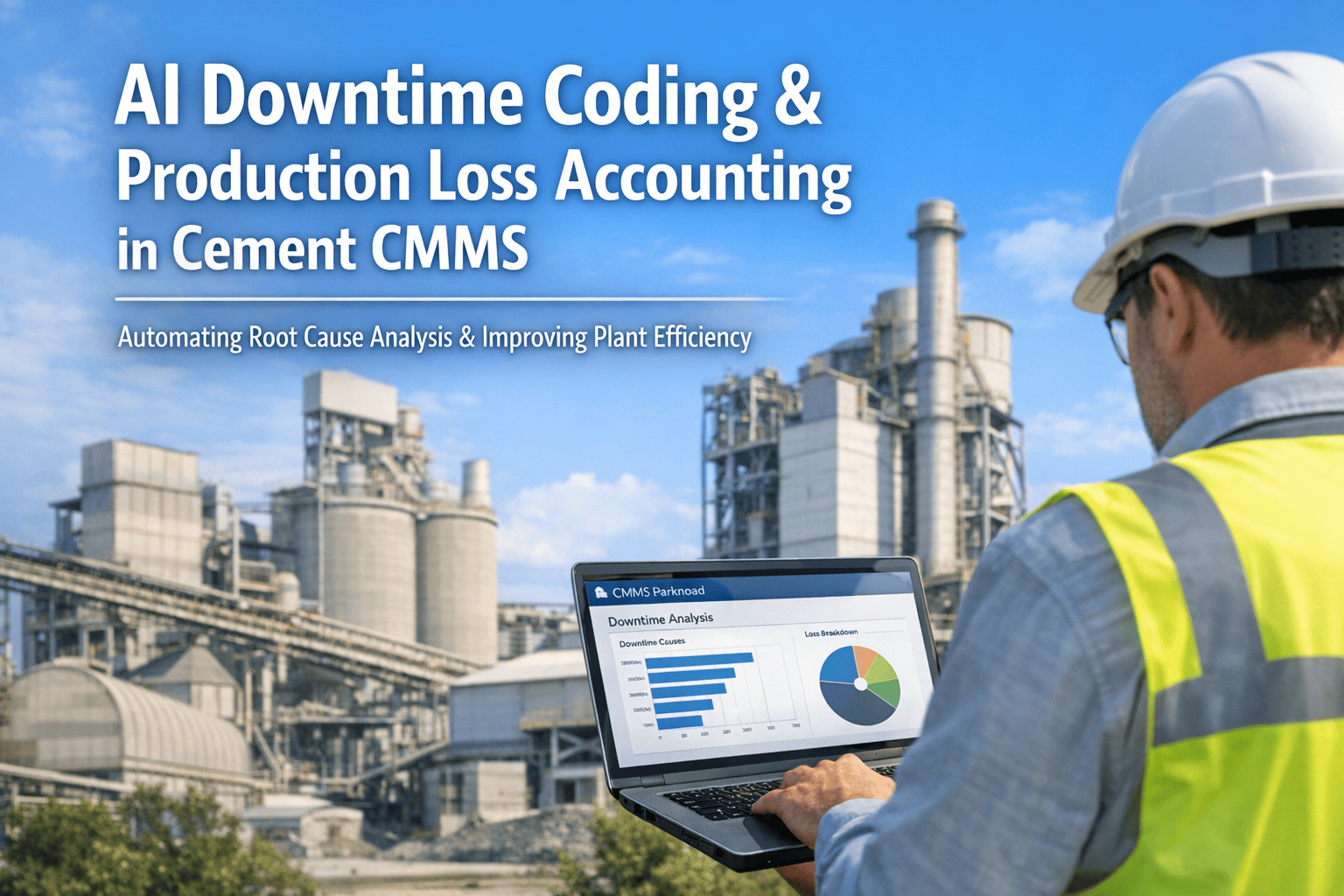
A CMMS resolves bottlenecks by automating downtime classification (eliminating manual tracking errors), calculating MTBF and MTTR per equipment to identify reliability weak points, scheduling preventive maintenance around the constraint to maximize bottleneck uptime, managing spare parts inventory so repairs happen faster, and providing trend analytics that correlate maintenance events with throughput changes over time.
What is the fastest way to increase cement plant throughput?
The fastest gains come from three actions that require zero capital investment: eliminate micro-stops at the bottleneck (recaptures 10–20% of lost time), recalibrate instruments at the constraint to remove operator-added safety margins (typically adds 5–10% throughput), and reschedule preventive maintenance away from peak demand windows. These "quick wins" can be implemented within a single week and often deliver measurable improvement within the first month.
Why does the bottleneck keep moving in my cement plant?
Bottleneck migration is normal and expected in any multi-stage production system. In cement, it occurs because equipment conditions change (a kiln stop shifts the constraint to raw meal depletion), raw material quality varies (high moisture shifts the constraint to raw milling), and maintenance events temporarily reduce capacity at different sections. The goal is not to eliminate migration entirely but to reduce its frequency and predict where the constraint will be next using data from your CMMS.
How much production improvement can debottlenecking deliver?
Industry case studies document annual savings of $1.5M or more from systematic debottlenecking at single cement plants. A 5-point OEE improvement on a mid-sized plant represents hundreds of additional tons of daily output. The exact value depends on current OEE baseline, cement selling price, and which specific bottlenecks are resolved — but most plants have at minimum $500K–$2M of annual value locked behind unresolved constraints.