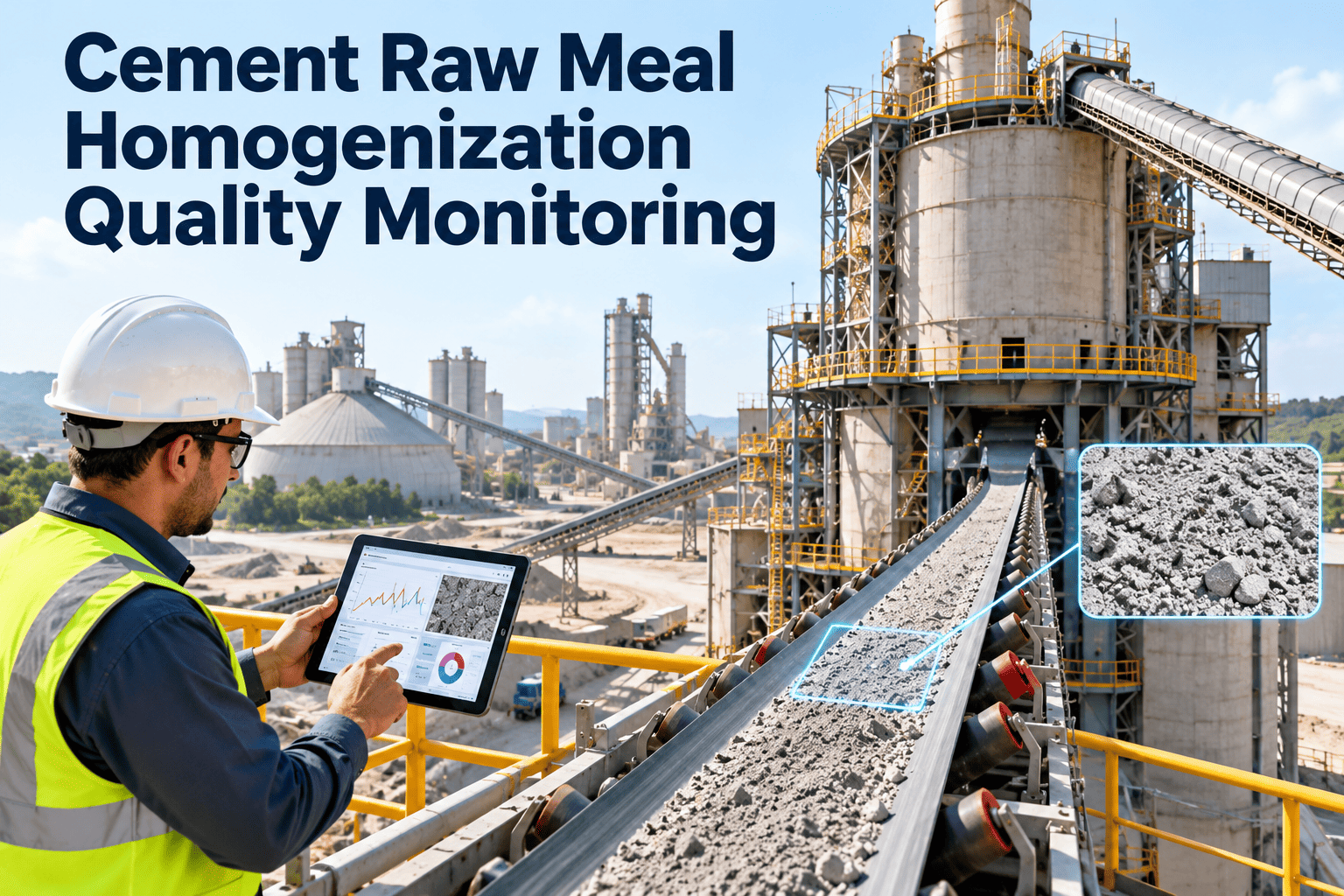
A stable kiln starts with stable raw meal. When the chemistry of kiln feed swings, the kiln responds with changes in burning zone temperature, coating, fuel demand and clinker quality, and operators spend shifts chasing the process. Homogenization is the step that damps those swings, and it depends on samplers, analyzers, feeders, blowers and silo aeration that all need to be maintained. This article explains how to monitor raw meal homogenization quality and keep the supporting equipment healthy, with a maintenance management platform to connect the two.
Quality and Process
Cement Raw Meal Homogenization Quality Monitoring
Link raw meal chemistry to the equipment that controls it, so quality drift triggers a maintenance check instead of a longer argument.
Raw millFineness and chemistry set here
Sampling and analysisRepresentative data on the stream
Blending siloVariation is averaged out
Kiln feedSteady feed rate and chemistry
What poor homogenization does to the kiln
Variation in raw meal rarely stays inside the quality lab. It shows up in operations, energy use and equipment condition.
Burning zone instabilityChanges in burnability force operators to adjust fuel and feed, which makes the burning zone harder to hold steady.
Coating and ring formationChemistry swings can shift coating behavior, raising the risk of rings and buildup in the kiln and preheater.
Clinker quality variationFree lime and phase balance change when feed chemistry moves, which affects cement strength consistency.
Higher fuel consumptionOperators often run hotter to protect clinker quality, which adds fuel use and thermal stress on refractory.
Refractory wearTemperature swings and unstable coating can shorten lining life in the burning zone.
The quality parameters to watch
Plants set their own targets, but most track the same family of indicators. Trend them by shift, and compare variation before and after the blending silo.
Lime saturation factorDescribes how much lime is available relative to the other oxides, and strongly affects burnability and clinker phases.
Silica modulusRelates silica to alumina and iron, and influences the amount of liquid phase in the burning zone.
Alumina modulusDescribes the alumina to iron ratio, and affects liquid viscosity and coating.
Calcium carbonate contentA fast indicator of feed variation, often used as the first control signal at the mill outlet and kiln feed.
FinenessAffects reaction rate in the kiln, and depends on mill and separator condition.
Moisture and minor elementsAlkalies, sulfur and chloride influence buildup and preheater behavior.
Equipment faults that look like quality problems
When variation increases, the cause is not always in the quarry or the mill. This table links common equipment conditions to the quality symptom they create.
| Equipment | Fault condition | Quality symptom | Maintenance check |
|---|
| Automatic sampler | Worn cutter, blocked chute, timing error | Unrepresentative samples, misleading control action | Cutter condition, chute cleaning, cycle timing |
| Online analyzer | Calibration drift, contamination, source aging | Readings diverge from lab results | Calibration records, cleaning, lab comparison |
| Raw material feeders | Weigh feeder drift, belt wear, material bridging | Proportioning errors, mill outlet variation | Calibration, belt condition, hopper flow |
| Raw mill and separator | Wear on grinding parts, separator vane damage | Fineness variation, unstable throughput | Liner and roller wear, separator inspection |
| Silo aeration pads | Pad blockage, damaged fabric, air leaks | Poor fluidization, channeling, weak blending | Pad pressure, air distribution, blower condition |
| Blowers and air slides | Wear, filter blockage, belt slip | Reduced air supply and uneven blending | Pressure, flow, filter condition, drive checks |
| Flow control and dosing valves | Sticking, wear, actuator problems | Unstable kiln feed rate | Valve travel, actuator response, seat condition |
When feed chemistry drifts, start with the equipment history
Connect sampler, analyzer, blower and valve records to your quality trends, so root causes are easier to find.
A monitoring loop from sample to action
Monitoring becomes useful when each quality signal has an owner and a defined response. The loop below keeps data, decisions and maintenance connected.
AMeasure at defined pointsSample the mill outlet, the silo feed and the kiln feed, so the effect of blending can be calculated.
BCompare with the labCheck online analyzer results against laboratory results on a set schedule.
CFlag deviationAlert when variation grows or when the analyzer and lab disagree.
DCheck equipment firstRule out sampler, feeder, aeration and valve faults before changing the raw mix design.
ERecord the fixLog the cause and action on the asset so repeat issues are visible.
Blending silo health checks
Silo design varies, but the maintenance logic is similar: keep air distribution even and discharge steady.
Air and aerationBlower discharge pressure and flow against baselineAeration pad pressure drop by zoneAir filters and silencers for blockagePiping and hose leaks that reduce effective air
Discharge and controlExtraction valve operation and responseFlow measurement and weighing accuracyLevel instrument condition and calibrationSilo build-up, dead zones and unusual noise
Calibration and sampling discipline
A measurement system that drifts creates false confidence. Treat samplers and analyzers as critical instruments with their own schedules.
DailyConfirm samplers cycle and deliver material, and review analyzer status messages
WeeklyClean sample lines and cutters, and compare analyzer results with laboratory samples
MonthlyCheck weigh feeder calibration and aeration pad pressures by zone
PeriodicFollow manufacturer guidance for analyzer source, detector and cutter replacement
After changeRecheck calibration after any repair, material change or software update
Reactive quality control versus integrated monitoring
Reactive approachQuality and maintenance data live in separate systemsVariation is corrected by changing the raw mix firstAnalyzer errors found after a lab mismatchRepeat faults are not tracked by cause
Integrated approachEquipment history sits beside quality trendsSampling, feeder and aeration checks come firstCalibration is scheduled and trackedCauses are coded, so patterns can be reviewed
Trends and technology in raw meal control
Cement plants increasingly combine online analysis with advanced process control and data analytics. The tools help, but they depend on clean sampling and well-maintained equipment.
- Online elemental analysis. Cross-belt and stream analyzers provide frequent chemistry data that can adjust proportioning faster than lab-only control.
- Process control software. Model-based control can use analyzer data to stabilize feed, but poor instrument data will mislead it.
- Condition monitoring. Vibration and pressure trends on blowers, mills and feeders reveal faults that eventually appear as quality variation.
- Data linking. Joining maintenance records with quality and process data helps teams see which equipment states precede drift.
KPIs that connect quality and maintenance
Variation before and after blendingShows how well the silo reduces chemistry swings.
Analyzer to lab agreementFlags instrument drift before it affects control.
Calibration tasks completed on timeIndicates discipline in maintaining measurement quality.
Quality-linked work ordersCounts repairs raised because of raw meal deviations.
Blower and aeration downtimeHighlights silo equipment that limits blending performance.
How Oxmaint supports quality-linked maintenance
Oxmaint maintenance software gives cement teams a single place to track the assets behind raw meal quality.
Asset registryOrganize samplers, analyzers, feeders, blowers and valves under the raw meal system.
Calibration schedulesPlan recurring checks and keep records with the instrument.
Mobile inspectionsRecord silo, blower and sampler checks with notes and photos.
Corrective workTurn a quality deviation into a work order with the suspect asset attached.
InventoryTrack sampler cutters, filters, pad sections and analyzer spares.
ReportingReview repeat failures and downtime for the raw meal system.
Frequently asked questions
What does raw meal homogenization mean?It is the blending of raw meal so that chemical composition reaching the kiln stays consistent.
Why check equipment before changing the raw mix?Sampler, feeder or aeration faults can mimic chemistry problems and lead to wrong corrections.
How often should analyzers be calibrated?Follow the manufacturer guidance and compare regularly with lab results to catch drift.
Where can I see this workflow?A demo can show calibration plans and work orders. Book a call.
Keep kiln feed steady by keeping the equipment behind it healthy
Bring raw meal assets, calibrations, inspections and work orders into one system, and give quality and maintenance teams a shared view.