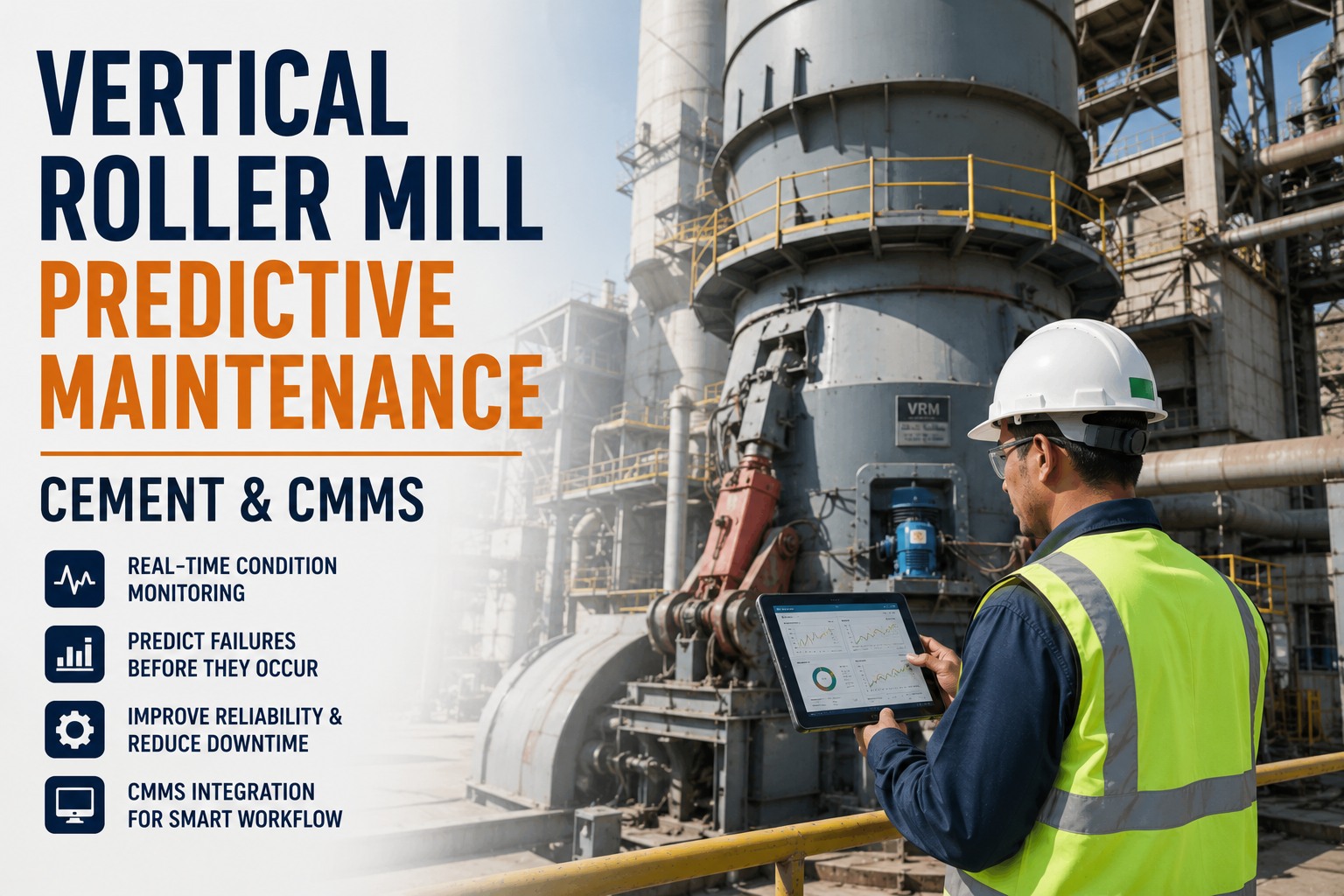
A cement plant in Egypt extended their vertical roller mill campaign from 8,000 to 11,500 hours by deploying inspection robots during scheduled outages—the drone-captured wear measurements identified uneven grinding table wear that would have caused roller failure two months later. Raw mills and vertical roller mills represent the highest-energy consumers in cement production, with grinding efficiency directly tied to component condition. Traditional inspections required multi-day shutdowns and confined space entry inside massive grinding chambers, limiting inspection frequency to annual events. Robot and drone inspection now delivers detailed component assessments in hours rather than days, enabling condition-based maintenance that maximizes campaign lengths while preventing catastrophic failures. Sign up for Oxmaint to track VRM component wear across campaigns and predict replacement timing.
45%
Of Cement Plant Energy Consumed by Raw Mills
72hr
Traditional Full Inspection Time Reduced to 8hr
35%
Extended Campaign Length With Condition Monitoring
$2.1M
Average Cost of Unplanned VRM Failure
VRM Critical Component Anatomy
Vertical roller mills contain six primary inspection zones, each with distinct wear mechanisms and failure signatures that robot inspection systems must capture for effective condition monitoring.
GTB
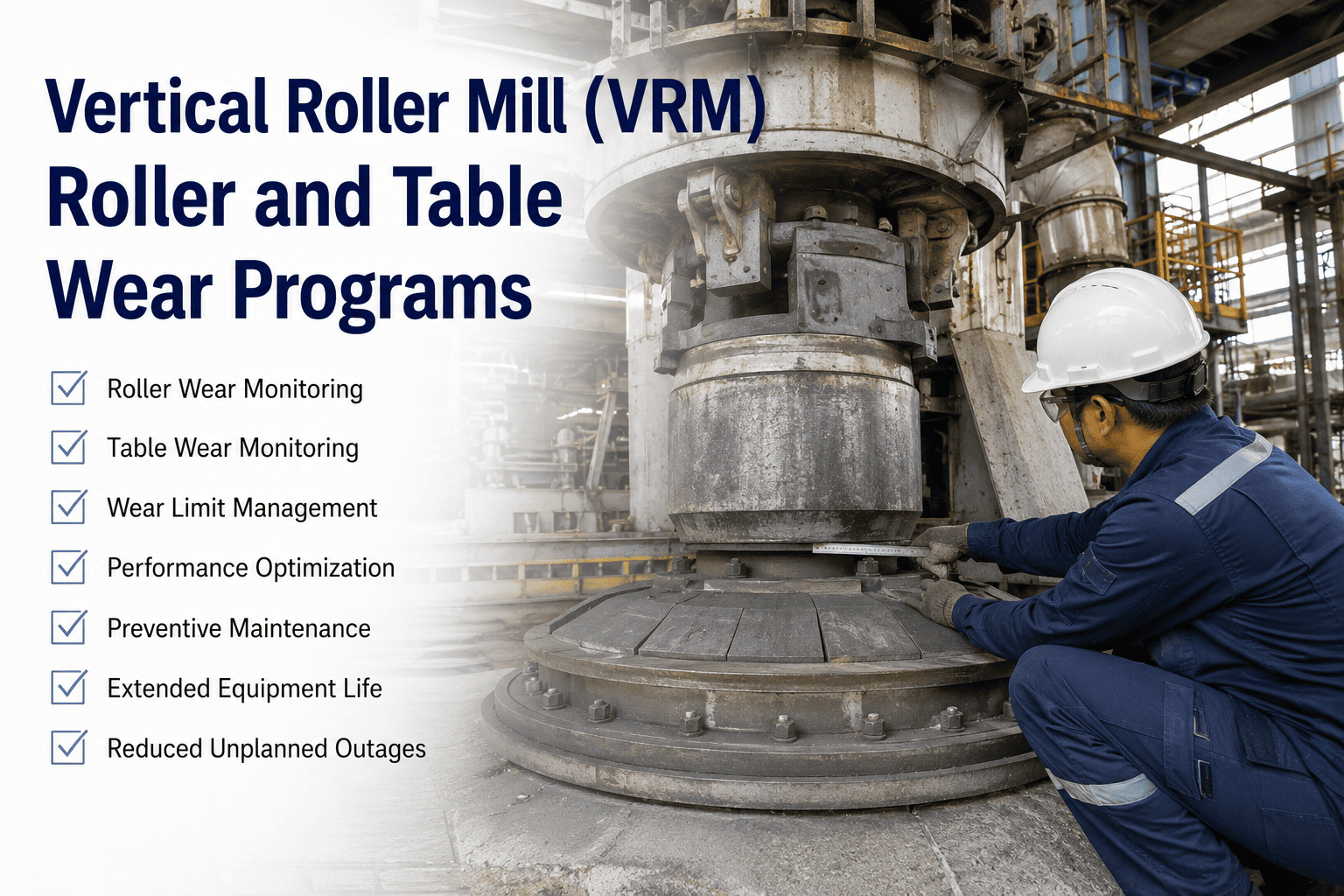
Grinding Table
Rotating table surface where raw material is crushed under roller pressure. Wear patterns indicate roller alignment and material distribution issues.
High Wear ZoneSurface Scan
GRL
Grinding Rollers
Hydraulically-pressed rollers that crush material against grinding table. Surface wear profiles determine grinding efficiency and power consumption.
Critical Component3D Mapping
DMR
Dam Ring
Adjustable ring controlling material bed depth on grinding table. Height measurement critical for maintaining optimal grinding conditions.
Height MeasureWear Pattern
LVR
Louvre Ring
Vane assembly directing hot gas flow for material drying and transport. Vane angle and erosion affect drying efficiency and separator feed.
Erosion RiskAngle Check
SEP
Separator Cage
Rotating classifier separating fine product from coarse returns. Cage bar wear and buildup directly impact product fineness and throughput.
Product QualityBuildup Check
HYD
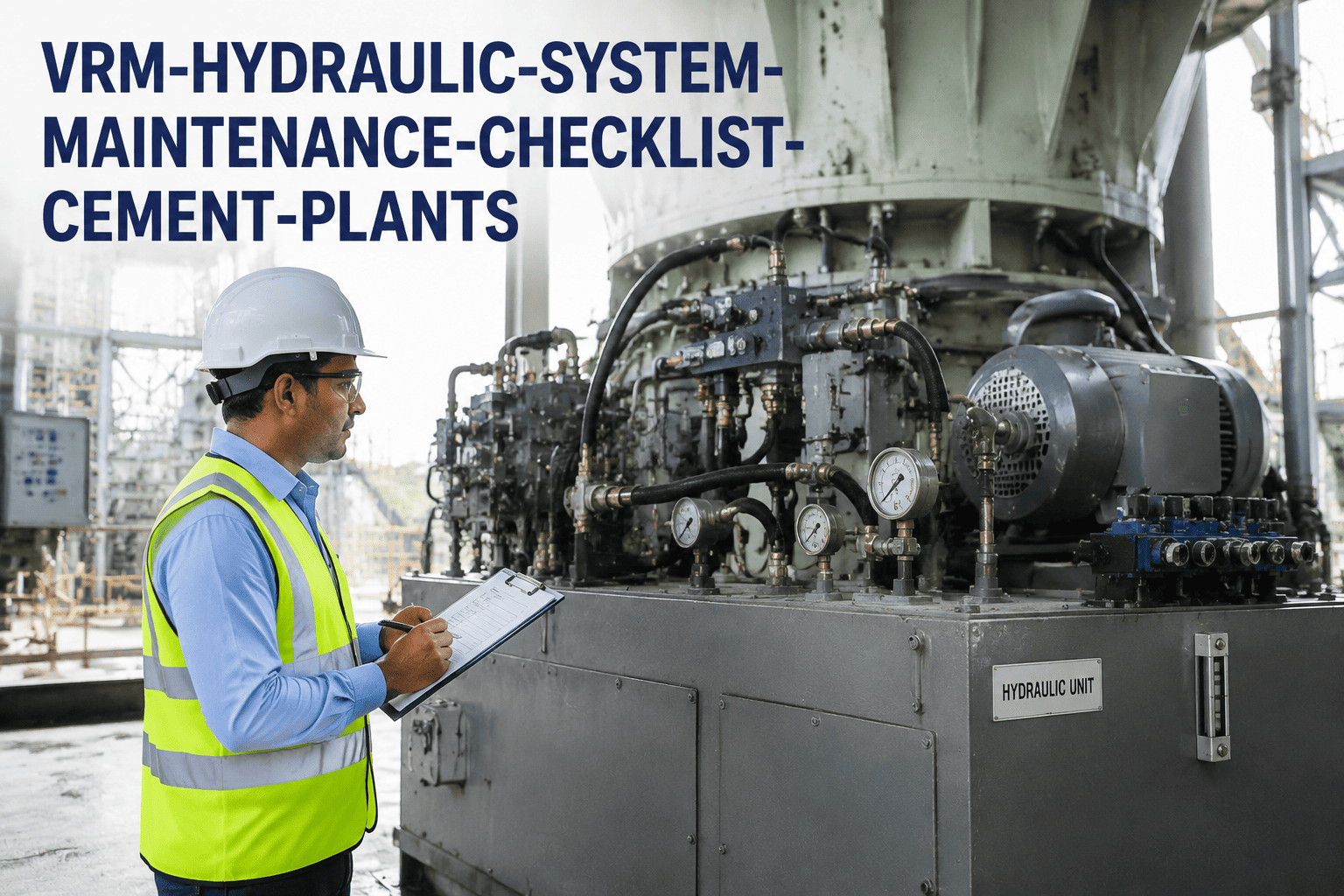
Hydraulic System
High-pressure cylinders applying grinding force to rollers. Leak detection and cylinder condition critical for maintaining grinding pressure.
Leak DetectionThermal
Robot & Drone Inspection Capabilities
Different robotic platforms address specific VRM inspection requirements. Crawling robots navigate grinding chamber surfaces while drones access upper separator zones. Book a demo to see how Oxmaint integrates multi-platform inspection data.
Crawler Robot - Grinding Chamber
Magnetic-wheeled robots traverse grinding table and roller surfaces, capturing high-resolution 3D wear profiles and surface condition data inaccessible to drones.
Surface Accuracy±0.1mm
Coverage Rate2m²/min
Operating TempUp to 80°C
Dust RatingIP67
Inspection Drone - Separator Zone
Confined-space drones navigate upper mill housing and separator areas, inspecting classifier cages, louvre vanes, and upper wear liners without scaffold installation.
Flight Time25 min per battery
Camera Resolution4K + Thermal
Collision Avoidance360° LiDAR
GPS-Denied NavVisual SLAM
Grinding Table & Roller Inspection Checklist
This checklist covers primary grinding components where wear directly impacts energy consumption and product quality. Capture all measurements for trend tracking in your CMMS.
Grinding Table Surface Inspection
Robot crawler with 3D laser scanning
Pre-Shutdown
Grinding Roller Inspection
Combined robot and manual verification
Per Roller
Track VRM component wear across multiple campaigns. Oxmaint captures robot inspection measurements, calculates wear rates, and predicts replacement timing—scheduling robot deployments coordinated with planned mill outages.
Systematic tracking of component measurements enables accurate prediction of replacement timing. Sign up for Oxmaint to automate wear trend calculations and replacement forecasting.
VRM Component Wear Status - Sample Data
Component
Original (mm)
Current (mm)
Wear Rate
Remaining Life
Status
Grinding Table Segment A1
120
78
0.8mm/1000hr
~12,000 hrs
OK
Roller 1 - Tire Crown
85
42
1.2mm/1000hr
~6,000 hrs
Monitor
Roller 2 - Tire Crown
85
38
1.4mm/1000hr
~4,200 hrs
Plan Replace
Dam Ring
180
145
0.5mm/1000hr
~30,000 hrs
OK
Louvre Vanes - Section C
12
7
0.3mm/1000hr
~8,000 hrs
Monitor
Swipe horizontally to view full table
Robot Inspection Deployment Timeline
Coordinate robot inspection with planned mill outages to maximize data capture while minimizing production impact.
Inspection Workflow: Mill Shutdown to Production Resume
1
Mill Cooldown
Allow 4-6 hours for temperature to reach safe inspection levels
2
Robot Deploy
Deploy crawler robot to grinding chamber; drone to separator
3
Data Capture
3D scans, thermal imaging, visual inspection (4-6 hours)
4
Analysis
Process inspection data; generate wear reports and recommendations
5
Action
Execute repairs or schedule component replacement for next outage
Oxmaint VRM Inspection Management
Oxmaint CMMS integrates robot inspection data with maintenance planning to optimize VRM campaign lengths and prevent unplanned failures. Book a demo to see wear tracking and replacement forecasting.
Campaign Wear Tracking
Store measurement data from each robot inspection. Calculate wear rates automatically and visualize component degradation trends across multiple grinding campaigns.
Outage Coordination
Schedule robot inspection deployments aligned with planned mill outages. Coordinate inspection teams, equipment, and reporting deadlines in unified maintenance calendar.
Replacement Forecasting
Predict component replacement dates based on wear rate trends. Generate procurement alerts for grinding segments, roller tires, and separator parts months in advance.
Frequently Asked Questions
How hot can robot inspection equipment operate inside a VRM?
Current crawler robots operate up to 80°C ambient temperature, requiring 4-6 hours of mill cooldown from operating temperatures of 300°C+. Drones have similar thermal limits. Most facilities schedule inspections during planned cooling periods to maximize available inspection time.
Can robot inspection completely replace human entry into grinding chambers?
Robots capture 85-90% of required inspection data without human entry. Some repairs and detailed assessments still require personnel access, but robot pre-inspection identifies exactly where human attention is needed—reducing confined space exposure significantly. Sign up for Oxmaint to document both robot and manual inspection findings.
How accurate are robot wear measurements compared to manual gauging?
3D laser scanning achieves ±0.1mm accuracy—comparable to or better than manual measurement. More importantly, robots capture thousands of data points creating complete wear profiles rather than spot checks at selected locations.
What inspection frequency do you recommend for VRMs?
Most operations perform comprehensive robot inspection every 2,000-3,000 operating hours or during every planned outage exceeding 12 hours. Book a demo to discuss inspection scheduling based on your specific mill configuration and operating conditions.
Extend VRM Campaigns With Robot Inspection Data
Every hour of additional grinding before component replacement represents production value. Oxmaint transforms robot inspection measurements into actionable wear predictions—maximizing campaign lengths while preventing the catastrophic failures that shut down raw meal production.