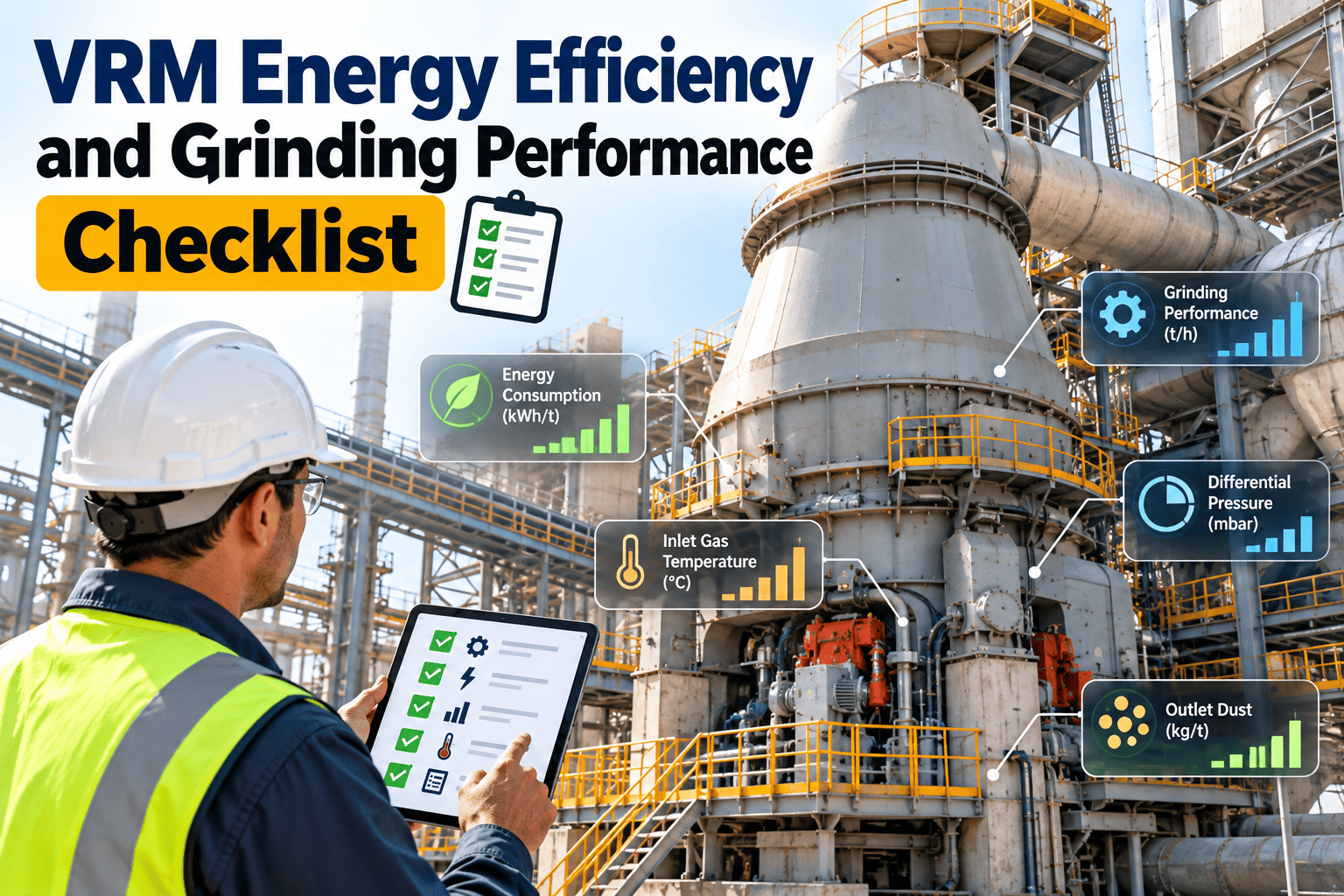
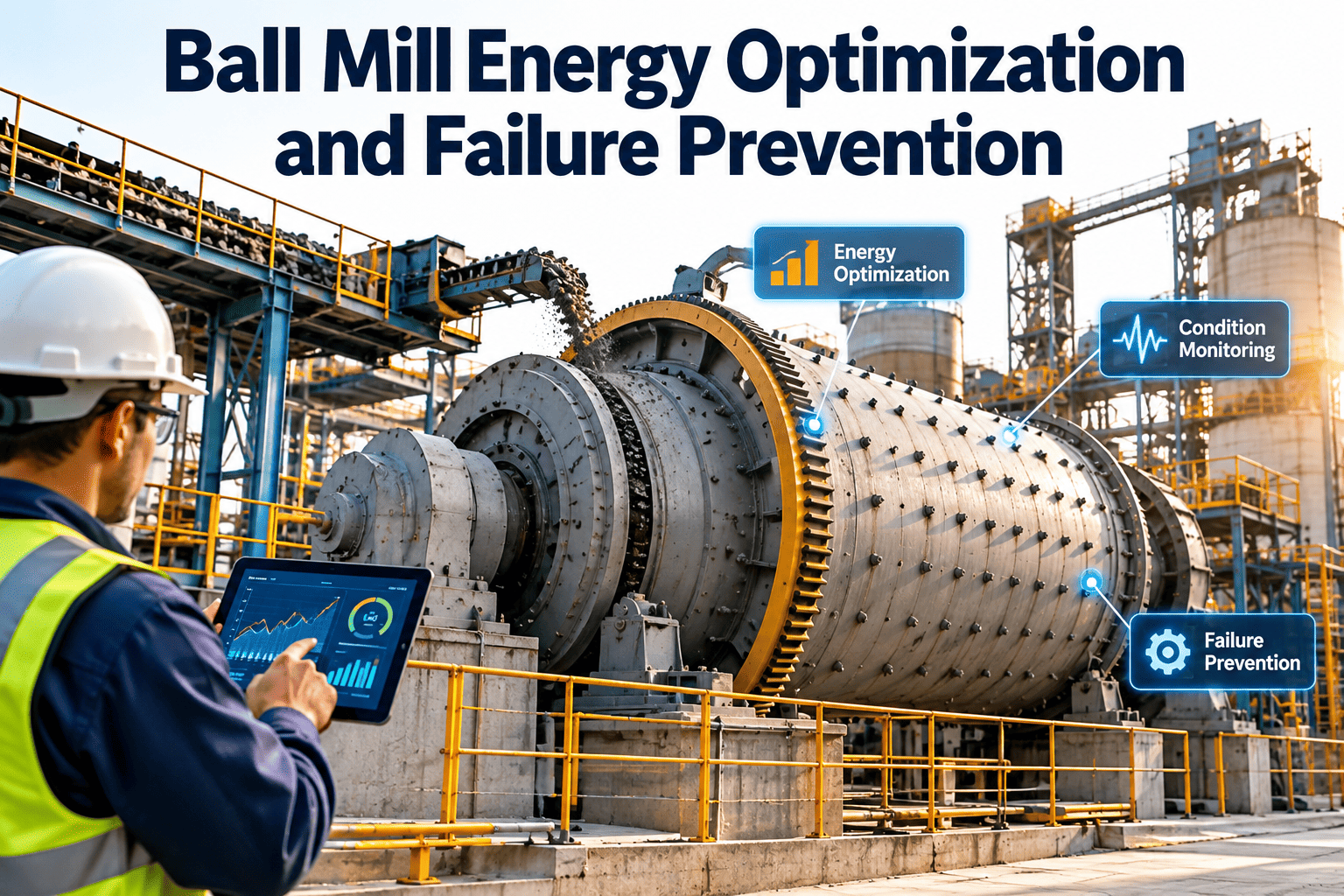
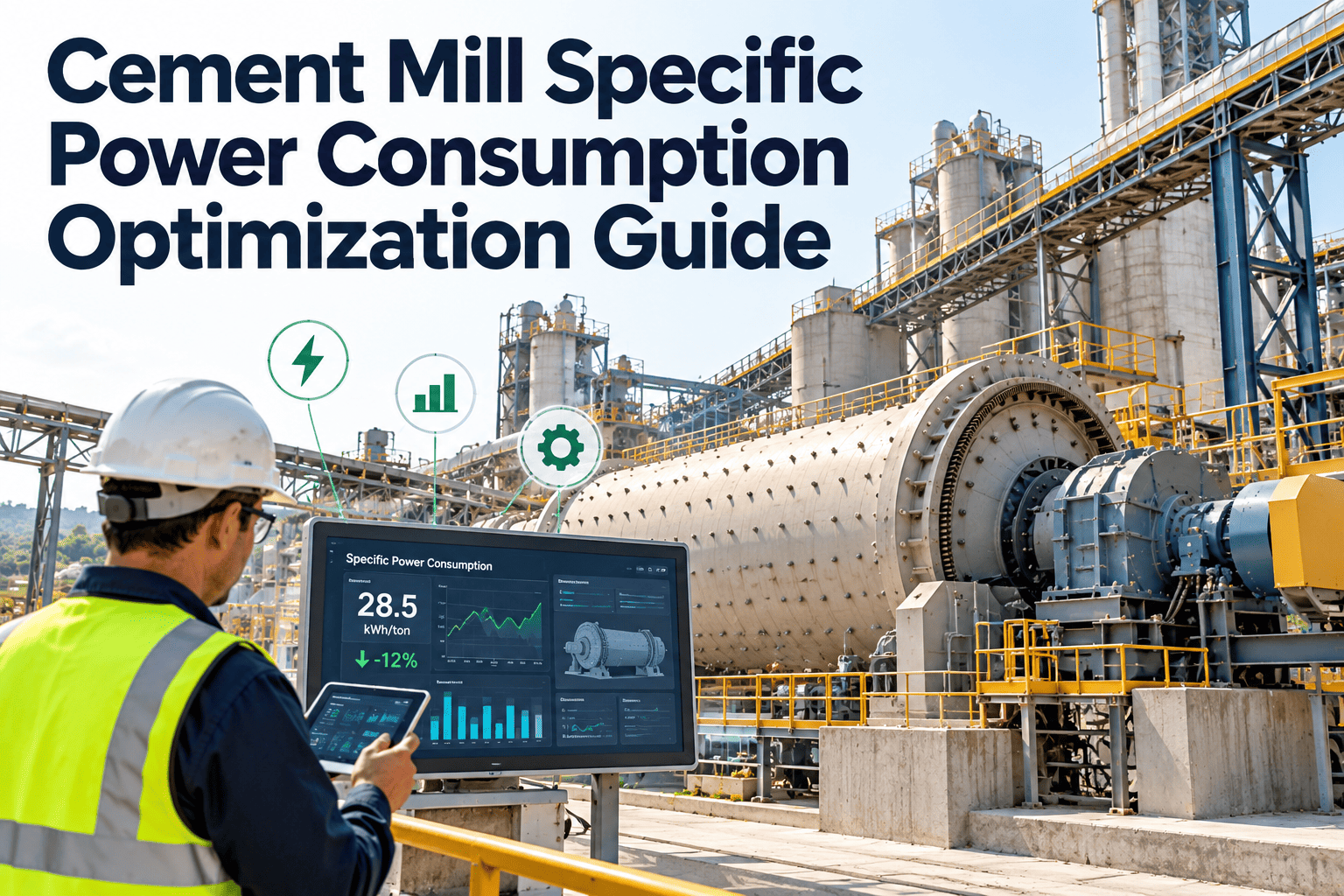
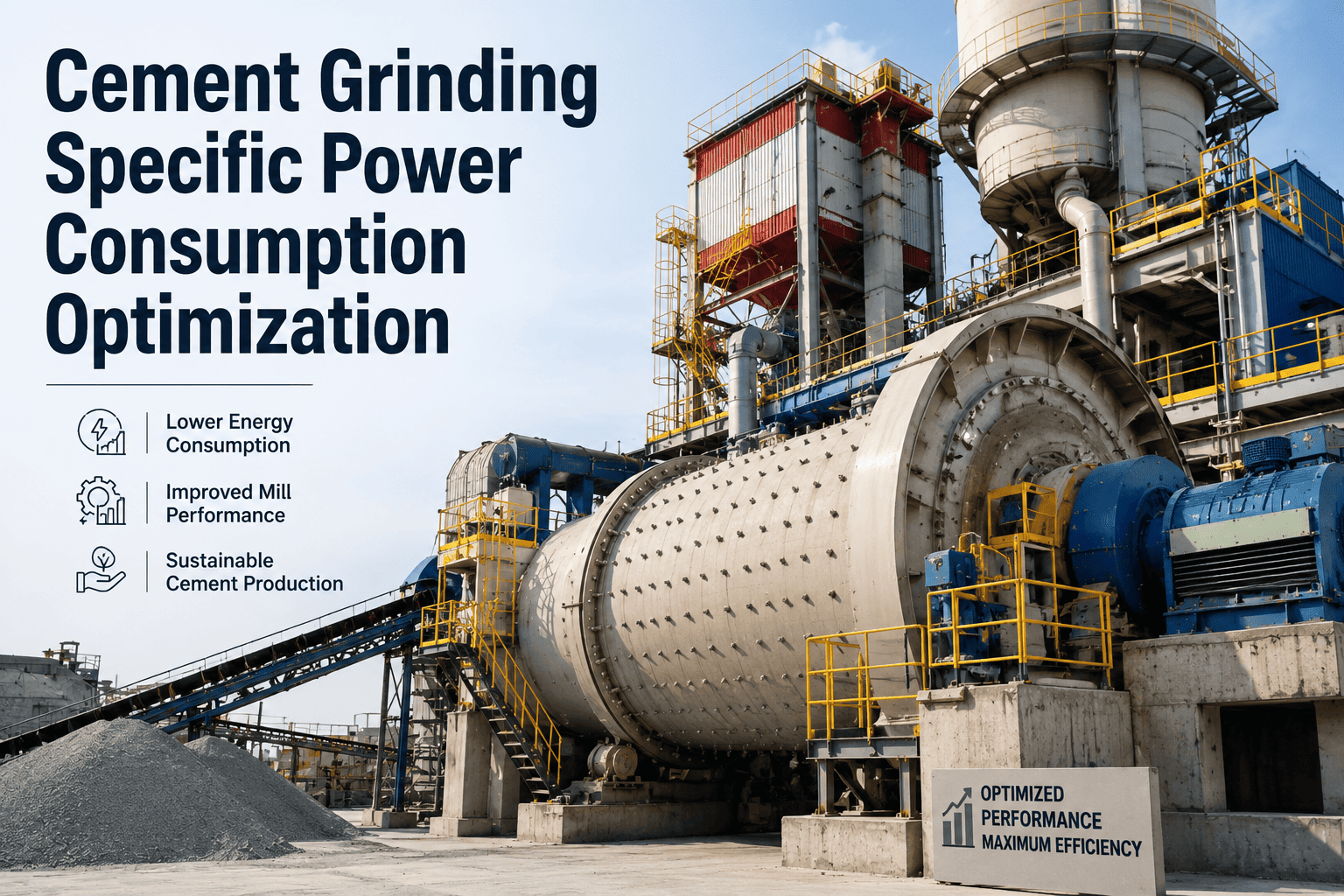
Cement grinding devours up to 70% of a plant's total electrical load — yet most mills operate at barely 5% thermodynamic efficiency. For a 1 MTPA facility consuming 33–40 kWh per tonne through conventional ball mills, that translates to over $1.5 million in annual electricity costs on grinding alone. The global cement industry processes 4 billion metric tonnes annually, and grinding circuits collectively burn through more than 2% of all electricity produced worldwide. The gap between average performers and best-in-class operators is staggering: vertical roller mills achieve 20–23 kWh/t, high-pressure grinding rolls push below 11 kWh/t, while aging ball mill circuits still lumber along at 40 kWh/t or more. Plants that sign up for Oxmaint are closing this gap by connecting real-time mill performance data to maintenance workflows that keep grinding circuits running at peak efficiency — eliminating the wear patterns, misalignment issues, and classification bottlenecks that silently inflate energy consumption month after month.
This guide dissects the energy efficiency of every major grinding technology used in cement production, maps the operational variables that drive specific energy consumption, delivers a practical optimization framework, and shows how CMMS-driven maintenance keeps your mills operating at their design-point efficiency rather than drifting toward the costly average.
Why Grinding Energy Efficiency Defines Cement Plant Profitability
Fuel and electricity represent the single largest variable production cost in cement manufacturing — typically 50% of total operating expenses. Within that electrical load, grinding dominates: raw material crushing accounts for 33% of power draw, while clinker finish grinding consumes 38%. Every kilowatt saved in the grinding circuit flows directly to the bottom line because grinding energy is a pure operating expense with no material recovery. A 10% reduction in specific grinding energy at a mid-size plant saves $300,000–$500,000 annually in electricity costs alone, before accounting for reduced wear part consumption, lower cooling requirements, and extended equipment life. The facilities that achieve these savings don't rely on capital-intensive equipment replacement alone — they combine technology selection with rigorous maintenance practices that prevent the gradual efficiency decay which plagues every grinding circuit over time.
Grinding Technology Energy Comparison
Specific energy consumption by mill type for finish grinding of OPC to 3,200–3,500 cm²/g Blaine
The Six Variables That Control Your Specific Energy Consumption
Grinding energy efficiency is not determined by the mill alone. Six interdependent variables govern the kWh/t figure that appears on your monthly energy report. Optimizing any single variable in isolation typically yields 3–5% improvement; optimizing all six as a system routinely delivers 15–25% reduction. Plants that book a demo with Oxmaint track each variable against baseline targets through automated dashboards that surface deviation before energy waste accumulates.
Feed Grindability & Moisture
Clinker hardness varies with kiln chemistry and cooling rate. Bond work index values range from 12–16 kWh/t across plants. Feed moisture above 3% forms a paste layer on grinding media that can increase energy consumption by 8–12%. Consistent clinker quality from the kiln is the first prerequisite for stable mill energy performance.
Mill Charge & Media Grading
Ball mill efficiency depends on proper charge volume (28–32% of mill volume), correct ball size distribution across compartments, and timely replacement of worn media. Undercharged mills waste energy on lifting air instead of grinding clinker. Overcharged mills reduce cascading action. A 5% deviation from optimal charge costs 3–7% in specific energy.
Separator Efficiency
The classifier determines what goes back to the mill and what leaves as product. Third-generation high-efficiency separators achieve 65–75% efficiency versus 40–50% for first-generation static separators. Upgrading to a high-efficiency separator alone can cut recirculating load by 30% and reduce specific energy by 6–10 kWh/t.
Ventilation & Mill Internals
Proper mill ventilation sweeps fine material out of the grinding zone before it cushions the ball impacts. Diaphragm slot blockage, damaged lifters, and worn liners alter material flow patterns that gradually increase retention time and energy per tonne. Liner profile and lifter bar angle affect the trajectory and impact energy of each ball.
Product Fineness Target
Energy consumption increases exponentially with fineness. Grinding to 4,000 cm²/g Blaine requires roughly 30% more energy than 3,200 cm²/g. Over-grinding costs energy without adding value. Precise fineness control through separator adjustment and real-time particle size monitoring prevents the 2–5% energy penalty of exceeding specification.
Grinding Aid Utilization
Chemical grinding aids (0.01–0.1% dosage) neutralize electrostatic charges on fresh clinker surfaces, preventing agglomeration that cushions grinding impacts. Published trials show 10–15% production increase and 5–10% specific energy reduction. One VRM trial cut consumption from 38 to 34.2 kWh/t — a 10% drop from a single additive change.
Track Every kWh/t in Real Time
Oxmaint connects mill performance data to maintenance workflows — auto-generating work orders when energy consumption deviates from baseline. Deploy in 2–4 weeks.
Ball Mill Optimization: Extracting Maximum Efficiency From Existing Assets
Ball mills remain the most widely installed grinding technology in cement plants worldwide. While they cannot match VRM or HPGR efficiency at the physics level, systematic optimization of an existing ball mill circuit typically recovers 15–25% of wasted energy — worth $200,000–$400,000 annually at a mid-size plant — without major capital expenditure. The optimization process follows a diagnostic sequence that identifies and eliminates the highest-impact losses first.
VRM vs. Ball Mill vs. HPGR: Making the Right Technology Decision
Choosing grinding technology involves trade-offs beyond energy consumption. Each mill type carries different capital costs, maintenance profiles, product characteristics, and operational flexibility. The decision matrix below maps these trade-offs for cement plant operators evaluating upgrades or greenfield installations.
Maintenance Impact on Grinding Energy: The Hidden Cost Driver
A perfectly optimized grinding circuit loses 1–2% efficiency per month without proper maintenance. Worn liners change ball trajectory. Blocked diaphragm slots alter material flow. Degraded separator rotor blades increase bypass. Bearing wear increases friction losses. Over a 6-month period between shutdowns, cumulative neglect can inflate specific energy consumption by 8–15% above optimized baseline — costing $120,000–$250,000 in excess electricity at a 1.5 MTPA plant. Plants that book a demo with Oxmaint catch this drift early through automated kWh/t trend alerts.
Prevent Grinding Efficiency Decay Automatically
Oxmaint auto-generates maintenance work orders when kWh/t trends exceed baseline thresholds — catching liner wear, media depletion, and separator degradation before they compound into six-figure energy losses.
Energy Efficiency KPIs Every Cement Grinding Operator Should Track
You cannot improve what you don't measure. These seven KPIs form the minimum monitoring set for any grinding circuit aiming to sustain top-quartile energy performance. Configure your Oxmaint dashboard to display these metrics in real time with automated alerts on deviation.
Frequently Asked Questions
How much energy does cement grinding consume compared to the total production process?
Grinding circuits consume 60–70% of a cement plant's total electrical energy. The total electrical consumption for producing one tonne of cement ranges from 110–120 kWh, with raw material grinding accounting for approximately 33% and clinker finish grinding consuming about 38% of the electrical load. This makes grinding the single largest energy consumer in cement manufacturing — far exceeding pyroprocessing auxiliaries, material handling, and packing operations combined.
What is the energy difference between ball mills and vertical roller mills?
Traditional ball mills in closed circuit consume 33–40 kWh per tonne of cement for finish grinding. Vertical roller mills (VRMs) achieve 20–23 kWh/t for equivalent product fineness — approximately 30–38% less energy. The savings come from the VRM's compression grinding mechanism, integrated classification, and ability to simultaneously dry high-moisture feeds. However, VRMs carry higher capital costs (1.3–1.5x) and more complex maintenance requirements, particularly around the gearbox and hydraulic roller systems.
How do grinding aids reduce energy consumption in cement mills?
Chemical grinding aids (dosed at 0.01–0.1% of feed weight) adsorb onto freshly fractured clinker surfaces, neutralizing electrostatic charges that cause fine particles to agglomerate and coat grinding media. By preventing this agglomeration, grinding aids maintain effective ball-to-particle contact, reduce the cushioning effect of fine coatings on media and liners, and improve separator efficiency. Published trials demonstrate 10–15% production increases and 5–10% specific energy reduction from grinding aid optimization alone.
What maintenance activities have the biggest impact on mill energy efficiency?
The four highest-impact maintenance activities for grinding energy are: proper media charge management (replacing worn balls and maintaining correct size distribution saves 3–8%), separator rotor and guide vane maintenance (prevents bypass that wastes 6–10 kWh/t), diaphragm slot cleaning (restores material flow and ventilation, saving 2–4%), and liner/lifter bar replacement (maintains correct ball trajectory and grinding geometry). Collectively, neglecting these four areas inflates specific energy by 8–15% over a typical 6-month operating period.
Can existing ball mill circuits be upgraded to improve energy efficiency without full replacement?
Yes. Retrofitting a hydraulic roller press (HPGR) ahead of an existing ball mill creates a combined grinding circuit that reduces energy consumption by approximately 25%. Upgrading from first-generation static separators to third-generation high-efficiency separators saves 6–10 kWh/t. Optimizing ball charge grading, improving ventilation, and introducing grinding aids can recover an additional 10–15%. One documented ball-mill upgrade combining these measures cut electricity consumption by 25% while simultaneously increasing throughput.
How does over-grinding waste energy in cement production?
Energy consumption increases exponentially with fineness — grinding to 4,000 cm²/g Blaine requires approximately 30% more energy than achieving 3,200 cm²/g. Over-grinding produces particles finer than required by product specifications, consuming extra kWh without improving cement performance. It also generates heat that can cause gypsum dehydration (false set problems) and increases separator load. Real-time particle size monitoring and tight separator control prevent over-grinding, eliminating the 2–5% energy penalty that most plants unknowingly carry.
What role does a CMMS play in maintaining grinding energy efficiency?
A CMMS like Oxmaint maintains grinding efficiency by automating condition-based maintenance triggers tied to energy KPIs. When specific energy consumption (kWh/t) exceeds baseline thresholds, the system automatically generates work orders for inspection — checking media charge level, diaphragm condition, separator performance, and liner wear. This prevents the gradual efficiency decay that accumulates between scheduled shutdowns. Plants using CMMS-driven grinding maintenance report sustaining energy performance within 3–5% of post-optimization baseline throughout the entire operating campaign.