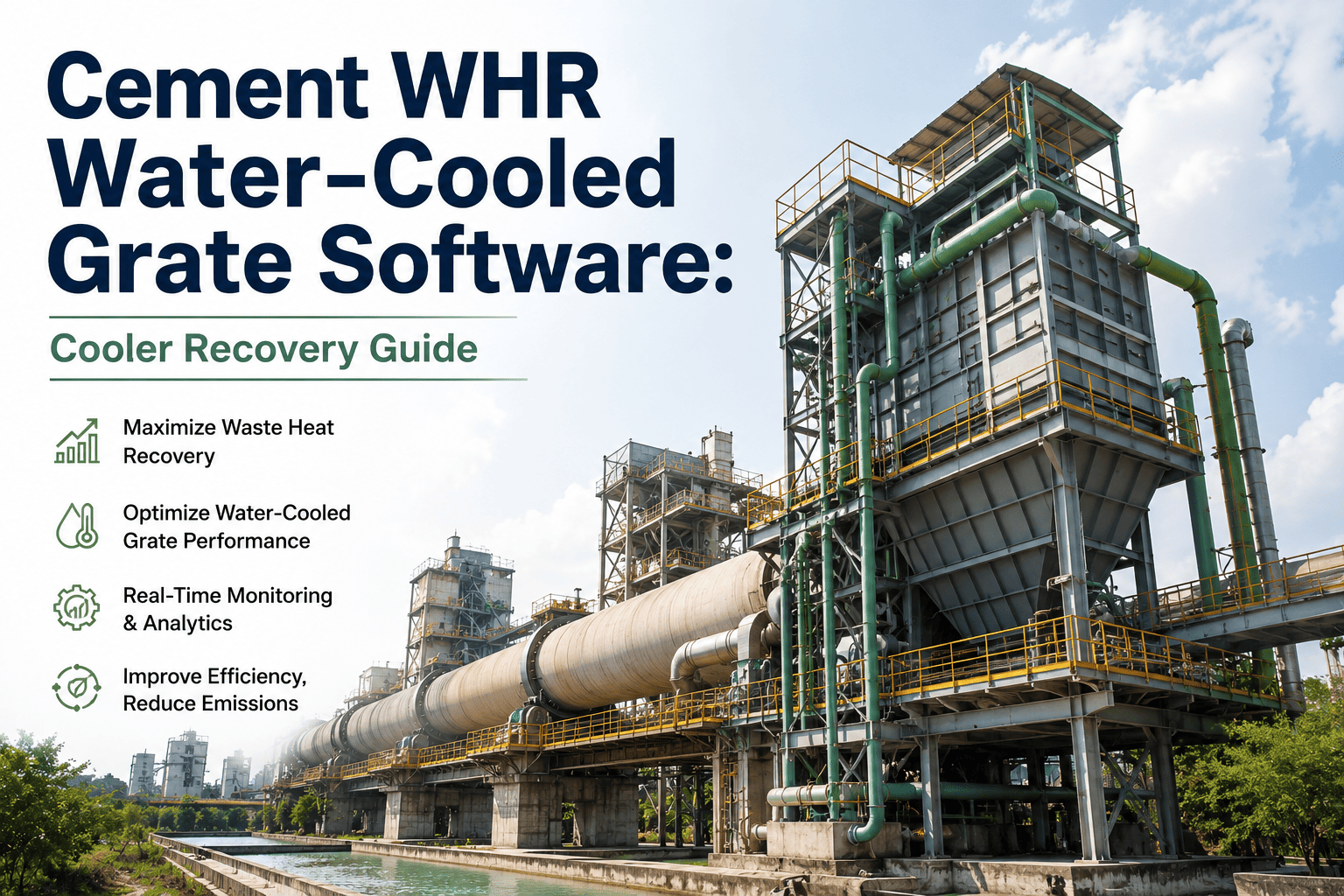
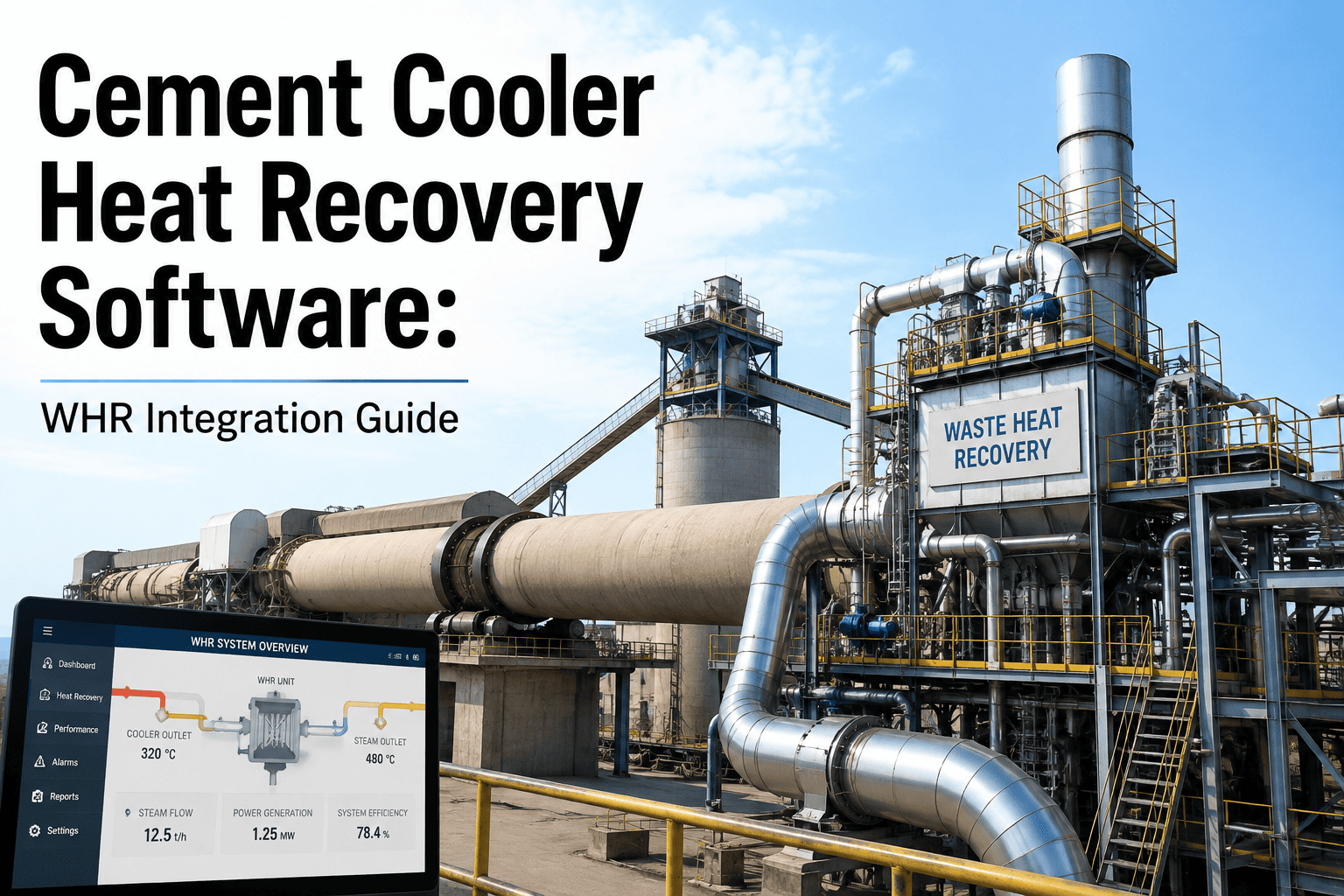
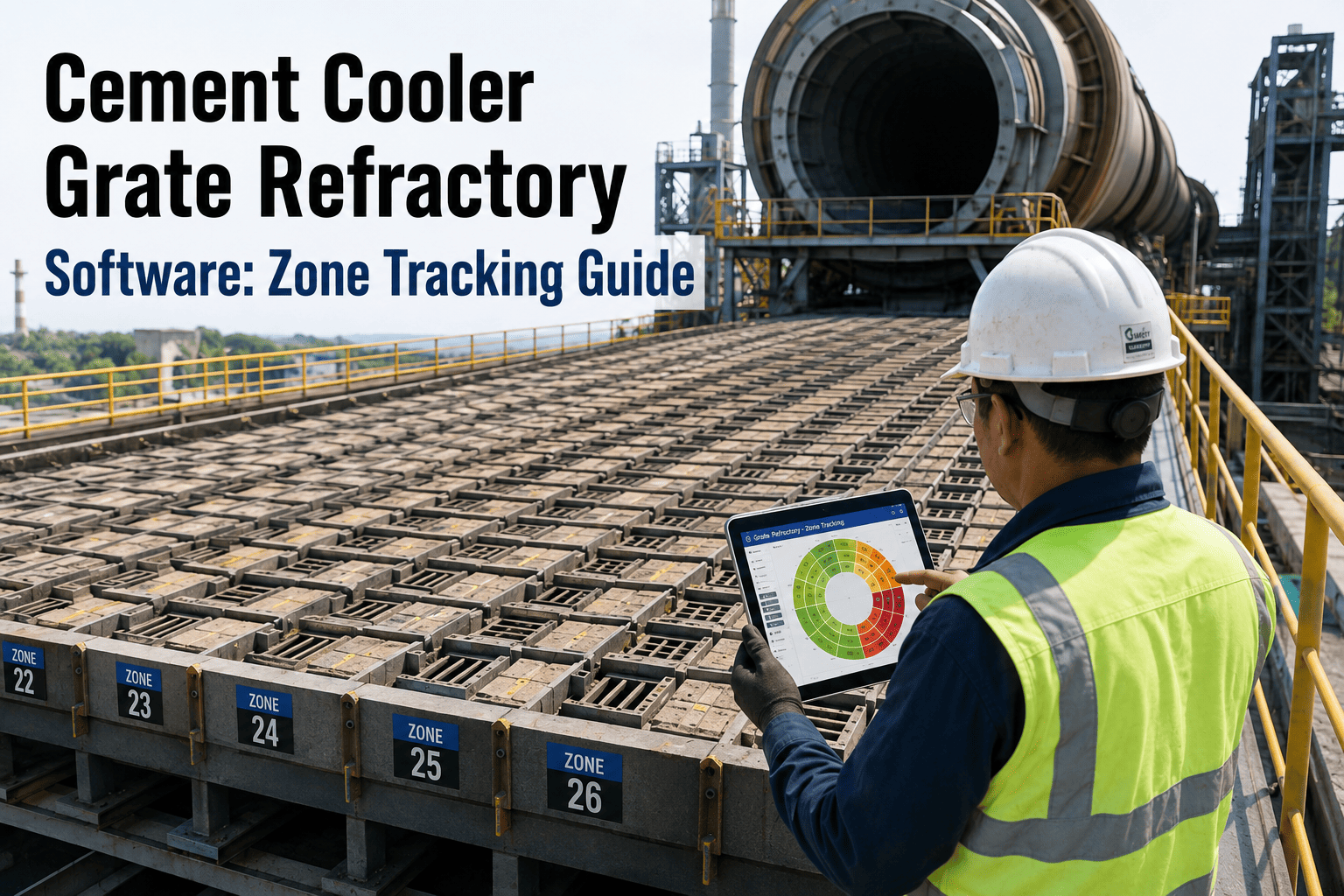
Cooling clinker isn't only about protecting downstream conveyors from heat damage — on the AQC boiler side, it's where a meaningful share of a cement plant's waste heat recovery output either gets captured or quietly lost. Every degree of drift in cooler exit air temperature, every zone where under-grate pressure creeps off baseline, and every slow clog on an AQC boiler's heating surface chips away at steam generation from heat the plant has already paid for in fuel. Most reliability teams watch kiln-side WHR closely but treat the cooler side as a black box until turbine output drops and nobody can explain why. A CMMS built around cooler-specific condition data turns that black box into a monitored, auditable system that catches drift zone by zone. This guide walks through how cooler-side WHR actually degrades, the readings worth tracking daily, and how OxMaint structures that discipline — you can start a free trial or book a demo to see the cooler-side WHR workflow firsthand.
Cooler-Side WHR · Water-Cooled Grate · AQC Boiler Duty
The Cooler Side of WHR Is Where Recoverable Megawatts Quietly Disappear
Grate wear, air leakage, and boiler fouling all cut AQC steam output long before anyone notices the turbine is underperforming. These losses build slowly, hidden inside readings that most control rooms glance at but never trend, which is exactly why they go unnoticed for so long. Here's how to track cooler-side WHR the way it deserves — zone by zone, reading by reading.
25–35
kWh recoverable per tonne of clinker from a healthy AQC circuit
5–15%
rise in specific heat consumption once grate zones drift unmonitored
2–3 yrs
typical payback window for a well-maintained WHR system
18 mo
zero unplanned cooler failures achievable with structured tracking
How Heat Actually Moves From the Grate to the AQC Boiler
The water-cooled grate carries red-hot clinker out of the kiln at 1,000–1,200°C and pushes cooling air up through the bed. That heated air doesn't just cool clinker — it's the entire feedstock for the AQC boiler. Anything that changes how air moves through the grate changes how much steam the boiler can make, which is why grate condition and boiler output are really one system, not two separate assets to be managed on separate schedules. The path below is what a healthy circuit looks like end to end, and it's the reference every maintenance team should be measuring their own cooler against.
1
Clinker enters the grate
Glowing clinker drops onto the recuperation zone of the water-cooled grate, still carrying the bulk of the kiln's thermal load. This zone sees the most abrasive, highest-temperature service of the entire cooler, and its condition sets the ceiling for everything downstream.
2
Cooling fans force air upward
Undergrate fans push ambient air through each grate zone, extracting heat from the clinker bed and carrying it upward as hot exhaust air. Each zone is sized to a specific airflow target, and any fan running below that target quietly reduces how much heat the whole circuit can recover downstream.
3
Hot air splits into two streams
A portion returns to the kiln as secondary and tertiary combustion air; the surplus, at roughly 250–350°C, is routed to the AQC boiler. Balancing that split correctly matters — sending too little air back to the kiln raises fuel demand, while starving the boiler cuts steam output.
4
AQC boiler converts heat to steam
The hot air passes across evaporator and economizer surfaces, transferring sensible heat into boiler feedwater to produce saturated or superheated steam. Dust carried in the airstream settles on these same surfaces over time, which is why fouling is the boiler's single biggest efficiency threat.
5
Steam drives the turbine
Steam from the AQC boiler joins the preheater boiler's output at the turbine, generating carbon-free electricity that offsets grid draw. Because the two streams combine before the turbine, a shortfall on the cooler side is easy to blame on the kiln side unless each circuit is tracked separately.
Five Places Cooler-Side WHR Loses Output Without Anyone Noticing
None of these failure points cause an alarm on day one. Each one shows up first as a slow drift in a reading nobody is watching closely — and by the time it shows up in turbine output, months of recoverable energy are already gone.
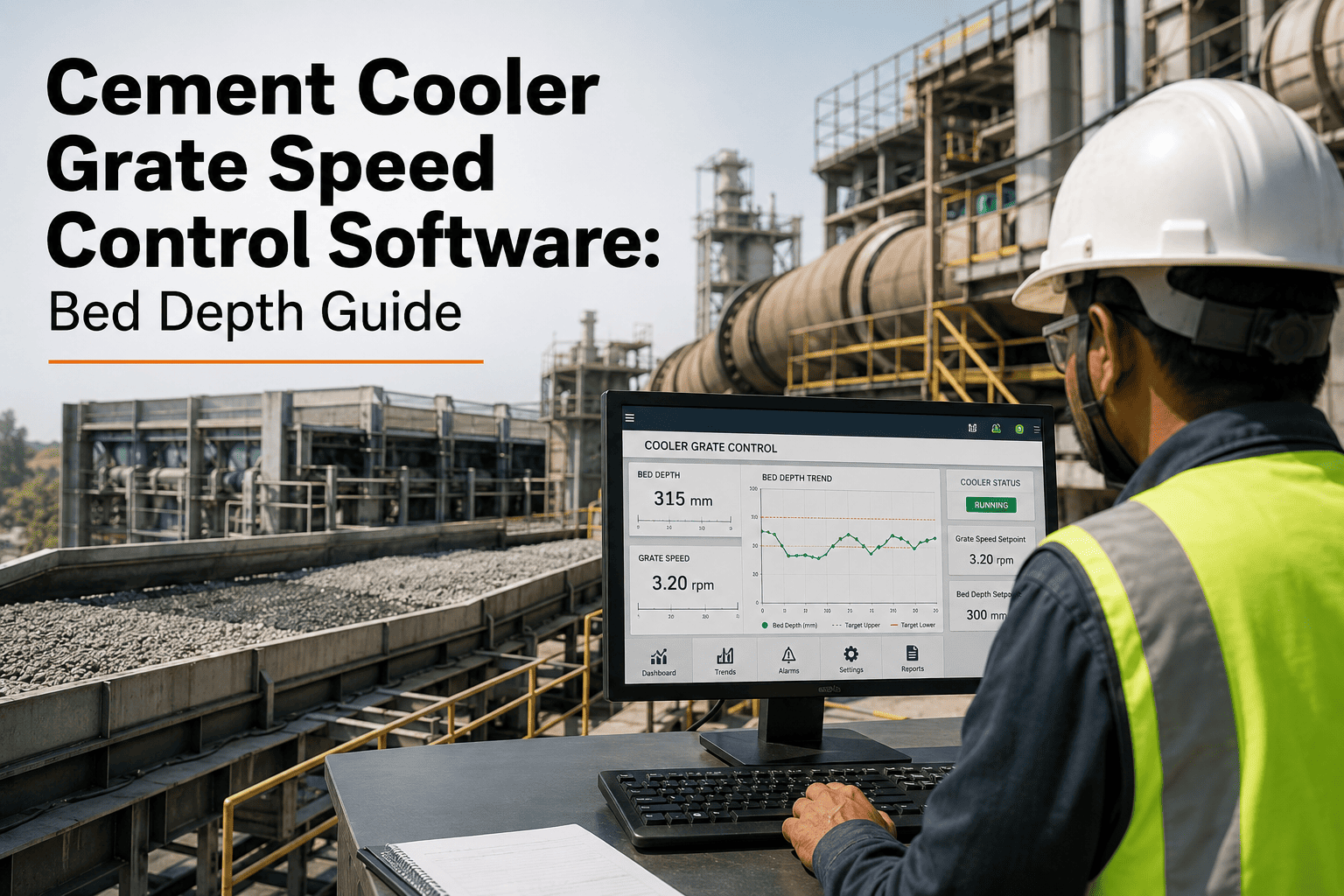
Grate plate wear and clogging
Individual plates warp or clog with fine clinker dust, starving sections of the bed of cooling air. Airflow shifts to healthier zones, evening out the total volume while quietly lowering AQC inlet temperature.
False air ingress
Worn seals around cooler hoods and grate side walls let cold ambient air leak into the hot air stream, diluting temperature before it ever reaches the boiler and forcing fans to work harder for the same output.
AQC boiler surface fouling
Dust carried in the cooler exhaust deposits on evaporator and economizer tubes over time, insulating them from the hot gas stream and reducing heat transfer even when inlet air temperature looks normal.
Cooling fan degradation
Bearing wear, damper drift, and impeller fouling on undergrate fans reduce delivered airflow per zone, lowering the volume of hot air available to the boiler even before a fan trips or fails outright.
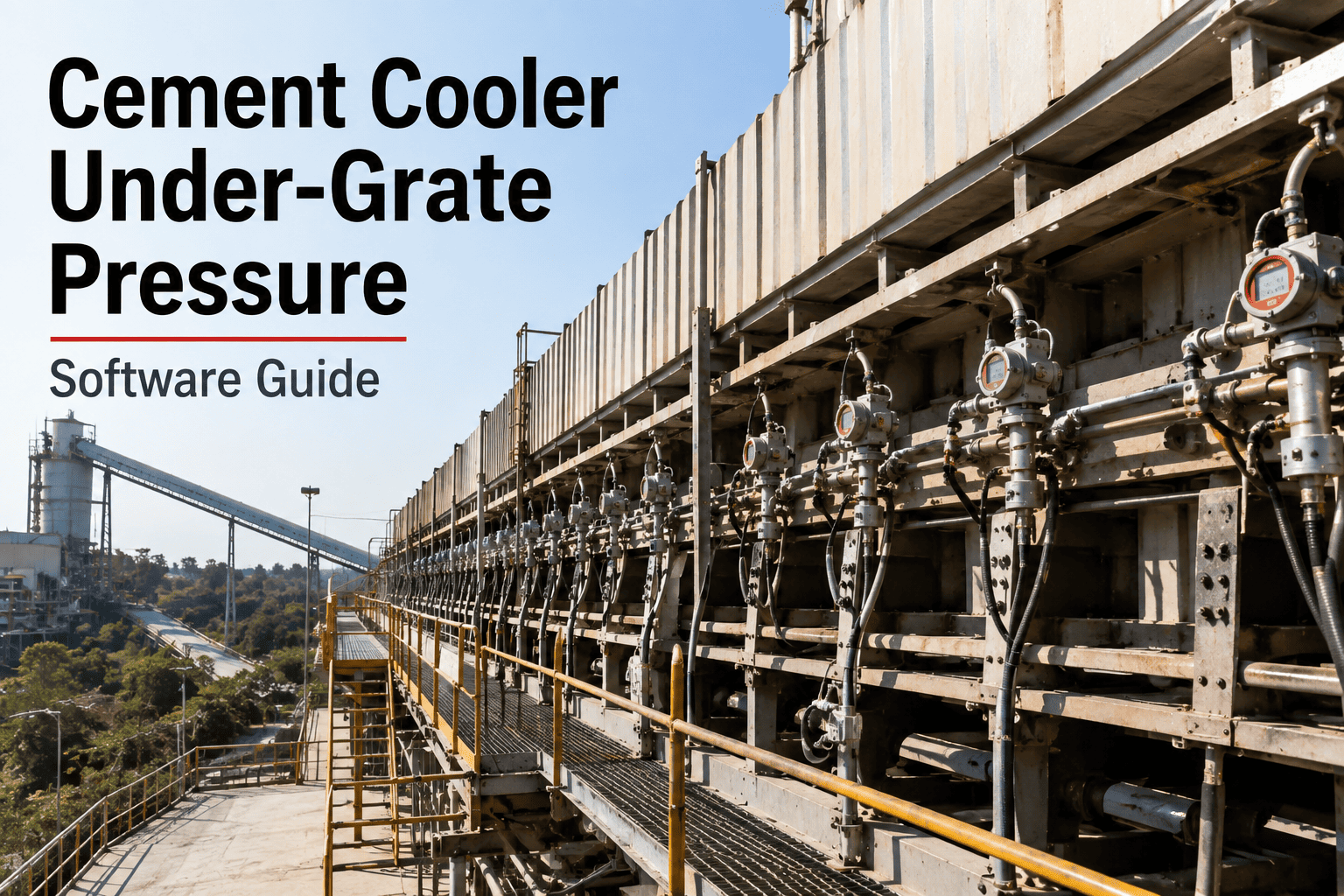
Undergrate pressure drift
Clinker sifting accumulates below the grate over months, gradually raising resistance and skewing pressure distribution across zones — a slow signal almost never caught by periodic visual inspection alone.
See Your Cooler-Side WHR Data in One Dashboard
OxMaint pulls grate zone readings, fan condition, undergrate pressure, and AQC boiler duty into a single asset register — with work orders that fire automatically the moment a reading drifts off baseline.
The Readings Worth Watching on the Cooler Side
Kiln-side WHR gets most of the attention because preheater exhaust temperature is easy to watch. Cooler-side WHR needs a slightly different set of readings — pulled from the grate, the fans, and the boiler itself — to catch degradation early.
| Reading |
What It Signals |
Watch For |
| Cooler exit air temperature |
Volume and quality of hot air actually reaching the AQC boiler |
Gradual decline of 10–20°C over weeks without a corresponding clinker rate change |
| Undergrate pressure by zone |
Airflow resistance and clinker sifting buildup under the grate |
Any single zone drifting more than 15% from its own baseline |
| AQC boiler feedwater delta-T |
Actual heat transfer efficiency across evaporator and economizer surfaces |
Delta-T shrinking while inlet air temperature stays flat — a fouling signature |
| Cooling fan motor current |
Delivered airflow per grate zone relative to design duty |
Rising current with falling airflow, indicating bearing or impeller wear |
| Clinker discharge temperature |
Whether the grate is achieving its designed cooling profile at all |
Sustained rise above target, often the last symptom to appear, not the first |
| AQC steam output vs clinker throughput |
Overall cooler-side WHR conversion efficiency in kWh per tonne |
Ratio falling below the plant's own historical baseline for that season |
How OxMaint Structures Cooler-Side WHR Monitoring
A CMMS earns its place here by turning scattered control-room trends and paper inspection sheets into one system that watches the whole cooler-to-boiler circuit and tells maintenance teams exactly when and where to act.
Baseline registry
Every grate zone, fan, and boiler surface gets its own recorded baseline, so alerts compare a machine to its own healthy history rather than a generic industry figure.
Automated thresholds
When a reading crosses its alert threshold, OxMaint auto-generates a work order and routes it to the right technician before the drift becomes a shutdown event.
Shutdown scoping
Accumulated condition data scopes each planned kiln stop — replace only the plates and surfaces flagged by trend data, with parts pre-kitted before the outage window opens.
Zone-level trend history
If one grate zone or fan degrades faster than its peers across cycles, OxMaint surfaces the pattern — prompting a design or air-distribution review instead of repeat blind replacement.
Compliance-ready records
Every reading, work order, and threshold change is timestamped and attributable, giving reliability teams an audit trail without extra paperwork burden.
What Structured Tracking Changes in Practice
The difference between reactive and structured cooler-side WHR management shows up clearly once the readings are actually being watched instead of collected and filed away.
Without Structured Tracking
Grate wear discovered visually, often after clinker buildup has already hidden the worst plates
AQC steam output drop noticed only when the turbine report comes in weeks later
Shutdown plate replacement decided on guesswork, over-ordering some parts and missing others
Fan bearing failures caught as unplanned trips rather than scheduled swaps
With OxMaint Tracking
Zone-level pressure and temperature trends flag wear months before a visual inspection would
AQC boiler delta-T monitored daily, catching fouling before it costs a full shutdown cycle
Shutdown parts list generated from actual condition data, staged before the outage begins
Fan condition trended continuously, converting failures into planned maintenance windows
Frequently Asked Questions
What is the difference between kiln-side and cooler-side WHR?
Kiln-side WHR captures heat from preheater exhaust gases through the SP boiler, while cooler-side WHR captures heat from the clinker cooler's hot air through the AQC boiler. Both feed the same turbine, but they degrade for different reasons and need separate monitoring. See how
OxMaint tracks both circuits from one asset register.
How much electricity can a healthy AQC boiler circuit generate?
A well-maintained AQC circuit typically contributes a meaningful share of the 8–12 kWh per tonne of clinker that a combined WHR system can generate, depending on cooler design and clinker throughput. Grate wear and fouling are the two biggest factors that erode this figure over time.
How often should undergrate pressure be checked?
Daily trending is far more useful than periodic spot checks, since pressure drift from clinker sifting builds gradually over weeks. A CMMS that logs each zone's reading automatically catches drift long before it triggers fan overcurrent or a forced shutdown.
Can a small cement plant run cooler-side WHR tracking without a dedicated energy engineer?
Yes. Route-based data collection by existing maintenance technicians, combined with automated threshold alerts, covers most of the value without a dedicated specialist.
Book a demo to see how the workflow is structured for lean teams.
Does AQC boiler fouling affect anything besides power generation?
Yes. Fouled heating surfaces increase draft resistance across the cooler exhaust path, which can affect fan loading and, in more severe cases, feed back into cooler airflow balance and secondary air temperature returning to the kiln.
Stop Losing Recoverable Megawatts on the Cooler Side
OxMaint gives cement reliability teams one place to track grate condition, fan health, and AQC boiler performance — turning slow, invisible drift into readings that trigger work orders before output is lost. Most cooler-side WHR programs are fully configured within days.