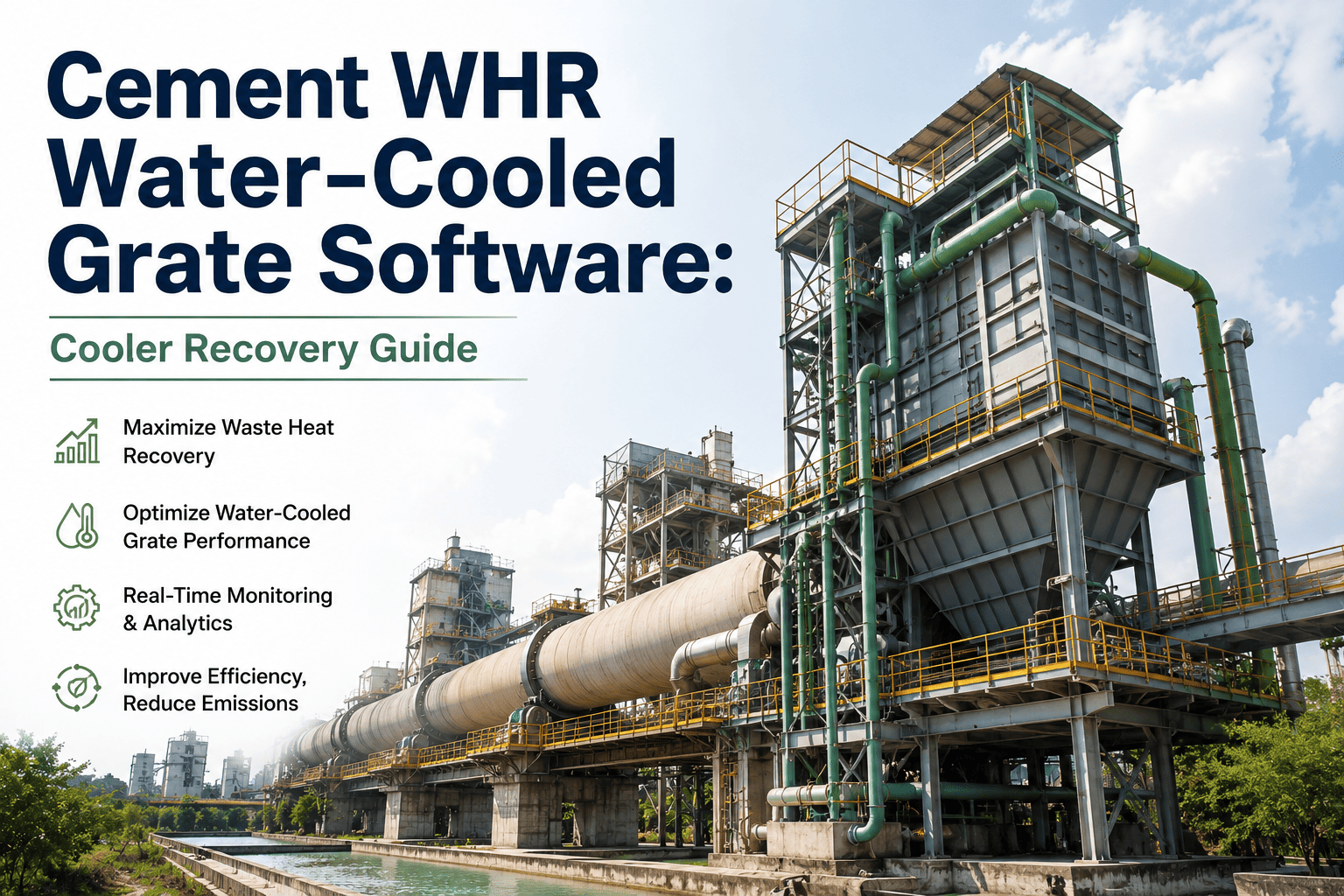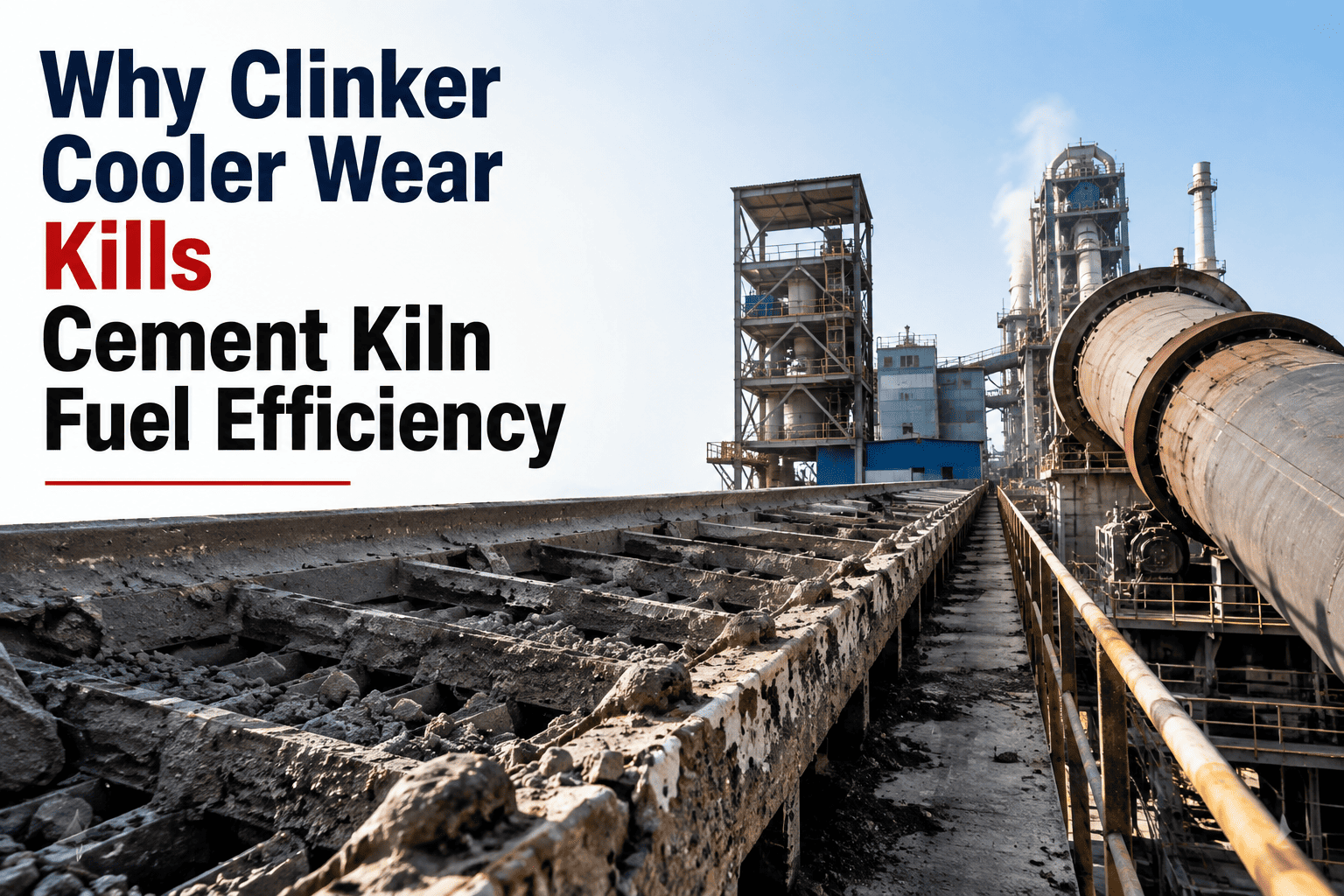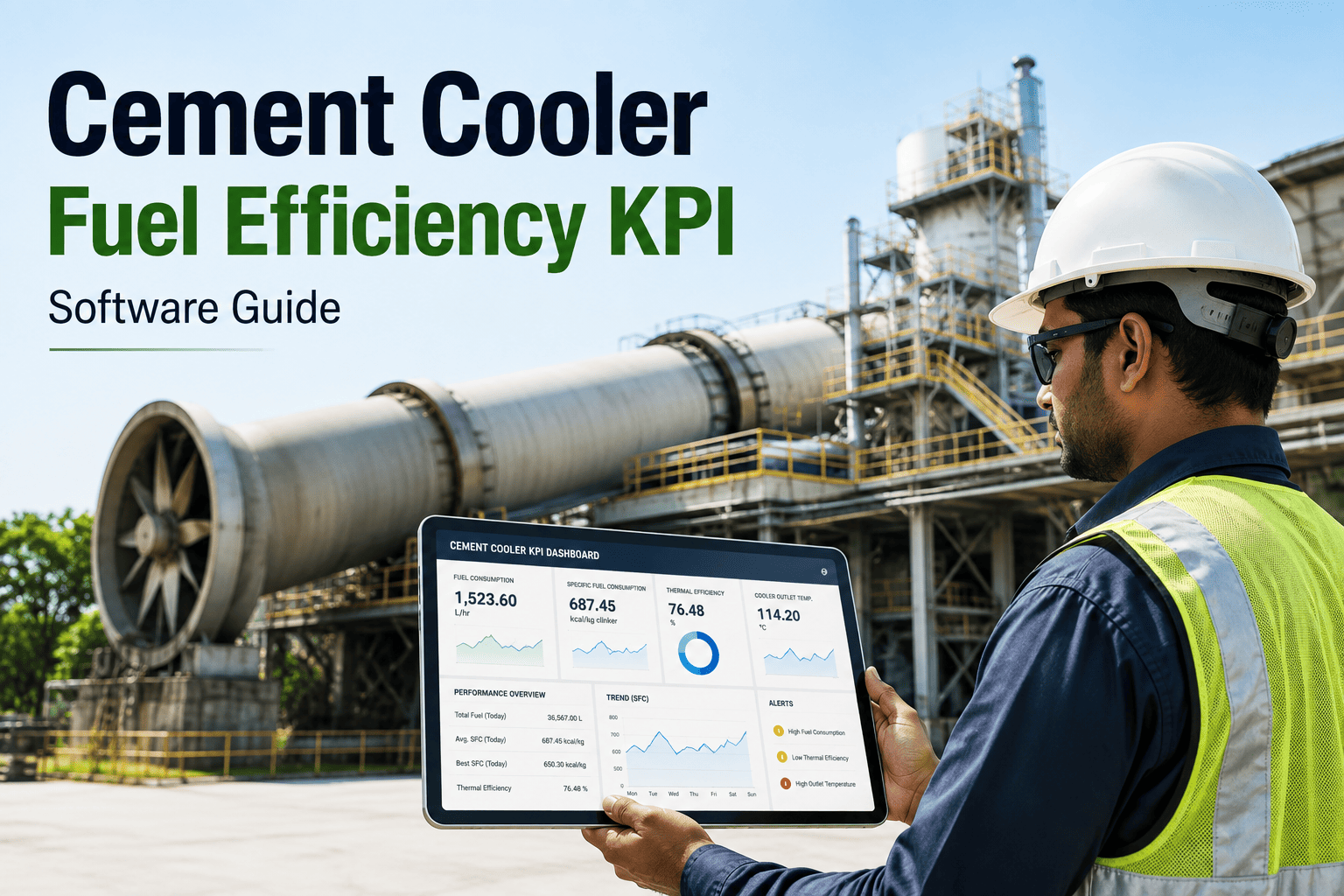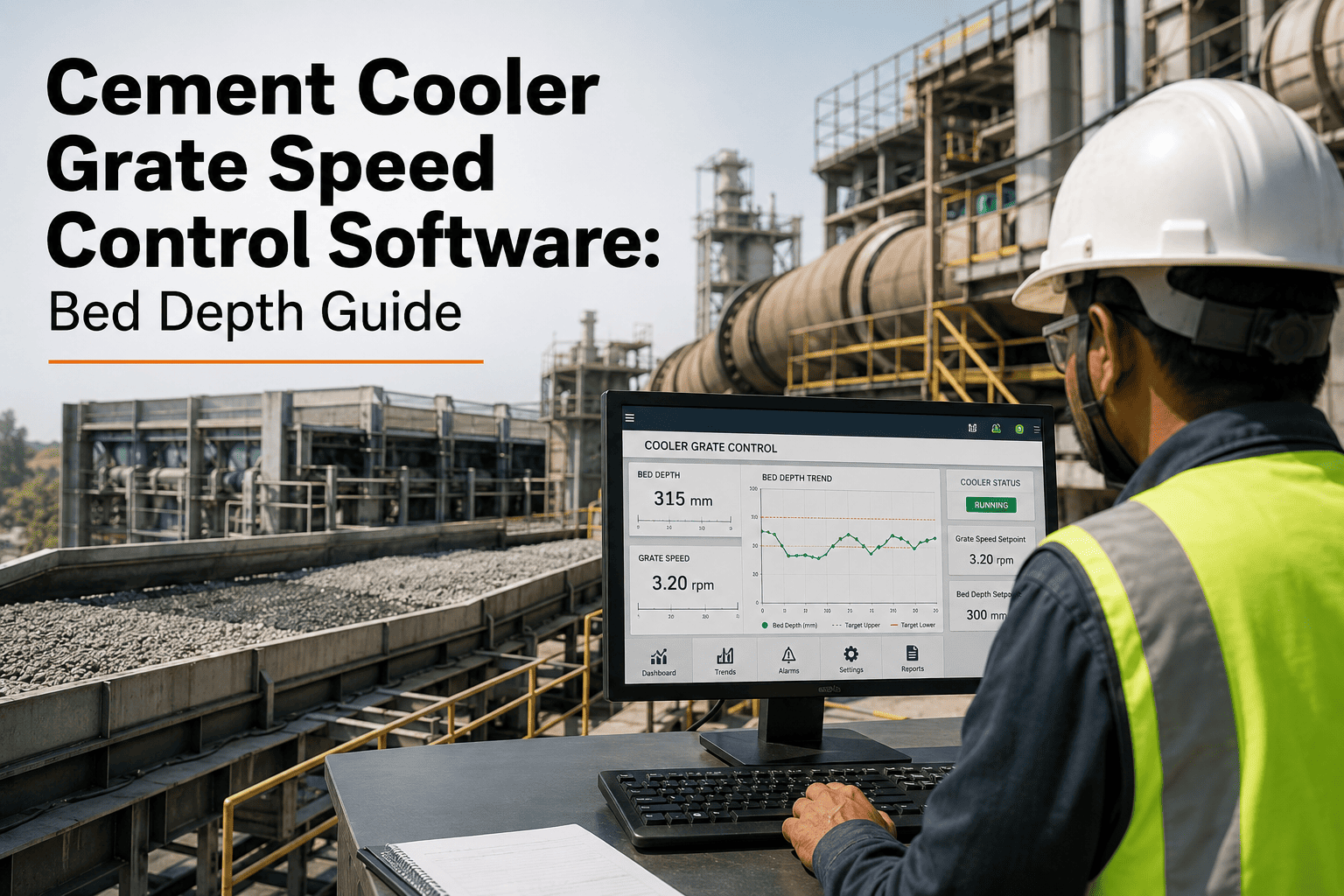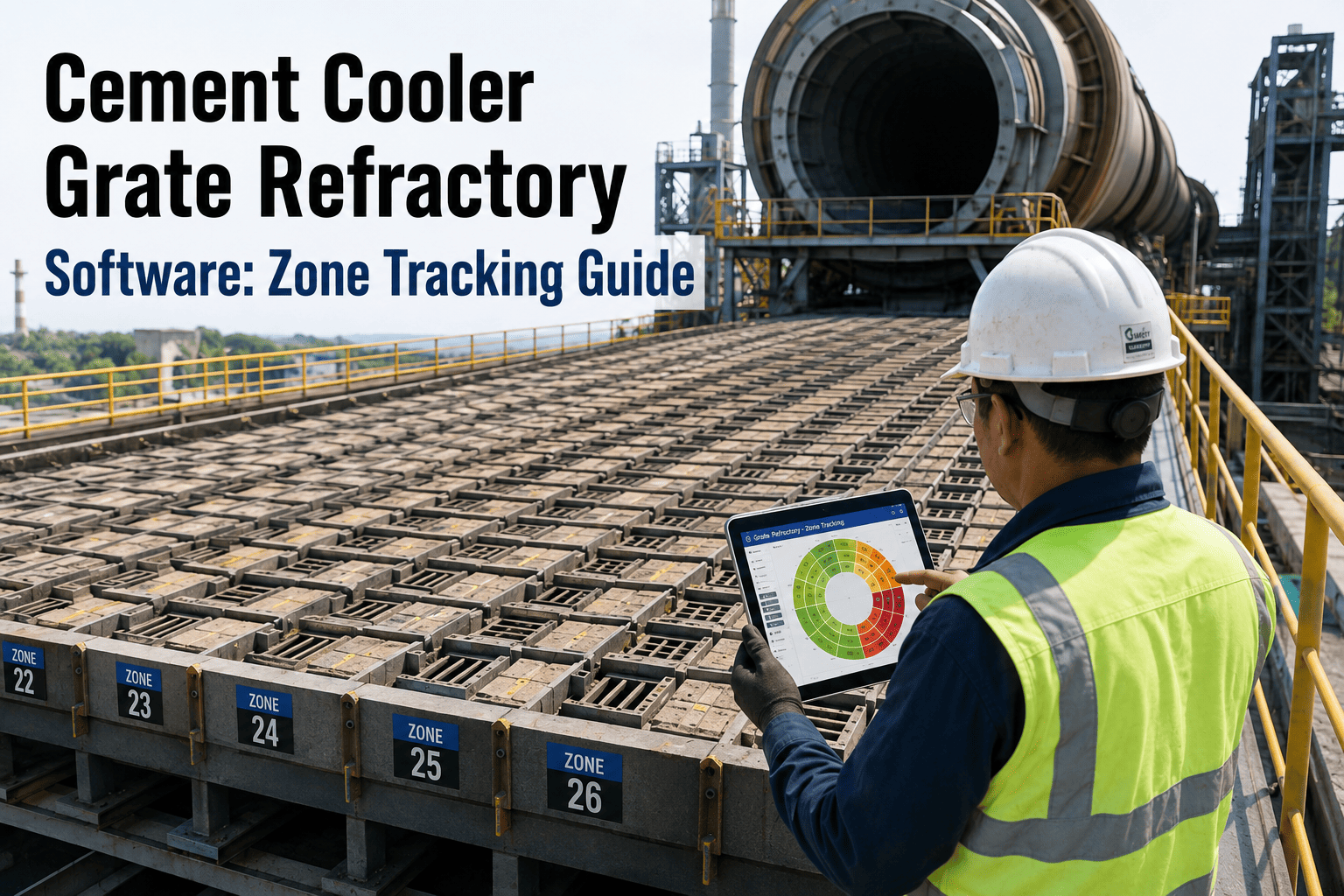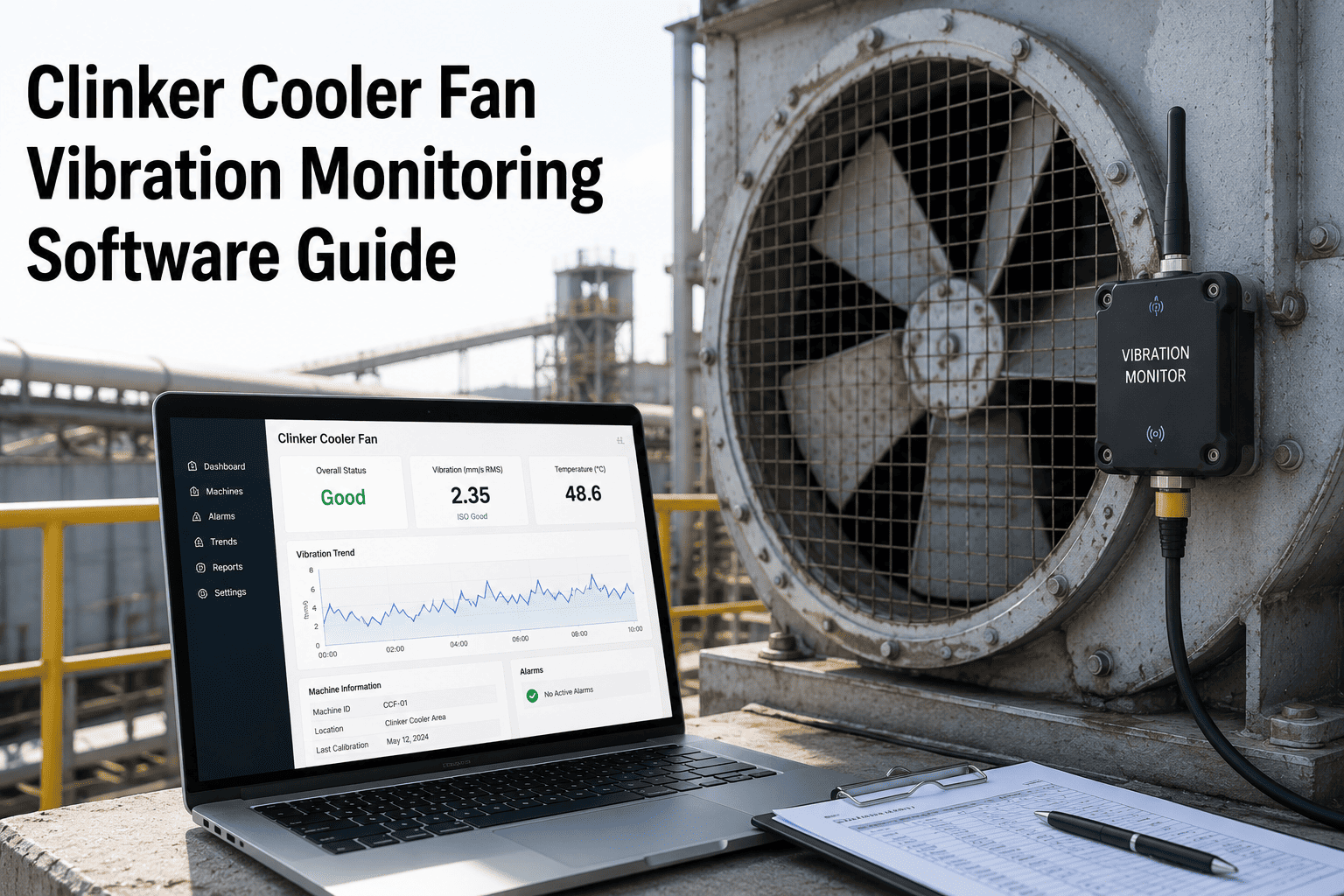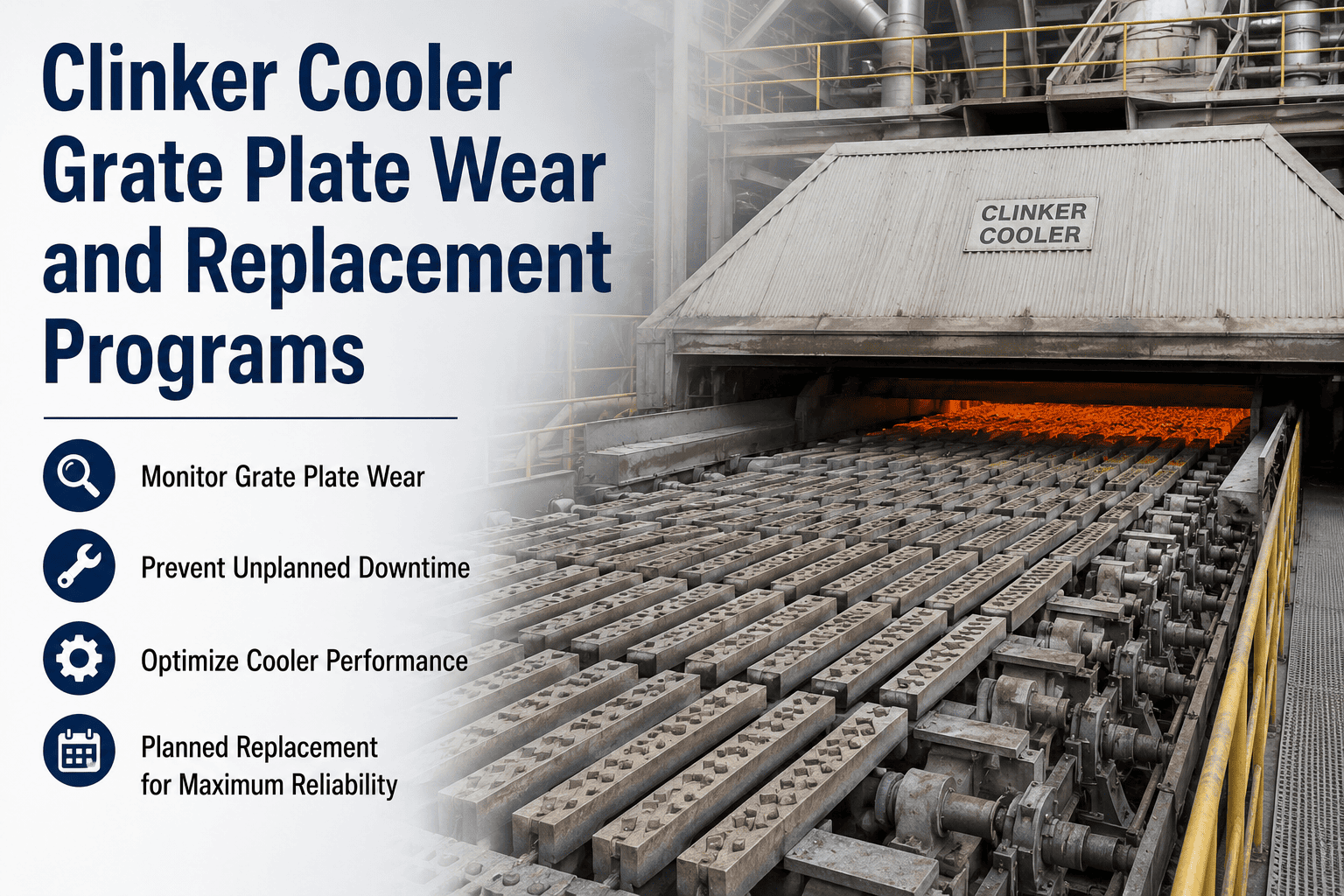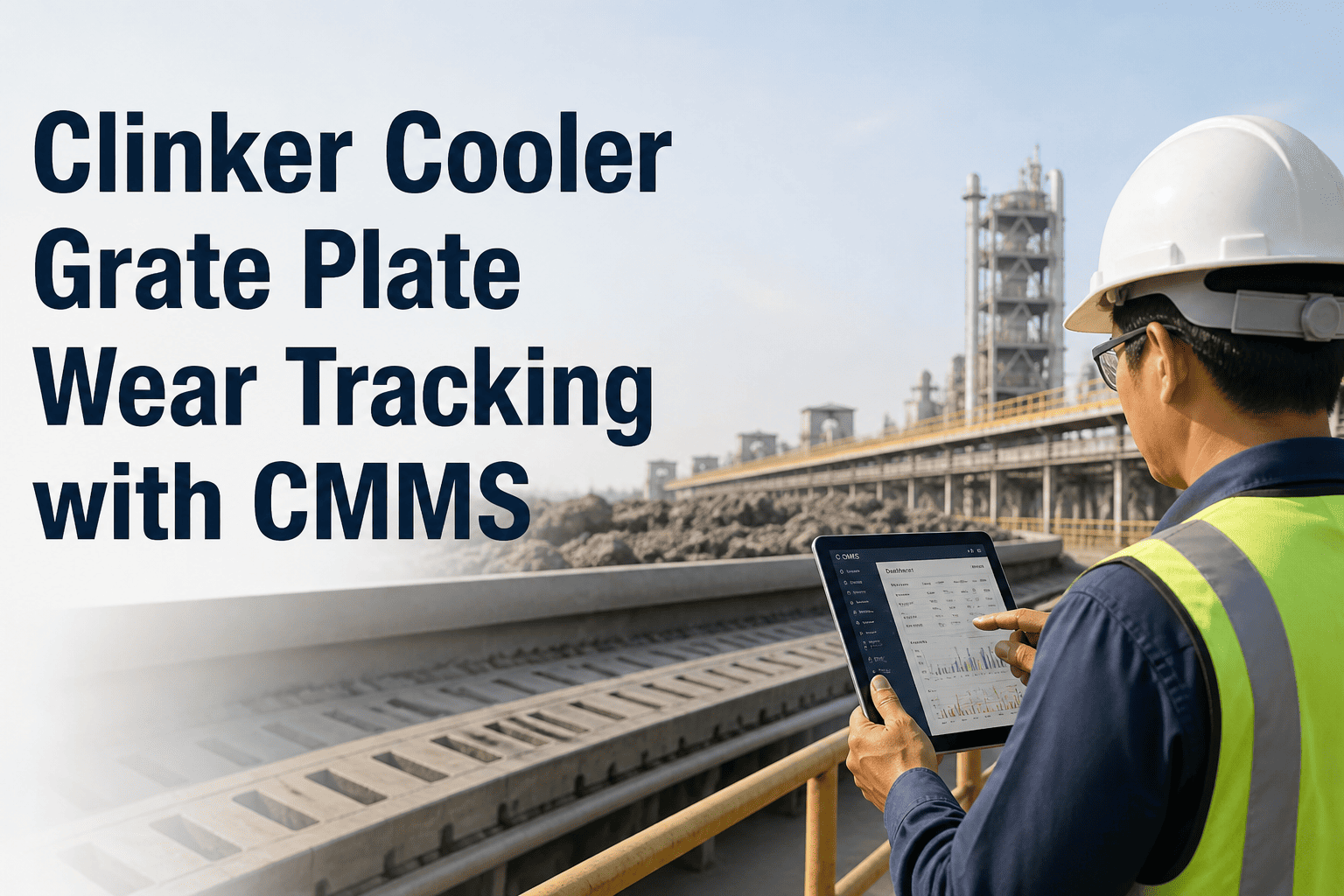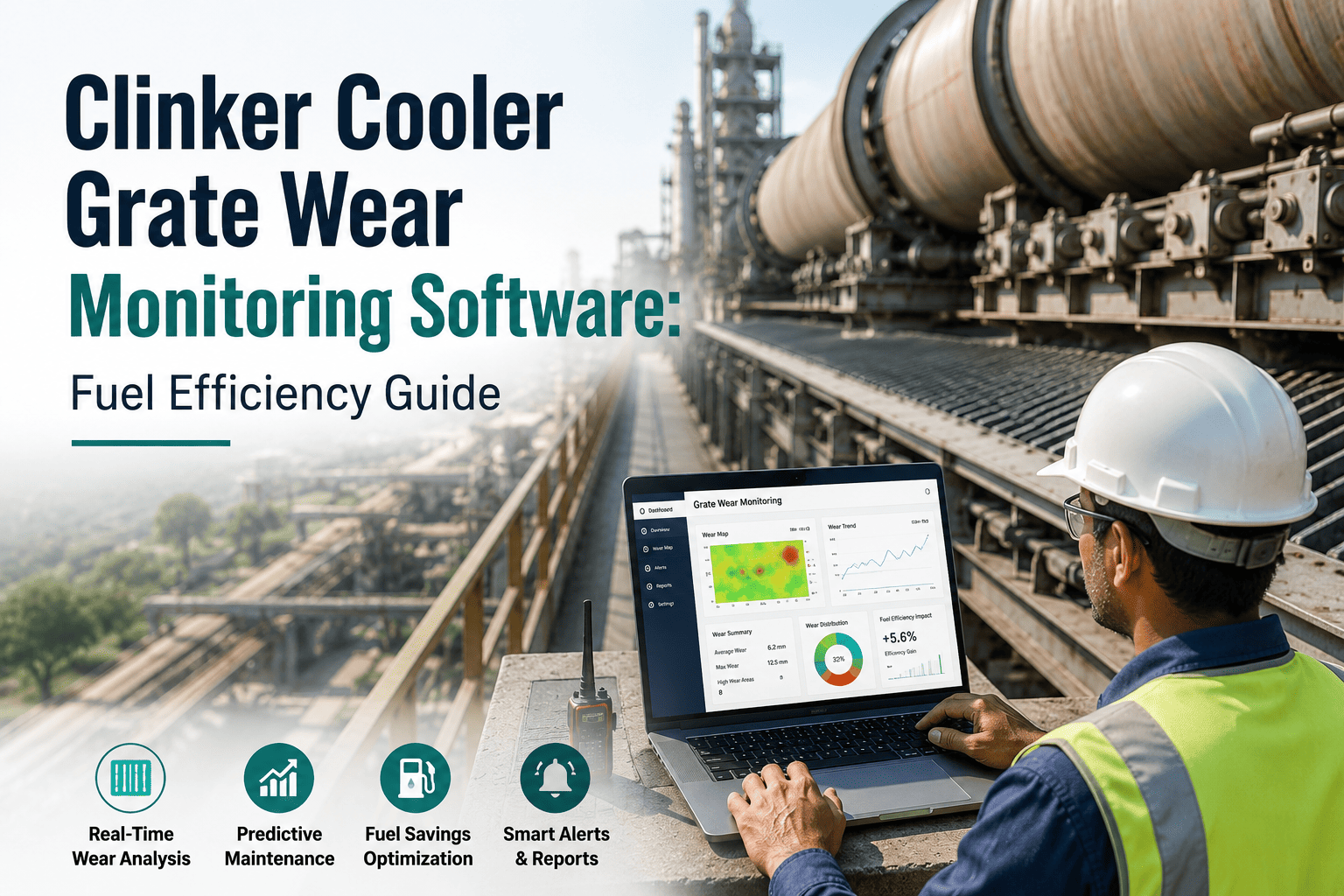
Clinker cooler grate plates are the silent tax on cement plant fuel economics — every millimetre of wear shortens secondary airflow contact time, pushes cooler exit temperatures up, and forces the kiln to burn more fuel to hold the same clinker mineralogy. Across a typical 5,000 TPD line, a grate bed losing just 8% of its designed aerodynamic profile can add 4–7 kCal/kg of clinker to your specific heat consumption, which translates to six-figure secondary fuel spend long before a plate actually fails. OxMaint's clinker cooler grate wear monitoring software turns this slow, expensive drift into a controlled, instrumented variable — giving maintenance managers, reliability engineers, and multi-site cement groups a single cloud-based CMMS to schedule preventive grate inspections, digitize LOTO isolations, run QR-tagged asset checks on the kiln deck, log root cause analyses, and generate OSHA/MSHA-ready compliance reports in minutes. Instead of discovering grate degradation during a monthly walkdown or, worse, after a red-clinker event, your team catches plate wear at Stage 1 — while cooler efficiency is still recoverable through planned replacement. You can Start Free Trial or read on for the full fuel-efficiency playbook.
Catch grate plate wear before it burns 3–8% of your secondary fuel budget.
OxMaint's cement CMMS digitises every grate plate inspection, LOTO isolation and replacement record across your kiln line — so cooler efficiency stops silently leaking through untracked wear. Cloud-based, mobile-first, and built for kiln decks, mill floors and remote silos alike.
Why grate plate wear is the hidden line on your fuel bill
A clinker cooler is engineered to recover heat: ambient air pushed through the grate bed reclaims 60–75% of clinker enthalpy and returns it as secondary air to the kiln burner. When grate plates wear — holes elongate, slots widen, sealing edges round off — the aerodynamic map of the bed drifts. Air follows the path of least resistance, bypassing clinker, and the cooler's job quietly degrades.
Empirically, k ≈ 0.18–0.24 for travelling-grate coolers on a 4,000–6,000 TPD line. A 10% airflow deviation paired with a 40°C exit-temp rise typically adds 7–9 kCal/kg — roughly $310K–$480K/yr in extra coal and petcoke at current ASF pricing.
A 5,000 TPD plant in central India ran a static-grate cooler for 14 months without structured wear tracking. By the time red clinker appeared at the cooler discharge, the Stage-2 plates had lost 11mm of slot edge — secondary air temperature had slipped from 1,080°C to 985°C, and specific heat consumption had climbed 6.4%. The recovery cost: a 9-day unplanned stop, 1,840 tonnes of replacement clinker inventory drawdown, and $412K in additional fuel burned over the prior two quarters. A digital wear curve would have flagged the drift at month 8.
Six wear signals every cement CMMS should track on the cooler grate
OxMaint structures grate wear monitoring around six instrumented signals — each tied to a QR-tagged asset, a digital inspection template, and a configurable alert threshold that pushes work orders before efficiency collapses.
Slot width deviation
Digital caliper readings logged per grate row against OEM spec. Alert triggers at +15% nominal slot width — the proven inflection where airflow map distortion begins.
Plate thickness loss
Ultrasonic thickness measurements scheduled every 30 days on high-temperature zones. Replacement threshold preset per plate grade — typically 40% material loss.
Secondary air temperature trend
IoT integration with the cooler hood thermocouple. A sustained 25°C drop over 14 days auto-opens a root-cause investigation ticket linked to the grate asset.
Cooler exit clinker temperature
A rise above 200°C at the discharge gate signals short-circuiting airflow. OxMaint ties the reading to the responsible grate section and the last inspection date.
Under-grate pressure differential
Static pressure drop across the bed, trended hourly. A 12% downward shift over 30 days is the earliest mechanical indicator of plate distortion — long before temperature drift shows up.
Visual red-clinker & snowman logs
Mobile inspection app captures photos against QR-tagged grate bays. Anomaly images attach directly to the asset record and feed the next reliability meeting.
A 12-month grate wear control calendar
Most cement plants replace grate plates reactively — after a failure event. OxMaint's monitoring software flips this to a planned, data-led rhythm. Here is the standard 12-month cycle our cement customers run on a travelling-grate cooler.
Baseline asset register & QR tagging
Every grate plate, row and bay gets a QR tag and a digital twin in OxMaint. OEM slot width, material grade and installation date are loaded as the wear-baseline reference.
Weekly visual + monthly UT inspections
Mobile inspection templates enforce photo capture and slot-width readings. Trends build automatically. Any plate crossing the +10% deviation threshold generates a planned replacement work order for the next shutdown.
Mid-cycle root cause review
Reliability engineers run a structured RCA inside OxMaint on any plates showing accelerated wear. Common findings: uneven clinker distribution, burner pipe alignment, or a failed under-grate seal.
Planned stage replacement during kiln stop
Plates flagged at +15% wear are replaced during the scheduled 72-hour kiln stop. LOTO isolation is fully digitised — every lockout step signed off in the mobile app, audit-ready.
OEE reconciliation & compliance export
Cooler availability, secondary air temperature recovery, and fuel-per-tonne are reconciled against the wear-replacement log. OSHA/MSHA compliance reports export in under five minutes.
What structured grate wear monitoring returns per year
Modelled on a 5,000 TPD line at 330 operating days, ASF coal at $115/tonne, and a 6.0 kCal/kg recoverable SHC drift — the typical recoverable loss before OxMaint is deployed.
| Recovery lever | Mechanism | Annual savings |
|---|---|---|
| Secondary fuel reduction | SHC restored by 4–6 kCal/kg via timely plate replacement | $310K–$412K |
| Unplanned downtime avoided | 22 hrs/quarter of red-clinker stoppage eliminated | $185K–$240K |
| Grate plate inventory optimisation | Spare plates ordered against wear curve, not safety stock | $48K–$72K |
| Labour & contractor efficiency | Digitised LOTO + pre-staged work orders cut stoppage labour 18% | $36K–$54K |
| Audit & reporting time | Compliance reports generated in minutes, not 3 days | $14K–$22K |
| Total recoverable value per kiln line per year | $593K–$800K | |
What cement reliability teams say after the first quarter
"We caught a Stage-2 grate plate at +14% slot deviation three weeks before our planned stop. Replaced it in the normal shutdown window — no red clinker, no emergency procurement. OxMaint paid for itself on that single catch."
Reliability Manager, 2-line integrated cement plant, Tamil Nadu
"Our multi-site group rolled out OxMaint across four kiln lines in eight weeks. The QR-asset tagging plus offline mode meant quarry-side and silo teams logged inspections even with no signal. Cooler availability is up 2.3 points across the group."
Group Maintenance Director, 4-plant cement operation, Northern Europe
Stop letting grate wear write your fuel bill.
Deploy OxMaint's clinker cooler grate wear monitoring software across your kiln line in under two weeks — and start recovering the 3–8% of secondary fuel that's currently leaking through untracked plate wear.
Clinker cooler grate wear monitoring — answered
How quickly can a cement plant deploy OxMaint for grate wear monitoring?
A single kiln line goes live in 10–14 days. The fastest path is the guided onboarding in Start Free Trial — you upload your asset register, print QR tags for each grate bay, and load OEM slot-width baselines. Most plants run their first digital inspection within 72 hours of signup, with IoT thermocouple and pressure integrations configured in week two.
Does OxMaint work offline on the kiln deck where there's no Wi-Fi?
Yes. The mobile app runs in full offline mode — inspectors scan QR asset tags, capture photos, log slot-width readings and complete LOTO checklists with no signal. Data syncs automatically to the cloud CMMS the moment the device reconnects, so multi-site groups always see a single source of truth.
What grate cooler types and kiln capacities does the software support?
OxMaint is vendor-agnostic and supports travelling-grate, reciprocating-grate and static-grate coolers across lines from 1,500 to 12,000 TPD. Asset templates are configurable per plate grade, row and bay — whether you run a legacy IKN cooler or a modern SF Cross-Bar.
How does the CMMS prove the 3–8% fuel savings to plant management?
OxMaint reconciles secondary air temperature, under-grate pressure differential, cooler exit clinker temperature, and specific heat consumption against the wear-replacement log — producing a monthly fuel-recovery report tied to each grate intervention. The methodology aligns with ISO 55000 asset performance tracking, so the numbers stand up to group-level review.
Can OxMaint handle LOTO isolation for grate plate replacement safely?
Yes — fully digitised lockout/tagout is built in. Every isolation step is sequenced, signed off by the authorised technician in the mobile app, and time-stamped. The complete LOTO record attaches to the work order and the asset, giving you an OSHA- and MSHA-audit-ready trail for every grate plate replacement.
See your cooler grate wear curve before it sees your fuel bill.
Join the cement plants using OxMaint to cut secondary fuel use 3–8%, extend grate plate life, and stay ahead of every OSHA and MSHA audit — with a cloud CMMS built for kiln decks, mill floors and remote silos.
Free 14-day trial · No credit card