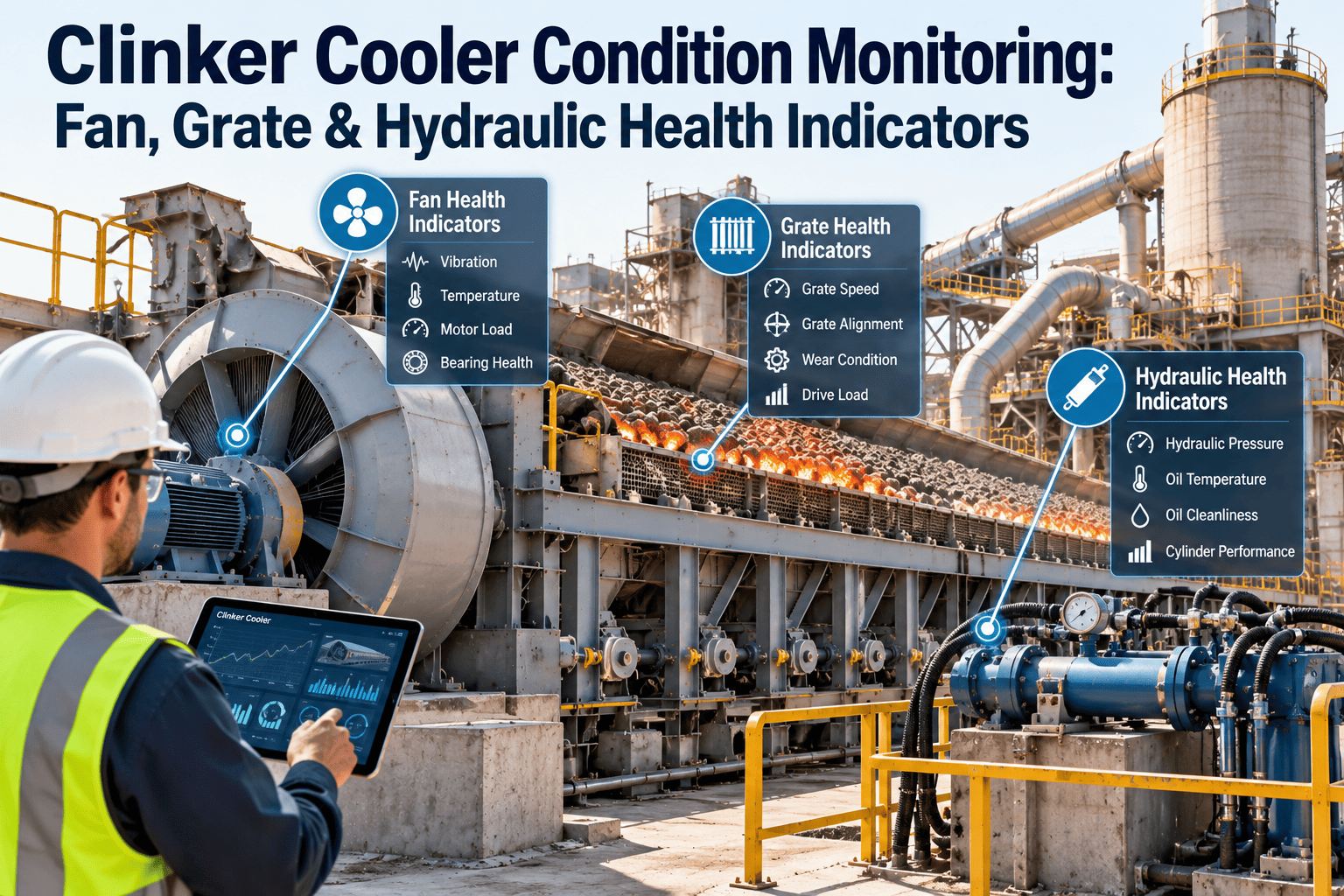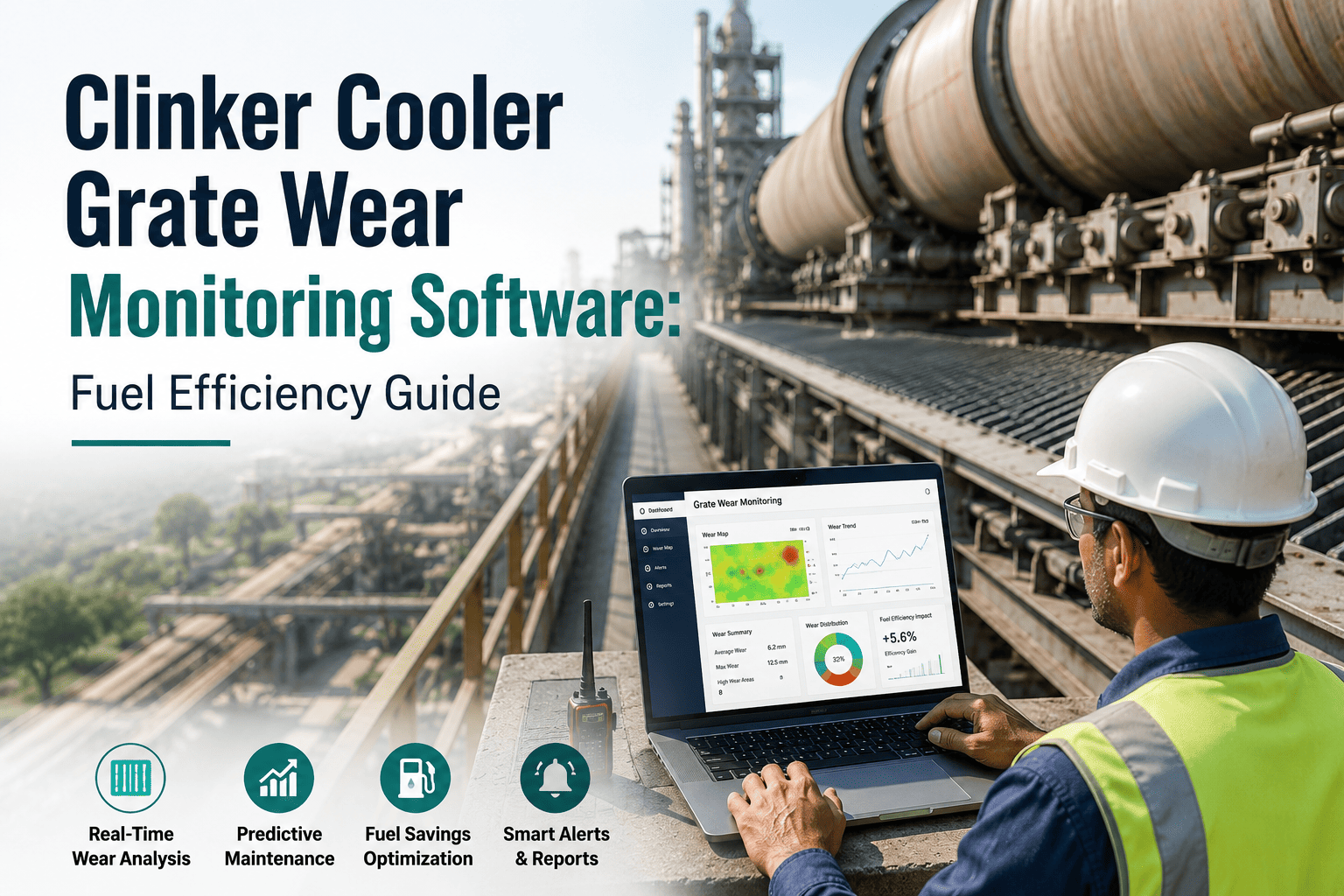
A clinker cooler has two jobs that pull in different directions: cool hot clinker quickly enough to protect product quality and downstream equipment, and hand as much heat as possible back to the process. When grate plates wear, fans lose pressure or seals leak, the cooler stops doing the second job well. Fuel use rises, secondary and tertiary air temperatures fall, and vent air carries away heat that should have stayed in the system. This article covers where thermal losses come from, how to maintain the cooler and heat recovery equipment, and how Oxmaint maintenance software helps keep the work organised.
Clinker Cooler Efficiency and Heat Recovery Maintenance
Find where cooler heat is lost, fix the mechanical causes, and keep recovery equipment performing between shutdowns.
What Thermal Loss Looks Like on a Cooler
The cooler recovers heat in three ways. Hot air goes back to the kiln as secondary air, to the calciner as tertiary air, and to other users such as drying or power generation. Anything that weakens these streams shows up as extra fuel per tonne of clinker.
Symptom, Likely Cause, Maintenance Action
| Symptom on the floor or in the DCS | Likely mechanical cause | Action to plan |
|---|---|---|
| Falling secondary or tertiary air temperature | Worn grate plates, poor air distribution, leakage, or an unstable clinker bed | Inspect grate and undergrate compartments, seal leaks, verify fan performance |
| Hot clinker at the cooler discharge | Insufficient airflow, coarse or uneven clinker, red river formation | Check fan output, damper positions and grate condition |
| Rising undergrate pressure with falling flow | Blocked or worn grate plate openings, fine clinker in compartments | Clean and inspect plates, review sifting and hopper condition |
| Frequent grate drive or hydraulic faults | Worn hydraulic components, bearing issues or linkage wear | Inspect cylinders, hoses, filters and oil quality |
| High casing temperature or visible hot spots | Failed refractory or insulation | Thermal scan and patch or replace lining at next opportunity |
| Clinker breaker or roll crusher overload | Oversize clinker, worn hammers or rolls, jammed material | Inspect wear parts, review process causes of coarse clinker |
Six Cooler Areas That Drive Efficiency
Root Causes Behind Poor Cooler Recovery
Process behaviour that stresses the cooler
- Red river is a stream of fine, hot clinker that runs along the bed and resists cooling. It points to uneven air distribution or segregation and can damage plates and side walls.
- Snowman formation builds up clinker deposits near the cooler inlet, restricting flow and stressing the equipment. It is influenced by clinker quality and cooling conditions.
- Fluctuating kiln output sends surges of hot clinker into the cooler, so the bed height and grate speed control constantly chase the load.
- Very fine or dusty clinker increases carryover and reduces the efficiency of heat exchange.
Maintenance conditions that lock in the loss
- Air passing through worn or damaged plates and gaps instead of through the bed reduces cooling and recovery quality.
- Fans that no longer deliver design pressure force operators to compensate with damper changes and higher power use.
- Seal leakage at the hood, doors and side walls lets in false air and lets out hot air.
- Missing records of which plates, positions or seals were replaced make it hard to spot repeating failures.
Operational Impact of an Underperforming Cooler
Questions maintenance and process should answer together
- Did secondary air temperature fall gradually or suddenly, and what maintenance work happened before the change?
- Which compartments or positions show repeated plate damage across the last few campaigns?
- Are fan settings compensating for a mechanical problem that should be fixed?
- Are open findings from the last inspection closed before the next start-up?
Heat Recovery Equipment: What Needs Regular Attention
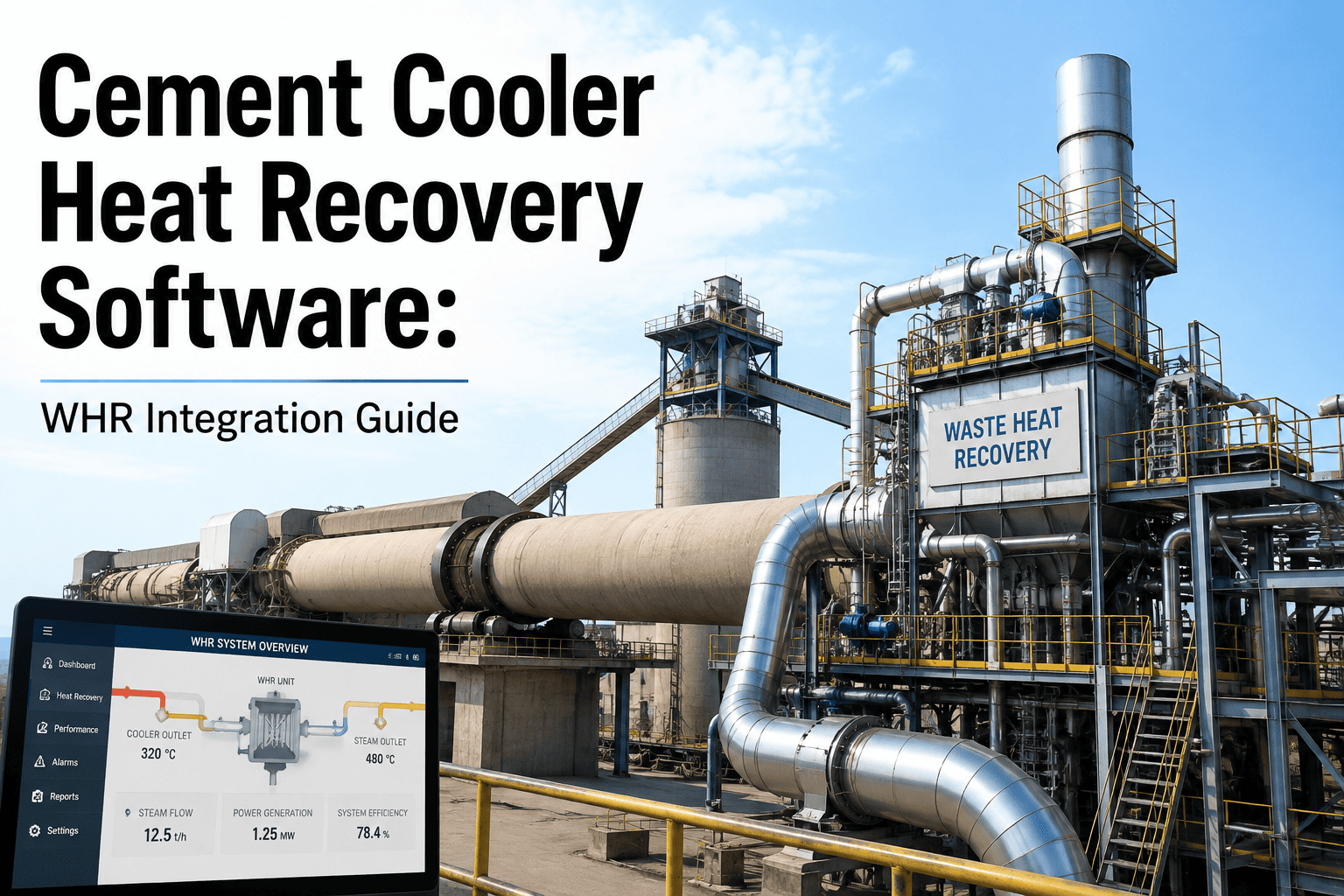
Many plants use cooler vent air for raw material drying, coal drying, or waste heat recovery power generation. These systems depend on stable, clean, hot gas from the cooler.
- Ducting and expansion joints suffer from abrasion, thermal cycling and leakage, which cut recoverable temperature.
- Dust removal equipment such as cooler electrostatic precipitators or bag filters must stay in good condition to keep gas flow and emissions stable.
- Boilers, heat exchangers and steam side equipment in waste heat recovery need inspection for fouling, tube wear and leaks.
- Instrumentation for temperature, pressure and flow needs calibration checks, because poor readings hide efficiency loss.
- Rotating equipment such as recovery fans and turbines follows vibration and lubrication routines like any critical machine.
Turn Cooler Inspections Into Tracked Work
Give technicians mobile checklists for grates, fans, hydraulics and seals, and have each finding become a work order with an owner and a due date.
A Maintenance Cycle Built Around Thermal Performance
Suggested Inspection Rhythm
| Frequency | Task | Purpose |
|---|---|---|
| Every shift | Operator round for noise, leaks, bed behaviour, hydraulic pressure and abnormal temperatures | Catch sudden changes early |
| Weekly | Fan vibration and current review, hydraulic oil check, clinker crusher inspection | Spot developing mechanical faults |
| Monthly | Thermal scan of casing, seal check at hood and doors, damper function test | Locate heat leakage |
| Quarterly | Filter and screen cleaning, duct and expansion joint inspection, instrument checks | Protect airflow and reading accuracy |
| Each planned shutdown | Grate plate survey, refractory inspection, hydraulic overhaul checks, wear part replacement | Restore designed performance |
Intervals should follow the plant's equipment manuals and operating experience. Treat this table as a starting point to adjust as history builds.
Before and After: Reactive Cooler Care Versus Planned Care
- Plate replacement decided during a stop, based on what is visible
- Temperatures noticed only when they cause a process upset
- Leaks patched repeatedly without a record of location
- Hydraulic faults addressed after a grate stalls
- Plate wear surveyed and tracked by position over campaigns
- Temperature and pressure trends reviewed against baselines
- Leak locations logged and repaired with follow-up checks
- Hydraulic condition monitored through routine oil and pressure checks
Trends in Cooler and Heat Recovery Maintenance
- Plants increasingly treat thermal efficiency as a maintenance target, not only a process target, because mechanical condition sets the ceiling for performance.
- Modern cooler designs use advanced grate concepts and improved air distribution, which reward disciplined wear part management.
- Waste heat recovery projects connect cooler and preheater condition directly to electricity generation, raising the value of every avoided stop.
- Thermal imaging, online temperature monitoring and vibration sensors are becoming easier to deploy on cooler fans and drives.
- Energy and emissions reporting demands make records of fuel and heat performance more valuable than before.
Practical Efficiency Actions Maintenance Can Own
None of these actions is new, but each depends on consistent records. Without repair history and readings side by side, improvements cannot be confirmed and problems return quietly.
KPIs for Cooler Efficiency
Data Worth Keeping for Every Cooler Repair
| Data point | Why it helps |
|---|---|
| Grate row, column or compartment position | Reveals wear patterns and uneven air distribution over time |
| Part type, supplier and installation date | Allows comparison of life between designs and suppliers |
| Readings before and after the job | Shows whether a repair actually restored temperature or pressure |
| Cause found on inspection | Separates mechanical wear from process induced damage |
| Downtime and labour hours | Supports planning and the business case for upgrades |
| Photos of damage | Gives engineers and vendors evidence without another site visit |
Planning the Shutdown Around Findings
How Oxmaint Supports Cooler Maintenance
- Asset management to record grates, fans, hydraulic units, crusher and recovery equipment with full repair history.
- Preventive maintenance scheduling for lubrication, filter changes, hydraulic checks and thermal scans.
- Mobile inspections so technicians record readings, hot spot locations and photos at the point of work.
- Work orders and corrective maintenance to convert every finding into assigned, tracked jobs.
- Inventory visibility for grate plates, hydraulic seals, bearings and crusher parts to shorten shutdown delays.
- Reports and dashboards for downtime causes, repeat repairs and PM compliance across the cooler.
Shutdown checklist for the cooler
- Survey grate plates and record wear and damage by row and position
- Inspect undergrate compartments, hoppers and sifting systems for material buildup
- Verify fan condition, inlet screens, dampers and drive components
- Check hydraulic cylinders, hoses, filters and oil sample results
- Inspect crusher rolls or hammers, and clinker conveying equipment
- Scan casing, doors and hood seals and plan lining or seal repairs
- Record findings, completed work and readings, then schedule the next check
Signs your cooler maintenance is on track
- Plate replacements are tracked by position and match a planned schedule
- Recovery temperatures are reviewed after every repair and stop
- Hydraulic oil analysis and filter changes happen on time
- Leaks and hot spots are logged with a location and closed with a follow-up check
- Process and maintenance teams discuss cooler trends in the same meeting
- Critical spares such as plates, seals and hydraulic parts are stocked against lead time
Common Questions
Recover More Heat by Keeping the Cooler in Condition
Connect inspections, readings, work orders and spare parts for the cooler and recovery equipment, and give your team a clear plan for every shutdown.