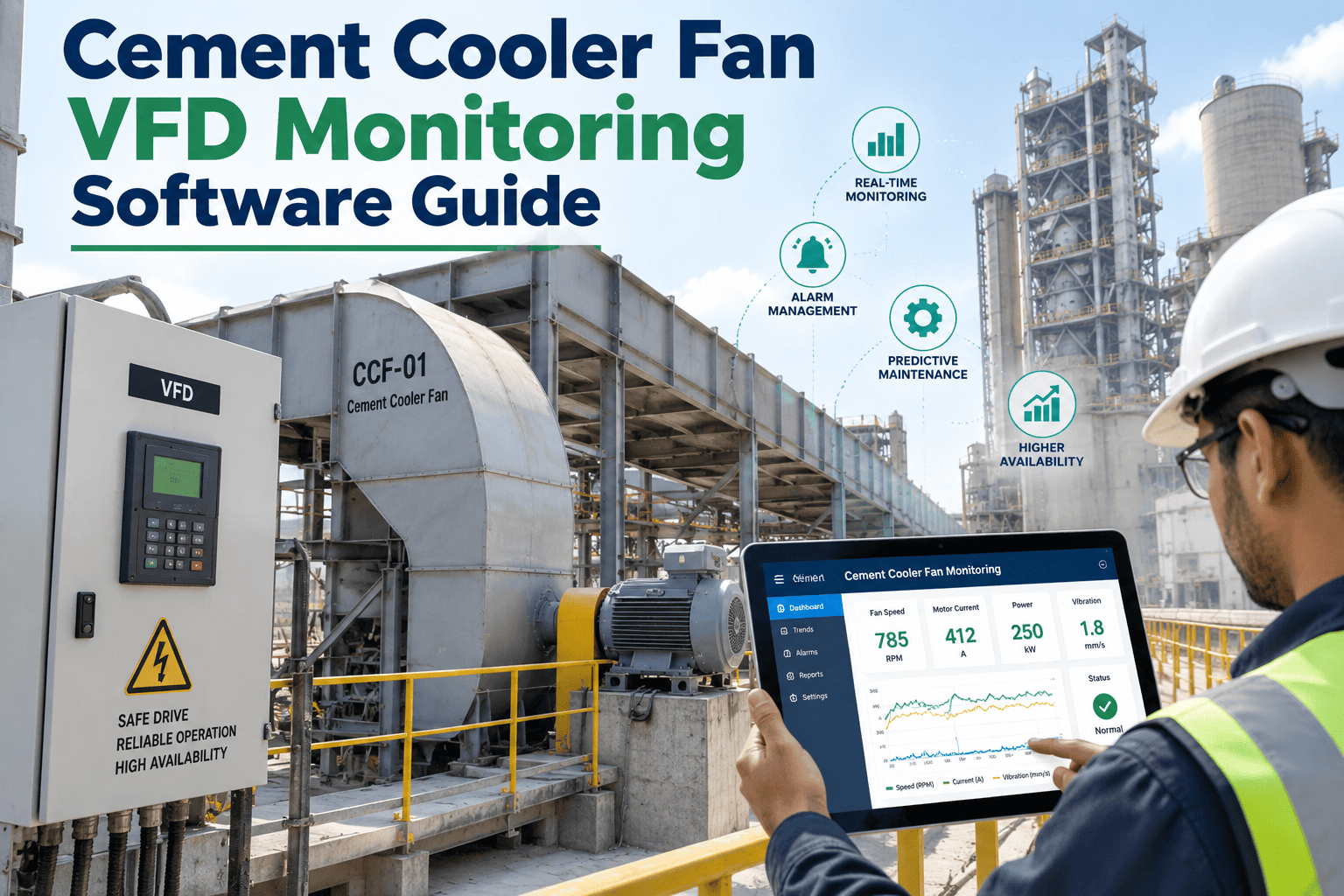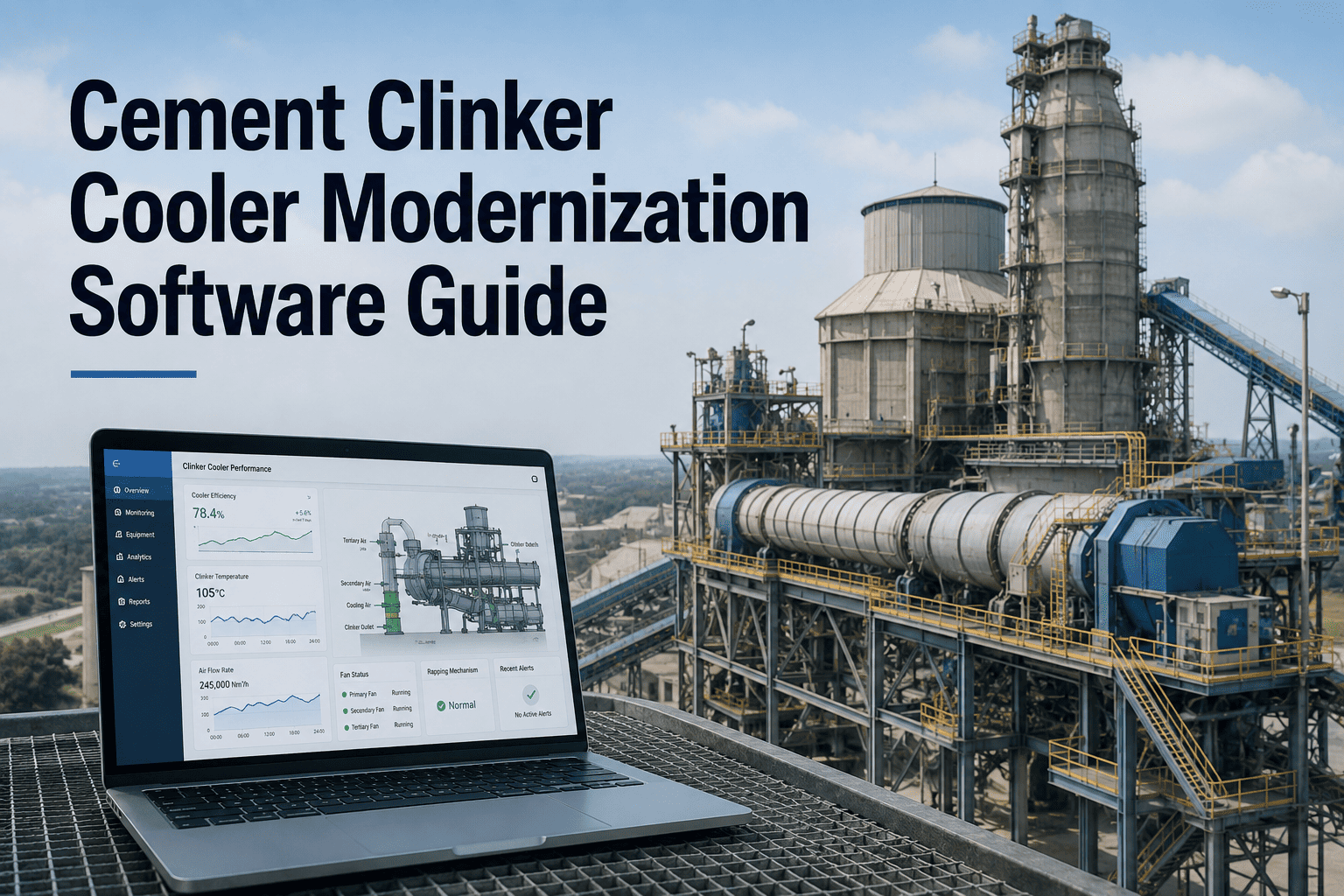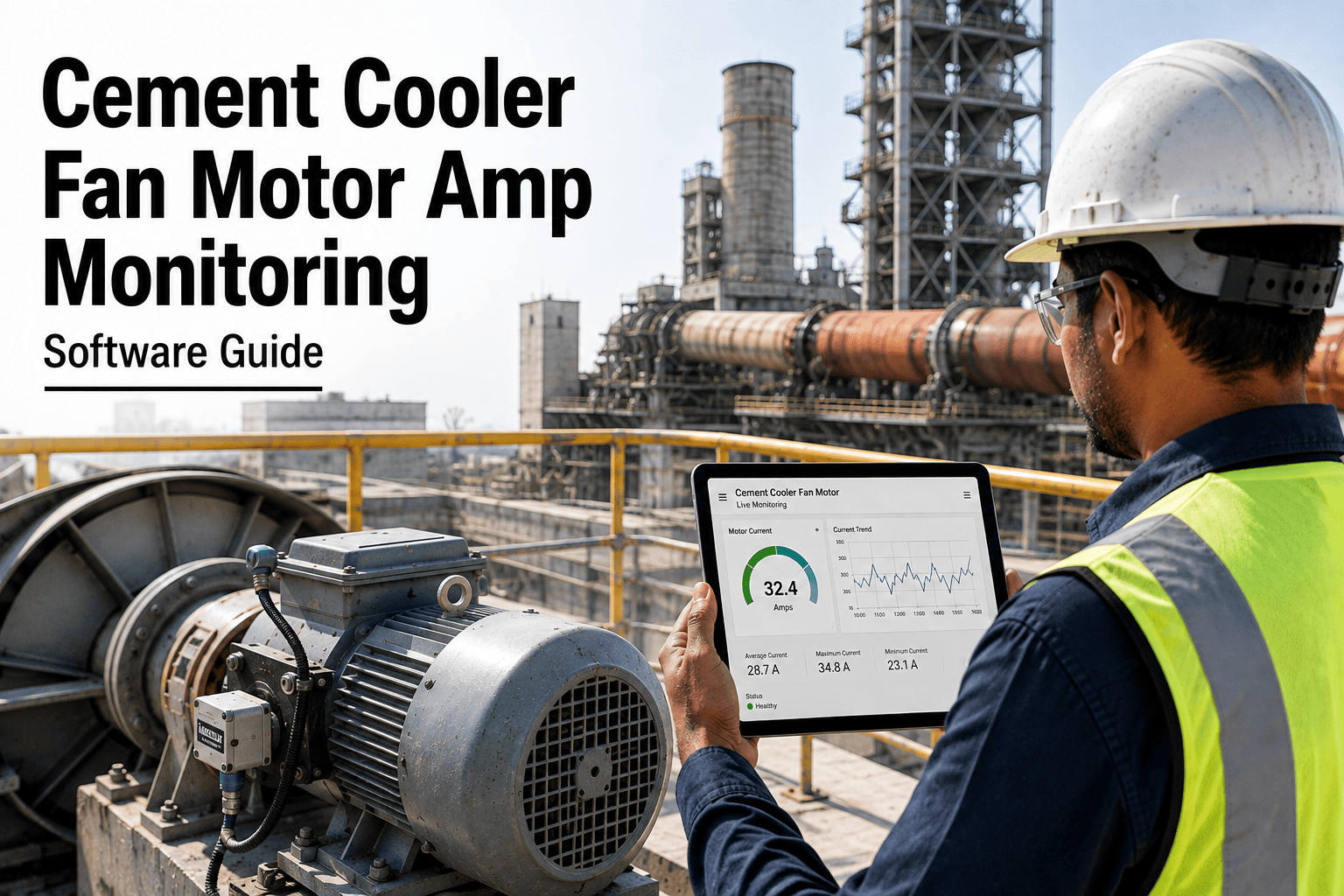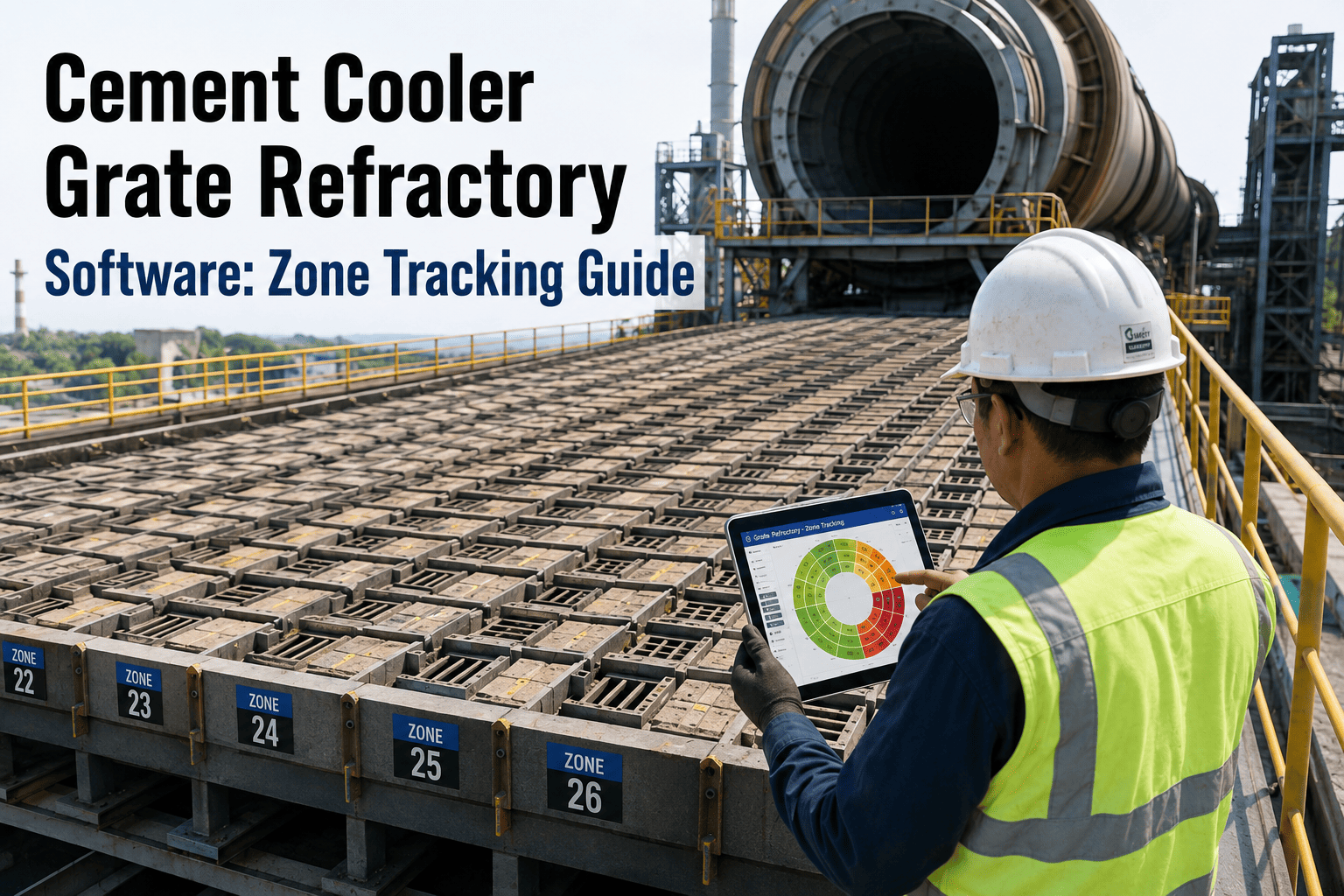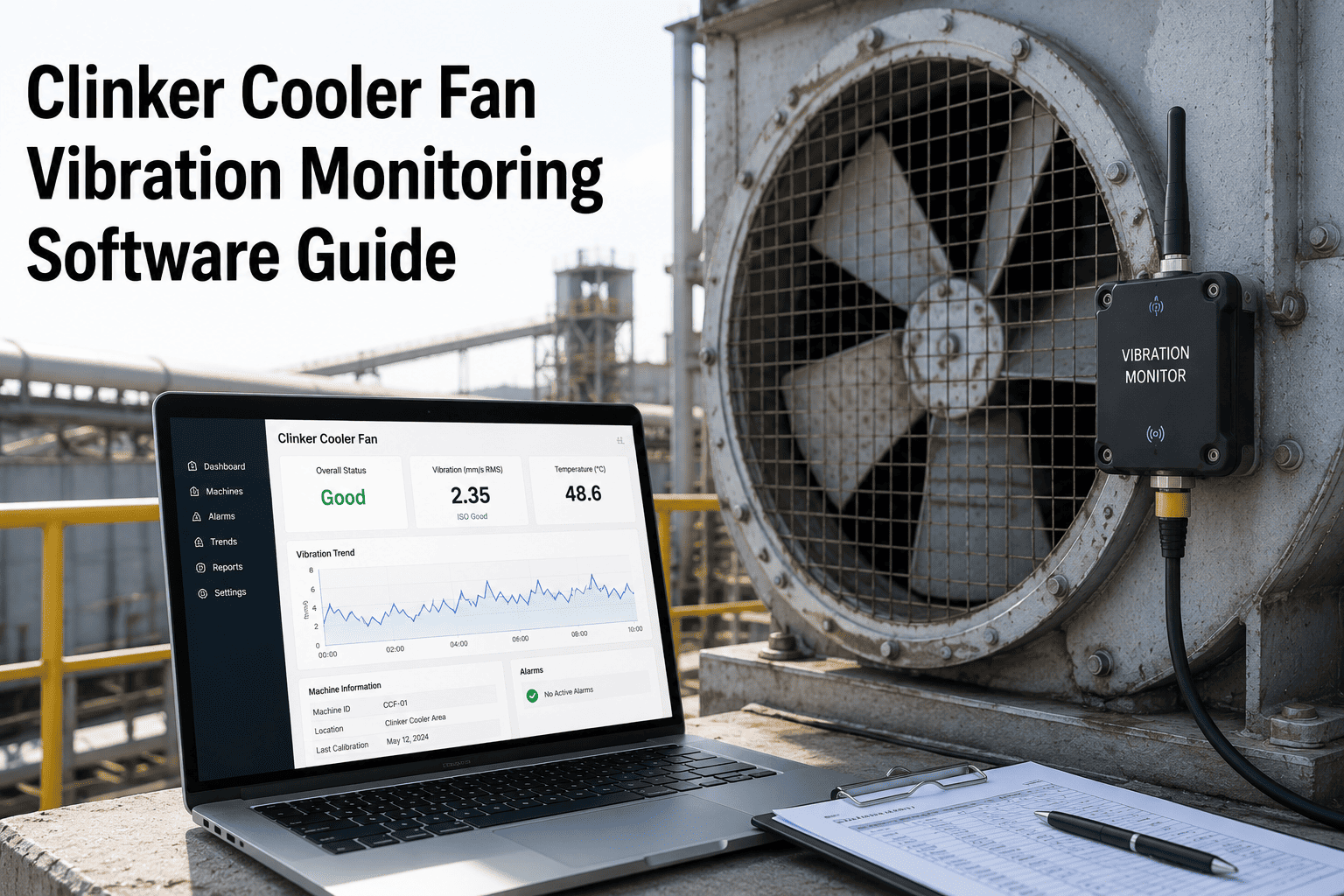
Clinker cooler fans are among the most punishing rotating assets in a cement plant — they move 400,000+ Nm³/h of 1,100°C air, run 24/7 for 8,000-hour campaigns, and when one throws a 7.0 mm/s RMS vibration alarm, the kiln behind it has roughly 30 minutes before a forced shutdown begins. OxMaint is a cloud-based cement plant CMMS built specifically to tame this risk: it captures ISO 10816-aligned vibration readings, schedules preventive maintenance, digitizes LOTO isolations, runs digital inspections, logs root cause analyses, and generates audit-ready compliance reports in minutes. You can Start Free Trial in under five minutes, or read on for the full playbook on clinker cooler fan vibration monitoring — fault signatures, alarm limits, ROI math, and the exact workflows our cement customers rely on.
One missed vibration alarm can stop your kiln for 18 hours and cost up to $200,000 a day.
OxMaint's cement cooler fan software aligns to ISO 10816 alarm bands, LOTO isolation, and RCA workflows — so your reliability team catches fan faults before they become kiln outages. Trusted on kiln decks, mill floors, and remote silos across multi-site cement groups.
The hidden cost of late clinker fan fault detection
Cement plants lose an average of 4–6% of annual clinker capacity to unplanned cooler fan outages. The fault usually begins 3–6 weeks before the bearing actually seizes — long enough to catch, if your CMMS is wired into the right alarm logic.
Fan rotor imbalance
Fugitive clinker dust builds on blades unevenly, raising 1× RPM amplitude past 4.5 mm/s RMS. Left uncorrected, imbalance tears bearings in 60–90 days and spikes motor current by 12–18%.
Misalignment fan-to-motor
Thermal growth on the cooler deck shifts the coupling 0.05–0.15 mm per 100°C of casing temperature, producing a dominant 2× RPM peak. Angular offset alone can halve coupling life from 36 to 14 months.
Bearing outer-race spalling
Fan bearings (typically 23240 CC/W33 or equivalent) develop outer-race pitting. gSE envelope readings climb past 8.0 gE long before overall RMS trips. A single missed BPFO signature can destroy a $14,000 bearing set.
Oil-film / bearing looseness
Pedestion bolt stretch or sleeve-bearing wear introduces a sub-1× component. Hard to spot with overall RMS, but unmistakable in a full FFT spectrum captured by an OxMaint-connected tri-axial accelerometer.
The math: what an hour of cooler fan uptime is worth
For a 5,000 TPD kiln producing clinker at $35/t margin, every hour of forced downtime costs roughly $7,300 in lost contribution. A single saved outage pays for the CMMS rollout many times over.
Example: 5,000 TPD × $35/t = $175,000 per day of exposure. A 30-hour cooler fan outage = $218,750 in lost margin before repair labor or restart fuel.
A 180-asset plant spending $42K/yr on OxMaint that avoids one $120K cooler fan outage achieves payback in 4.2 months — and a 2.8× annual ROI after that.
| Failure Mode | Detection Lead Time | Repair Cost (Planned) | Repair Cost (Forced) | Downtime Exposure |
|---|---|---|---|---|
| Rotor imbalance | 3–6 weeks | $8,500 | $32,000 | $7,300 / hr |
| Coupling misalignment | 2–4 weeks | $4,200 | $19,500 | $7,300 / hr |
| Bearing spalling (BPFO) | 4–8 weeks | $14,000 | $46,000 + casing | $7,300 / hr |
| Sleeve looseness | 1–3 weeks | $6,800 | $24,000 | $7,300 / hr |
| Resonance / critical speed | Immediate (transient) | $5,500 | $58,000 + shaft | $7,300 / hr |
From signup to first saved outage in 21 days
OxMaint's cement plant CMMS roll-in is built around the realities of a running kiln line — no prolonged shutdowns, no IT procurement cycle, no panel re-wiring required.
Asset hierarchy + QR tags
Import your existing asset register or start fresh. OxMaint auto-generates QR codes for every cooler fan, motor, bearing, and coupling. Stick the tag, scan it, and the asset's full history loads on any phone — kiln deck, mill floor, or silo top.
ISO 10816 alarm bands + routes
Set per-fan alarm thresholds aligned to ISO 10816-3 Band B/C/D for rigid and flexible mounting. Build vibration routes by shift, by area, or by criticality tier. Offline mode keeps data capture working in dead-zone silo galleries.
LOTO isolations + inspections
Replace paper LOTO permits with digital isolation workflows that enforce sequence, require photo verification, and auto-archive. Every inspection answer becomes a trendable data point in the asset's reliability timeline.
IoT + sensor pairing
Pair OxMaint with your existing wireless vibration sensors (ifm, Banner, Schenck, PRUFTECHNIK) via REST or MQTT. Continuous 4–20 mA and modbus feeds populate the same alarm engine as your manual routes.
First avoided outage
Reliability engineers review the first full trend. A flagged bearing is planned-in during the next short kiln stop instead of failing mid-campaign. Compliance reports for OSHA / MSHA audits auto-generate in under five minutes.
A 5,000 TPD plant that saved $146,000 in one campaign
“Our #2 clinker cooler fan was running at 5.8 mm/s RMS — inside alarm, but trending up 0.3 mm/s per week. OxMaint's trend view caught the BPFO signature three weeks before our normal route would have. We swapped the bearing during a planned 12-hour refractory stop instead of losing 30 hours mid-campaign. That one catch paid for the platform for two years.”
What OxMaint covers across your cement plant
Beyond clinker cooler fans, the same CMMS extends to every critical rotating and static asset on site — kilns, raw mills, cement mills, crushers, conveyors, packers, and silos.
| Asset Area | Monitoring Focus | Key CMMS Modules | Typical Alarm Standard |
|---|---|---|---|
| Clinker cooler fans | Vibration, bearing temp, motor current | Vib routes · LOTO · RCA · QR tags | ISO 10816-3 Band B/C |
| Kiln drives & support rollers | Slow-speed vibration, thrust, wear | Inspections · IoT · Work orders | ISO 10816-3 Band D |
| Raw & cement mills | Gearbox, pinion, slide-shoe pressure | PM scheduling · RCA · Compliance | VDI 3832 / OEM spec |
| Crushers (limestone / clinker) | Hammer / roll wear, frame vibration | Digital inspections · QR tags | ISO 10816-3 Band C |
| Conveyors & bucket elevators | Bearing temp, belt tracking, speed | Offline routes · Work orders | OEM / site criticality |
| Packing & silos | Feeder vibration, level, aeration | Mobile inspections · Compliance | Site criticality tier |
Ready to stop the next cooler fan outage before it starts?
Spin up OxMaint on your kiln line this week. Bring your asset list, your alarm thresholds, and your last shutdown report — we will have your first vibration route live before the next campaign begins.
Clinker cooler fan vibration monitoring — answered
How does OxMaint align to ISO 10816 for clinker cooler fans?
OxMaint ships with ISO 10816-3 alarm bands pre-mapped for rigid (Band B) and flexible (Band C/D) fan installations. You set the fan's mounting class and power rating; the software assigns the correct mm/s RMS thresholds for alarm and danger, and lets you layer envelope (gE) and bearing-specific (BPFO, BPFI, BSF, FTF) alarms on top for early-stage bearing faults.
Can technicians use OxMaint offline on the kiln deck or inside a silo?
Yes. The mobile app runs in full offline mode — vibration readings, inspection answers, LOTO permits, and photos all capture locally and sync the moment the device reconnects. QR asset tags mean a technician scans the fan, sees its full history, logs the reading, and moves on without paper or a laptop. You can Start Free Trial and test offline capture on your own kiln deck today.
Does OxMaint integrate with our existing vibration sensors and analyzers?
OxMaint accepts manual route data from any analyzer (SKF, Pruftechnic, Emerson, Adash) via CSV import, and pairs continuously with wireless sensors from ifm, Banner, Schenck, and PRUFTECHNIK through REST or MQTT. Both feed the same alarm engine, so you are not locked into one hardware vendor.
How long does it take to deploy across a multi-site cement group?
A single site is live in 7–10 days: asset import, QR tagging, alarm configuration, and first routes. Multi-site groups typically roll out in 30–60 days using a shared template — asset hierarchy, criticality tiers, and LOTO workflows copy from plant to plant. Schedule a Book a Demo session and we will map your specific rollout.
What compliance reports does OxMaint generate for OSHA and MSHA audits?
OxMaint auto-generates audit-ready reports covering PM completion, LOTO isolation records, inspection logs, vibration trend summaries, and root cause analyses — each timestamped, signed, and exportable as PDF. Reports that used to take a maintenance manager a full day to compile are produced in under five minutes.
Catch the next fan fault before it catches you.
Join the cement plants using OxMaint to cut unplanned cooler fan downtime, extend bearing life, and stay ahead of every OSHA and MSHA audit.
Free 14-day trial · No credit card