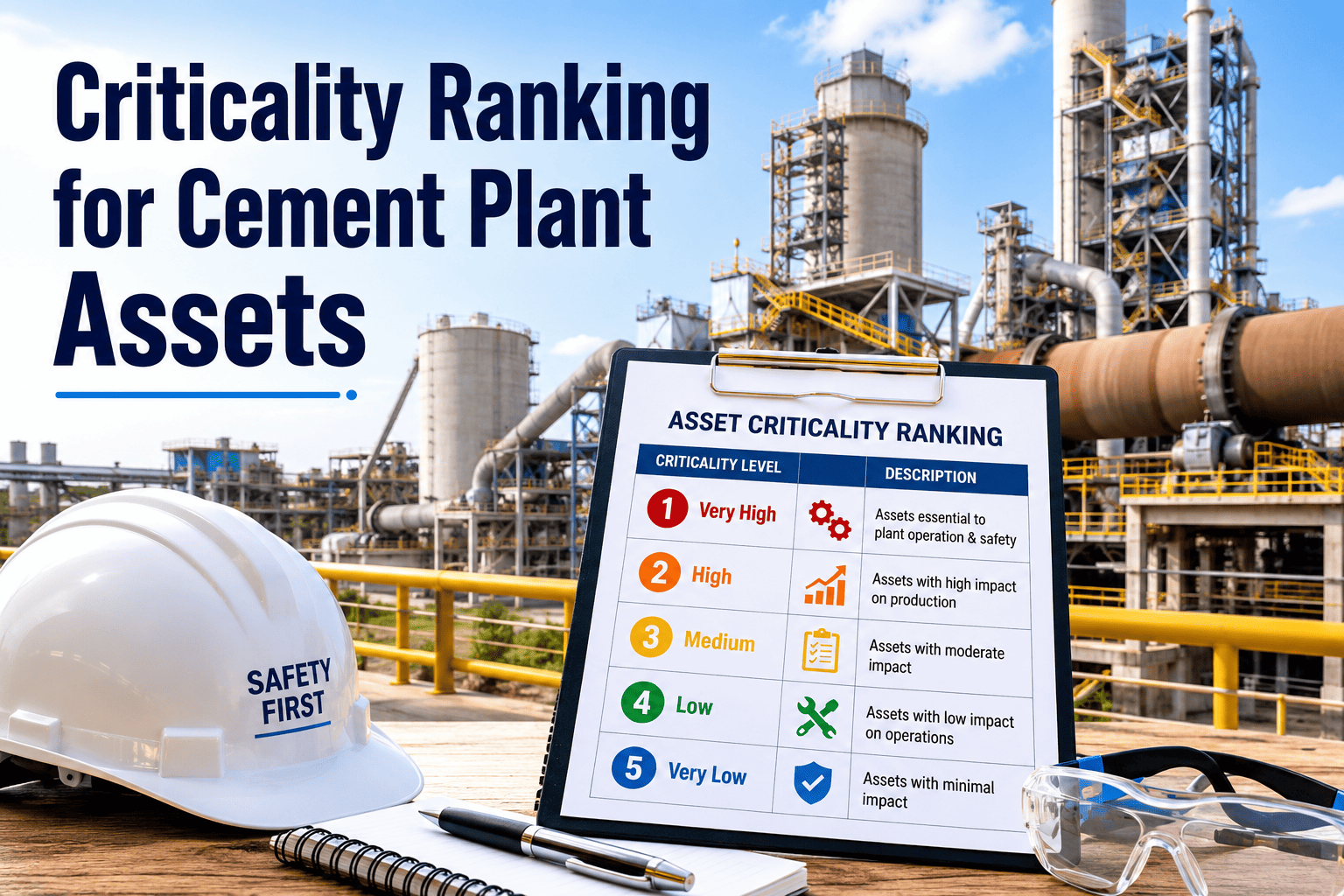
When a cement plant's rotary kiln drive fails, the entire line stops. When a packing line motor fails, dispatch slows but production keeps moving. Treating every asset on the same PM schedule wastes technician hours on low-risk equipment while the assets that can actually shut down the kiln wait their turn. A structured criticality ranking sorts kilns, mills, crushers, conveyors and utility systems by real production risk, so PM frequency, spares stock and response priority match what each asset can actually cost you. Book a demo to see how OxMaint builds a criticality model from your existing asset register, or start a free trial to rank your own plant's assets this week.
Rank Every Asset by What It Actually Costs You When It Fails
OxMaint scores kilns, mills, crushers, conveyors and utilities on production impact and failure probability, then ties PM frequency and spares priority directly to the result.
Why Flat PM Schedules Fail Cement Plants
Most plants apply the same PM interval across asset classes because building a true risk model by hand takes weeks no planner has free. The result is predictable — critical assets get under-serviced while low-risk equipment absorbs technician hours it never needed.
Sample Criticality Ranking Across a Cement Plant
OxMaint scores each asset on production impact, failure probability, repair cost and safety risk to produce one ranked list — the same list that drives PM frequency and spares priority going forward.
| Asset | Tier | Score | Production Impact | Recommended PM |
|---|---|---|---|---|
| Rotary Kiln Drive | Critical | 95 | Full plant stoppage | Weekly + vibration |
| Raw Mill | Critical | 88 | Line stoppage | Weekly |
| Preheater ID Fan | Critical | 85 | Kiln trip risk | Vibration monthly |
| Clinker Cooler | High | 74 | Kiln derate | Weekly |
| Cement Mill | High | 72 | Dispatch delay | Bi-weekly |
| Limestone Crusher | Medium | 58 | Buffer absorbs | Monthly |
| Main Belt Conveyors | Medium | 52 | Redundant path | Monthly |
| Packing Line | Low | 34 | Dispatch only | Quarterly |
Stop Spending Equal PM Hours on Unequal Risk
Build a criticality model from your existing asset register, then let PM frequency, spares stock and response priority follow the ranking automatically.
From Asset Register to Ranked Criticality List
OxMaint turns four scoring inputs into one ranked list that planners and reliability engineers can act on the same week it's built.
Most plants already collect the failure history and cost data a real criticality model needs — it just sits in spreadsheets nobody updates. The value isn't the scoring formula, it's having one ranked list that planners, reliability engineers and procurement all work from instead of three different priority lists.
Frequently Asked Questions
How many criticality tiers should a cement plant use?
Can criticality scores change as failure history accumulates?
Does criticality ranking replace a formal RCM study?
How does criticality tier affect spare parts stocking?
Can the ranking include safety and environmental risk, not just production loss?
Put Every PM Hour Against the Assets That Actually Carry Risk
Build a ranked criticality model across kilns, mills, crushers, conveyors and utilities, then connect it directly to PM scheduling and spares planning inside OxMaint.