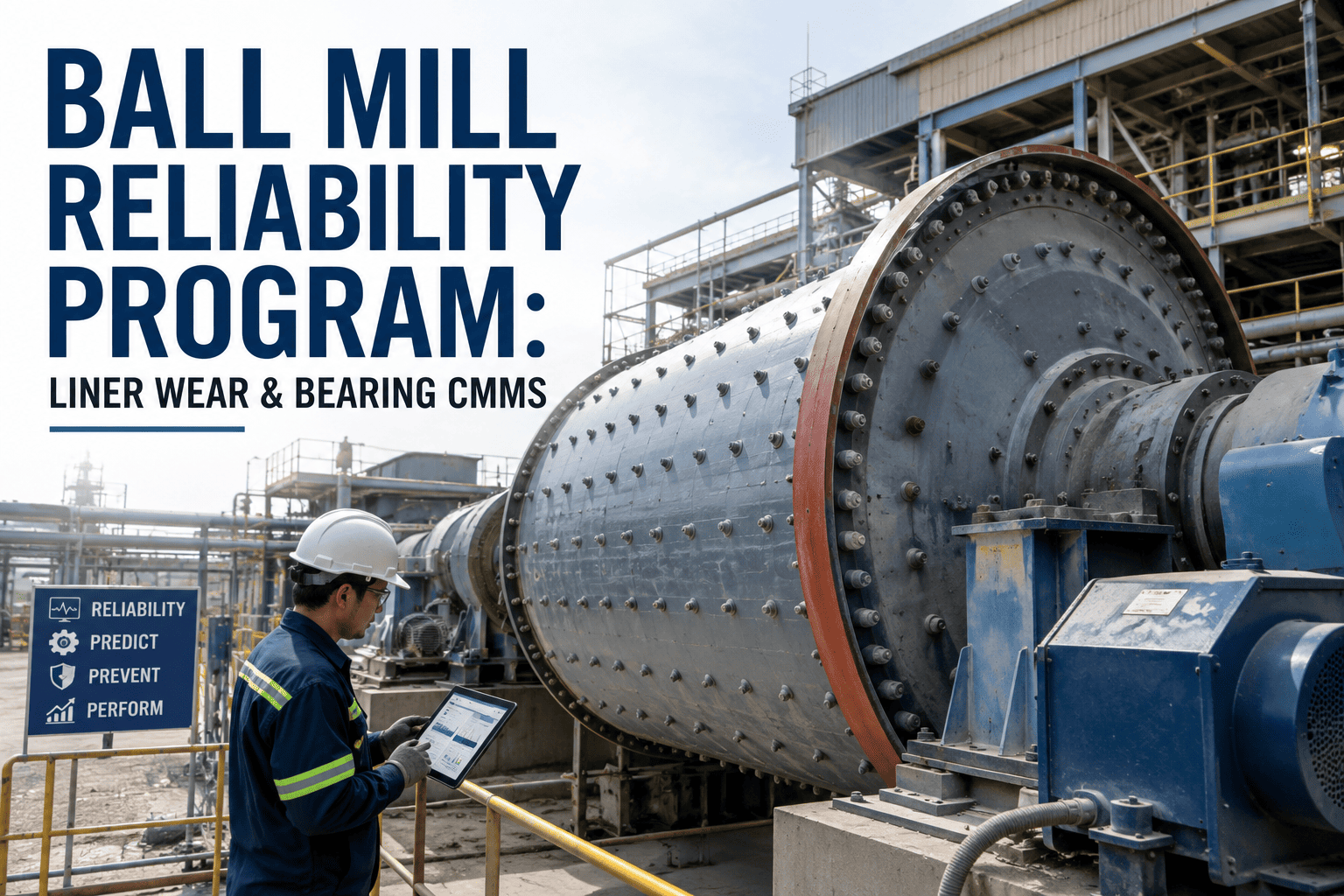
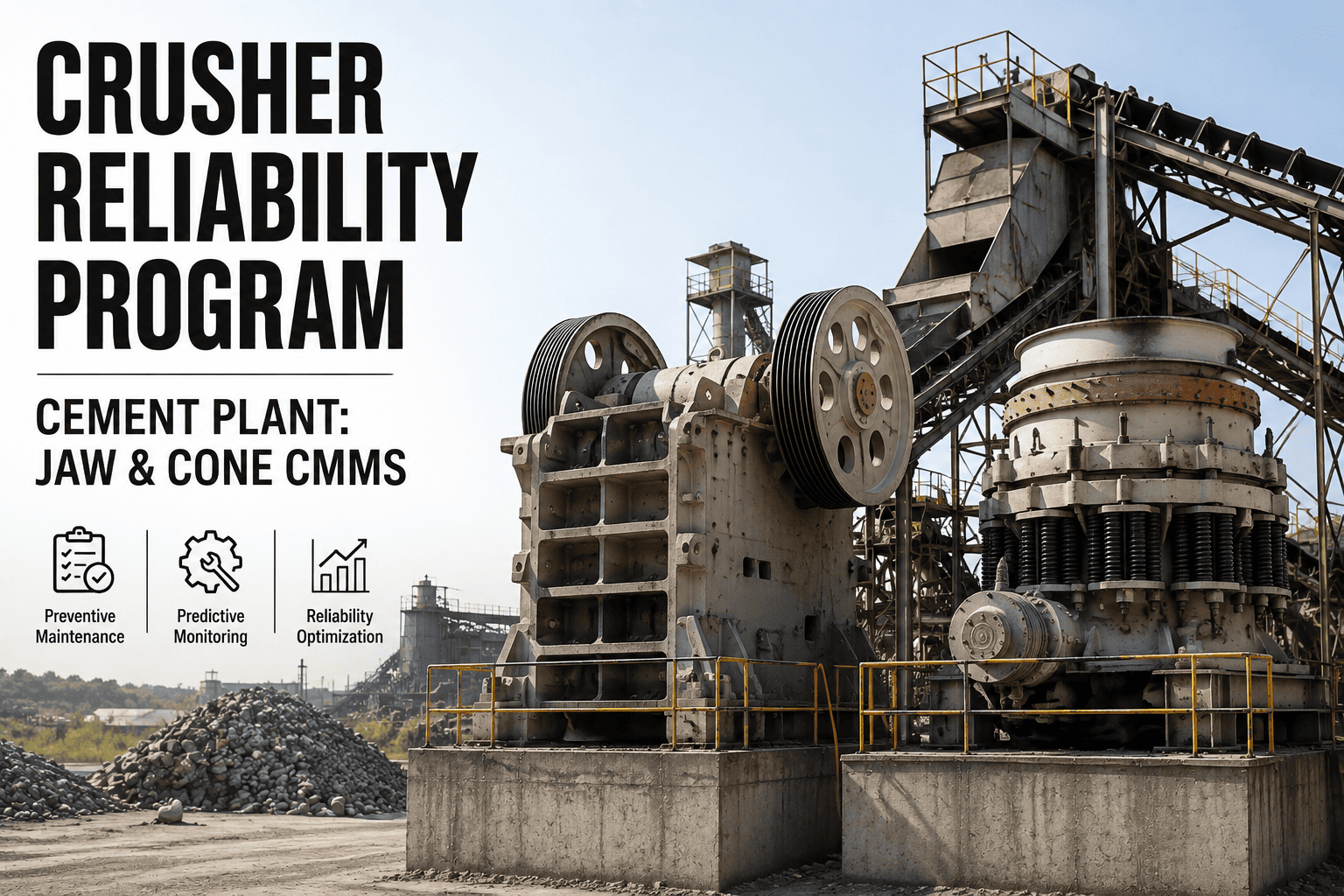
Cement plant crushers operate in one of the harshest environments in any industrial setting — fine limestone and clinker dust saturates the air, penetrates every gap, and silently destroys bearings, seals, motors, and electrical enclosures over weeks and months. Dust ingress failures are insidious: they rarely cause sudden dramatic breakdowns. Instead, they cause progressive degradation — rising bearing temperatures, increasing motor current draw, premature seal failures — that goes unnoticed until the component fails completely at the worst possible moment. Most plants have no structured program for dust ingress prevention. Inspections happen reactively after a failure, seal replacements are logged on paper and never analysed for patterns, and nobody tracks which equipment zones generate the most dust-related failures. OxMaint changes this by giving you a purpose-built preventive maintenance framework for high-dust crusher environments — scheduled seal checks, bearing lubrication routines, enclosure inspections, and motor protection audits, all tracked, trended, and linked to work orders. Start your free OxMaint trial or book a demo to see the dust ingress PM templates.
Cement Plant CMMS · Preventive Maintenance Scheduling
Crusher Dust Ingress Maintenance Program
Dust destroys bearings, seals, and motors in silence. OxMaint structures your dust ingress prevention — scheduled routines, field checklists, trending data — so your crusher keeps running in the harshest cement plant conditions.
70%
of crusher bearing failures have dust ingress as a contributing factor
5x
longer bearing life with structured dust sealing programs
30%
reduction in motor replacements with regular enclosure inspection
Where Dust Ingress Attacks First
Different crusher components are vulnerable at different rates. Understanding the failure priority order helps you allocate your PM resources where they matter most.
01
Roller and Jaw Bearings
Highest ingress risk. Fine abrasive dust bypasses lip seals and contaminates grease, increasing wear rate by 300–500%. Bearing temperature rise is the first detectable signal.
PM Routine: Grease purge and seal inspection every 200 operating hours
02
Drive Motor Windings and Enclosures
Dust accumulation on motor windings raises operating temperature and degrades insulation. IP54 motors in heavy-dust zones can fail in 18–24 months without regular cleaning and enclosure checks.
PM Routine: Motor enclosure clean and IP rating inspection every 500 hours
03
Shaft Seals and Labyrinth Rings
Worn shaft seals are the direct entry point for dust into bearing housings. A cracked or deformed labyrinth ring provides no barrier — but visual inspection during normal operation is nearly impossible.
PM Routine: Seal condition check and replacement at planned shutdown
04
Electrical Panels and Junction Boxes
Dust-contaminated electrical panels cause tracking faults, insulation breakdown, and arc events. Gasket failures on panel doors are the most common entry point and among the easiest to prevent.
PM Routine: Panel gasket inspection and internal compressed air purge every quarter
05
Crusher Guards and Skirt Boards
Damaged guards and torn skirt boards allow dust to concentrate at bearing zones and create respiratory hazards. Structural damage is often visible but not logged until it causes a secondary failure.
PM Routine: Guard and skirt board structural inspection every 100 operating hours
Building Your Dust Ingress PM Schedule in OxMaint
Daily
Visual check of seal condition at accessible bearing points
Dust accumulation level around motor housings
Guard and skirt board integrity walk-around
Weekly
Bearing temperature trending vs. baseline
Grease condition check at main bearings
Electrical panel door gasket visual check
Motor enclosure vent screen cleaning
Monthly
Grease purge and repack at all crusher bearings
Labyrinth seal inspection and gap measurement
Motor winding resistance test
Dust suppression system flow check
At Planned Shutdown
Full bearing housing disassembly and grease analysis
Shaft seal replacement if worn beyond limit
Panel compressed air purge and insulation resistance test
Guard replacement or weld repair
Set up your crusher dust ingress PM schedule in OxMaint — before the next bearing runs dry.
OxMaint includes ready-to-use PM templates for high-dust cement plant environments. Configure intervals, assign checklists, and track compliance from day one.
How OxMaint Tracks Dust Ingress Program Performance
PM Compliance Rate
Track the percentage of scheduled dust ingress PM tasks completed on time. Compliance below 85% is a leading indicator of future bearing and seal failures.
Bearing Temperature Trend
OxMaint plots bearing temperature against the rolling baseline. A rising trend after a greasing cycle indicates either product contamination or advanced seal degradation.
Seal Replacement Frequency
Track how often each seal point is replaced. High-frequency replacements at specific locations signal structural dust ingress issues — chute gaps, guard damage — rather than just component wear.
Dust-Related Failure Rate
Filter work orders closed with dust ingress as root cause. Over time, this metric directly shows whether your PM program is reducing ingress-driven failures — or not.
Frequently Asked Questions
Does OxMaint have ready-made templates for dust ingress inspections?
Yes. OxMaint includes configurable PM templates for bearings, motors, seals, and electrical enclosures in high-dust environments. You can deploy these for your crushers in the initial setup without building checklists from scratch.
Start a free trial to access templates.
How do technicians record dust ingress inspection findings in the field?
Technicians use the OxMaint mobile app to complete inspection checklists, record condition ratings, add photos of seal wear or enclosure damage, and flag defects for corrective work orders — all while standing at the crusher, without paper forms.
See a live field inspection demo.
Can OxMaint identify which crusher zones generate the most dust failures?
Yes. OxMaint's failure analysis module lets you filter closed work orders by failure code, asset zone, and component type. You can pinpoint exactly which bearing housings, seal positions, or motor locations drive the most repeat dust failures — and adjust PM intervals accordingly.
How does OxMaint handle multi-shift PM task continuity?
All PM tasks, checklists, and completion status are stored centrally in OxMaint — not in shift logs or operator notebooks. Any shift can see what was done, what is pending, and what was flagged by the previous team, eliminating the handover gap that causes tasks to fall through.
Is OxMaint suitable for plants with multiple crushers across different dust zones?
Yes. OxMaint's asset hierarchy supports separate PM schedules per crusher, per zone, and per component — so a primary crusher in a high-dust zone gets more frequent seal checks than a tertiary crusher in a partially enclosed building, all managed from one platform.
Dust ingress failures are preventable. The only thing missing is a system that tracks them.
OxMaint gives your team the PM schedules, checklists, and trend data to stop dust from destroying crusher components — starting this week.