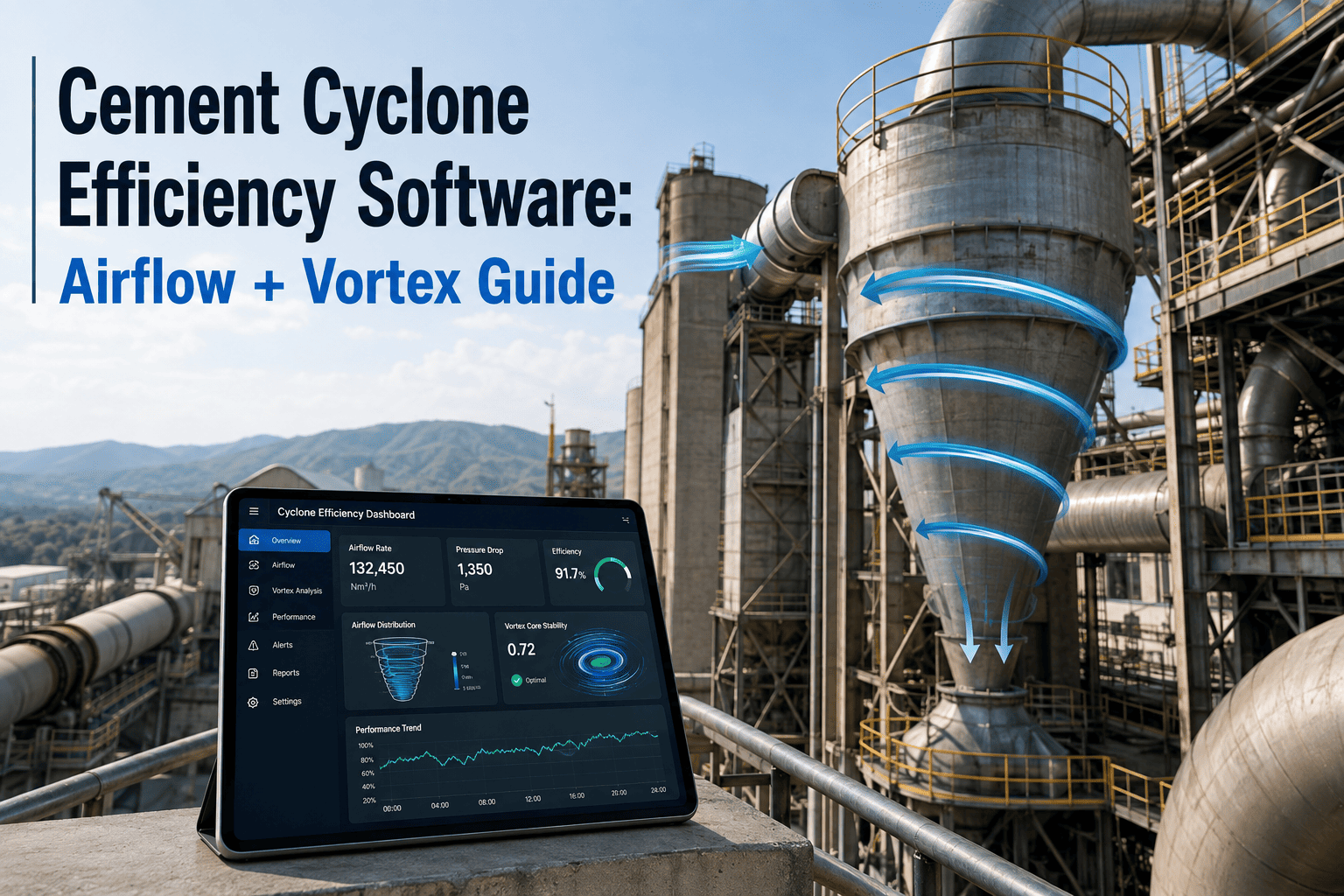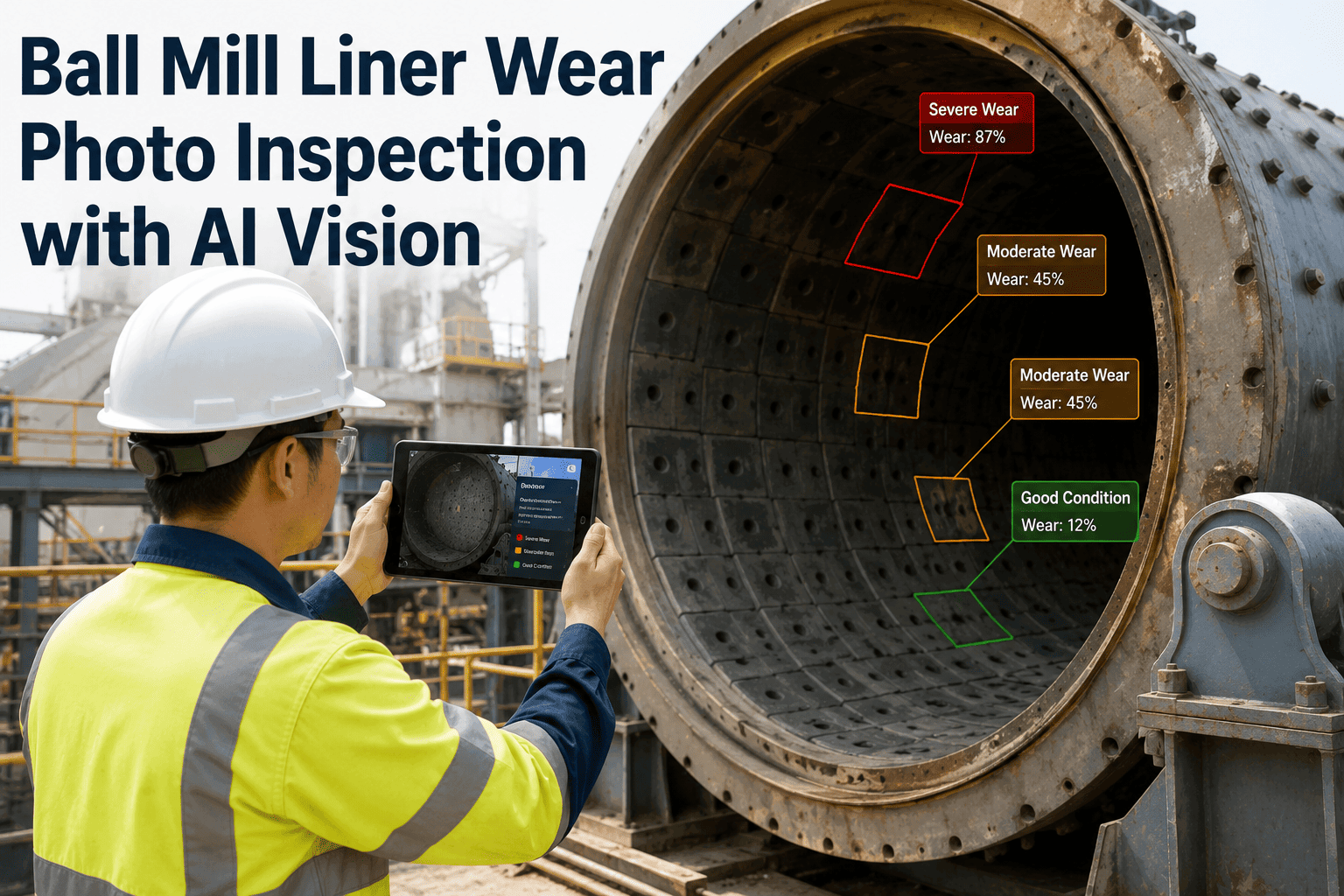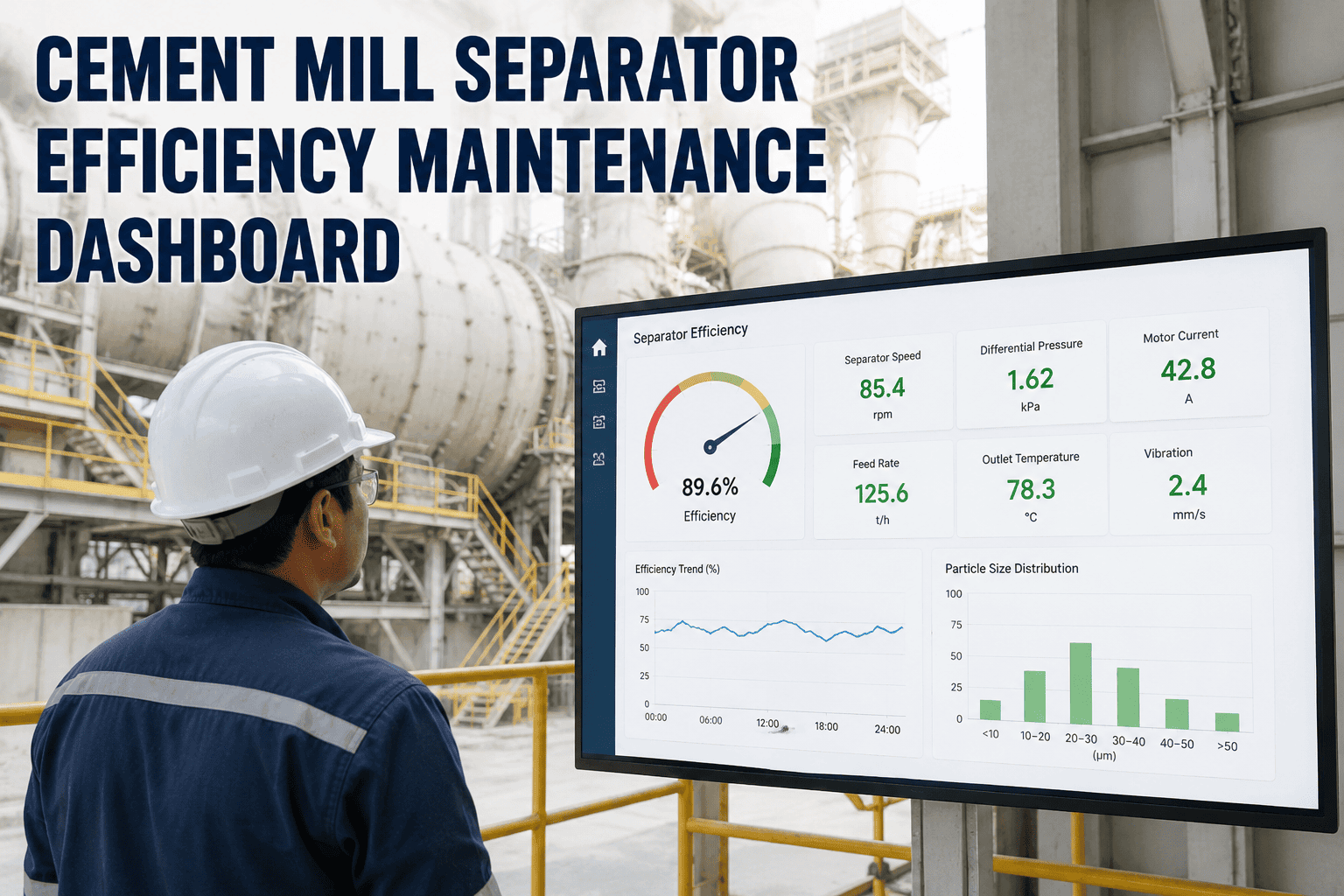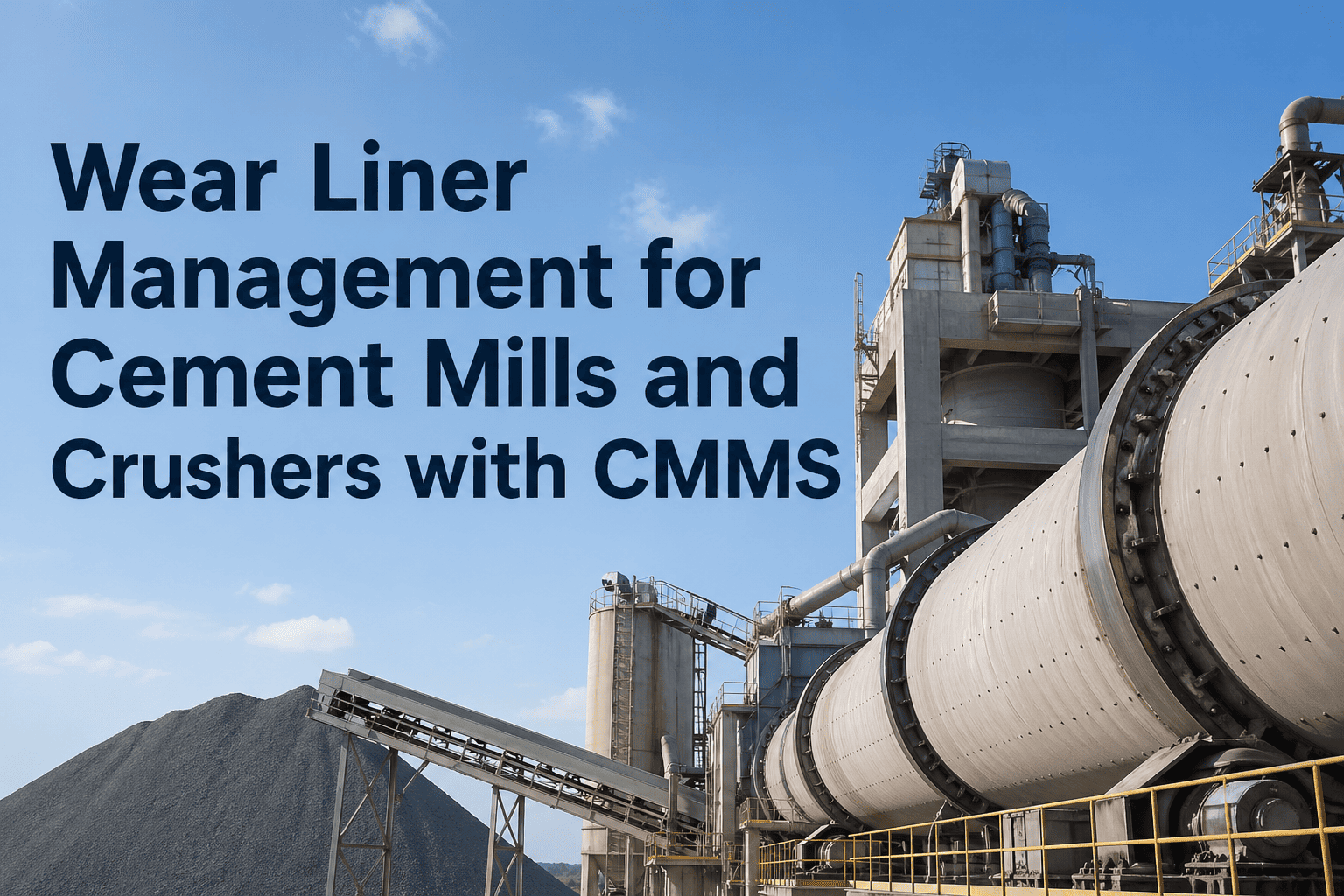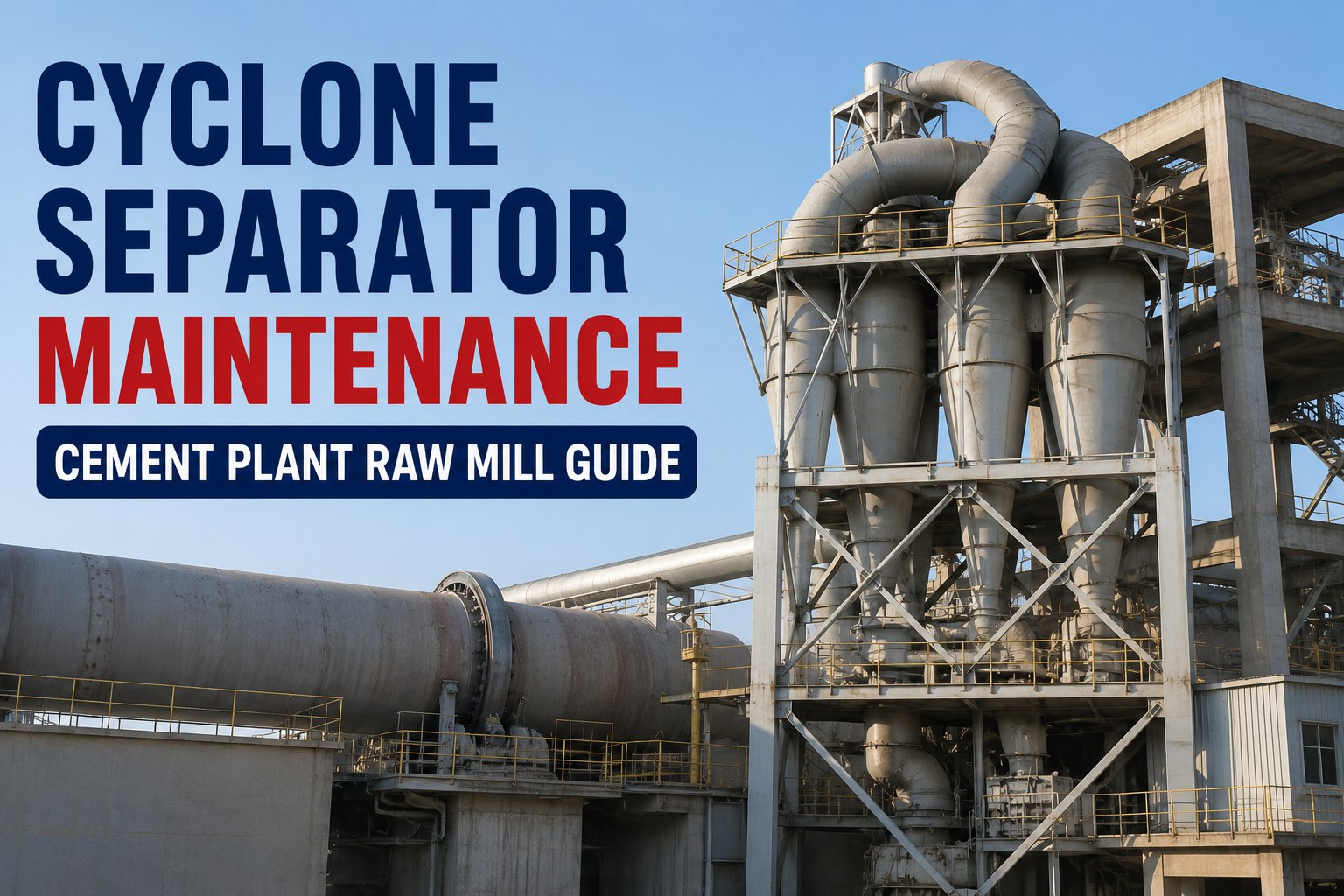
Cyclone separators in the raw mill and preheater circuits of a cement plant handle some of the most abrasive material streams in the industry, enduring constant particle impacts at temperatures exceeding 300°C. As cone walls thin and vortex finders degrade, the resulting pressure drop rise and efficiency loss can reduce raw meal recovery by 5 to 12 percent, forcing the fan to draw harder and the kiln to burn more fuel. A structured cyclone separator maintenance program—anchored in a CMMS and built around cone wear tracking, buildup prevention, and efficiency monitoring—keeps recovery at design levels and extends lining life to 18 to 24 months. Bring your asset strategy online and Start Free Trial to convert cyclone maintenance from reactive firefighting into a scheduled, auditable discipline.
Is Your Raw Mill Cyclone Quietly Losing 8% of Your Material Recovery?
Cone wear, vortex finder erosion, and material buildup do not announce themselves until fan amperage spikes and kiln feed slips below target. A CMMS-driven cyclone maintenance program restores design efficiency, cuts fan energy, and extends liner life past the 18-month mark.
The Hidden Cost of Cyclone Inefficiency in the Raw Mill
A single percentage point drop in cyclone collection efficiency forces recirculated dust back through the mill, raising circulation ratio and specific power consumption by roughly 2 to 3 kWh per ton of raw meal. Across a 4,000-tpd kiln, that translates to over $180,000 in additional energy and grinding media cost per year before the kiln fuel impact is counted.
Tiered Cyclone Maintenance Checklist by Criticality
Not every cyclone in the preheater tower fails at the same rate. Stage-1 cyclones see the highest gas velocity and abrasive load; Stage-4 cyclones operate at the top temperatures. Tiering your preventive maintenance by duty severity keeps inspection hours focused where the risk of efficiency loss is greatest.
Weekly Operational Checks
- Record pressure drop across each stage and flag deviations greater than 8% from baseline
- Inspect dipleg flap valves for free movement and seal integrity under negative pressure
- Log fan amperage trends and correlate with feed rate to detect early efficiency drift
- Verify gas temperature at cyclone inlet stays within design band (280–340°C raw mill)
Monthly Mechanical Inspection
- Ultrasonic thickness survey of cone lower third, target wear ring, and inlet scroll liner
- Inspect vortex finder for tip erosion, deformation, and ash buildup greater than 15% of diameter
- Check dipleg refractory and detect active hot spots above 380°C on the casing
- Photograph and document buildup locations for trend-based buildup prevention planning
Annual Shutdown Overhaul
- Full cone relining where remaining wall thickness falls below 40% of original design spec
- Vortex finder replacement when tip diameter wear exceeds 6% of nominal diameter
- Clean and recalibrate all pressure and temperature instruments feeding the CMMS KPI dashboard
- Re-baseline pressure drop and collection efficiency after every major component change
A 12-Month Cyclone Maintenance Timeline
Distributing inspection, measurement, and overhaul work across the year prevents the all-too-common pattern of running cyclones until failure and then losing 48 hours of production on an unplanned cone relining. Here is a defensible annual cadence, anchored in CMMS work-order scheduling.
Establish Thickness & Pressure Baselines
Complete ultrasonic thickness mapping of all cyclone cones and vortex finders. Log baseline pressure drop per stage and create the efficiency trend chart inside the CMMS that all future readings will be measured against.
Weekly Tracking & Monthly UT Survey
Operations logs pressure drop and fan amperage weekly. Maintenance performs monthly ultrasonic thickness checks at the high-wear cone zones, flagging any reading below 70% of baseline for accelerated monitoring.
Buildup Removal & Mid-Cycle Repair
Schedule a planned 8-hour stop for high-pressure water cleaning of buildup in the cone and dipleg, plus spot refractory repair at any hot-spot location flagged in the CMMS asset condition log during the summer operating period.
Annual Shutdown & Component Renewal
Execute cone relining and vortex finder replacement based on CMMS wear-trend projections, ensuring every component is replaced before efficiency drops below 92% rather than after production losses are already realized.
From Reactive Chaos to Scheduled Recovery
A 180-asset cement plant in the southern United States was replacing cyclone cones reactively at an average of 14 months, with three unplanned stoppages per year costing roughly $42,000 each in lost production and emergency labor. After implementing a CMMS-based cyclone inspection program, the plant extended cone life to 22 months and eliminated unplanned cyclone failures entirely within the first 18 months.
- Reactive cone replacement at month 14 average
- 3 unplanned stoppages per year at $42K each
- Material recovery drifting down to 88% by month 12
- No structured thickness trend data retained year over year
- Scheduled cone replacement at month 22 during planned outage
- Zero unplanned cyclone stoppages in 18 months following rollout
- Material recovery held above 94% across the full cycle
- UT trend data feeding annual budget projections with 95% accuracy
Stop Guessing at Cone Wear — Start Scheduling It
Deploy a CMMS that turns ultrasonic thickness readings, pressure-drop trends, and fan amperage data into scheduled work orders before efficiency drops and production suffers.
Cyclone Separator Maintenance Essentials
How often should cyclone cone thickness be measured in a raw mill circuit?
High-wear zones on Stage-1 and Stage-2 cyclone cones should be measured monthly with ultrasonic thickness gauges, while lower-severity stages can be surveyed quarterly. All readings must be logged in the CMMS against a baseline so the wear rate per month can be projected forward and the replacement date scheduled before the wall reaches 40% of original thickness.
What is the acceptable pressure-drop deviation before maintenance is triggered?
A pressure drop shift of more than 8% from the established baseline should trigger an inspection work order, and a shift beyond 15% indicates active buildup, cone distortion, or dipleg blockage that requires immediate intervention. The CMMS can auto-generate these work orders from instrument data to remove human delay from the response loop.
When should a vortex finder be replaced versus repaired?
If the vortex finder tip diameter has eroded by more than 6% of its nominal value, or if the wall has deformed enough to alter the spiral flow pattern, replacement is the correct action. Minor surface wear without dimensional change can be addressed with weld overlay repair during a planned stop. You can Book a Demo to see how the CMMS tracks vortex finder condition across multiple cyclones.
How does a CMMS improve cyclone maintenance compared to spreadsheet tracking?
A CMMS enforces scheduling, attaches inspection photos and UT readings to the asset record, and triggers work orders automatically when a reading crosses a threshold. Spreadsheets depend on someone remembering to check them; the CMMS pushes the task to the technician and closes the loop with a completed work order that feeds the next year's budget projection.
What is the typical payback period for implementing a CMMS on cyclone maintenance?
Most cement plants recover the CMMS implementation cost within 4 to 7 months by eliminating a single unplanned cyclone stoppage and restoring 2 to 4 percentage points of material recovery. A plant running 4,000 tpd can save over $120,000 in the first year from reduced fan energy and improved raw meal yield alone. Start Free Trial to map your own payback.
Bring Your Cyclone Program Into a Single, Auditable System
Schedule inspections, track wear trends, and auto-generate work orders before efficiency drops. Join the cement plants that have eliminated unplanned cyclone failures with oxmaint.
Free 14-day trial · No credit card