Cement grinding consumes 40–45% of a plant's total electrical energy — yet most North American plants lack the asset-linked performance data to identify where that energy is being wasted. Separator inefficiency, overloaded mill circuits, and untracked Blaine fineness drift push specific energy consumption 12–22% above design benchmarks, adding $380,000–$920,000 in avoidable power costs annually on a 1 MTPA plant. Book a demo to see how Oxmaint links CMMS analytics to grinding performance across your mill fleet.
Cement mill optimization through CMMS analytics means linking asset condition data — separator performance, liner wear state, ball charge level, and mill bearing temperatures — directly to grinding KPIs such as specific energy consumption, Blaine fineness, and throughput rate. Oxmaint's performance analytics module tracks these KPIs against asset maintenance records, enabling maintenance and process teams to identify the root cause of efficiency loss before it compounds into a major cost event.
Grinding Performance KPIs — Where Most Plants Fall Short
These six metrics define grinding circuit efficiency. The values below reflect the median performance of North American cement plants without structured CMMS-linked analytics programs.
Four Causes of Grinding Efficiency Loss
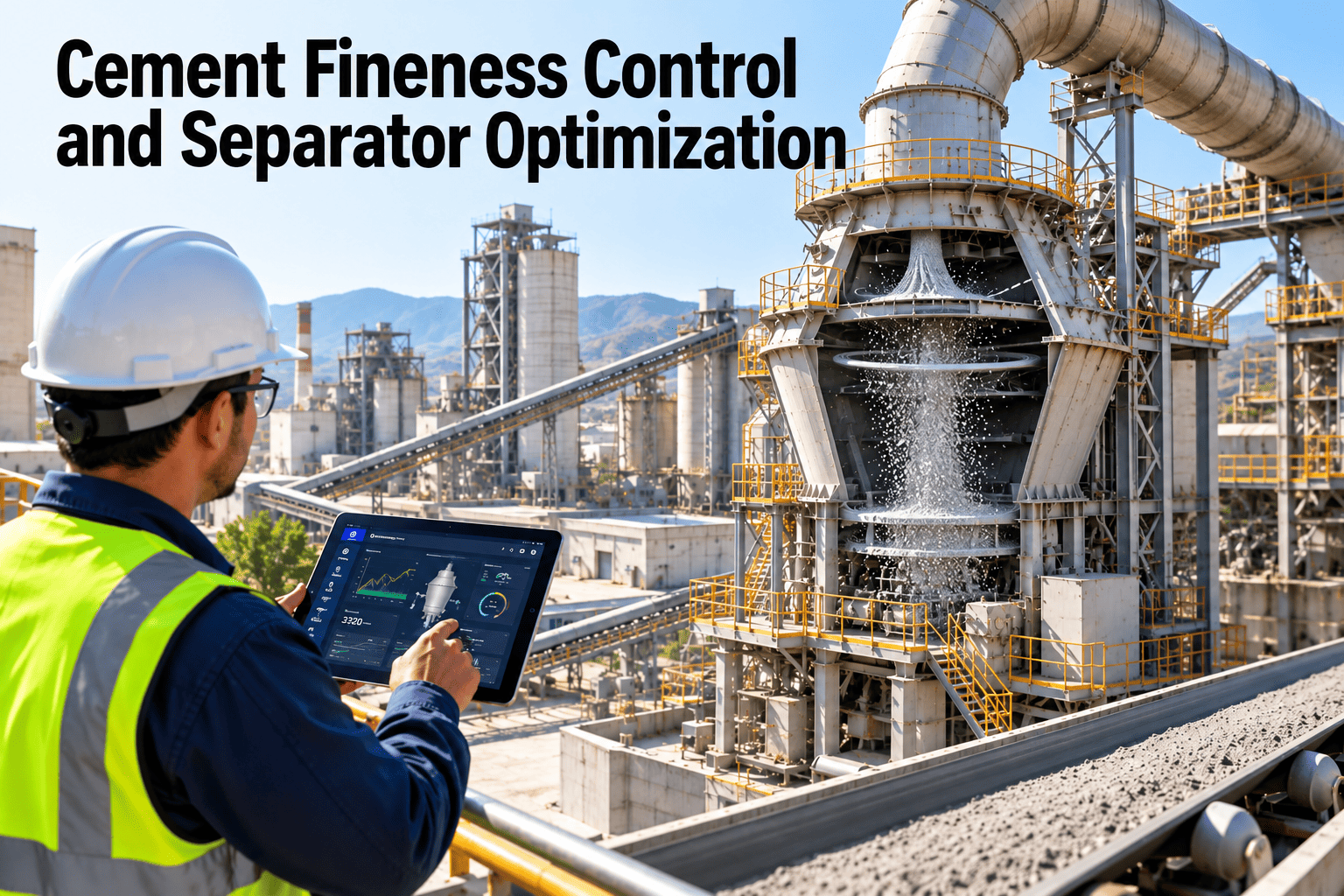
Dynamic separator rotor blade wear, guide vane fouling, and reject cone deterioration reduce separator efficiency from a design 78% down to 55–62% without triggering a maintenance alarm. The efficiency drop is attributed to feed variability rather than separator condition — delaying intervention and inflating recirculating load by 30–45%.
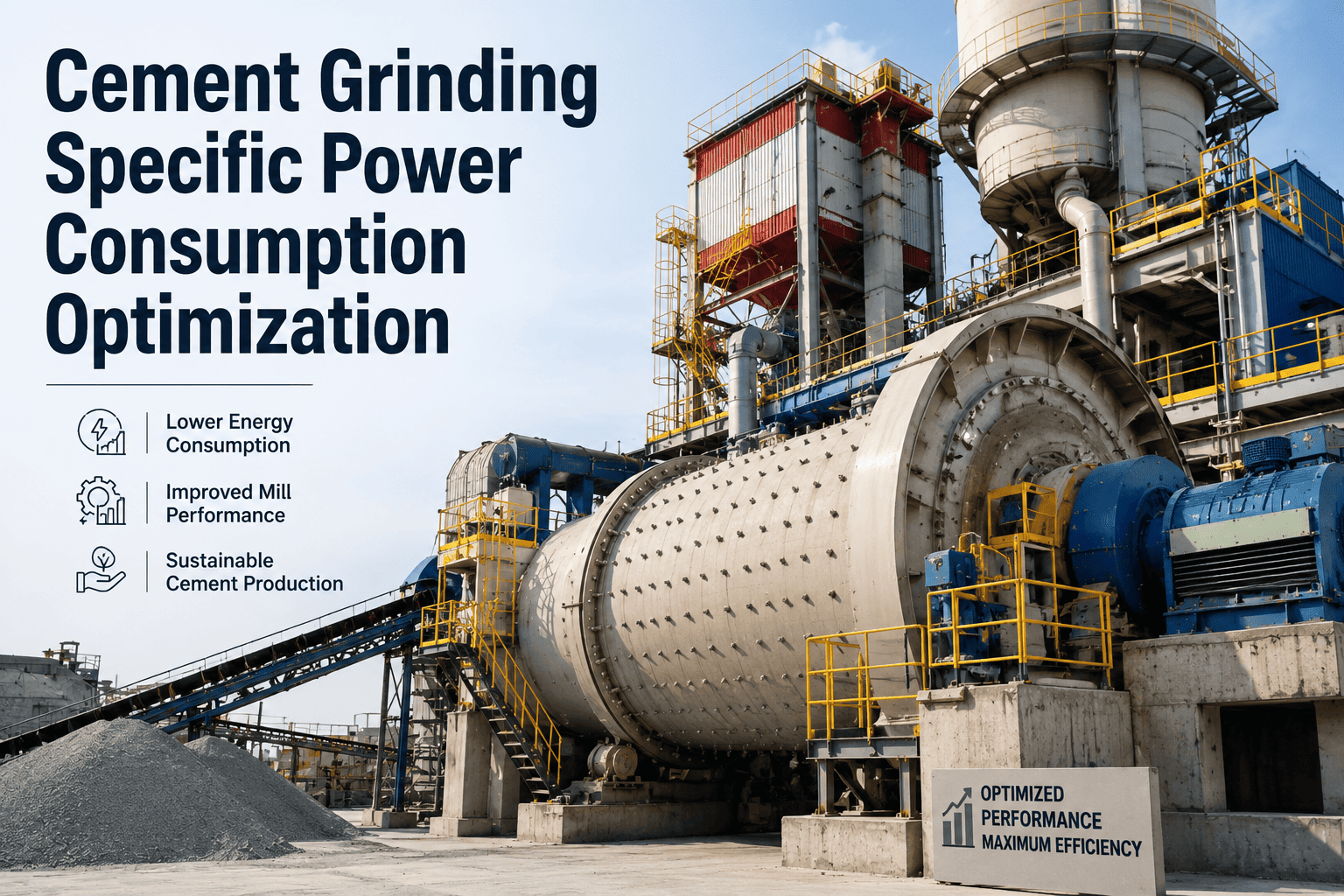
As shell and end liners wear beyond 65% of their original profile, grinding media trajectories change — reducing grinding efficiency and increasing specific energy consumption by 8–14%. Without liner wear data linked to energy monitoring records, the cost of running worn liners is invisible to both the maintenance and process teams.
Grinding media consumption at 40–55 grams per tonne is rarely logged against actual production. Under-charged mills lose 6–11% throughput capacity and produce product fineness 150–300 cm²/g below target — yet the root cause remains undiagnosed without ball charge consumption rate tracking linked to the mill asset record.
When a mill's specific energy consumption spikes 12%, operators adjust process parameters without checking whether a recent maintenance event — a diaphragm repair, bearing replacement, or partial relining — changed the mill's operating dynamics. Without a CMMS that correlates work order history with performance KPI trends, root cause analysis takes days rather than hours.
Link Asset Condition Data to Grinding Performance — From One Dashboard
Oxmaint's performance analytics module connects maintenance work order history, component wear records, and energy monitoring into a single grinding circuit view. Book a demo to see grinding KPI dashboards configured for your mill fleet.
How Oxmaint Delivers Cement Mill Optimization
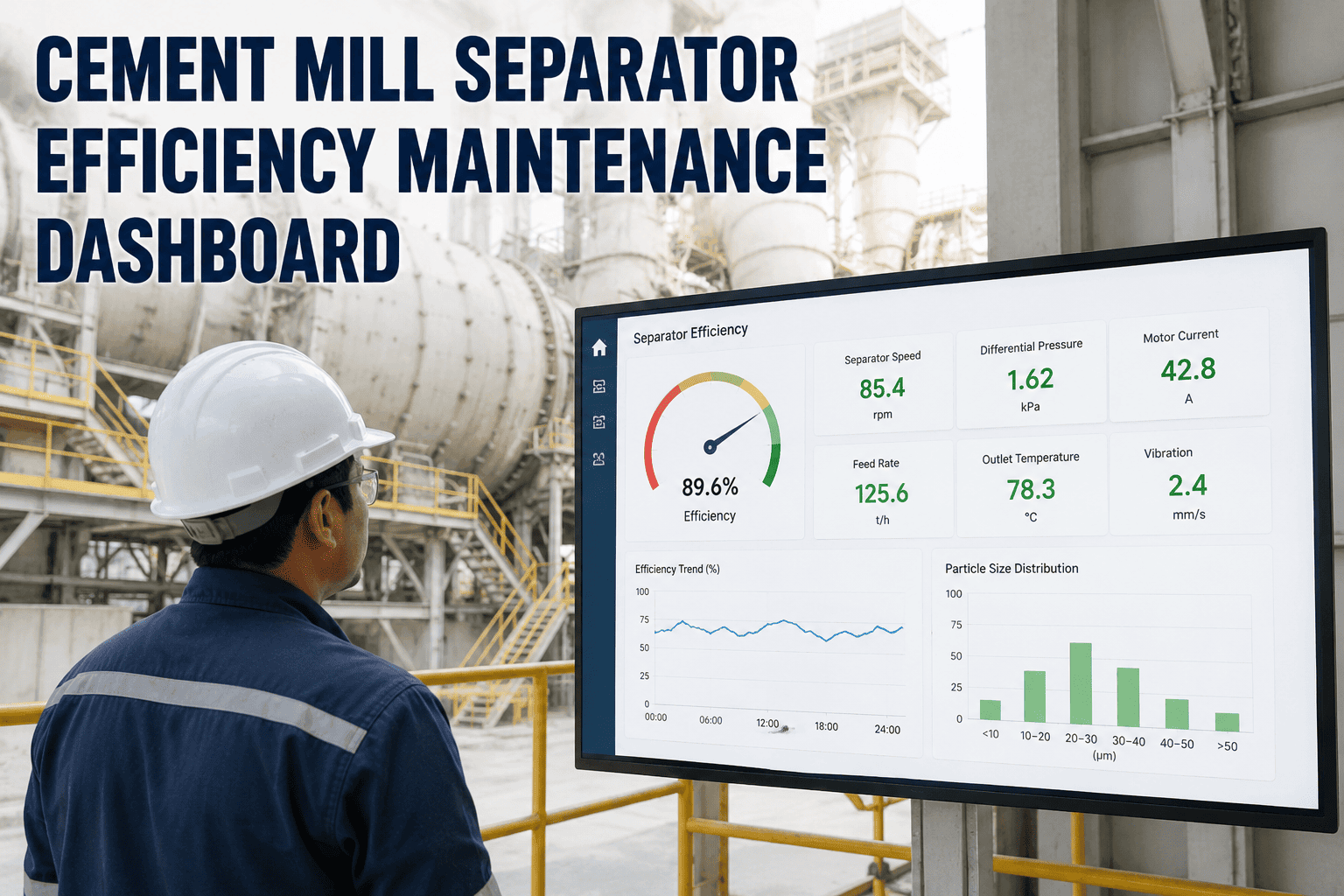
Specific energy consumption, Blaine fineness, mill throughput, and separator efficiency are tracked as KPIs against the mill asset record. When a KPI deviates from baseline, the dashboard cross-references the asset's recent work order history — flagging maintenance events, wear state changes, or overdue PM tasks as probable root causes. Book a demo to see grinding performance dashboards built from your plant's operational data.
Separator rotor blades, guide vanes, and reject cone are registered as components under the separator asset. Inspection findings are logged at each planned outage and plotted against separator efficiency readings. When efficiency drops below the defined threshold, Oxmaint creates a corrective work order automatically and cross-references the separator's last inspection date and blade wear measurement.
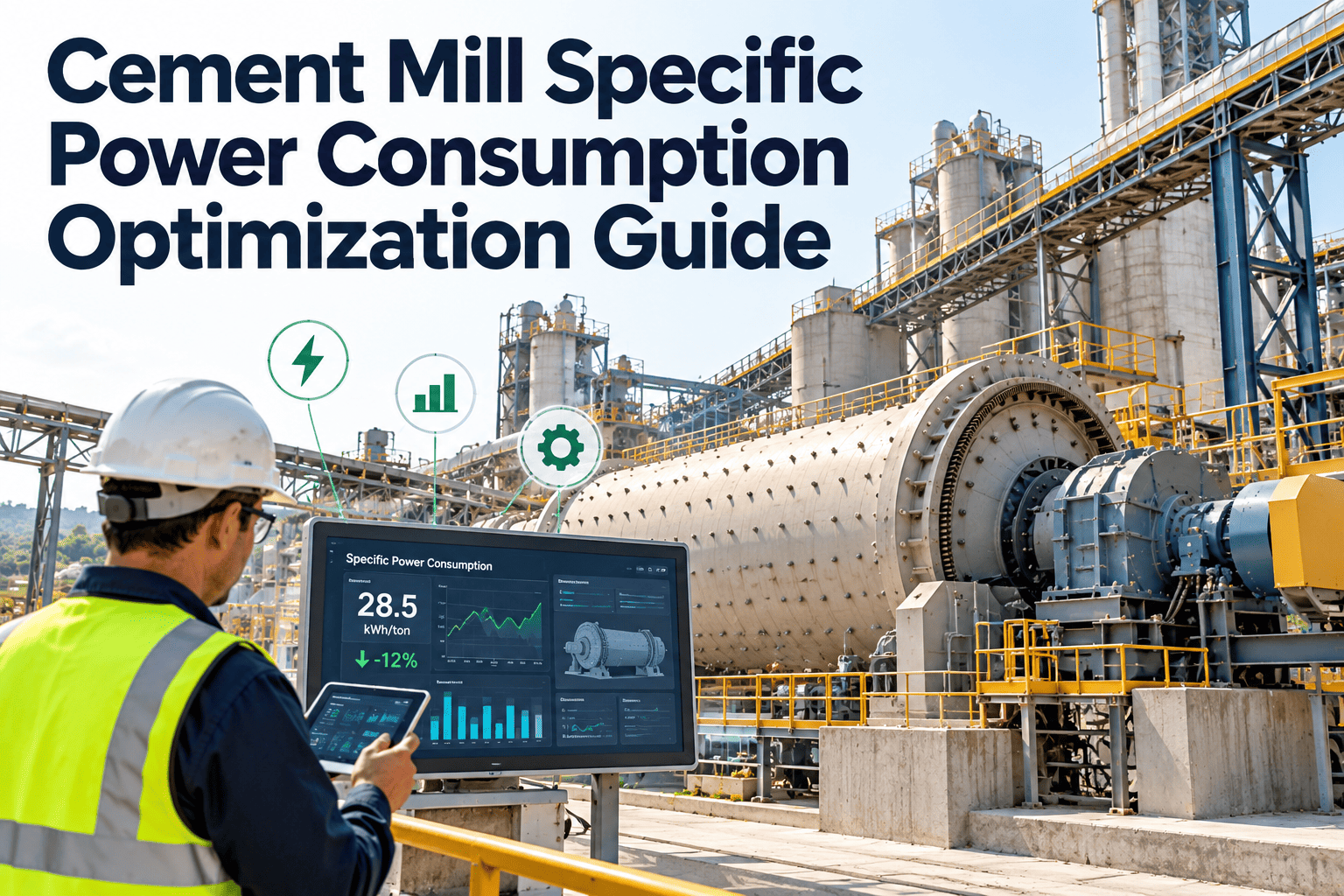
Shell liner wear measurements and ball charge top-up records are stored against the mill asset and surfaced alongside specific energy consumption trends. When specific power rises above baseline, the energy monitoring module checks liner wear state and ball charge level before flagging a process investigation — reducing root cause analysis time from days to under two hours. See how liner wear and energy data are correlated in the Oxmaint analytics module.
The portfolio-level dashboard compares specific energy consumption, availability, and PM compliance across all mills on site — identifying which assets are underperforming against fleet benchmarks. The CapEx forecasting module uses component wear rate data to build a rolling 5-year replacement schedule, formatted for VP of Operations and board-level review with cost-per-tonne projections.
Platform Features for Grinding Efficiency Management
Tracks kWh per tonne against the mill asset record — flagging deviations from baseline and cross-referencing recent maintenance events, liner wear state, and ball charge level as probable root causes. Reduces energy investigation time by up to 80%.
Separator efficiency readings logged against inspection records for rotor blades, guide vanes, and reject cone. Threshold alerts trigger corrective work orders automatically. Separator PM compliance reaches 91% within two quarters of deployment.
Product fineness readings linked to liner wear state, ball charge level, and separator condition in the asset record. When fineness drifts outside spec, the system surfaces the most recent maintenance events affecting grinding geometry — directing process engineers to the correct root cause immediately.
Compares specific energy, availability, and PM compliance across all mills on site from a single view. Identifies underperforming mills against fleet benchmarks and surfaces the maintenance gap driving the deviation — without manual report compilation.
Rolling 5-year grinding circuit capital plan built from liner wear rate data, separator component RUL, and gearbox condition scores. Cost-per-tonne projections formatted for VP of Operations and board-level budget submissions — 88% approval rate versus 47% for estimate-based requests.
Work orders auto-generated by operating hours for separator blade inspections, liner wear measurements, ball charge checks, and gearbox oil sampling. 30-day, 7-day, and 48-hour alerts prevent missed intervals — lifting PM compliance from a plant median of 57% to 91%.
Oxmaint Outcomes — Cement Grinding Circuit Deployments
Cost of Grinding Inefficiency vs. Oxmaint Deployment
| Inefficiency Source | Annual Cost Without CMMS | With Oxmaint | Saving |
|---|---|---|---|
| Specific energy overrun | $380,000–$920,000 excess power on 1 MTPA plant at 12–22% above benchmark | Liner and separator condition linked to energy monitoring — root cause identified within 2 hours | $180,000–$440,000 recoverable annually |
| Separator inefficiency | $95,000–$180,000 excess recirculating load energy cost at 55% separator efficiency | Separator condition tracked — corrective work orders auto-generated when efficiency drops below threshold | Up to $135,000 recovered per mill annually |
| Premature liner replacement | $62,000–$95,000 per avoidable relining event on calendar schedule | Throughput-linked wear trending extends liner life to actual wear limit | Up to $95,000 avoided per relining cycle |
| Unplanned stoppages | $95,000–$240,000 per event — 4.2 average events per mill per year | PM compliance at 91% — unplanned stop ratio reduced to under 18% | Up to $840,000 avoided per mill annually |
| Oxmaint platform (full grinding circuit) | $28,000 per year — up to 6 mills | Prevention and analytics platform | $450,000+ combined annual avoidance |
Reduce Specific Energy and Unplanned Stops — Live in 3 Weeks
CMMS-linked grinding analytics, separator efficiency trending, and multi-mill CapEx forecasting — no hardware, no consultant fees. Book a demo to review your grinding circuit configuration with our team.
Frequently Asked Questions
Continue Reading
Connect Asset Condition to Grinding Performance — Deploy in 3 Weeks
Specific energy monitoring, separator efficiency trending, multi-mill benchmarking, and 5-year CapEx forecasting — configured for your grinding circuit, live in three weeks. Book a demo to see your grinding performance analytics built in real time.