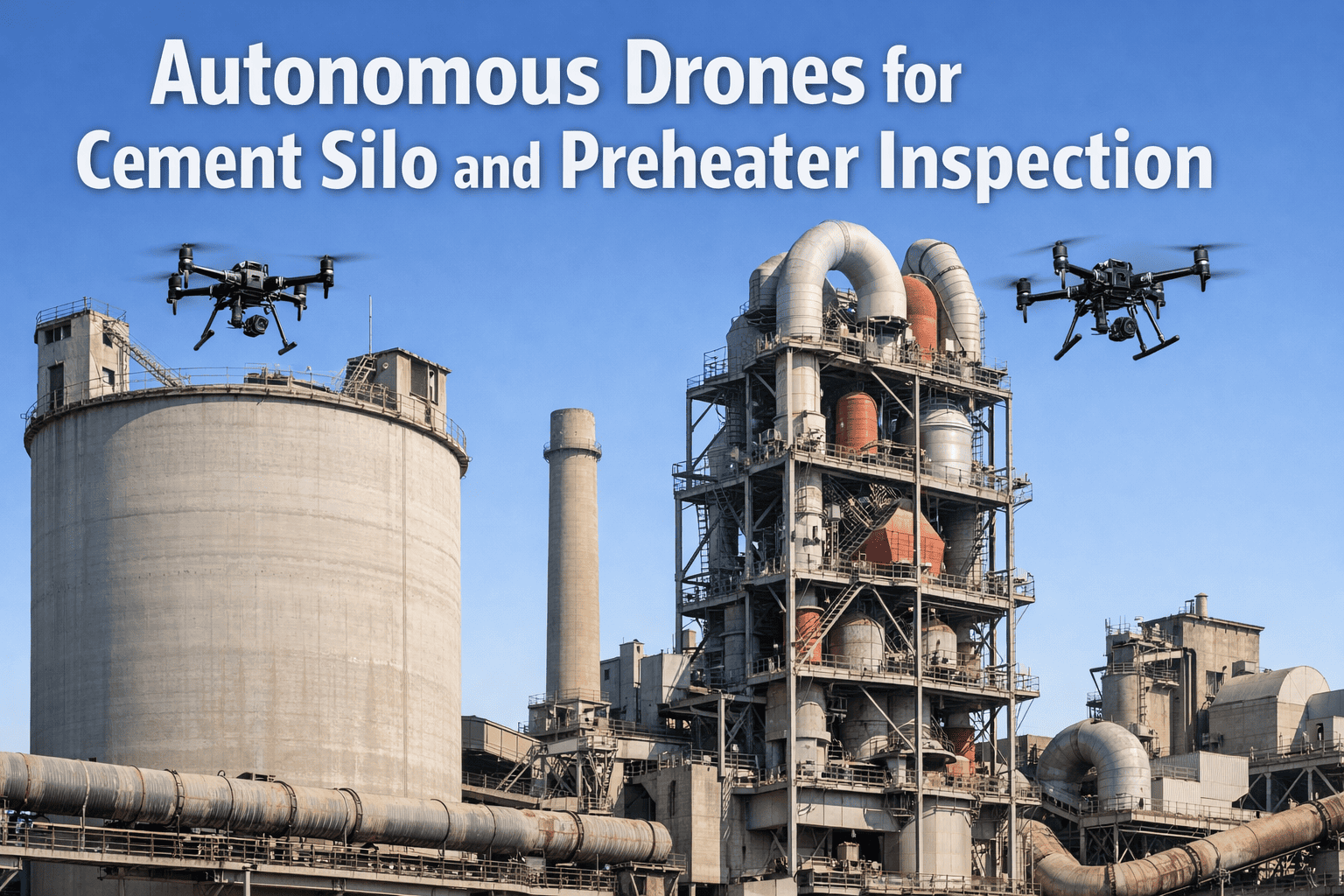
A cement plant in Morocco experienced a catastrophic silo collapse that killed two workers and shut down production for seven weeks. Investigation revealed the silo's internal structure had been deteriorating for months—corrosion weakening support rings, material buildup creating uneven load distribution, and wall thinning that went undetected because manual inspections were too dangerous and infrequent. After the incident, the company implemented drone silo inspection protocols with AI-powered defect detection, identifying 23 critical issues across their remaining silos that required immediate attention. The robotic inspection system now provides quarterly internal assessments that would have caught the failure conditions months earlier. Sign up for Oxmaint to integrate drone inspection data with your cement plant maintenance software and prevent similar tragedies.
Best Drone Silo Inspection Solutions for Cement Plants in 2026
Confined space silo inspections are among the most dangerous tasks in cement operations. Drone inspection technology eliminates human entry requirements while delivering superior defect detection through AI vision analysis and direct CMMS integration.
Why Silo Inspection Matters in Cement Plants
Cement silos store thousands of tons of material under conditions that actively degrade structural integrity. Moisture intrusion, material flow patterns, temperature cycling, and chemical reactions create corrosion, erosion, and structural stress that can lead to catastrophic failures. Traditional inspection methods require confined space entry—one of the deadliest procedures in industrial maintenance—and still miss defects hidden by material buildup or poor lighting. Industrial drone inspection technology transforms this equation entirely.
The Confined Space Problem
OSHA classifies cement silos as permit-required confined spaces with atmospheric hazards, engulfment risks, and limited egress. Each manual inspection requires extensive safety protocols—atmospheric testing, rescue standby teams, ventilation equipment, and personnel monitoring systems. Despite these precautions, confined space incidents remain a leading cause of industrial fatalities. The cement industry robotics 2026 trend toward autonomous inspection directly addresses this risk while improving inspection quality.
Book a demo to see how drone inspection eliminates confined space entry requirements.
- Atmospheric hazards from cement dust and CO2 accumulation
- Engulfment risk from material bridging and collapse
- Limited visibility in dusty, dark environments
- Difficult egress through narrow access points
- Physical strain from scaffolding and rope access
What Drones Detect Inside Silos
Modern silo inspection drones equipped with high-resolution cameras, thermal imaging, and AI defect recognition identify structural issues invisible to manual inspection. Wall thickness variations, corrosion patterns, weld failures, support ring degradation, and material buildup distribution become visible in comprehensive digital documentation that feeds directly into CMMS software for maintenance planning.
Sign up for Oxmaint to manage drone inspection findings and automate work order generation.
- Wall corrosion and thickness reduction mapping
- Support ring and stiffener degradation
- Weld crack detection and joint failures
- Material buildup and flow obstruction patterns
- Roof and cone structural integrity assessment
Connect Inspection Data to Maintenance Action
Oxmaint receives drone findings automatically, generating work orders with photos and location data.
Drone Inspection Capabilities
Purpose-built drone inspection systems for cement silos combine specialized hardware with AI-powered analysis to deliver comprehensive structural assessments that exceed manual inspection quality while eliminating safety risks.
High-Resolution Visual
4K cameras with LED illumination capture surface detail at 0.5mm resolution, documenting cracks, corrosion, and coating failures across entire interior surfaces with georeferenced positioning.
Thermal Imaging
Infrared sensors detect moisture intrusion, material buildup density variations, and thermal anomalies indicating structural stress or chemical reaction hot spots invisible to visual inspection.
3D Mapping
LIDAR and photogrammetry create millimeter-accurate 3D models of silo interiors, enabling wall thickness trending, deformation monitoring, and precise defect location mapping over time.
AI Defect Recognition
Machine learning algorithms trained on thousands of silo defect images automatically identify and classify corrosion, cracks, and structural anomalies with 94% accuracy.
CMMS Integration
Inspection findings upload directly to Oxmaint with defect photos, severity ratings, and location coordinates—automatically generating prioritized work orders for maintenance automation.
Collision Avoidance
360-degree obstacle detection enables safe autonomous flight in confined silo interiors with internal structures, access platforms, and material surfaces creating complex navigation environments.
Inspection Findings and CMMS Response
Each drone inspection finding triggers appropriate maintenance response through maintenance workflow automation. Critical defects generate immediate work orders while monitoring items track through scheduled assessments.
Defect Classification and Response Protocol
| Finding Type | Detection Method | CMMS Action | Response Window |
|---|---|---|---|
| Wall thickness below minimum | 3D mapping comparison | Emergency engineering review | Immediate |
| Support ring corrosion | Visual + thermal analysis | Priority repair work order | 7-14 days |
| Weld crack detected | AI visual recognition | NDT inspection scheduled | 14-30 days |
| Material buildup obstruction | 3D volume mapping | Cleaning work order | Next outage |
| Coating degradation | Visual inspection | Recoating scheduled | Annual planning |
Implementation Checklist
Successful silo inspection drone deployment requires systematic preparation. This checklist ensures your facility is ready for drone-based inspection programs integrated with CMMS software for equipment uptime optimization.
Frequently Asked Questions
Inspect Every Silo Safely and Thoroughly
Drone inspection eliminates confined space risk while delivering superior defect detection. Oxmaint turns findings into maintenance action before structural issues become safety incidents.