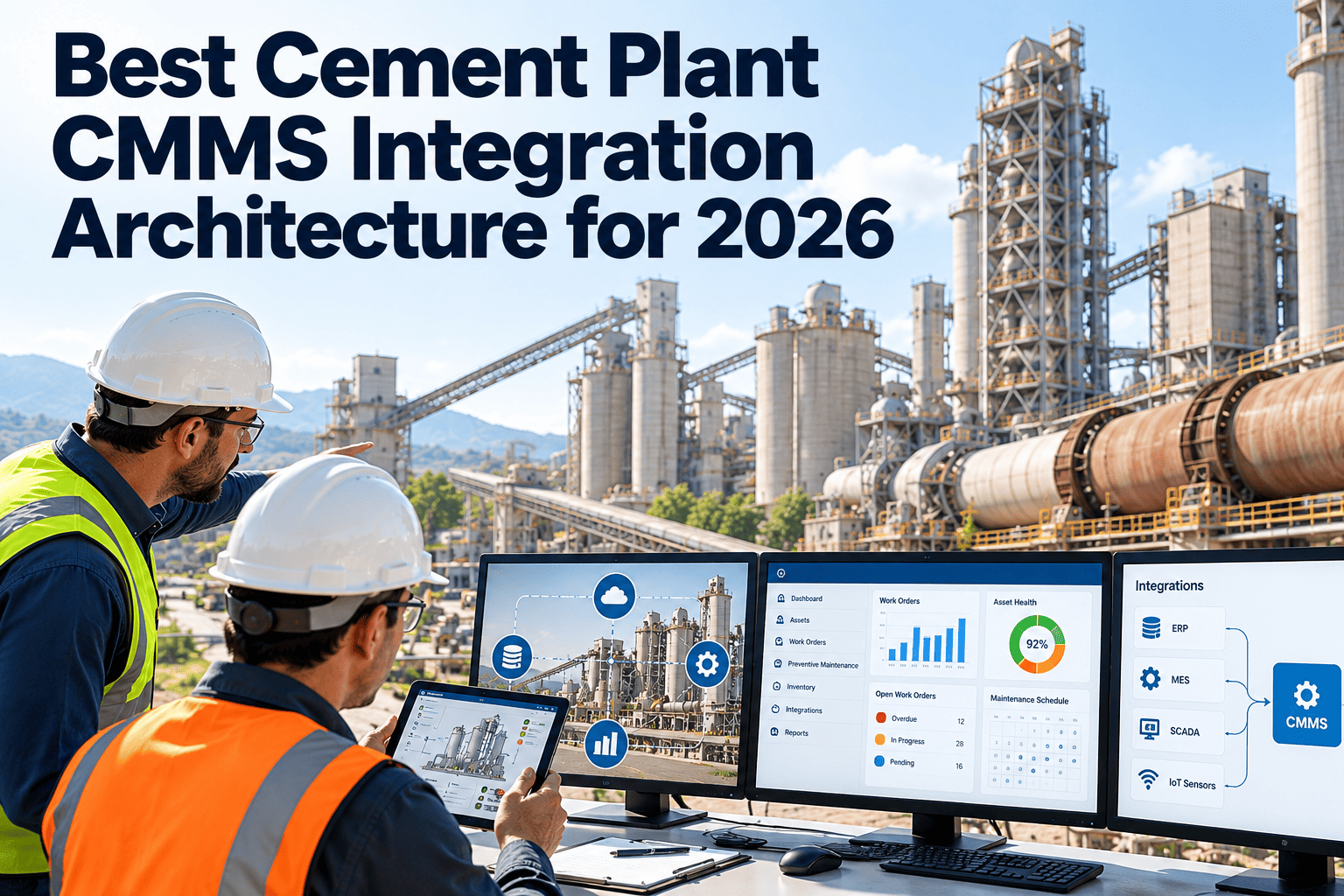
In 2026, cement plant operations directors are under simultaneous pressure from five directions at once — rising alternative fuel targets, AI-driven maintenance expectations, a generation of retiring engineers taking tribal knowledge with them, ERP consolidation mandates from corporate, and ESG reporting requirements that now reach all the way down to kiln-level CO2 intensity data. Each pressure individually could justify a CMMS upgrade. Together, they're creating a wave of platform modernization that's moving faster than any previous cycle in the industry. This guide explains the five trends reshaping cement plant CMMS requirements in 2026, why they're accelerating, and what they mean for plant engineers evaluating whether their current maintenance platform can keep up — or whether it's time to replace it. Start a free trial with Oxmaint and explore how a modern CMMS handles every one of these trends in a live cement plant configuration.
Why Cement CMMS Modernization Is Accelerating in 2026
The cement plants that modernized their CMMS in 2022 to 2024 are now publishing results that are difficult to ignore. 68% fewer unplanned kiln stops. 84% PM compliance rates. 52% reduction in emergency repair costs. 72% faster regulatory audit response. These aren't projected benefits from a vendor pitch deck — they're measured outcomes from plants that made the switch and tracked the data.
The plants that haven't made the switch yet are watching that gap compound each quarter. Legacy CMMS platforms can't connect sensor data to predictive work order generation, can't track AFR rate against specific heat consumption, can't export NESHAP records on demand, and can't give a corporate sustainability team the CO2 intensity data they need for CDP reporting. In 2026, those gaps are no longer inconveniences — they're competitive disadvantages.
What's Driving CMMS Modernization Decisions at Cement Plants Right Now
Cement groups with 2030 net-zero commitments are pushing AFR rate targets down from corporate to plant level as operational KPIs — not aspirations. A plant running 18% AFR with a 40% target by 2028 needs to increase alternative fuel throughput by more than double while maintaining kiln stability and product quality. That operational complexity — managing fuel quality variability, burner adjustments, kiln atmosphere monitoring — generates more maintenance data, more corrective actions, and more equipment condition events than the previous fossil fuel operation ever did.
A legacy CMMS that was configured for a petcoke-fired kiln doesn't have the asset structure, the KPI linkages, or the sensor integration to manage an AFR-intensive operation. Modern CMMS platforms track AFR rate in real time against specific heat consumption — so the operations team can see immediately whether a fuel quality change is affecting thermal efficiency, and maintenance teams see the corrective work orders that kiln condition changes generate automatically.
Machine learning models predicting kiln bearing failures 4 to 8 weeks ahead are no longer a technology demonstration — they're operational reality at 23% of new cement CMMS implementations in 2026 and growing rapidly. The catalyst is cost: a cement plant that prevents two unplanned kiln stops per year using AI predictive saves $360,000 or more in direct repair and production costs. The platform cost pales against that figure.
Legacy CMMS platforms that were built for calendar-based PM scheduling cannot bridge to AI predictive without replacing their core architecture. Platforms that connect sensor data streams directly to CMMS work order generation — converting a rising vibration anomaly into a prioritized planned job with parts reserved — are structurally different from platforms that send an email alert and wait for a human to act. In 2026, that architectural difference is driving platform replacement decisions at cement plants that have quantified what the legacy approach is costing them.
The generation of cement plant engineers and technicians who accepted printing work orders and carrying paper checklists to the kiln platform is retiring. The workforce entering cement plant operations in 2024 to 2026 expects to complete a PM checklist, attach a photo, and close a work order from a phone at the equipment location — not return to the office to enter data into a desktop system. CMMS platforms that treat mobile as a secondary interface are failing this expectation in a way that affects data quality, PM compliance, and technician adoption rates.
True mobile parity in 2026 means offline functionality in areas without connectivity, voice-to-text on checklists, photo attachment from the point of work, QR code asset scanning, and automatic CMMS sync when connectivity restores. Platforms that bolt a mobile browser interface onto a desktop-first architecture deliver none of these consistently — and the data quality consequences show up immediately in PM compliance rates and defect capture rates from field inspections.
Major cement groups running SAP, Oracle, or Microsoft Dynamics at the corporate level are accelerating plans to connect plant-level maintenance systems directly to the ERP — or replace disconnected CMMS platforms that can't integrate. The driver is data: work order costs not flowing to cost centers, parts purchases not triggering POs in the ERP, and maintenance spend data not available in corporate financial reports. In an industry where maintenance costs represent 15 to 25% of total production cost, that visibility gap has become intolerable at group level.
CMMS platforms that can only export CSV files to be manually imported into SAP are being replaced on this basis alone, regardless of their functional performance on the maintenance side. Modern CMMS platforms that offer bidirectional ERP integration — work order costs flowing to SAP cost centers, SAP material master data flowing back into CMMS inventory — are winning RFPs on the integration specification alone in 2026 cement CMMS evaluations.
In 2026, corporate sustainability teams at major cement groups are asking plant operations directors for monthly CO2 intensity per tonne clinker, specific heat consumption trends, AFR rate progress, and energy intensity data — and they need it connected to maintenance records to satisfy auditors and CDP framework requirements. This data request is landing on plant engineers who previously had no sustainability reporting function, creating a new demand on plant-level systems that most legacy CMMS platforms were never designed to serve.
The CMMS is increasingly the system of record for the connection between maintenance quality and energy performance — because it's where the corrective actions that change equipment efficiency are documented. A properly configured modern CMMS links every maintenance event that affects energy performance to the KPI impact it generates, building the documented chain from kiln alignment work to reduced specific heat consumption that sustainability auditors and CDP reviewers require.
Is Your Current CMMS Ready for All 5 Trends?
| Trend | Legacy CMMS Capability | Oxmaint Capability |
|---|---|---|
| AFR Rate Tracking vs. Specific Heat | Not supported. Generic KPI fields only. | Real-time AFR vs. heat consumption dashboard with alerts |
| AI Predictive Work Order Generation | Manual threshold alerts only, no auto work order | ML models auto-generating prioritized jobs with parts reserved |
| True Mobile Offline Capability | Browser-dependent, fails without connectivity | Full offline PM with photo capture and auto-sync |
| ERP Bidirectional Integration | CSV export only, manual ERP re-entry required | Real-time SAP/Oracle API integration, no duplicate entry |
| CO2 Intensity and ESG Reporting | No sustainability KPI tracking built in | CDP-compatible CO2 intensity exports with maintenance linkage |