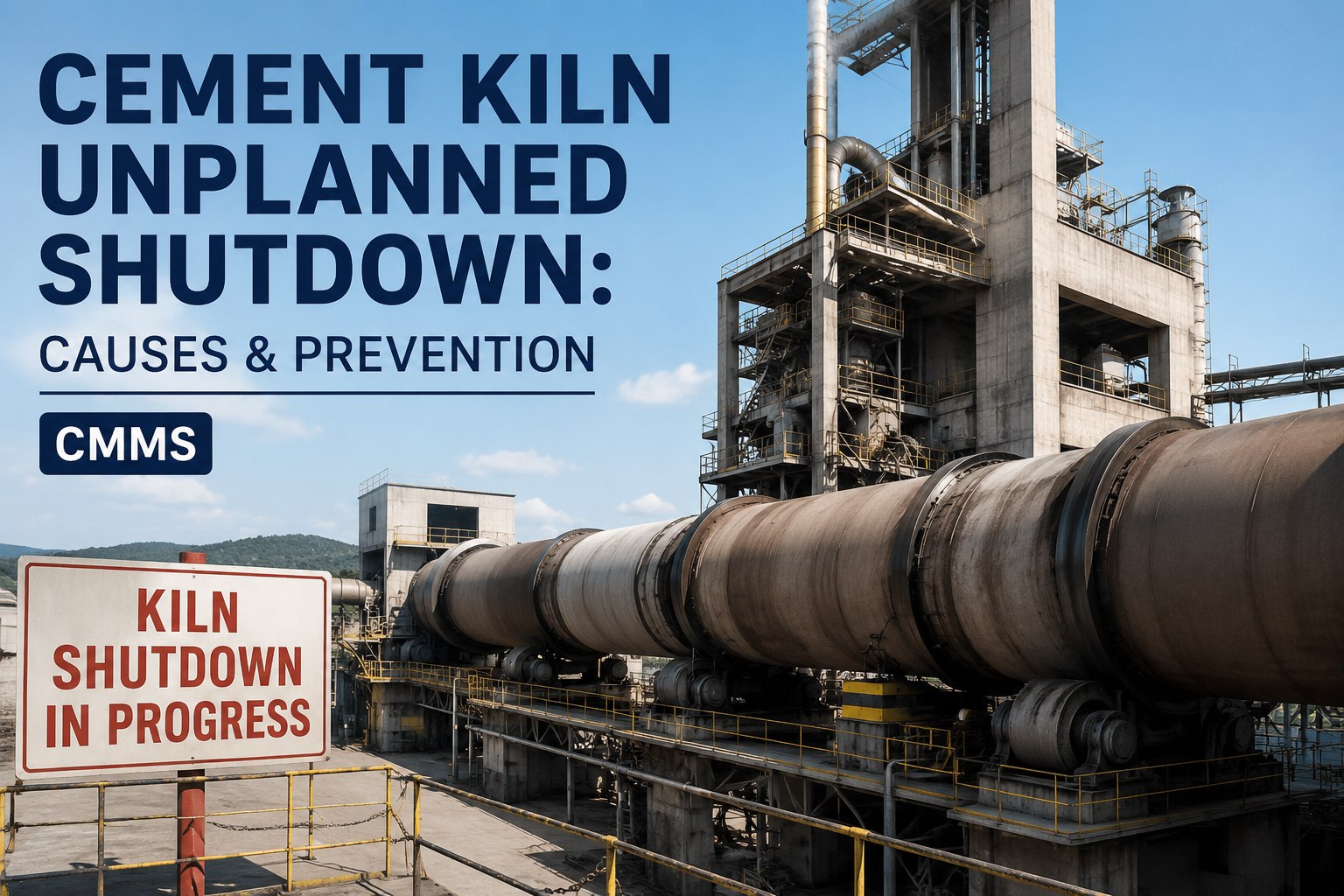
Cement plants managing 500-plus shutdown work orders across rotary kilns, preheater cyclone towers, and ball mills cannot rely on spreadsheets and radio coordination to execute an annual outage costing between $2M and $8M in planned expenditure alone. Every unplanned day of shutdown extension costs a mid-size integrated plant between $350,000 and $500,000 in lost clinker production, and 60% of that overrun is caused by scope discovered after the kiln cools. Book a demo to see how Oxmaint structures cement plant annual shutdown planning from scope definition through post-commissioning closeout on a single CMMS platform.
CMMS Compliance Coverage for Cement Plant Shutdown Management by Region
Cement plant annual shutdowns must satisfy regional inspection, permit-to-work, contractor safety, and equipment certification frameworks before restart clearance is granted. Oxmaint automates shutdown work order documentation, inspection scheduling, lockout/tagout permit records, and audit trail generation across all frameworks listed below.
| Region | Key Regulatory Frameworks | Oxmaint Coverage |
|---|---|---|
| USA | OSHA 29 CFR 1910 lockout/tagout, MSHA 30 CFR Part 56 confined space, EPA Title V restart clearance, NFPA 652 combustible dust | Digital lockout/tagout records, confined space permits, restart checklists, shutdown audit trail exports |
| UAE | OSHAD-SF contractor safety, Civil Defence hot work permits, SASO equipment inspection, Ministry of Industry directives | Contractor work package records, permit-to-work documentation, multi-site shutdown dashboards |
| India | Factories Act 1948 Rule 73 statutory inspections, BIS IS 14489 maintenance standards, DGMS kiln and quarry shutdown directives | Statutory inspection scheduling, maintenance registers, compliance certificate tracking, shutdown closeout records |
| Germany | BetrSichV equipment safety during shutdown, DIN EN 13306 maintenance documentation, TUV inspection sign-off, EU ETS restart verification | Inspection record archiving, maintenance documentation per asset, condition history per equipment class |
| UK | PSSR 2000 pressure system shutdown, PUWER 1998 work equipment isolation, HSE cement plant shutdown guidance | Work order closeout records, pressure system inspection history, shutdown compliance exports |
| Canada | CSA Z1000 maintenance management, Provincial OHS Acts contractor management, ACGIH kiln entry guidelines, CCOH equipment isolation | Contractor induction records, equipment isolation permits, multi-site shutdown dashboards, PM audit trails |
Plan Your Next Cement Plant Shutdown on a Purpose-Built CMMS Platform
Oxmaint manages shutdown scope, critical path milestones, contractor work packages, and real-time progress tracking across every equipment class from rotary kiln to packing line. Book a 30-minute demo with your shutdown planning team and see the platform running against your plant's actual outage schedule and equipment profile.
What Is Cement Plant Annual Shutdown Planning with CMMS?
Annual shutdown planning in a cement manufacturing context is the structured process of defining work scope, scheduling critical path tasks, coordinating contractors, managing materials, and executing equipment overhauls across a planned outage window. CMMS transforms this from a clipboard-and-radio exercise into a data-driven programme anchored to actual equipment condition records. Book a demo to see how Oxmaint builds your shutdown work scope directly from live asset condition data and accumulated work order history.
Scope Definition and Work List
Every shutdown task identified from equipment condition scores, inspection findings, and deferred maintenance backlog before the outage window opens. Scope locked and priced at least 90 days ahead, not discovered on day one of kiln cooldown when scope changes cost 3 to 4 times more than planned work.
Critical Path Scheduling
Kiln refractory reline, girth gear inspection, and preheater cyclone overhaul sequenced on the critical path. Every milestone tracked in real time with dependency management that prevents a slipped refractory crew from cascading into a 3-day startup delay costing $1M or more in lost clinker production.
Contractor and Resource Coordination
Refractory crews, mechanical contractors, instrumentation specialists, and OEM service engineers managed from a single work package system. Mobilisation dates, crew sizes, access requirements, and safety inductions tracked per contractor against the master shutdown schedule without spreadsheet reconciliation.
Post-Shutdown Commissioning and Review
Systematic equipment restart from utilities through auxiliaries to main production train with punch list management, commissioning checklist completion, and 72-hour post-startup monitoring. Every shutdown closes with structured review data that improves the next outage scope, duration, and contractor performance.
Four Shutdown Planning Failures Costing Cement Plants Every Year
Scope Discovered During the Outage, Not Before It
Without complete equipment condition records, maintenance teams discover deterioration after the kiln cools down. Scope changes during a live shutdown cost 3 to 4 times more than identical work planned 90 days in advance and extend outage duration by an average of 2.4 days per major kiln or mill event.
No Real-Time Critical Path Visibility During Execution
When the refractory crew falls behind on day three, the plant manager finds out at the evening debrief rather than when the milestone slips. Without live critical path tracking, recovery actions arrive 12 to 18 hours too late to prevent a shutdown extension that costs $350,000 to $500,000 per additional day of production loss.
Contractor Coordination Failures Extending Outage Duration
Refractory contractors waiting for scaffolding access while mechanical crews wait for isolation permits creates compounding delays invisible in a spreadsheet-based shutdown schedule. Poor interface management between contractor packages accounts for 28% of total shutdown overrun hours at cement plants operating without structured CMMS.
No Post-Shutdown Learning Captured for the Next Cycle
Plants that skip post-shutdown analysis repeat the same scope gaps, parts stockouts, and contractor coordination failures every outage cycle. Without structured closeout data in the CMMS, the next shutdown starts from zero with no improvement on actual versus planned duration, cost, or scope accuracy quarter over quarter.
How Oxmaint Structures Cement Plant Annual Shutdown Planning
Oxmaint connects asset condition data, work order history, contractor management, and critical path tracking into a single shutdown planning platform built for cement manufacturing outages. Book a demo to walk through the full shutdown planning workflow with your plant's equipment profile and upcoming outage schedule.
Stop Discovering Shutdown Scope on Day One of the Outage
Oxmaint builds cement plant shutdown work scope from live equipment condition data accumulated between outages, so your scope is locked and costed before the kiln cools. Book a 30-minute demo and see how your asset condition records translate into a structured shutdown plan ready for contractor mobilisation.
Oxmaint Platform Modules for Cement Plant Shutdown Management
Each module below addresses a specific shutdown planning gap. Together they form a complete outage management platform connecting asset condition data to shutdown execution and post-outage learning. Book a demo to walk through each module against your cement plant's specific shutdown structure and equipment scope.
Reactive Shutdown Management versus Oxmaint Planned Outage: Performance Comparison
The performance gap between reactive and CMMS-structured shutdown management is measurable in outage duration, cost variance, and contractor productivity at every cement plant that makes the transition. Read the root cause analysis guide for cement plant failures to understand how post-shutdown analysis closes the loop on recurring equipment failures that drive shutdown scope year after year.
18 to 24 days average refractory reline duration. Scope discovered after cooldown adds 2 to 4 days. Refractory crew wait time from access delays accounts for 18% of total outage hours with no visibility until end-of-day debrief.
12 to 16 days average refractory reline duration. Full scope defined 90 days ahead. Access, isolation, and crew mobilisation pre-planned against the critical path. Zero scope discovery delays after kiln cooldown begins.
Scope overruns of 35 to 60% versus initial estimate. Undetected deterioration discovered during outage triggers emergency parts orders at 2.8 to 4.2 times standard cost and extends duration by an average of 2.4 days per event.
Scope within 12% of initial estimate. Equipment condition fully documented between outages from PM inspection records. Planned scope compiled from condition data before kiln cooldown begins and locked before contractor mobilisation.
Contractor interface managed by radio, paper handovers, and daily verbal briefings. Crew conflicts and access bottlenecks identified after the clash occurs. Contractor wait time averages 3.4 hours per crew per day on a 14-day shutdown.
Digital work packages issued before mobilisation. Access windows, isolation requirements, and crew sequences pre-planned and visible to all supervisors. Contractor wait time reduced by 71% versus unplanned shutdown baseline.
Critical path status updated once per day at evening debrief. Milestone slippage identified 12 to 18 hours after the deviation occurs. Recovery actions arrive too late to prevent a shutdown extension costing $350,000 per additional day.
Critical path milestone status updated in real time from mobile task completions by area supervisors. Slip alerts generated within 2 hours of schedule deviation. Recovery plans mobilised within the same shift.
Budget variance of 40 to 65% versus initial estimate. Emergency parts, extended contractor hire, and unplanned scope add cost only visible in the monthly financial report, weeks after commitment is already made.
Budget variance under 15%. Scope change cost captured at point of approval. Emergency parts and out-of-scope contractor work logged immediately with budget impact visible to the shutdown manager before commitment.
Post-shutdown review skipped or completed informally. Same scope gaps, parts stockouts, and contractor clashes repeat at the next annual outage. No data linkage between shutdown outcomes and future planning or contractor selection.
Actual versus planned analysis generated automatically within 48 hours of restart. Contractor scorecards and lessons learned linked to next shutdown planning cycle. Each outage improves the next by 10 to 15% in duration and cost accuracy.
See Oxmaint Shutdown Planning Running Against Your Plant's Outage Schedule
Bring your last shutdown debrief data and upcoming outage window to a 30-minute platform session. Book a demo and see critical path tracking, contractor work packages, and shutdown cost reporting built from your actual equipment list.
Cement Plant Shutdown Performance: Benchmarks Within 18 Months of CMMS Deployment
These benchmarks represent measured results from cement plants that transitioned from reactive shutdown management to Oxmaint-structured outage programmes within 18 months of full platform deployment across kiln-to-packer operations.
Key Equipment Asset Profiles for Cement Plant Shutdown Scope Planning
Understanding the maintenance profile of each major cement plant equipment class defines shutdown scope requirements, critical path duration estimates, and critical spare stocking levels that must be confirmed before the outage window opens. Book a demo to see how Oxmaint configures shutdown asset profiles for your specific equipment inventory and outage schedule.
Rotary Kiln and Girth Gear Assembly
Refractory lining condition scored per zone at each campaign inspection with hot zone records updated from shell temperature scans. Girth gear backlash and tyre migration measured quarterly against wear thresholds. Shutdown scope for refractory reline compiled automatically from accumulated zone condition records before the outage window opens.
Ball Mill and Vertical Roller Mill
Liner wear progression tracked against throughput tonnage since last change event. Separator and classifier bearing condition recorded at each scheduled mill inspection. Shutdown work packs for liner change compiled automatically from accumulated inspection findings. Drive gearbox oil analysis results stored against maintenance records and linked to shutdown scope.
Clinker Cooler and Grate System
Grate plate wear condition assessed per cooler section at each outage and scored against replacement threshold. Drive chain elongation measured at each PM cycle and recorded against the chain record. Cooling fan bearing vibration tracked against commissioning baseline. Grate section replacement history linked to kiln campaign records to identify wear acceleration patterns.
Preheater Cyclone Tower
Cyclone stage refractory condition scored at each outage inspection with photo documentation stored against the specific stage record. Dip tube wear measured and recorded per stage against replacement threshold. Shell temperature hot spot records linked to refractory condition scores to predict lining failure before breakthrough events cause uncontrolled kiln shutdown.
CMMS Shutdown ROI: Results Statistics from Cement Plants Using Oxmaint
These figures represent measured outcomes from integrated cement plants that transitioned from reactive shutdown management to Oxmaint-structured annual outage programmes. Book a demo to see a custom ROI calculation run against your plant's production volume, shutdown frequency, and current maintenance spend.
Frequently Asked Questions: Cement Plant Annual Shutdown Planning with CMMS
QWhat is annual shutdown planning in a cement plant and why does it require CMMS?
QHow does Oxmaint reduce cement plant shutdown duration?
QWhich compliance frameworks apply to cement plant shutdowns globally?
QHow quickly can Oxmaint be deployed before a planned kiln shutdown?
QWhat happens when shutdown scope changes mid-outage with Oxmaint?
QHow does Oxmaint track contractor performance during cement plant shutdowns?
Continue Reading: Cement Plant Shutdown and Maintenance Management Resources
Explore these guides to build a complete picture of cement plant shutdown planning, contractor coordination, maintenance KPIs, and equipment failure analysis across your operations.
Cement Plant Contractor Management for Shutdowns
Managing refractory crews, mechanical contractors, and OEM service engineers across a planned kiln outage requires structured work packages, digital sign-off trails, and real-time visibility. Learn how CMMS eliminates the 28% of overrun hours caused by contractor interface failures at cement plants operating without structured outage coordination tools.
Click Here to Read MoreCement Plant Maintenance KPIs: MTBF, OEE, and Availability
MTBF, OEE, and kiln availability are the three numbers that define maintenance programme quality in cement manufacturing. Discover how structured CMMS tracking transforms these metrics from lagging indicators in a monthly report into leading signals that predict shutdown scope, prevent unplanned kiln stops, and anchor capital replacement decisions with real data.
Click Here to Read MoreKiln Shutdown Checklist: Cooldown and Restart Procedures
A rotary kiln cooldown and restart procedure executed without a structured CMMS-driven checklist puts refractory lining, drive components, and instrumentation at risk of thermal shock and premature failure. Access the complete checklist covering cooldown sequencing, confined space entry, refractory inspection, dry-out curve management, and 72-hour post-startup monitoring protocols.
Click Here to Read MoreRoot Cause Analysis for Cement Plant Equipment Failures
Twenty percent of failure modes drive eighty percent of total shutdown scope in cement plants, yet most maintenance teams repeat the same reactive responses every outage cycle. Learn how structured root cause analysis combined with CMMS failure history closes the loop on refractory failures, girth gear degradation, and ball mill liner wear patterns that inflate shutdown scope year after year.
Click Here to Read MoreStart Building Your Cement Plant Annual Shutdown Programme Today
Oxmaint deploys across your cement plant's full asset base in 60 to 90 days. No heavy implementation fees, no extended onboarding programme, no shutdown required at any deployment stage. Book a 30-minute demo with your maintenance team and see the platform running against your actual kiln, mill, and preheater equipment data from your first session.