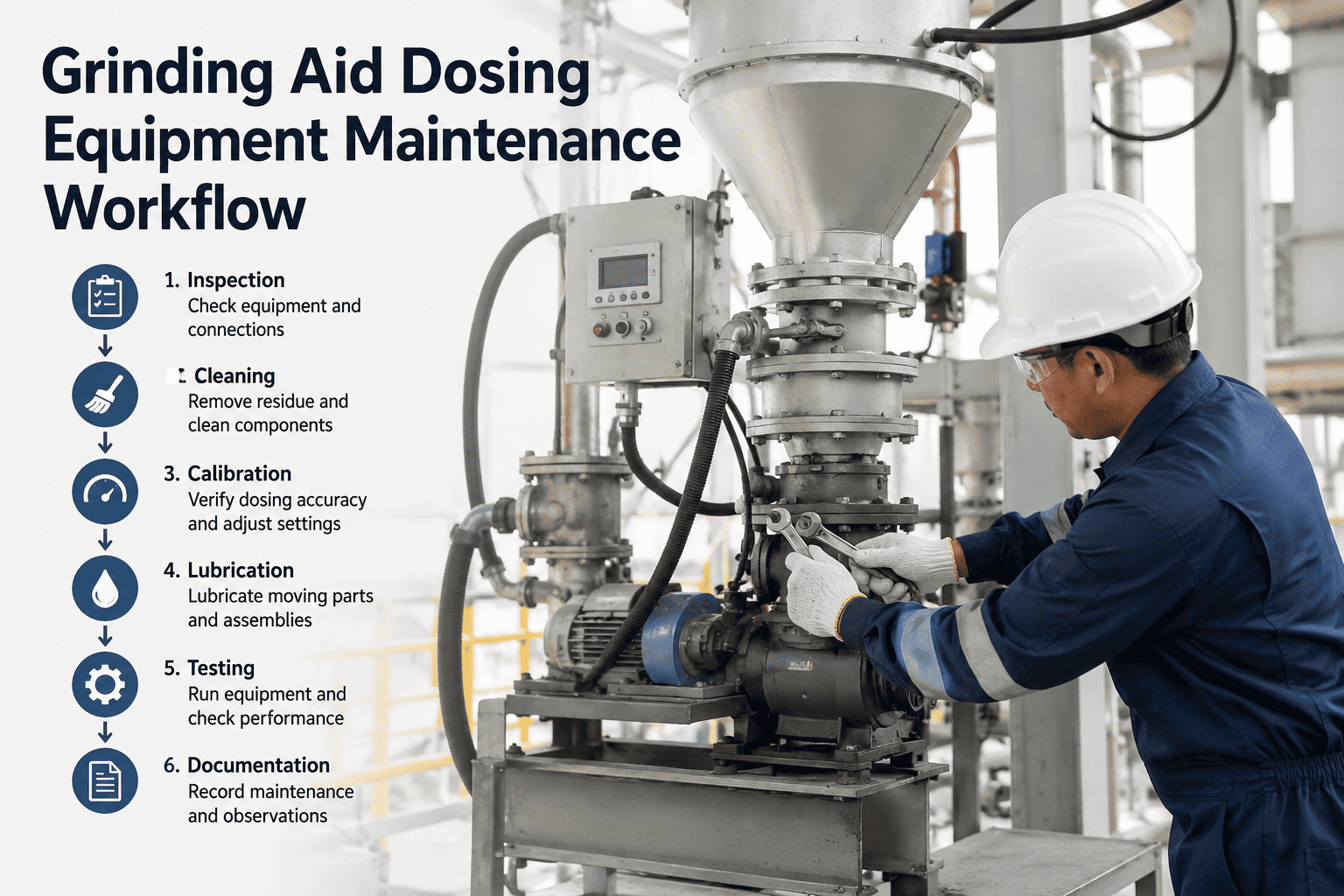
Grinding aid dosing pumps run continuously at low flow, 24 hours a day, for years without a planned replacement — and when they drift out of calibration, nobody sees it on a gauge. Industry data shows grinding aids can lift cement mill throughput by up to 25%, but only within a narrow dosing band, often 100 to 300 grams per tonne depending on the additive and target fineness. A pump running 15% under-dosed silently erases that production gain; one running over-dosed burns through a $150,000-a-year chemical budget for no strength benefit. Oxmaint's work order management module turns dosing pump upkeep from a forgotten utility task into a scheduled, verified workflow.
The Dosing Pump Nobody Watches Is Quietly Costing You Mill Capacity
Grinding aid dosing equipment sits at the very start of the finish mill circuit, running non-stop at gram-per-tonne precision. When it drifts, the mill compensates with more kWh, not more output — and the loss never shows up as a breakdown.
Why Dosing Pumps Fail Silently
A metering pump running 24/7 at low flow doesn't announce a problem the way a bearing or a motor does. Diaphragm wear, check-valve fouling from concentrated additive residue, and suction-line air-lock all produce the same symptom — a slow, gradual dosing drift that operators cannot detect by walking past the skid. Stockout prevention on critical spares matters here too, since a failed diaphragm without a spare on hand means the pump runs unmetered until parts arrive.
Diaphragm micro-tears
Concentrated grinding aid attacks diaphragm material over months. Flow rate drops in small increments no operator notices shift to shift.
Check valve fouling
Additive residue crystallizes in the check valve seat, reducing effective stroke volume even though the pump motor still runs at full speed.
Suction line air-lock
A low tote level or a loose suction fitting introduces air into the line, causing the pump to cycle without delivering a full metered dose.
Undetected until quality drifts
The first visible sign is often a Blaine fineness or mill throughput deviation days later — by which point the mis-dosed period cannot be recovered.
The Work Order Workflow That Closes the Gap
A dosing pump does not need constant attention — it needs the right checks at the right interval, captured on mobile, and tied automatically to the mill's production data. This is the workflow Oxmaint runs underneath every grinding aid dosing skid.
Daily Verification Work Order
Auto-generated every shift: technician checks tote level, records actual dosing rate against the target g/t setpoint, and logs any visible leak or crystallization at the pump head — all from a mobile device at the skid.
Weekly Calibration Check
A measured drawdown test confirms actual delivered volume against pump stroke setting. Deviations beyond the tolerance band trigger an automatic work order before the drift affects a full production run.
Diaphragm & Check Valve PM
Scheduled replacement intervals based on running hours rather than guesswork, with the correct diaphragm and valve kit part number and quantity pulled directly into the work order.
Dosing-to-Quality Correlation
Actual g/t dosing logs are timestamped alongside mill Blaine and throughput data, so a fineness deviation can be traced back to a dosing event in minutes instead of a multi-day investigation.
A Dosing Pump Running 15% Off Target Costs More Than the Chemical Bill
Oxmaint schedules verification, calibration, and PM work orders for every dosing skid in the plant, and links dosing data directly to mill throughput and fineness — so drift gets caught in hours, not weeks.
Correct Dosing vs Drifted Dosing — What Changes on the Mill
The comparison below reflects the operational difference reported across cement mill grinding aid trials when dosing sits within its calibrated band versus when it has quietly drifted 15–20% off target.
Dosing Pump Checklist — Weekly PM Card
This is the exact checklist structure Oxmaint pushes to a technician's mobile device for a grinding aid dosing pump weekly PM round. Every item is timestamped and signed at completion.
Frequently Asked Questions
How often should a grinding aid dosing pump be calibrated?
Most cement plants run a weekly drawdown calibration on grinding aid metering pumps, since diaphragm wear and check valve fouling develop gradually rather than as a sudden failure. A weekly check catches drift within a tolerance band before it compounds into a measurable throughput or fineness deviation. Higher-throughput mills or plants using more aggressive polyglycol-based additives sometimes move to twice-weekly checks. Start free in Oxmaint to schedule automated calibration work orders.
Can dosing pump maintenance be tied to mill quality data automatically?
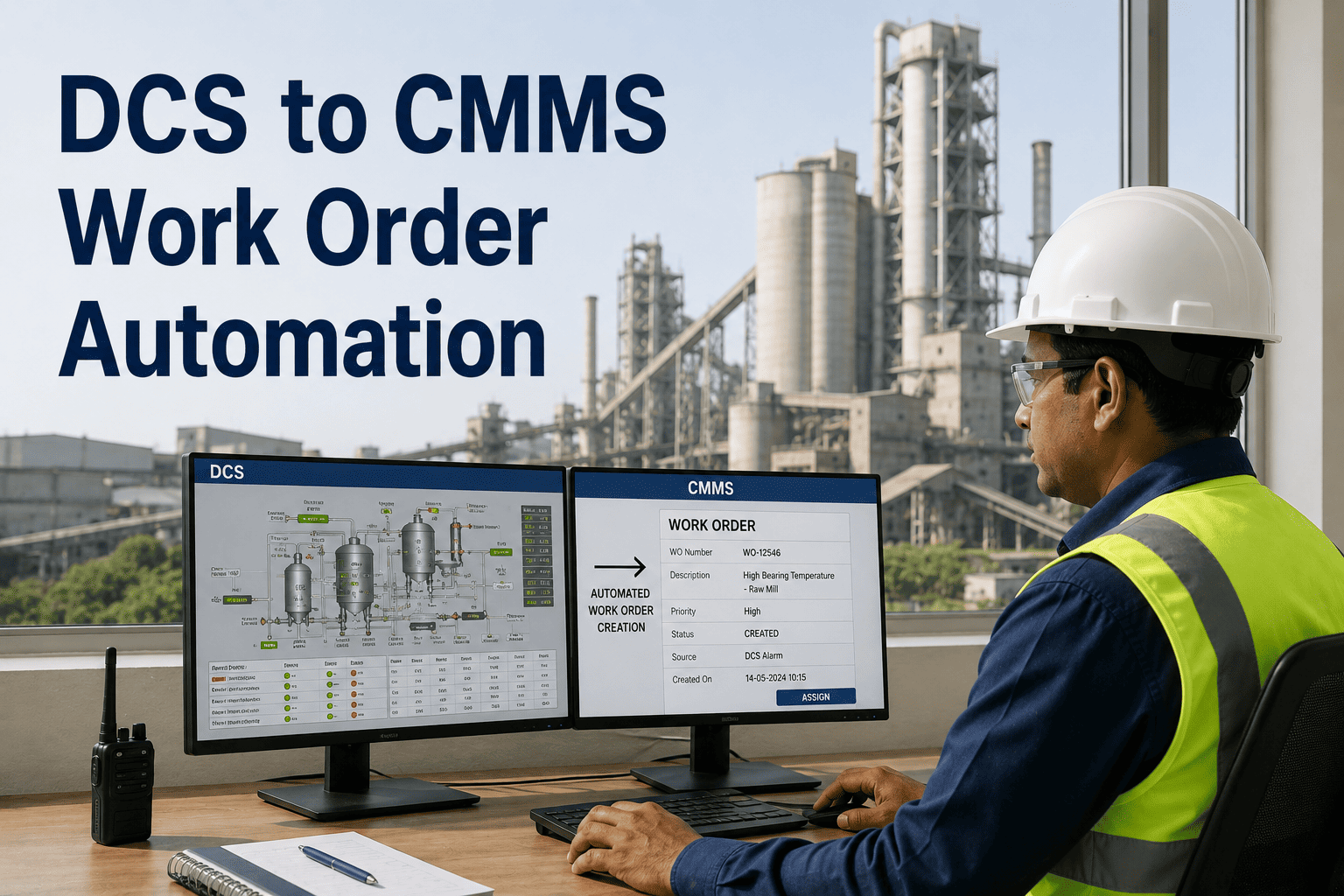
Yes. Oxmaint timestamps every dosing verification, calibration check, and PM event against the same asset record used for mill throughput and fineness logging. This means a quality team investigating a Blaine deviation can see, in the same view, whether a dosing pump event occurred in the relevant window — cutting root-cause investigation from days to minutes. Book a demo to see the dosing-to-quality correlation view.
What is the typical cost of a dosing pump diaphragm and check valve kit?
Diaphragm and check valve kits for industrial metering pumps used in grinding aid service typically run in the low hundreds of dollars per kit, with replacement taking under an hour when scheduled. The cost of the part is trivial compared to weeks of undetected under-dosing across a mill running continuously — which is why proactive scheduling matters more than reactive replacement.
How much grinding aid should a cement mill actually use?
Typical dosing ranges run from roughly 100 to 300 grams per tonne of pure active additive, with the correct point depending on target Blaine fineness, clinker hardness, and the specific chemistry supplied. Suppliers generally provide a recommended range after plant trials, and the dosing pump's job is holding that setpoint consistently — drift in either direction erodes either grinding efficiency or chemical budget. CMMS-driven inventory management also helps track additive consumption against production for budget accuracy.
Does grinding aid dosing maintenance affect energy consumption, not just chemical cost?
Yes, directly. Correctly dosed grinding aid reduces electrostatic agglomeration and media coating inside the mill, which improves grinding efficiency and has been documented to cut specific energy consumption by 5 to 10 percent in published trials. A drifted or failed dosing pump silently forfeits that energy saving even while the mill continues running normally, making it an energy issue as much as a chemical cost issue. Start free in Oxmaint to track dosing against your mill's kWh/tonne baseline.
Put Every Dosing Pump on a Verified Maintenance Schedule
Daily checks, weekly calibration, and PM intervals — generated automatically and linked to mill production data, so grinding aid spend always converts into grinding aid performance.