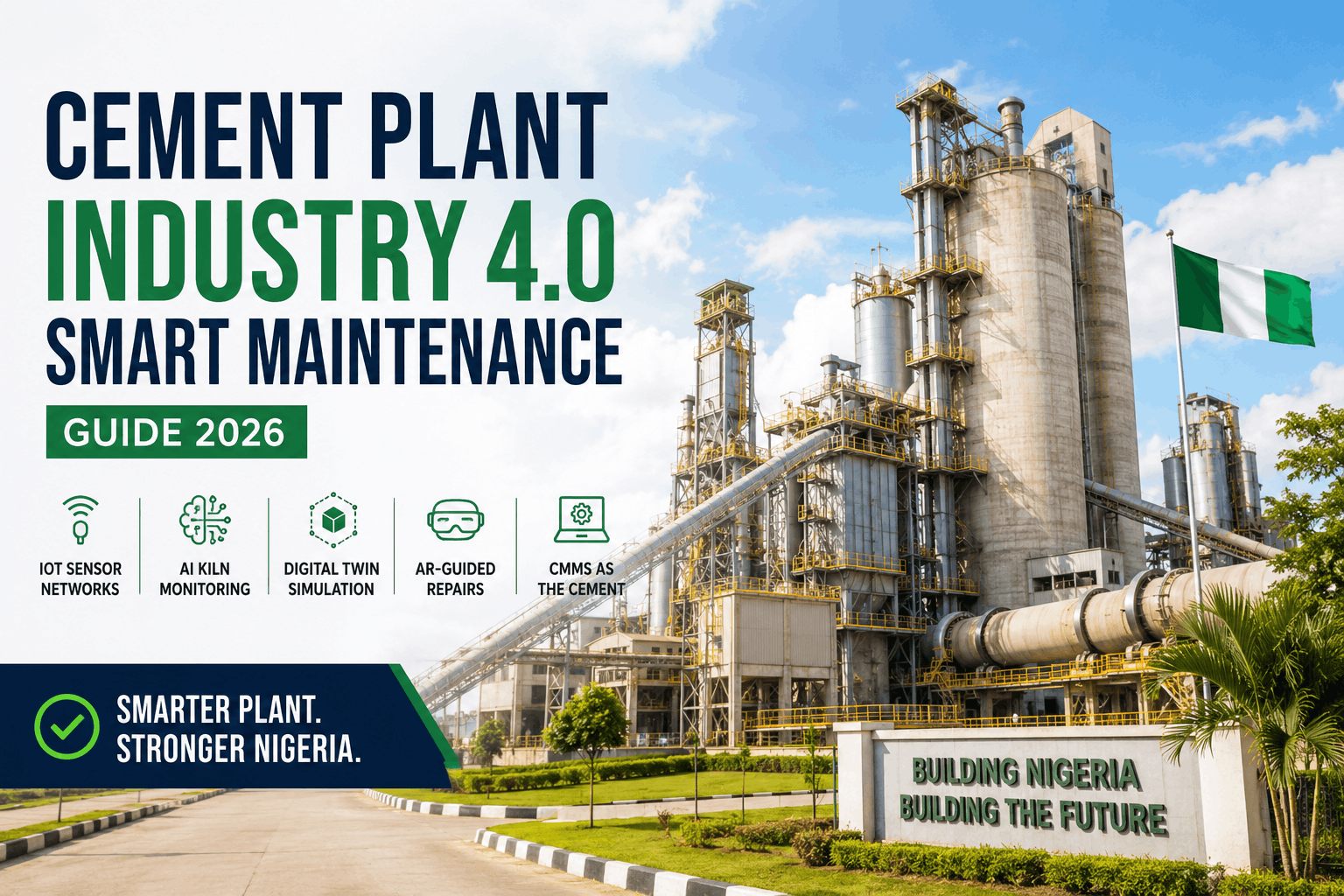
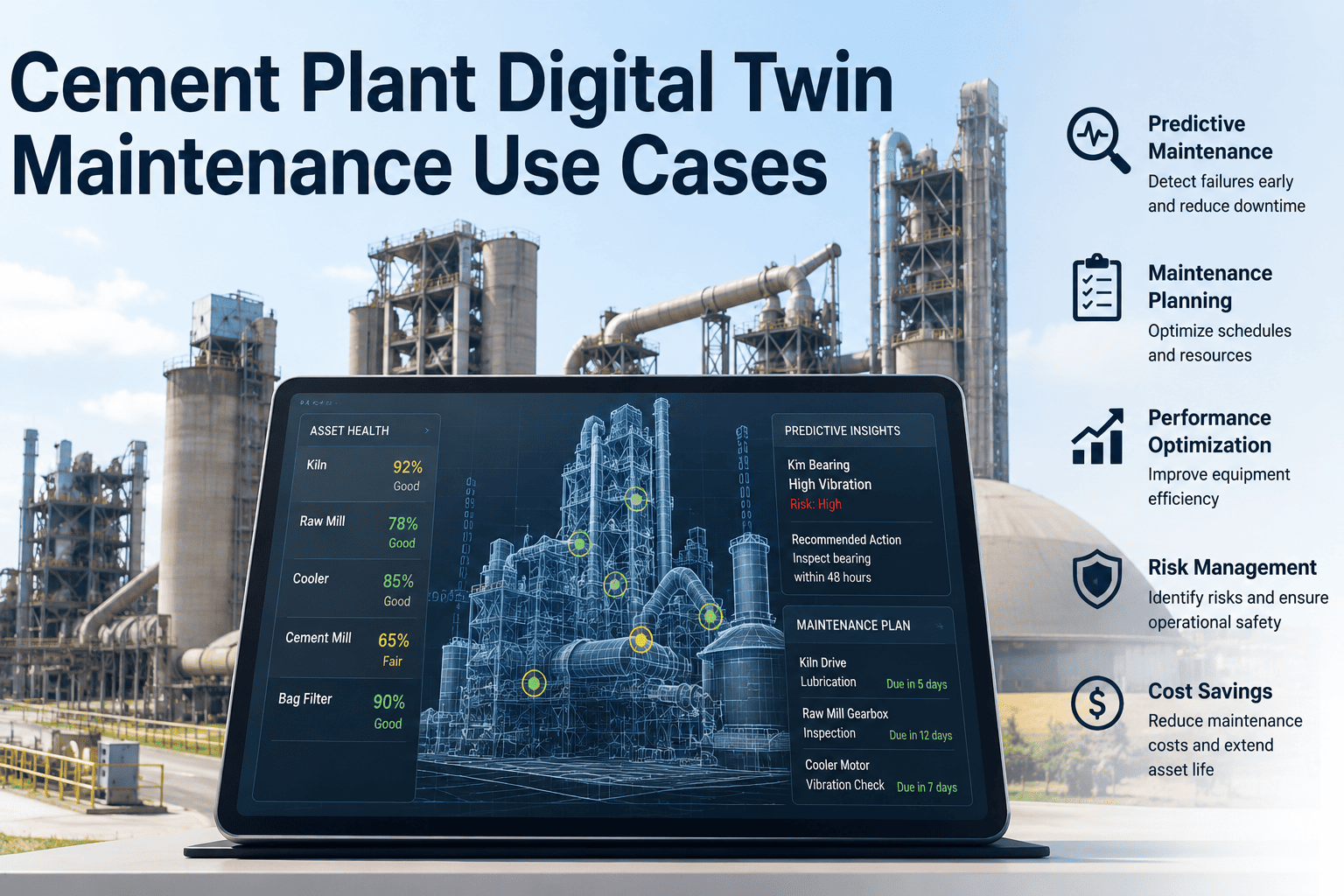
The cement industry stands at a transformation point. While the basic chemistry of cement production hasn't changed in over a century, the way plants operate is undergoing radical evolution. Industry 4.0 technologies—IoT sensors, AI analytics, digital twins, and connected systems—are turning traditional cement plants into intelligent manufacturing operations that optimize themselves in real-time.
Early adopters report 10-20% improvements in energy efficiency, 30-50% reductions in unplanned downtime, and significant gains in product consistency. Digital manufacturing platforms make these capabilities accessible to cement producers of all sizes.
Sensors & systems sharing data in real-time
AI analyzing patterns and predicting outcomes
Systems acting on insights without human delay
People and machines working together seamlessly
The Digital Cement Plant Architecture
Industry 4.0 in cement isn't a single technology—it's an integrated ecosystem where physical equipment connects to digital systems that analyze, predict, and optimize.
Sensors & Devices
Thousands of data points captured every second from equipment across the plant
Data Infrastructure
Collecting, storing, and organizing data for analysis and action
Intelligence Engine
Turning raw data into actionable insights and recommendations
User Interfaces
Delivering insights to the right people at the right time for decision-making
Key Industry 4.0 Technologies for Cement
Industrial IoT
Networks of sensors monitoring every aspect of production—temperatures, pressures, flows, vibrations, power consumption. Wireless sensors enable monitoring of previously inaccessible points.
Digital Twin
Virtual replica of physical plant that mirrors real-time conditions. Test scenarios, optimize settings, and train operators without touching actual equipment.
AI & Machine Learning
Algorithms that learn from historical data to predict quality, optimize energy, detect anomalies, and recommend actions. Continuously improving as more data flows in.
Advanced Process Control
Model predictive control that optimizes multiple variables simultaneously. Maintains quality while minimizing energy, handling disturbances automatically.
Predictive Maintenance
Vibration analysis, thermal imaging, and oil analysis combined with ML to predict equipment failures before they happen. Move from reactive to condition-based maintenance.
Mobile & AR
Field operators access data, work orders, and procedures on mobile devices. AR overlays equipment data and guided instructions onto physical equipment.
Industry 4.0 Use Cases Across the Cement Value Chain
Quarry
Raw Mill
Kiln
Cement Mill
Logistics
Start Your Industry 4.0 Journey
Oxmaint provides the digital foundation for cement plant transformation—from sensor integration to AI analytics.
Implementation Roadmap
Digital transformation doesn't happen overnight. Successful implementations follow a phased approach that builds capability while delivering value at each stage. Talk to our experts about planning your roadmap.
Connect & Collect
3-6 months- Audit existing sensors and controls
- Install additional IoT sensors
- Establish data infrastructure
- Create unified data historian
Visualize & Analyze
3-6 months- Deploy dashboards and reports
- Train staff on data analysis
- Identify optimization opportunities
- Establish KPI tracking
Predict & Optimize
6-12 months- Deploy AI/ML models
- Implement predictive maintenance
- Advanced process optimization
- Digital twin development
Automate & Scale
Ongoing- Closed-loop autonomous control
- Scale to all production lines
- Integrate supply chain
- Continuous improvement
Overcoming Implementation Challenges
Legacy Equipment Integration
Older equipment lacks digital connectivity. Solutions include retrofit sensors, protocol converters, and edge devices that extract data from legacy PLCs.
Cybersecurity Concerns
Connected plants face new security risks. Implement defense-in-depth: network segmentation, encryption, access controls, monitoring, and regular audits.
Skills Gap
Plant staff may lack digital skills. Invest in training, hire data specialists, partner with technology providers who offer ongoing support.
ROI Uncertainty
Hard to predict returns upfront. Start with pilot projects that have clear, measurable outcomes. Use success to build case for expansion.
Measuring Industry 4.0 Success
Operational KPIs
Digital KPIs
Industry 4.0 Results from Leading Cement Plants
Transform Your Cement Operations
Oxmaint delivers the Industry 4.0 platform purpose-built for cement manufacturing—connecting equipment, enabling AI analytics, and driving continuous improvement.