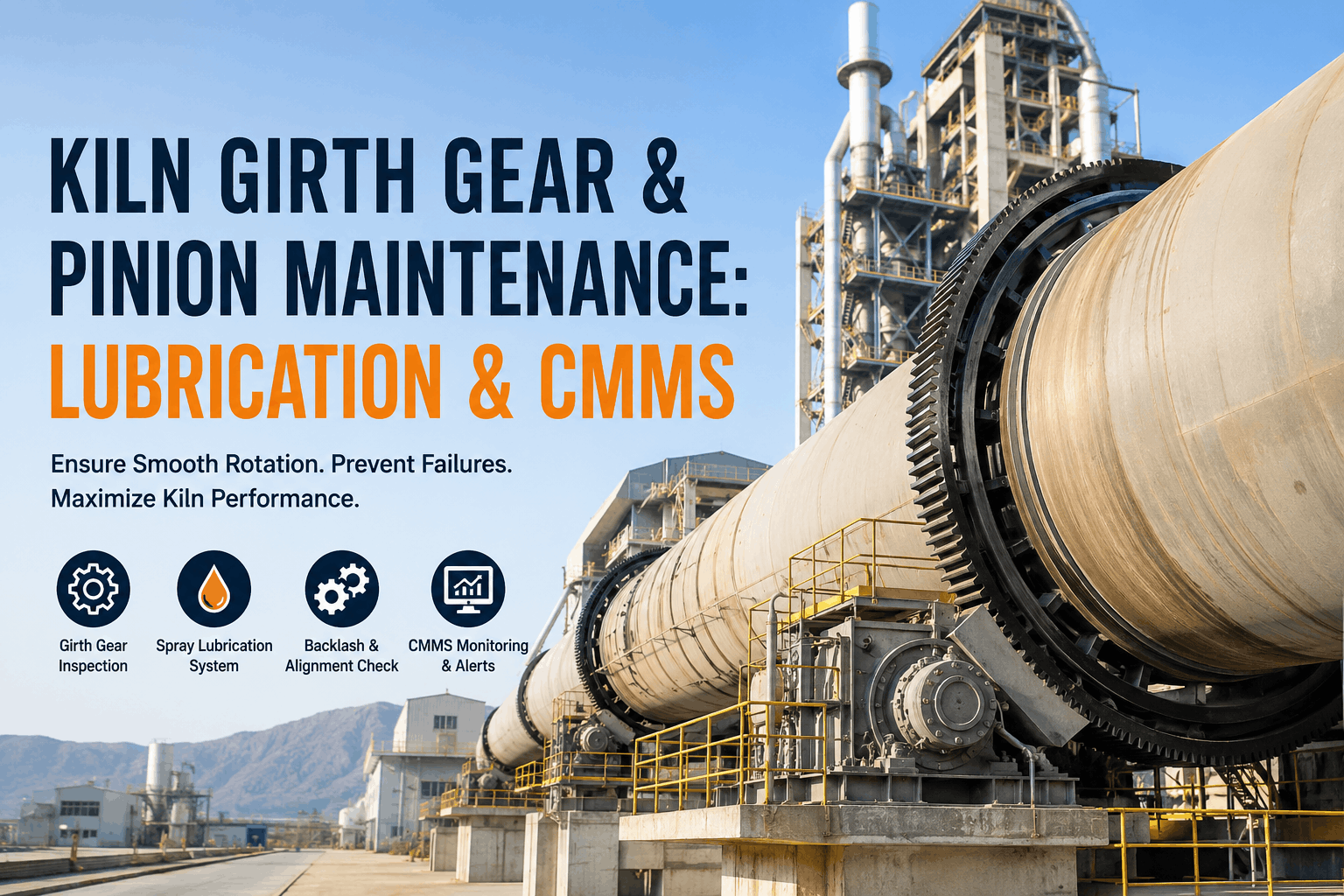
The girth gear is the largest and most expensive power transmission component on a rotary kiln — a single forged steel ring that transfers drive torque to the shell across millions of revolutions per year. When a girth gear fails, it rarely gives much warning: backlash increases, tooth surfaces pit, and one torque spike under a loaded start can propagate a crack across multiple teeth. This guide covers the maintenance discipline that separates girth gear campaigns of 15–20 years from premature replacements at 6–8 years — and how OxMaint's preventive maintenance platform keeps alignment checks, backlash records, and lubrication schedules consistently executed.
Blog · Kiln Drive Reliability · Girth Gear & Inching Drive
Kiln Girth Gear Maintenance & Inching Drive Reliability
Alignment checks, backlash measurement, spray lubrication, inching drive PM, and CMMS-tracked records — the complete drive maintenance playbook to prevent kiln main drive failures.
What This Guide Covers
01 · Why Girth Gears Fail
02 · Alignment Procedures
03 · Backlash Measurement
04 · Spray Lubrication
05 · Inching Drive PM
06 · CMMS Records
07 · Inspection Checklist
08 · FAQs
Why Girth Gears Fail — Root Causes
Girth gear failure is rarely a surprise to anyone who reads the maintenance records — but most plants don't have the records to read. The failure modes below account for over 90% of premature girth gear replacements in cement kilns.
Tooth surface pitting
Inadequate or contaminated lubrication
Audible noise, lubricant debris
$300K–$700K
Backlash overrun
Shell flex from axis misalignment
Increasing backlash readings, noise on start
$200K–$500K
Tooth breakage
Torque spikes, pinion misalignment
Impact noise, vibration spike
$250K–$600K
Gear segment loosening
Fastener fatigue, shell flex
Bolt torque drop, radial movement
$80K–$200K
Inching drive failure
Deferred PM, clutch wear
Slow engagement, slip
$50K–$150K
Girth Gear Alignment — The Critical Procedure
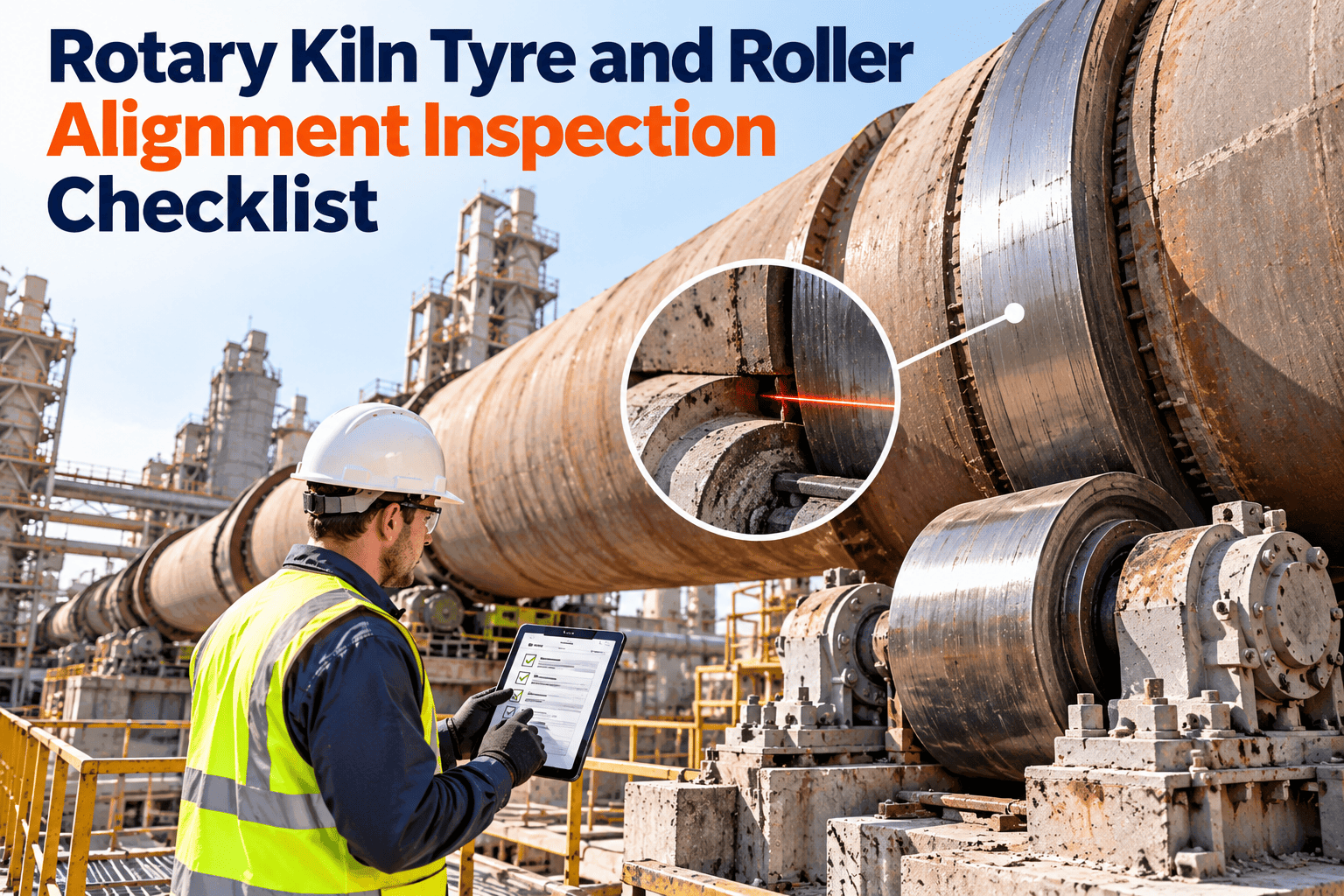
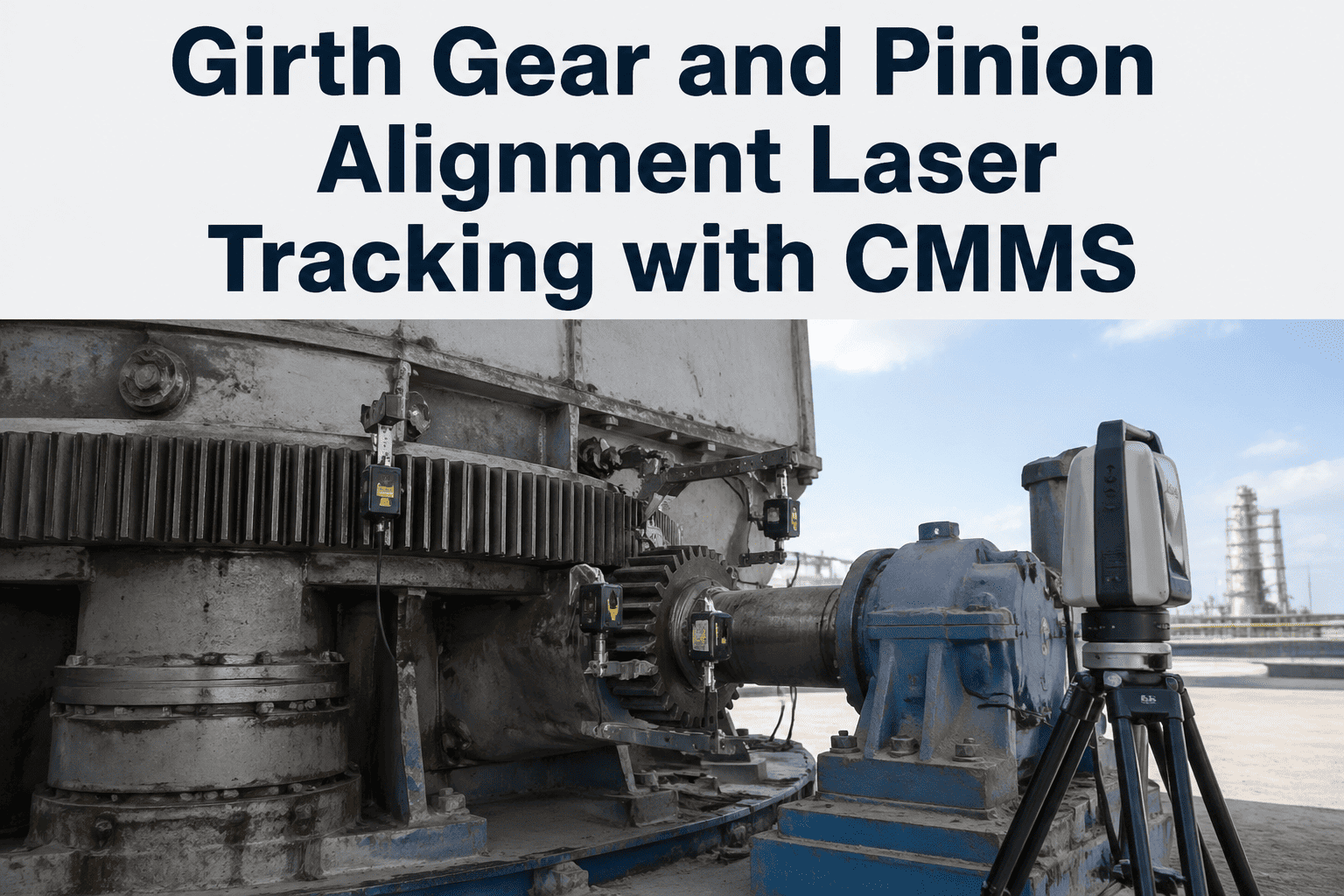
Pinion-to-girth gear alignment determines load distribution across the full tooth face width. Misalignment by even 0.1 mm per meter of face width concentrates load on one tooth edge, reducing fatigue life by up to 60% and accelerating lubricant film breakdown.
Step 1
Radial Run-Out Check
Mount dial indicator on a fixed reference and rotate kiln via inching drive through full revolution. Total radial run-out should be within 0.5–1.0 mm depending on gear diameter. Readings above this indicate shell deformation or mounting distortion requiring investigation before alignment proceeds.
Step 2
Axial Run-Out Verification
Axial run-out measured at the gear face should be within 0.5 mm per meter of pitch diameter. Excessive axial run-out causes cyclic tooth-load variation with every revolution — the primary driver of fatigue cracking in cement kiln girth gears over 4 meters diameter.
Step 3
Pinion Contact Pattern
Apply marking compound to pinion teeth and engage the gear drive briefly. The resulting contact pattern should be centered on at least 70% of tooth face width and height. Edge-loaded patterns require pinion position adjustment before returning to full production.
Step 4
Document and Baseline
Record all readings in the CMMS asset record with photographs of the contact pattern, instrument used, temperature at time of measurement, and technician name. This baseline becomes the reference for every future check — trending run-out over years reveals shell distortion before it becomes critical.
Auto-Schedule Every Alignment Check — Never Miss a Critical Record
OxMaint generates alignment work orders on your defined cycle, captures before/after readings with photo attachments, and maintains a timestamped record that tracks run-out trends across years — not just individual events.
Backlash Measurement — Thresholds and Trending
Backlash is the gap between mating tooth flanks when the gear is loaded. It increases progressively as tooth surfaces wear, and is the most direct indicator of remaining girth gear life. Unlike vibration or noise — which can be ambiguous — backlash gives an unambiguous wear measurement when taken consistently.
New Installation
0.5–1.5 mm
As-commissioned backlash per OEM specification. Document as baseline in CMMS on day one.
→
Alert Threshold
3× baseline
Increase measurement frequency. Review lubrication, alignment, and shell flex data. Plan inspection window.
→
Action Threshold
5× baseline
Schedule gear replacement or full refurbishment. Operate at reduced speed if possible. Log WO immediately.
Measurement Method
ToolLead wire or dial gauge on locked gear
PositionsMinimum 4 positions around circumference
FrequencyEvery 3 months or after any shock load event
ConditionKiln at normal operating temperature
CMMS recordAll 4 positions logged, trend chart auto-updated
Spray Lubrication System — Maintenance and Parameters
Girth gear lubrication is fundamentally different from bearing lubrication — it operates as an open gear system exposed to scale, dust, and high temperatures. The spray lubrication system must deliver the right quantity of the right lubricant at the right position on the gear tooth, consistently across the full operating cycle.
Spray System Parameters
Spray frequencyEvery 10–20 min typical
Spray durationPer OEM (usually 2–5 sec)
Application pointTooth root, approach side
Lubricant typeOpen gear compound, EP grade
Temperature rangeVerify viscosity at gear temp
Inspection Points
Nozzle conditionWeekly visual + flow check
Coverage patternMonthly — blue paper test
Lubricant levelDaily — auto-level sensor
Pump pressureDaily — pressure gauge log
Filter changePer OEM schedule in CMMS
Common Failure Signs
Dry patches on teethNozzle blockage or misalignment
Lubricant poolingOver-application, timer fault
White depositsLubricant incompatibility
Excessive throw-offViscosity too low at temp
Gear noise increaseLube failure — check immediately
Inching Drive PM — Why It Can't Be Deferred
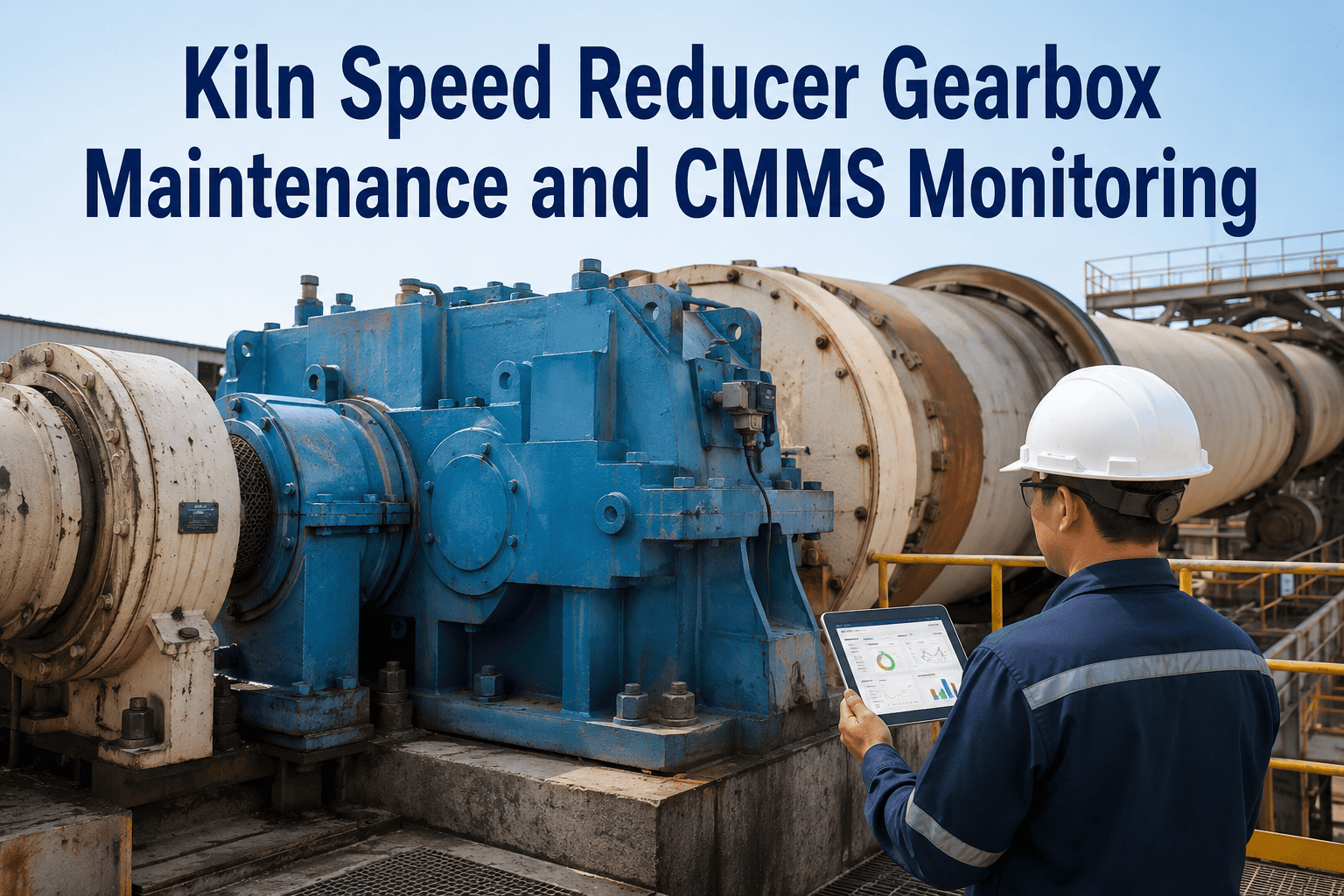
The inching drive is used during start-up, alignment checks, refractory inspection, and emergency slow-rotation to prevent shell distortion during a hot stop. It is used infrequently — which is exactly why it is routinely skipped in PM programs. When it fails during a critical hot stop, the consequences are severe.
Inching Drive PM Schedule
MonthlyFunctional test — engage under no-load conditions and verify rotation
QuarterlyClutch engagement inspection, coupling condition check
6 MonthsGearbox oil sample, brake lining measurement, motor current check
AnnuallyFull clutch overhaul, coupling replacement per OEM, alignment verification
Consequences of Inching Drive Failure
Shell distortion (banana effect) during uncontrolled hot stop — requires full refractory replacement
Inability to perform alignment checks during planned shutdowns, extending downtime by 12–24 hours
Cold start torque overload on main drive if kiln position is not optimal before engagement
Total inching drive replacement cost: $50,000–$150,000 plus production loss
Girth Gear & Drive Inspection Checklist
Every item below should be recorded in your CMMS with technician name, reading value, and timestamp. OxMaint converts this into scheduled mobile work orders — no paper, no missed tasks.
Daily
Spray lube system — level and pressure
Gear drive noise — audio baseline
Pinion bearing temperature (IR)
Gear guard condition check
Weekly / Monthly
Spray nozzle visual + flow test
Inching drive function test
Gear segment fastener torque spot-check
Lubricant coverage pattern check
Quarterly / Annual
Backlash measurement — 4 positions
Radial and axial run-out survey
Pinion contact pattern verification
Inching drive full inspection
Frequently Asked Questions
How often should girth gear backlash be measured on a cement kiln?
Backlash should be measured at a minimum every 3 months, at 4 circumferential positions, with results logged in the CMMS against the as-commissioned baseline. Additionally, backlash should be checked immediately after any shock load event, unusual drive noise, or significant change in kiln axis alignment. Trending in
OxMaint shows wear velocity and projects when the action threshold will be reached.
What is the typical service life of a rotary kiln girth gear?
With consistent spray lubrication, correct alignment, and regular backlash monitoring, girth gear service life of 15–20 years is achievable. Plants with deferred lubrication PM or persistent misalignment typically see failure at 6–10 years. The difference is almost entirely attributable to maintenance discipline, not gear quality. CMMS-tracked records prove compliance and support insurance and warranty claims.
How do I know if my kiln's spray lubrication system is applying the right coverage?
The blue paper test is the standard field method: hold a sheet of blue paper against the gear teeth immediately after a spray cycle and check that the lubricant pattern covers the tooth face uniformly from root to pitch line. Edge concentration or gaps indicate nozzle misalignment or blockage. Document with a photograph in the
OxMaint work order record.
Why is inching drive maintenance neglected and what is the real risk?
Inching drives are used only a few hours per month, so deferred PM rarely shows an immediate consequence — until a hot stop makes slow rotation critical. Shell distortion during an uncontrolled hot stop requires full refractory replacement and typically costs more than the entire kiln's annual PM budget. Monthly functional tests in the CMMS take under 20 minutes and eliminate this risk entirely.
Can CMMS records support a girth gear warranty or insurance claim?
Yes. Gear manufacturers and insurers increasingly require documented evidence of compliant PM before honouring warranty or covering failure costs.
OxMaint provides timestamped, technician-signed records for every alignment check, lubrication task, and backlash reading — an audit trail that paper-based systems cannot replicate and that directly supports claims worth hundreds of thousands of dollars.
Protect Your Girth Gear Investment with a CMMS-Driven PM Program
OxMaint auto-schedules every alignment check, backlash measurement, spray lube inspection, and inching drive test — with mobile work orders, photo capture, and a full audit trail. Most kiln teams are live in under a week. Start free or book a 30-minute demo tailored to your kiln drive configuration.