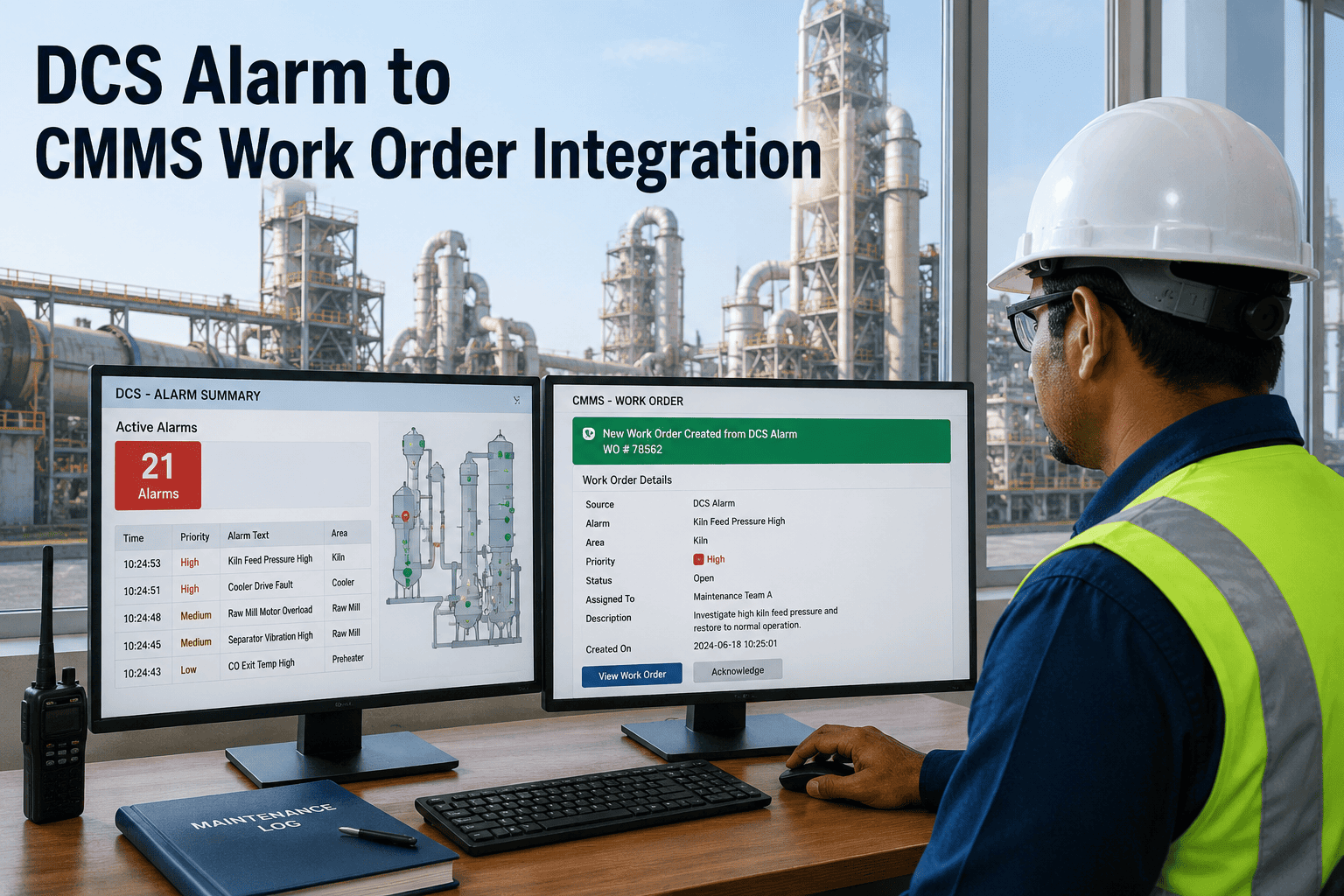
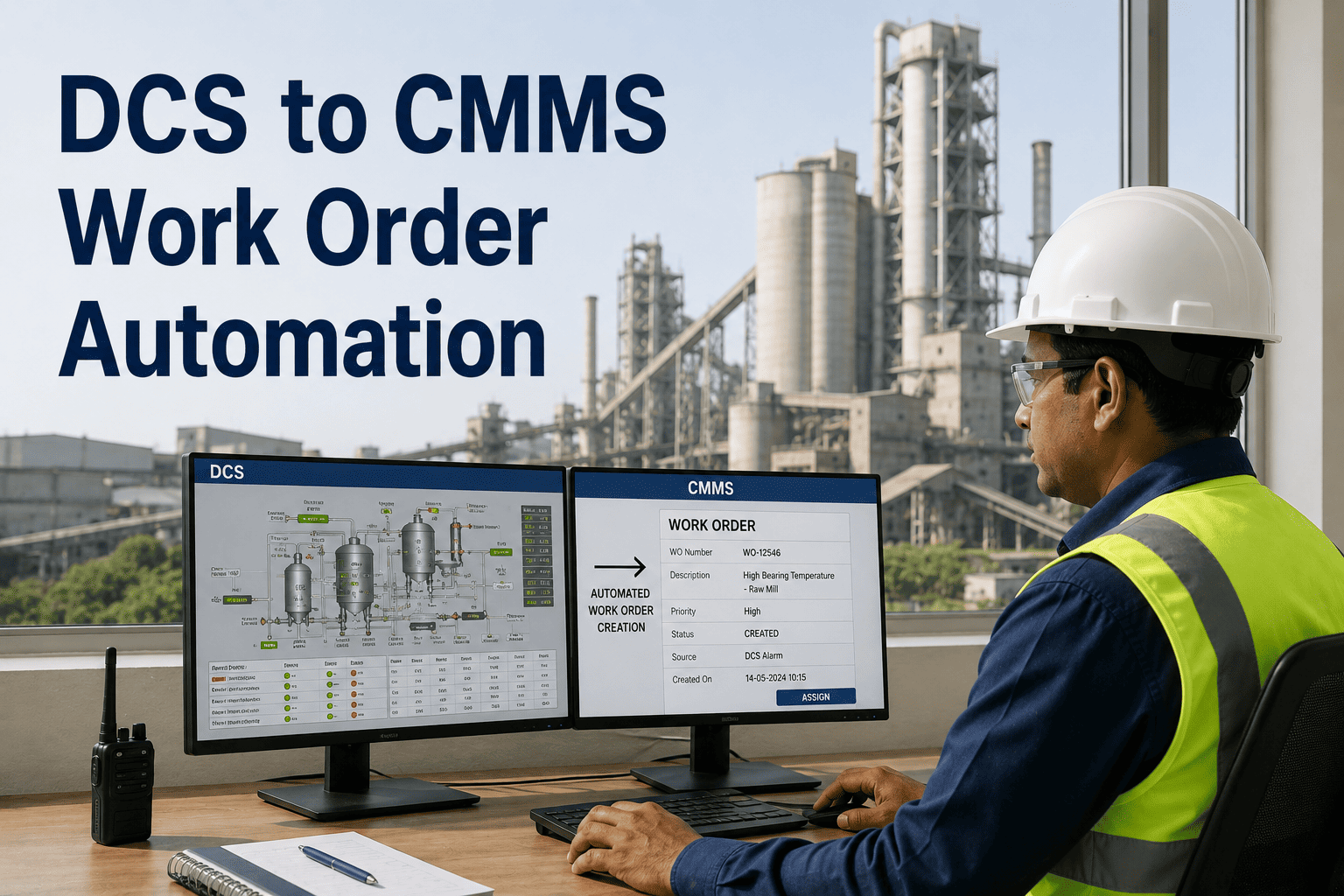
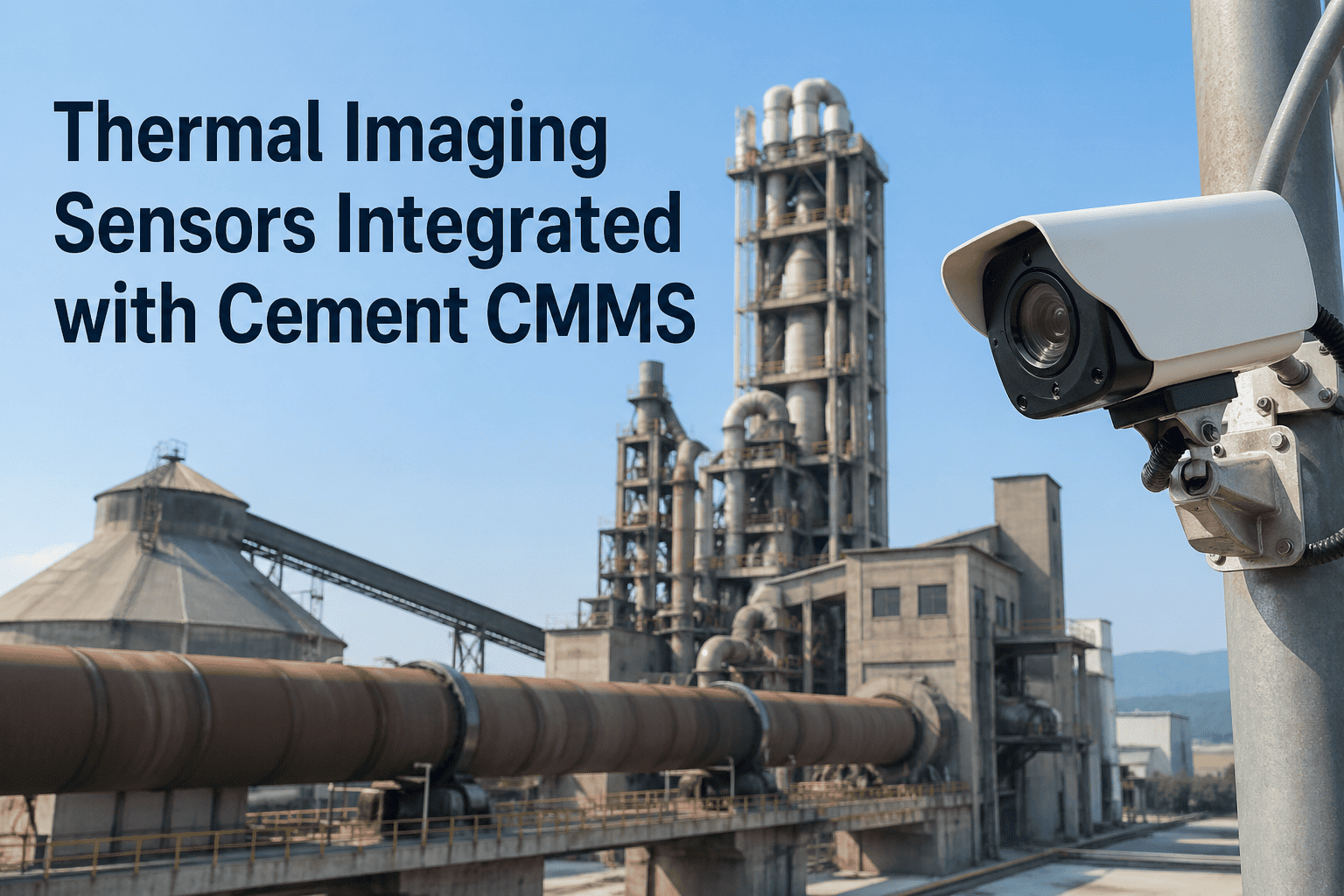
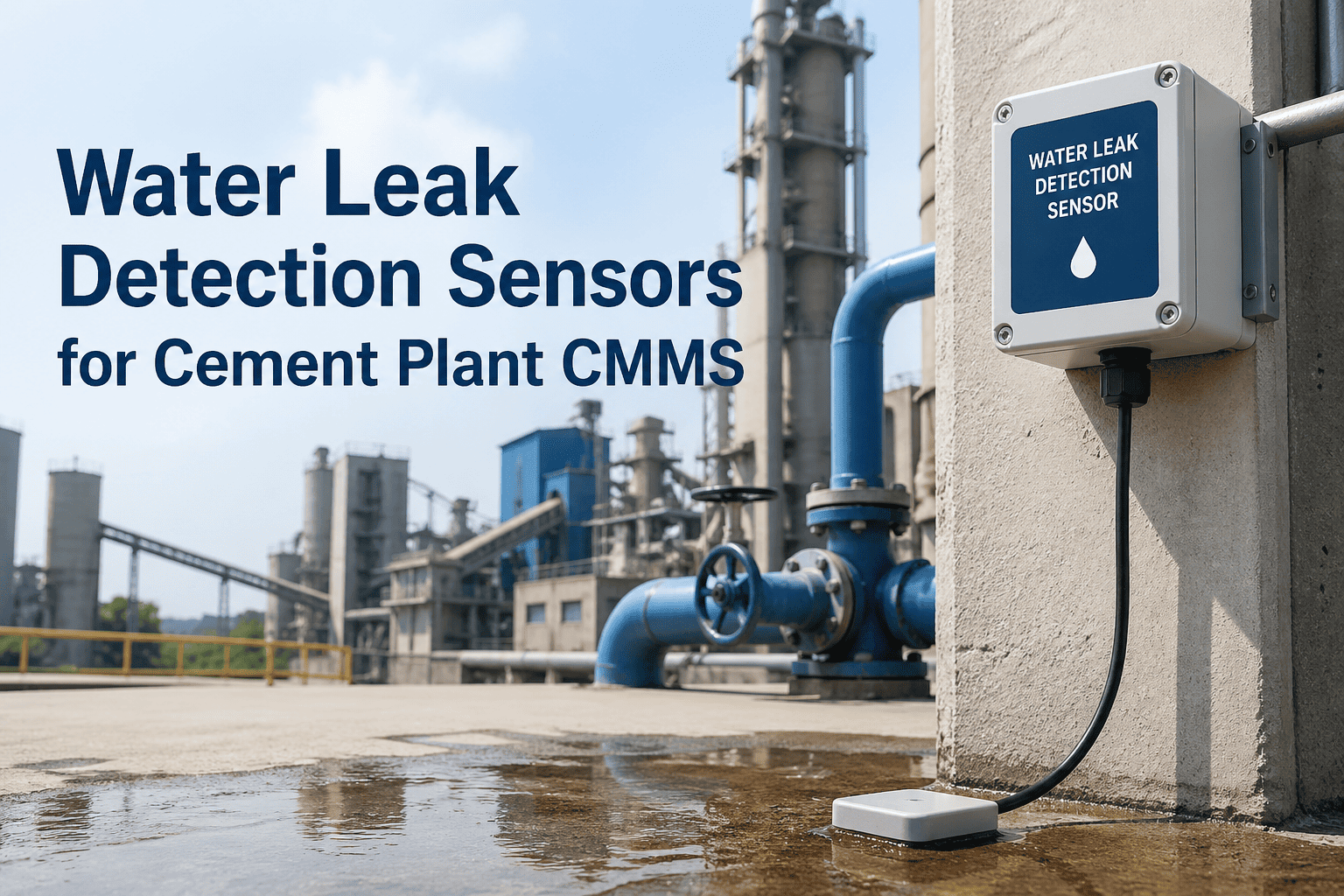
PLC outputs and sensor readings from your cement plant contain a continuous stream of equipment condition data — motor current draw, bearing temperature, conveyor belt speed, pump pressure. But most maintenance teams only see this data after something breaks, when production stops and the fault code is already on the screen. OxMaint connects PLC and sensor data to active maintenance workflows: PM frequency adjustments, inspection triggers, and corrective work orders raised from live readings before the threshold is breached. Learn more at Oxmaint or book a 30-minute demo to see sensor-driven maintenance in action for cement.
IoT Sensor Integration · PLC Data · Cement Plant Automation
PLC Sensor Data Maintenance Workflows for Cement Plants
Your sensors already know what your equipment needs. OxMaint turns that raw signal into a structured maintenance action — inspection, PM change, or corrective job — before the fault arrives.
Live Sensor to Work Order
Kiln Drive Current
142A
Normal
VRM Gearbox Temp
88°C
Inspection WO Raised
Bag Filter Diff. Press.
1.8 kPa
Corrective WO Created
Clinker Conveyor Speed
1.2 m/s
Normal
Why Sensor-Driven Maintenance
From Reactive to Condition-Based: What Shifts
Without Sensor Integration
PM runs on fixed calendar intervals regardless of actual load cycles
Condition changes between inspections go undetected
First indication of a problem is often a breakdown or quality excursion
Spare parts ordered reactively — often at premium cost
With OxMaint Sensor Workflows
PM frequency adjusts when operating hours or load readings exceed thresholds
Abnormal readings trigger inspection work orders before failure point
Condition trends visible over 30/60/90 days per asset
Parts staged based on predicted need — not emergency orders
Workflow Types
Three Maintenance Workflows PLC Data Triggers in OxMaint
01
Inspection Trigger
When: Sensor reading enters amber zone (approaching limit)
OxMaint creates an unscheduled inspection work order for the relevant asset — assigned to the area technician with the inspection checklist attached.
Example: VRM gearbox oil temperature exceeds 85°C — inspection WO raised for oil level and cooler check.
02
PM Frequency Change
When: Running hours or load cycles exceed configured threshold before scheduled PM
OxMaint pulls the next PM forward automatically, adjusts the PM schedule, and notifies the planner of the change with the reason (accumulated hours/load).
Example: Kiln main drive accumulated 30% more hours than plan due to extended campaign — next lubrication PM pulled 8 days earlier.
03
Corrective Work Order
When: Sensor reading breaches critical threshold
OxMaint raises a high-priority corrective work order, escalates to the shift supervisor, and records the sensor reading at trigger time as evidence in the work order.
Example: Bag filter differential pressure exceeds 1.8 kPa — Priority 1 corrective WO created with last 24-hour trend attached.
Let Your Sensors Drive Your Maintenance
OxMaint connects PLC and sensor data to structured work order workflows — so your maintenance team responds to conditions, not clocks.
Integration Reference
Common Cement Plant PLC Tags and Workflow Mapping
| Equipment |
PLC Tag / Sensor |
Threshold (Example) |
OxMaint Workflow Triggered |
| Rotary Kiln |
Drive motor current |
Above 160A for 10 min |
Inspection WO — mechanical load check |
| Vertical Roller Mill |
Gearbox outlet temp |
Above 85°C |
Inspection WO — oil system check |
| Cement Mill |
Main bearing temp |
Above 70°C |
Priority 1 corrective WO |
| Bag Filter |
Differential pressure |
Above 1.8 kPa |
Corrective WO — bag compartment check |
| Kiln Drive |
Running hours counter |
PM interval hours met |
PM work order auto-generated |
| Clinker Conveyor |
Belt speed deviation |
More than 10% from setpoint |
Inspection WO — drive and tension check |
Technical Integration
How OxMaint Connects to PLC and Sensor Data
OPC-UA
Direct connection to Siemens, ABB, and Rockwell PLCs via OPC-UA. OxMaint subscribes to configured tag values and evaluates thresholds in real time without DCS changes.
REST API
Sensor platforms and IoT gateways push readings to OxMaint via REST API. Works with plant historians including OSIsoft PI and Wonderware.
MQTT
Edge devices and IoT sensors publish readings via MQTT broker. OxMaint subscribes to configured topics and maps readings to asset records and threshold rules.
CSV / Manual
For plants without live connectivity, technicians enter sensor readings during rounds in OxMaint mobile. The same threshold rules evaluate manual entries and trigger workflows.
Common Questions
PLC Sensor Workflows — What Teams Ask
Do we need a separate IoT platform to connect sensors to OxMaint?
Not necessarily. OxMaint connects directly via OPC-UA or REST API. If you already have a plant historian or IoT gateway, OxMaint integrates through it. If not, OxMaint can receive data from edge devices directly.
Book a technical call to map your current plant architecture to the right integration path.
Can we configure custom thresholds per asset rather than using a global setting?
Yes. Every threshold in OxMaint is configured at the asset level. The same PLC tag can have different trigger points for a new kiln drive versus an older one with known higher operating temperature. Asset-specific rules prevent false triggers and missed conditions.
How do sensor-driven workflows interact with scheduled PM?
OxMaint checks against the existing PM schedule before creating a sensor-triggered work order. If a PM is already due within 7 days, OxMaint adds the sensor finding to the upcoming PM rather than creating a separate job — reducing work order duplication.
See it in the free trial.
Can operators and supervisors see sensor trend data alongside work orders?
Yes. The OxMaint asset view shows recent sensor readings and trend graphs alongside the work order history for each asset. Supervisors can see whether the current work order was triggered by a reading and what the trend looked like over the past 30 days.
Turn Plant Data into Maintenance Action
OxMaint reads what your PLC and sensors already know — and converts it into scheduled inspections, adjusted PMs, and prioritized corrective work orders before the breakdown reaches production.