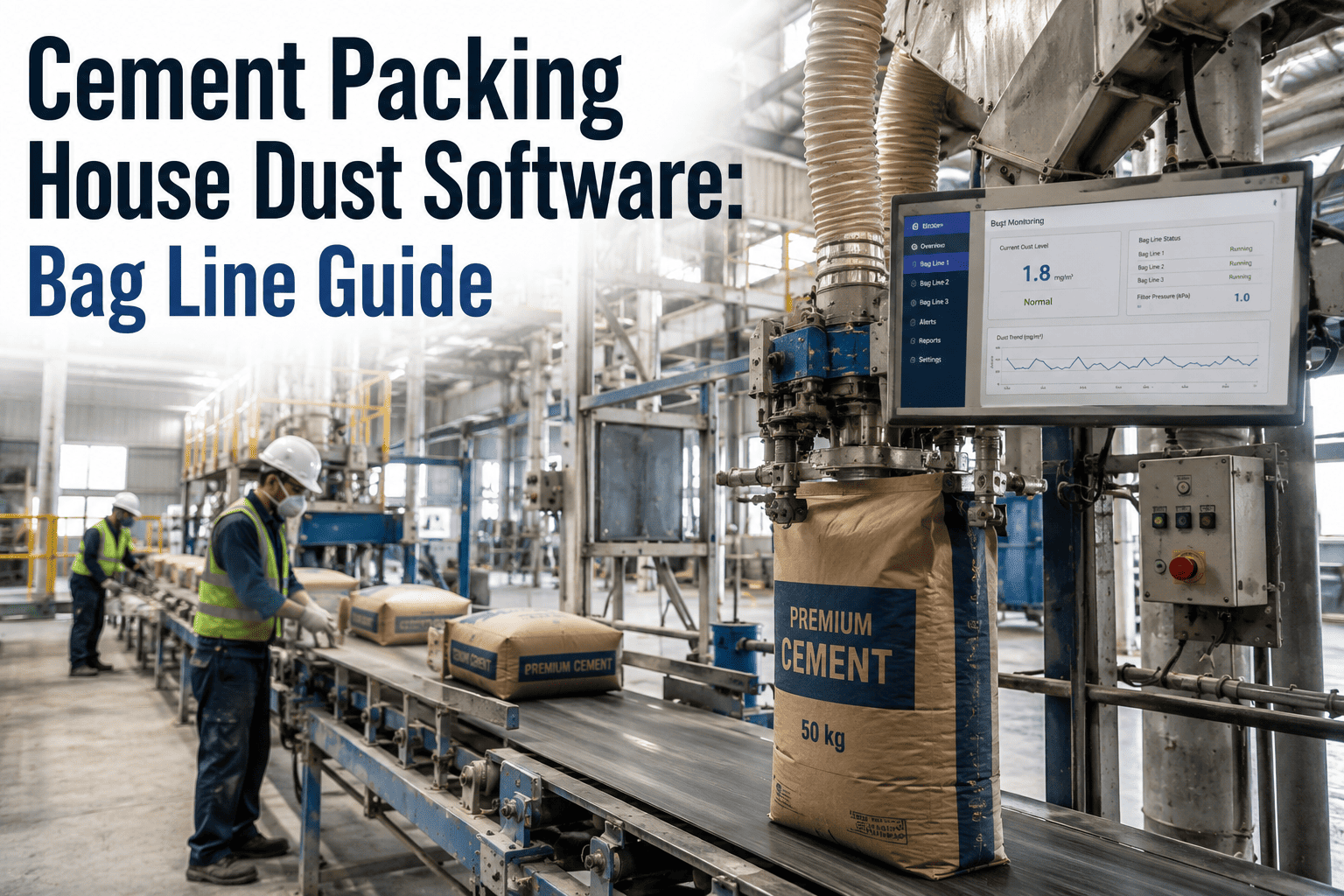
A cement plant in Brazil eliminated 94% of packaging department injuries and reduced worker turnover from 45% to 8% annually after deploying collaborative robots and automated palletizers across their bag filling and stacking operations. Their manual process required workers to lift 25-50kg cement bags 800+ times per shift—causing chronic back injuries, shoulder strain, and cumulative trauma disorders that accounted for 67% of all plant medical claims. Now robotic systems handle all repetitive heavy lifting while workers supervise operations from ergonomic control stations. Packaging throughput increased 35% with consistent pallet quality that reduced customer complaints by 60%. Sign up for Oxmaint to schedule packaging robot maintenance between production shifts.
Robotic Palletizing & Packaging for Cement Bags: Cobot Maintenance with CMMS 2026
Cement bag handling causes more musculoskeletal injuries than any other packaging operation. Collaborative robots and automated palletizers eliminate repetitive heavy lifting while CMMS tracks gripper wear, servo maintenance, and OEE metrics to maintain throughput and safety performance.
The Hidden Cost of Manual Cement Bag Handling
Packaging department injuries account for the highest workers' compensation costs in cement manufacturing. Repetitive lifting of 25-50kg bags creates cumulative trauma that ends careers and drives workforce turnover. Book a demo to see how Oxmaint tracks packaging line performance.
Packaging Automation Systems
Purpose-built robots for cement packaging handle bag filling, layer stacking, pallet wrapping, and truck loading with precision that eliminates human injury risk. Sign up for Oxmaint to track gripper consumable usage and maintenance schedules.
Robotic Palletizer
High-Speed Layer StackingIndustrial palletizers handle up to 2,400 bags per hour with programmable pallet patterns. Gripper pads designed for abrasive cement bag surfaces minimize bag damage while maintaining consistent stack alignment.
Collaborative Robot
Human-Safe OperationsCobots work alongside operators for flexible packaging tasks. Force-torque sensors enable safe human proximity operation while handling bags at consistent speeds without fatigue-related slowdowns.
Pallet Wrapper
Automated Load SecuringStretch wrap systems secure completed pallets for transport with consistent film tension and coverage. Programmable wrap patterns optimize material usage while ensuring load stability during shipping.
Manual vs. Robotic Packaging Operations
The transformation from manual bag handling to robotic automation delivers measurable improvements across safety, quality, and operational efficiency.
- Workers lift 25-50kg bags 800+ times per shift
- 67% of medical claims from back/shoulder injuries
- 45% annual turnover in packaging department
- Fatigue causes 23% pallet quality variance
- Throughput limited by physical endurance
- Zero repetitive lifting—robots handle all bags
- 94% reduction in packaging department injuries
- 8% turnover as workers move to supervision
- 99.2% pallet pattern accuracy every time
- 35% throughput increase with 24/7 capability
Schedule Robot Maintenance Between Shifts
Oxmaint coordinates packaging robot PM tasks with production schedules to maximize uptime and prevent unplanned stoppages.
Packaging Robot Maintenance Checklist
Cement dust and abrasive bag surfaces accelerate wear on packaging robot components. This checklist ensures reliable operation and consistent throughput. Sign up for Oxmaint to digitize your packaging line PM program.
Oxmaint Packaging Line OEE Dashboard
Robot Performance & Maintenance Analytics • Real-TimeShift-Based Scheduling
Coordinate PM tasks between production shifts to maximize packaging uptime
Consumable Tracking
Track gripper pad usage rates per bag type for proactive replacement
OEE Reporting
Link packaging line uptime to robot maintenance intervals for optimization
Track Gripper Wear by Bag Type
Oxmaint monitors gripper consumable usage rates per product SKU—enabling proactive replacement before grip force degradation affects throughput.
Frequently Asked Questions
Eliminate Packaging Injuries with Robotic Automation
Collaborative robots and automated palletizers handle repetitive heavy lifting while workers move to safer supervisory roles. Oxmaint tracks maintenance, consumables, and OEE to keep packaging lines running at peak performance.