Cement plants running SAP S/4HANA often struggle with a painful disconnect: your ERP holds financial and procurement data in one silo, while maintenance teams work with spreadsheets, paper forms, or outdated CMMS systems. The result? Duplicate data entry, delayed work orders, and maintenance costs eating up 15-25% of your operating budget. In 2026, smart cement manufacturers are bridging this gap with real-time SAP PM integration—syncing equipment masters, work orders, materials, and costs automatically between systems. If you're ready to see how this works for your plant, schedule a quick demo with our integration team. Here's how to make your maintenance data flow as smoothly as your cement production line.
Why Cement Plants Need SAP-CMMS Integration
Your kiln doesn't care about your software limitations. When it fails, every hour costs you thousands.
SAP S/4HANA
Maintenance Team
"When our kiln went down unexpectedly, we lost $300,000 in a single day. The failure signs were in our sensor data—but that data never made it to SAP until it was too late."
— Maintenance Director, Mid-Size Cement PlantReal-Time SAP S/4HANA Integration with OxMaint
Bridge the gap between your ERP backbone and field maintenance execution.
SAP S/4HANA
OxMaint CMMS
Equipment Master Sync
Automatic synchronization of functional locations, equipment hierarchy, and technical specifications between SAP PM and OxMaint.
Work Order Integration
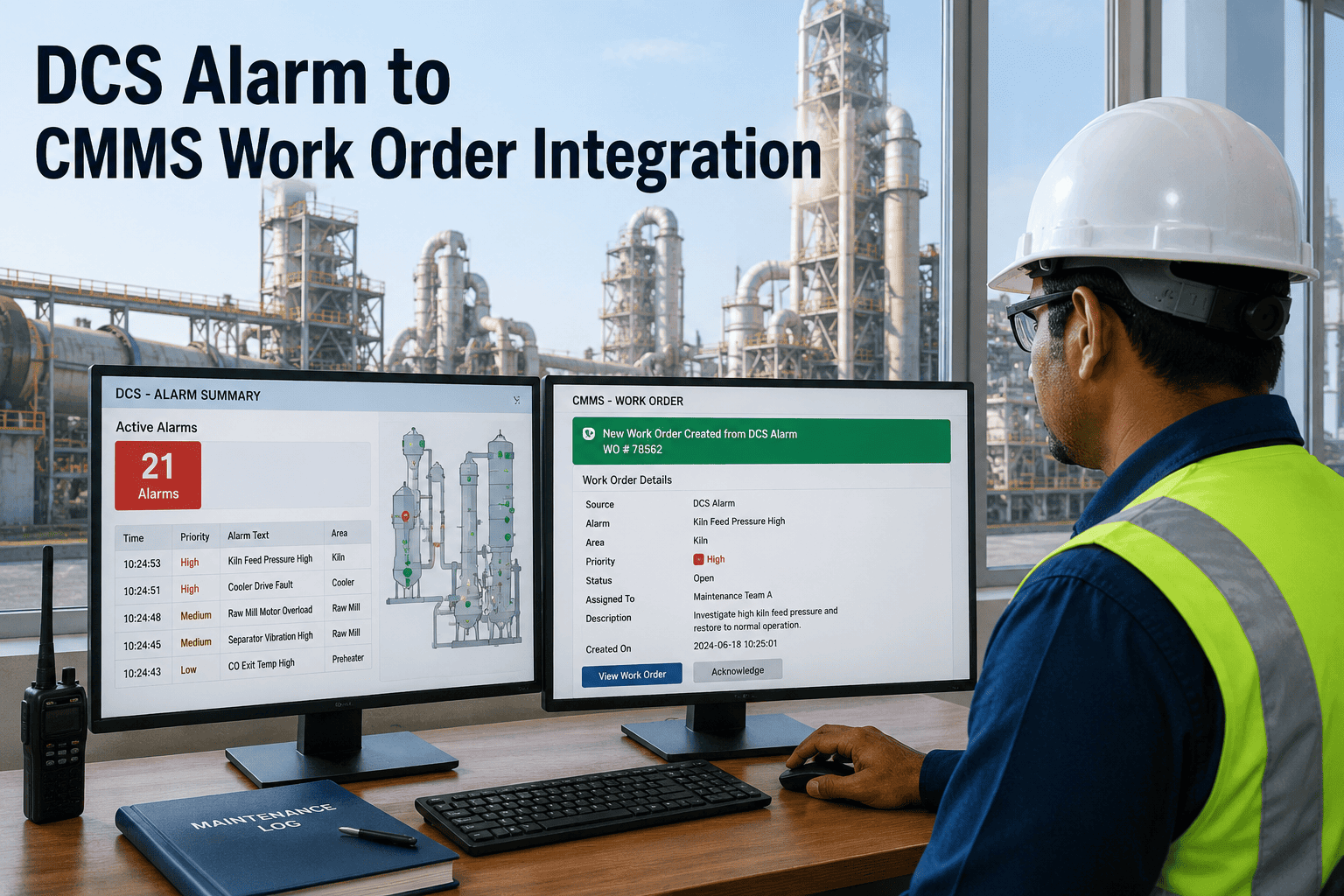
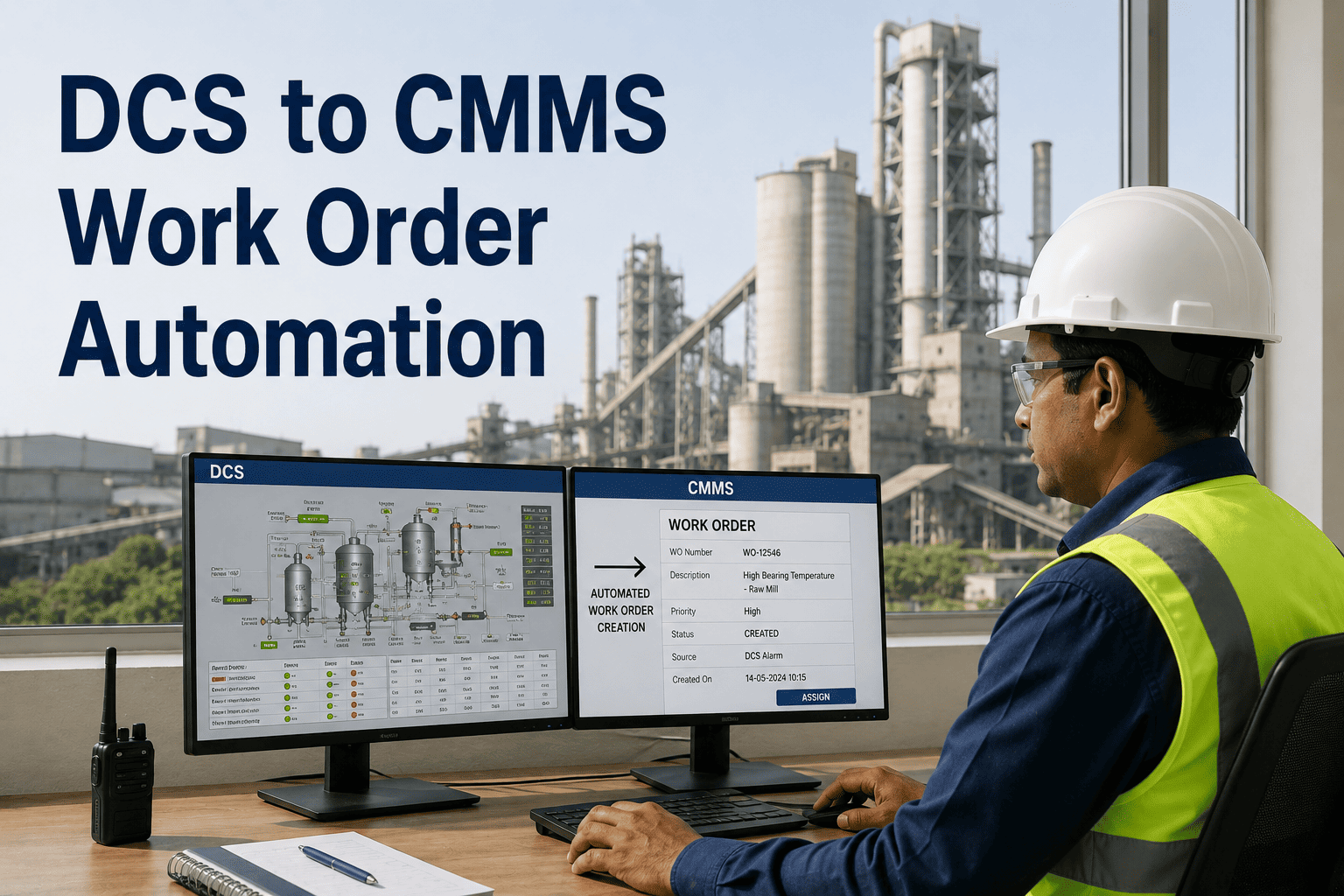
Create work orders in OxMaint that instantly appear in SAP. Technician updates sync back in real-time with labor hours and completion status.
Materials Management
Real-time spare parts availability from SAP MM. Automatic reservation creation and consumption posting when parts are used.
Cost Tracking
Maintenance costs automatically post to correct cost centers in SAP FI/CO. Full visibility into actual vs. planned maintenance spend.
What Gets Synchronized
A complete view of data elements that flow between SAP S/4HANA and OxMaint CMMS.
Built for Cement Plant Challenges
Integration designed around the unique demands of cement manufacturing operations. Try it free and see the difference.
Kiln Maintenance Tracking
Monitor refractory lining conditions, shell temperatures, and drive system health. SAP integration ensures kiln maintenance costs are accurately tracked against production output.
Mill Reliability Programs
Coordinate grinding media replacement, roller inspections, and gearbox maintenance. Material reservations automatically created in SAP MM when parts are needed.
Crushing Circuit Uptime
Track crusher liner wear, conveyor belt conditions, and motor health. Work orders flow seamlessly between field technicians and SAP planning teams.
Environmental Compliance
Maintain baghouse filters, ESP systems, and stack monitoring equipment. Inspection records sync to SAP for regulatory audit trails.
Integration Timeline
Most cement plants achieve full SAP S/4HANA integration within 4-8 weeks. Talk to our team to get a timeline for your plant.
Discovery & Mapping
Analyze your SAP PM configuration, map data fields, and define integration scope. Identify equipment hierarchies and cost center structures.
Connection Setup
Configure API connections using SAP BAPI, OData, or IDocs. Establish secure data channels between SAP S/4HANA and OxMaint cloud.
Data Migration
Import equipment masters, functional locations, and maintenance history. Validate data integrity across both systems.
Testing & Training
Run parallel operations, verify bi-directional sync, and train maintenance teams on the new workflow.
Go-Live & Optimization
Launch production integration, monitor performance, and fine-tune sync frequencies based on operational needs.
What Cement Plants Achieve
Better data visibility enables proactive maintenance scheduling before equipment failures occur.
Accurate cost tracking and optimized parts inventory reduce waste and emergency purchases.
Eliminate paper-based processes and manual SAP data entry with mobile-first workflows.
Every maintenance action automatically documented in SAP for regulatory requirements.
What SAP Integration Experts Say
Michael Sullivan
SAP S/4HANA Implementation Consultant Deloitte DigitalThe biggest mistake cement plants make is treating SAP PM as a standalone solution. When you integrate a mobile-first CMMS with SAP S/4HANA, you get the enterprise backbone of SAP with the field usability that technicians actually need. I've seen plants cut their work order processing time by 70% after proper integration.
James Richardson
VP of Operations & Maintenance Texas Lehigh Cement CompanyWe evaluated five different integration approaches before choosing OxMaint. The bi-directional sync with SAP S/4HANA was seamless—our equipment masters, work orders, and cost postings flow automatically. Our technicians went from spending 45 minutes per shift on paperwork to zero. The ROI was clear within the first quarter.
Want to discuss your SAP integration requirements with our specialists? Schedule a free consultation →
Frequently Asked Questions
Does OxMaint work with both SAP ECC and S/4HANA?
Yes. OxMaint integrates with both SAP ECC and SAP S/4HANA using standard interfaces including BAPI, OData REST APIs, and IDocs. The integration approach is adapted based on your specific SAP version and configuration.
Will our existing SAP PM data be preserved?
Absolutely. SAP remains your system of record. OxMaint complements SAP PM by providing a mobile-friendly execution layer while all master data, work orders, and costs continue to reside in SAP.
What happens if connectivity is lost?
OxMaint's mobile app works fully offline. Technicians can complete work orders, record inspections, and log time without network access. Data automatically syncs to SAP when connectivity is restored.
How is data security handled?
All data transfers use encrypted connections. OxMaint is ISO 27001 compliant and supports SSO integration with your existing identity provider. Role-based access ensures users only see authorized data.
Do we need IT resources for implementation?
Minimal IT involvement is required. Our integration team handles the technical setup and works directly with your SAP basis team to configure connections. Most implementations require only 2-4 hours of your IT team's time.