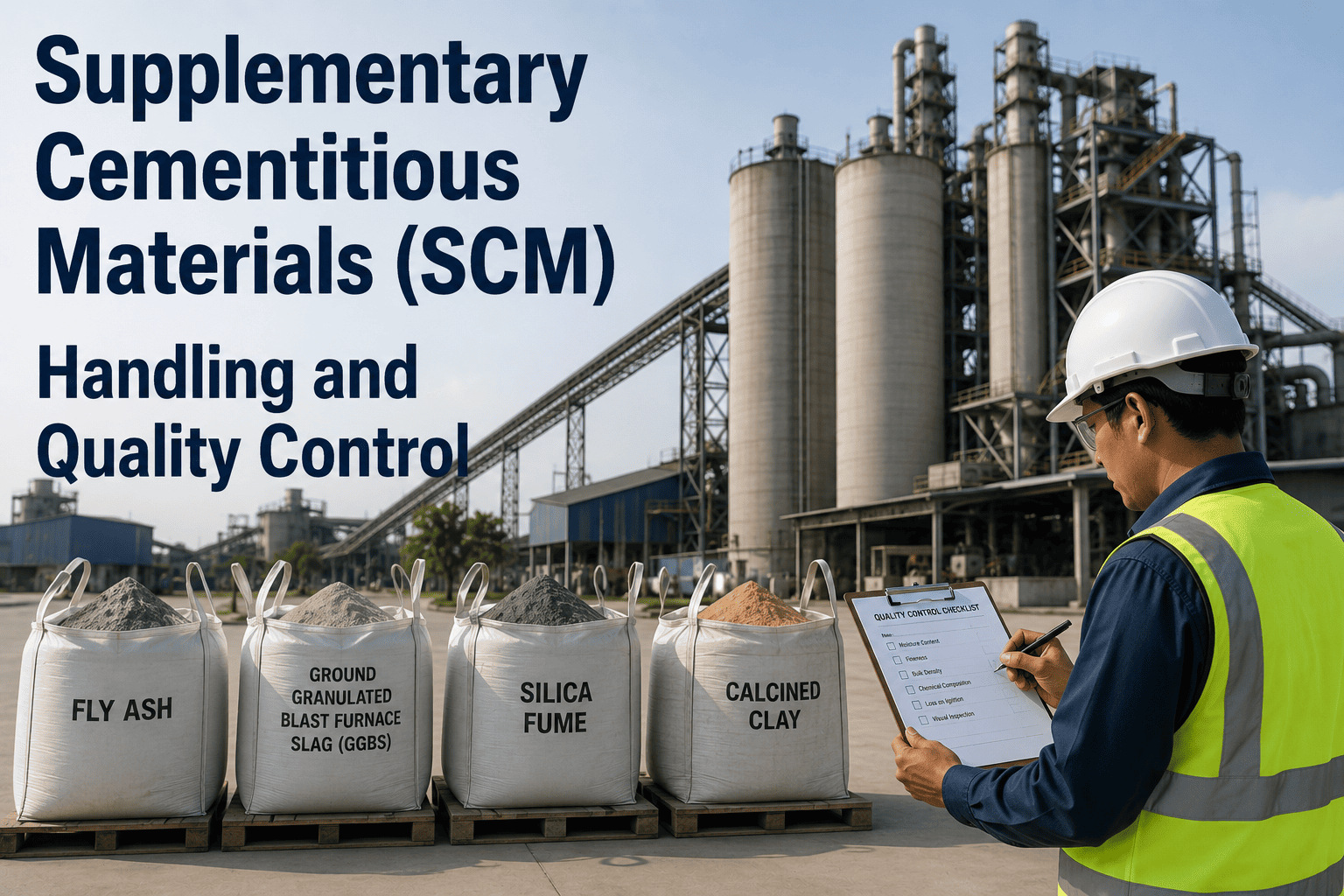
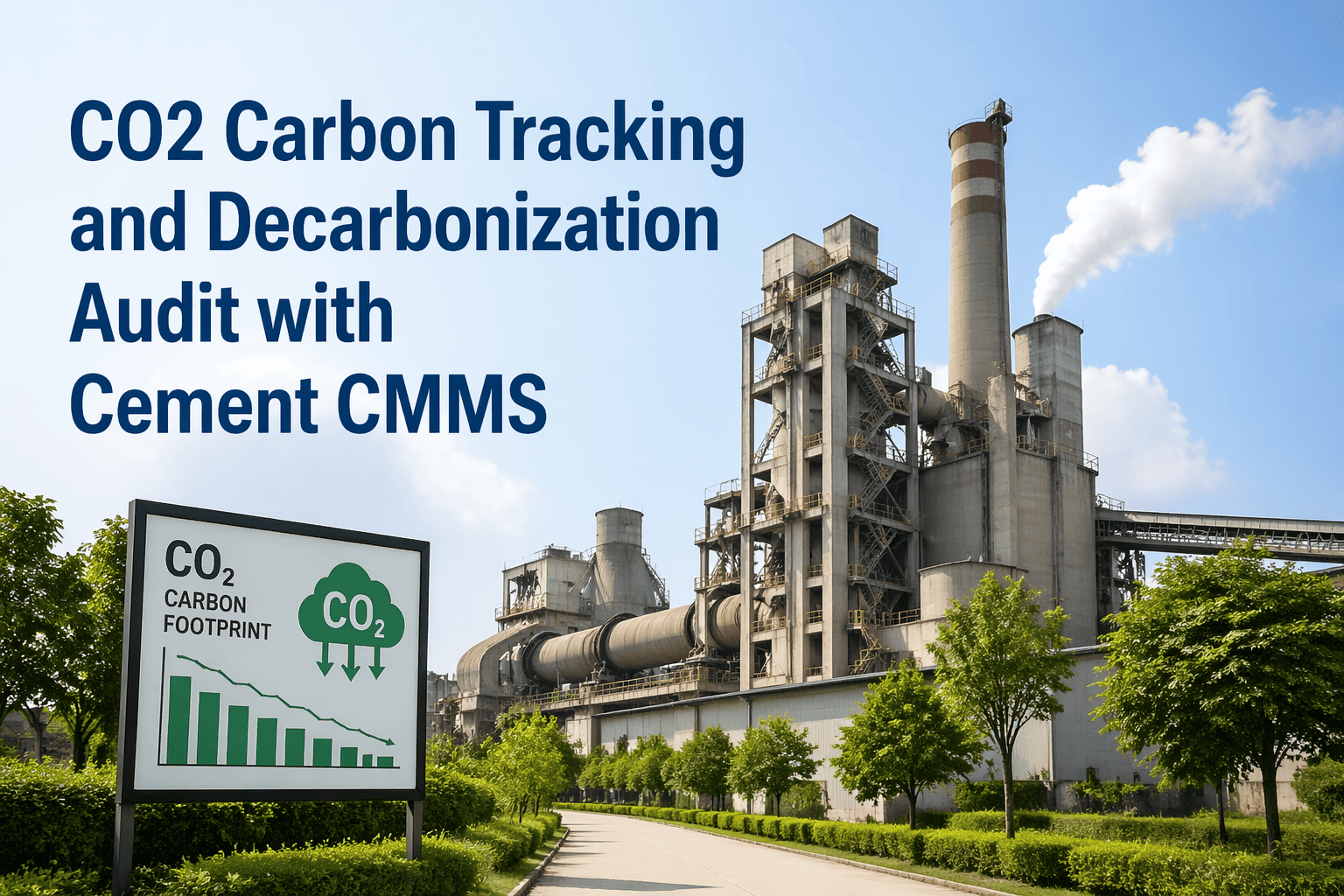
The technical director at a regional cement plant was struggling to meet new sustainability targets. Despite optimizing the kiln and switching to alternative fuels, their carbon emissions remained stubbornly high. The core issue? Their cement formulations relied on a clinker factor of over 85%. While they had attempted to introduce Supplementary Cementitious Materials (SCMs) in the past, inconsistent early strength results caused the quality control team to revert to high-clinker blends. The clinker reduction strategy they implemented lacked proper material tracking, precise dosing mechanisms, and optimized grinding protocols. This hesitation cost them not only in massive CO2 penalties but also in elevated thermal energy expenses. The $3 million annual carbon tax could have been slashed by effectively integrating SCMs and documenting the quality assurance process.
Reducing the clinker factor is the most impactful near-term strategy for decarbonizing cement production. But simply adding fly ash or slag doesn't guarantee a high-performance blend. SCM reactivity varies with source materials, particle size distribution, and chemical composition. Facilities utilizing structured quality management and optimized SCM blending templates can reduce their clinker factor by up to 40% while consistently passing stringent ASTM and EN performance standards. The difference isn't just access to materials—it's systematic control and documentation that proves the blended cement delivers the required structural integrity. Request a demo to see digital quality tracking templates in action.
Sustainability / Cement Production
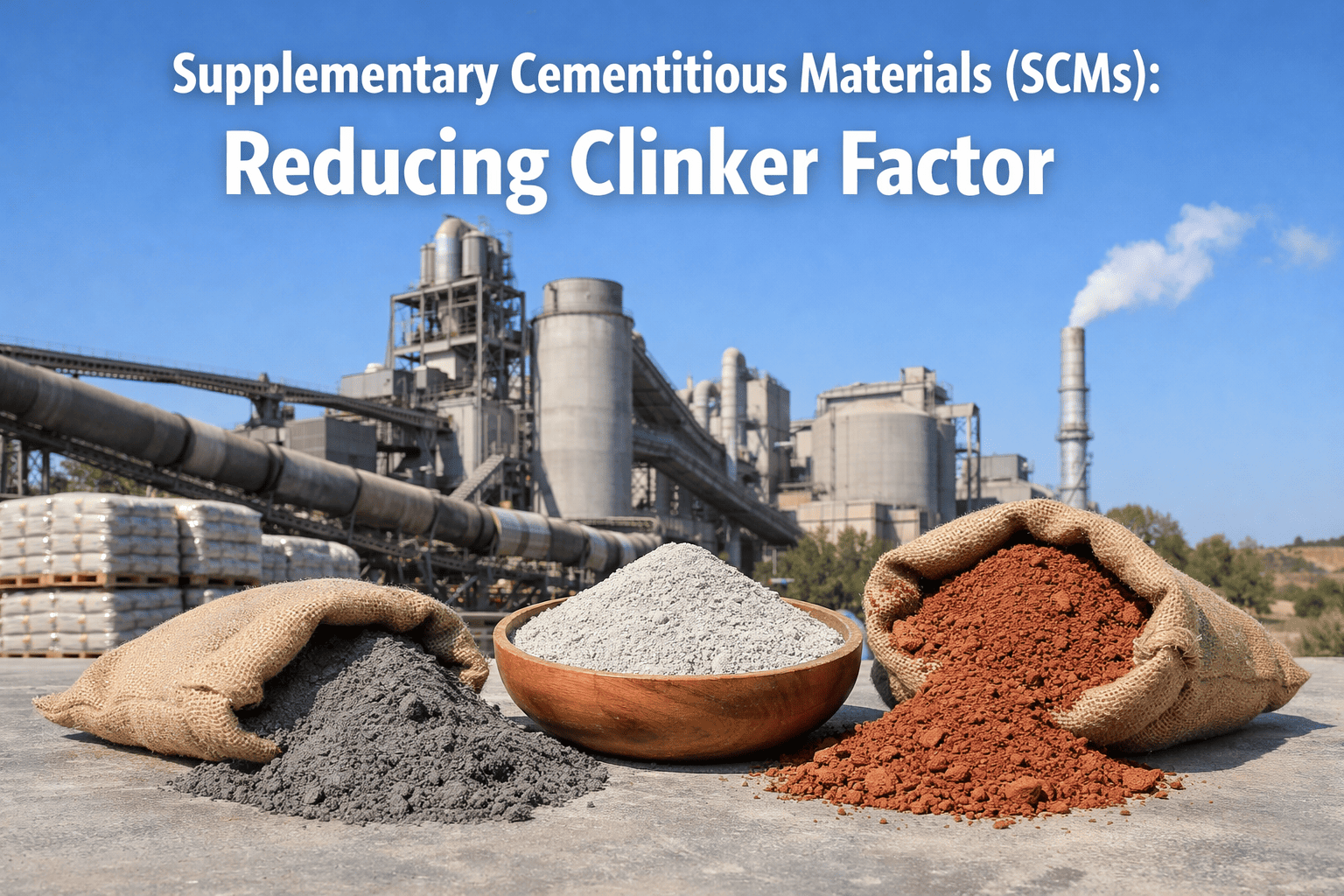
Supplementary Cementitious Materials (SCMs): Reducing Clinker Factor
Optimize mix designs. Lower CO2 emissions. Enhance concrete durability while maintaining structural performance.
Reduction in CO2 Emissions
Standard Compliance (EN/ASTM)
50 %
Max SCM
Replacement Ratio Achievable
Why Basic Clinker Reduction Strategies Fail
Most clinker reduction attempts fail because they treat SCMs as a simple volumetric replacement for clinker. This approach misses the critical reality that SCMs fundamentally alter hydration kinetics. Early strength development, water demand, and setting times vary significantly depending on whether you are using ground granulated blast-furnace slag (GGBS), fly ash, or calcined clay. A mix that achieves target strength at 28 days might severely delay formwork removal if early strength isn't carefully managed.
Modern construction and environmental standards have evolved beyond simple compressive strength tests. Environmental Product Declarations (EPDs) and sustainable building certifications (LEED, BREEAM) require documented evidence of carbon reduction alongside performance metrics. Paper-based batch logs provide zero insight into real-time quality variations and fail to protect the manufacturer against performance disputes.
8%
Of global CO2 emissions originate from cement production, primarily from clinker calcination. SCM integration is the most viable strategy to cut these emissions today. Structured formulation management with reactivity verification, strength tracking, and proper admixture dosing closes the gap between sustainability and performance.
Effective SCM implementation goes beyond just altering the feed scale. It requires verifying material reactivity against established benchmarks, documenting particle size distributions, confirming chemical compatibility with superplasticizers, and creating traceable records that satisfy both internal QA programs and external regulatory requirements.
Critical SCM Implementation Control Points
Comprehensive SCM integration covers material reactivity, physical properties, fresh concrete behavior, and long-term durability. Each area requires specific measurements and documentation to ensure the final product meets engineering requirements: Sign Up to Oxmaint Now.
A byproduct of coal combustion, fly ash improves workability and late-age strength but requires careful monitoring of carbon content (Loss on Ignition) to prevent issues with air-entraining admixtures.
Control Points:
Loss on Ignition (LOI) testing (typically < 6%)
Fineness and particle size distribution
Class C vs. Class F chemical composition
Moisture content monitoring
Documentation Required:
Source verification and ash class
LOI batch test results
Reactivity indices
Ground Granulated Blast-furnace Slag offers excellent durability and sulfate resistance. Because it is highly cementitious, it can replace a large percentage of clinker, but early strength must be monitored.
Control Points:
Glass content verification (> 90%)
Blaine fineness optimization
Early strength (2-day and 7-day) tracking
Color observation (slag can cause a blue/green tint)
Critical Verification:
Slag Activity Index (SAI) testing
Alkali activation levels
Setting time delays
Limestone Calcined Clay Cement (LC3) is a breakthrough allowing up to 50% clinker reduction. It relies on the synergistic reaction between calcined kaolinite clay, limestone, and clinker.
Control Points:
Kaolinite content in raw clay
Calcination temperature (typically 700-800°C)
Limestone quality and fineness
Superplasticizer compatibility
Verification Required:
Color consistency monitoring
Workability retention tests
Clay calcination completion status
Highly reactive and ultrafine, silica fume dramatically increases strength and reduces permeability. Due to its high surface area, it requires strict control over water demand and mixing procedures.
Control Points:
Dispersion in the mix (preventing clumping)
Water-to-cementitious materials ratio
High-range water reducer dosage
Plastic shrinkage cracking prevention
Environmental Factors:
Curing temperature sensitivity
Evaporation rates during placement
Dust control during handling
The physical condition of grinding mills, weigh feeders, and blending silos directly impacts SCM consistency. Equipment must be calibrated to handle materials with vastly different bulk densities.
Control Points:
Weigh feeder calibration for light materials
Separator efficiency in the grinding circuit
Silo aeration and flow promotion
Filter bag condition for fine dust
Maintenance Concerns:
Material bridging in silos
Wear rates on mill internals
Dosing accuracy drift
Complete documentation creates the audit trail that proves the blended cement's performance and carbon footprint reduction, necessary for EPDs and structural certifications.
Documentation Elements:
Mill certificate generation
Clinker factor calculation per batch
Daily compressive strength logs
CO2 equivalent savings tracking
Audit Requirements:
LCA (Life Cycle Assessment) data points
Raw material source traceability
Quality deviation logs
Manage Your SCM Equipment Maintenance Digitally.
Oxmaint helps cement facilities transform paper maintenance logs into digital workflows. Ensure your weigh feeders, grinding mills, and dosing systems are perfectly calibrated for complex SCM blends.
Phases of Clinker Factor Reduction
Lowering the clinker factor is a gradual process that requires careful validation at each stage. Transitioning to high-SCM blends follows a systematic approach to guarantee performance and compliance: Sign Up to Oxmaint Now.
01
Material Sourcing & Analysis
Evaluate local availability of SCMs (fly ash, slag, clay). Conduct chemical composition analysis (XRF), mineralogy (XRD), and physical characterization. Establish a reliable, consistent supply chain before altering production.
02
Baseline Laboratory Testing
Perform lab-scale blending to determine Activity Indexes. Test various clinker-to-SCM ratios to evaluate impacts on setting time, water demand, and heat of hydration. Establish target particle size distributions.
03
Admixture Optimization
SCMs change the rheology of cement. Test compatibility with polycarboxylate ether (PCE) superplasticizers and air-entraining agents. Ensure the mix maintains workability without suffering from excessive retardation.
04
Industrial Trial Batching
Scale up to plant-level production for short runs. Monitor grinding efficiency, separator performance, and silo storage behavior. Validate that lab results translate accurately to industrial-scale processing.
05
Performance & Durability Review
Conduct long-term testing on trial batches. Measure 28-day and 90-day compressive strengths. Evaluate durability metrics like chloride ion penetrability, sulfate resistance, and alkali-silica reaction (ASR) mitigation.
06
Full-Scale Integration & Certification
Finalize plant settings for continuous production. Update quality control protocols. Obtain necessary certifications (e.g., ASTM C595, EN 197-1) and publish Environmental Product Declarations (EPDs) highlighting the reduced carbon footprint.
Performance Variables and Acceptance Criteria
Blended cements behave differently than pure Ordinary Portland Cement (OPC). Understanding these variations is critical for proper field application and quality assurance:
Typical Behavior:
1-day to 7-day strength is often lower
28-day strength equals or exceeds OPC
90-day strength significantly higher
Field Impact:
Contractors may need to delay formwork stripping or use accelerators during cold weather. Educating end-users on the strength-gain curve is essential.
Typical Behavior:
Lower peak temperatures during curing
Delayed temperature rise
Reduced thermal gradient in mass concrete
Major Benefit:
Excellent for mass concrete pours (e.g., dams, large foundations) as it drastically reduces the risk of thermal cracking.
SCM-Specific Effects:
Fly Ash typically reduces water demand
Silica Fume increases water demand
Calcined Clay requires optimized superplasticizers
Critical Note:
Slump retention must be monitored. SCMs can alter how quickly concrete loses workability during transit, requiring tailored admixture solutions.
Key Improvements:
Pore refinement reduces permeability
Consumes free lime, resisting chemical attack
Mitigates Alkali-Silica Reactivity (ASR)
Structural Value:
Blended cements extend the service life of structures in aggressive environments, such as marine applications and wastewater facilities.
Curing Requirements:
More sensitive to poor curing practices
Requires extended wet curing periods
Prone to plastic shrinkage if unprotected
Documentation Required:
Site engineers must enforce strict curing protocols. Premature drying halts the secondary pozzolanic reactions, degrading surface durability.
Material Impacts:
Slag can cause a temporary bluish-green hue
Fly ash variations can shift concrete to darker grays
Silica fume creates very dark concrete
Customer Communication:
Architectural concrete requires strict SCM source consistency. Color variations must be communicated and managed with clients beforehand.
Automate Your Plant Maintenance with Oxmaint.
Prevent unplanned downtime in your blending and grinding circuits. Oxmaint provides automatic alerts, preventive maintenance scheduling, and digital work orders—ensuring your SCM integration runs flawlessly.
Compliance Frameworks and Standards
Integrating SCMs must comply with regional and international cement standards. Understanding these frameworks ensures your low-carbon cement is legally and structurally viable in target markets:
ASTM
ASTM International Standards
In the US, blended cements are governed by ASTM C595 (Blended Hydraulic Cements) and ASTM C1157 (Performance Specification), alongside standards for raw SCMs (C618 for Fly Ash, C989 for Slag).
Type IL, IS, IP, IT classifications
Performance-based limits
Reactivity verification testing
Sulfate resistance designations
EN
EN 197-1 (European Standard)
The European standard allows for up to 5 distinct classes of cement (CEM I through CEM V), accommodating vast clinker reductions through single or complex multi-component blends.
CEM II (Portland-composite) limits
CEM III (Blastfurnace) specifications
CEM IV (Pozzolanic) requirements
Strict strength class categories
EPD
Environmental Product Declarations
EPDs are essential for quantifying the carbon reduction achieved by lowering the clinker factor. They provide transparent, verified data on the Global Warming Potential (GWP) of the cement.
Life Cycle Assessment (LCA) data
Verified GWP calculations
Contribution to LEED/BREEAM points
Third-party verification audits
ISO
Quality & Environmental Systems
Managing a complex supply chain of varying SCMs requires robust ISO 9001 (Quality) and ISO 14001 (Environmental) management systems to ensure consistency and continuous improvement.
Standardized operating procedures
Supplier quality agreements
Non-conformance tracking
Environmental impact monitoring
Best Practices for Reducing Clinker Factor
Maximizing SCM replacement while maintaining product quality requires operational discipline. These practices ensure your clinker reduction strategy is both sustainable and structurally sound:
1
Separate Grinding vs. Intergrinding
Consider grinding clinker and SCMs separately before blending. Different materials have different grindabilities (e.g., slag is much harder than clinker). Separate grinding allows optimized fineness for each component, maximizing reactivity.
2
Implement Real-Time Moisture Control
SCMs like slag and fly ash can absorb significant moisture. Use inline moisture sensors to dynamically adjust weigh feeders. Failing to account for moisture leads to incorrect clinker ratios and out-of-spec cement.
3
Optimize Particle Size Distribution (PSD)
Don't just measure Blaine fineness; utilize laser diffraction to monitor the entire PSD. Proper packing density (where fine SCM particles fill the voids between cement grains) reduces water demand and increases strength.
4
Rigorous Supplier QA/QC
SCMs are industrial byproducts or natural materials, meaning they inherently vary. Establish strict acceptance criteria with suppliers. Test every incoming load for critical metrics like LOI, moisture, and fineness before unloading into silos.
5
Educate the End User
Provide comprehensive technical data sheets to concrete producers and contractors. Advise them on required admixture adjustments, expected setting times, and curing requirements to prevent field failures blamed on the cement.
6
Maintain Equipment Reliability
High-SCM blends require precise dosing. Regularly calibrate weigh feeders and maintain pneumatic conveying systems. Unplanned downtime in blending equipment forces plants back to high-clinker fallback recipes.
Frequently Asked Questions
What is the "Clinker Factor" in cement production?
The clinker factor is the percentage of clinker (the primary, high-carbon component created in the kiln) present in the final cement product. Ordinary Portland Cement (OPC) typically has a clinker factor of 90-95%. By replacing clinker with Supplementary Cementitious Materials (SCMs) like fly ash, slag, or calcined clay, manufacturers reduce the clinker factor, significantly lowering the carbon footprint and energy intensity of the cement.
Which SCM allows for the highest reduction in clinker?
Ground Granulated Blast-furnace Slag (GGBS) generally allows for the highest clinker replacement rates, sometimes up to 70% or more in specialized applications (like marine environments or mass concrete). Recently, Limestone Calcined Clay Cement (LC3) has emerged as a revolutionary blend, allowing up to 50% clinker reduction while mimicking the early strength development of traditional OPC.
How does reducing the clinker factor impact early concrete strength?
Most traditional SCMs (like fly ash and slag) rely on pozzolanic reactions that occur after the initial clinker hydration. Therefore, concrete with a low clinker factor typically exhibits lower compressive strength at 1 to 7 days compared to OPC. However, these blends generally match or exceed OPC strength by 28 days and continue gaining strength for years. LC3 is an exception, often matching OPC early strength due to synergistic reactions.
Sign Up to Oxmaint Now.
What are the main challenges when milling high-SCM blended cements?
Different materials have different grindability indices. For example, clinker is relatively easy to grind, while slag is much harder. If interground in a single mill, the clinker may become over-ground (increasing water demand) while the slag remains too coarse (reducing reactivity). Best practice is often separate grinding followed by precision blending, or utilizing high-efficiency separators to manage particle size distribution.
Why is clinker reduction so important for sustainability?
Producing one ton of clinker generates roughly 0.8 to 0.9 tons of CO2. About 60% of this CO2 comes from the chemical calcination of limestone (which cannot be avoided by switching fuel sources), and 40% comes from the thermal energy required to heat the kiln to 1450°C. Reducing the amount of clinker directly eliminates both the chemical and thermal CO2 emissions associated with that volume.
Does using SCMs make concrete more durable?
Yes. In most cases, well-designed SCM blends significantly improve long-term durability. The secondary pozzolanic reactions consume calcium hydroxide (a weak byproduct of cement hydration) and create additional calcium silicate hydrate (C-S-H) gel. This refines the pore structure, drastically reducing permeability to water, chlorides, and sulfates, thereby protecting the reinforcing steel from corrosion.
Streamline Maintenance. Optimize SCM Production.
Oxmaint ensures your plant's critical blending, dosing, and grinding equipment stays operational. Schedule preventive maintenance and reduce downtime to hit your clinker reduction targets.