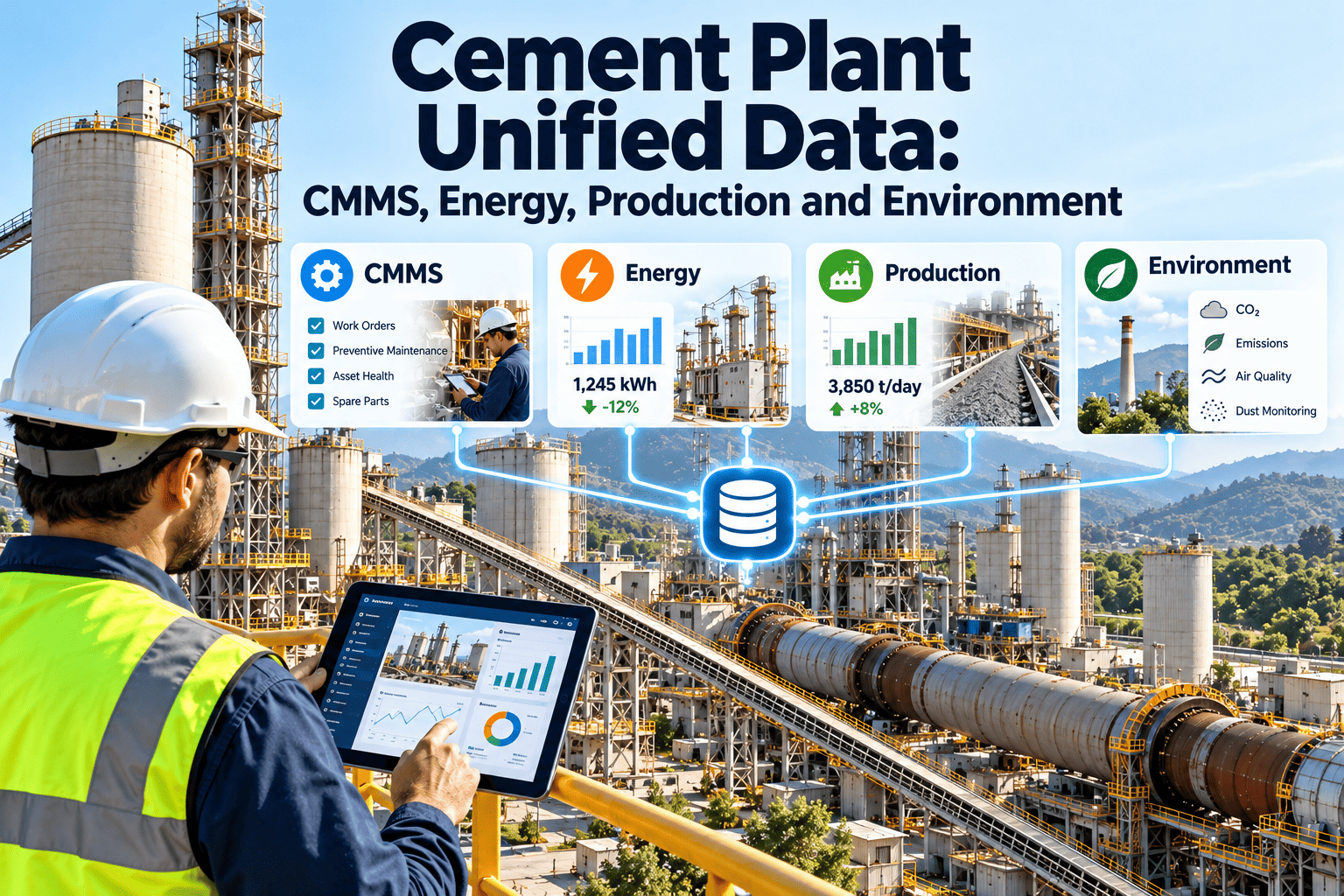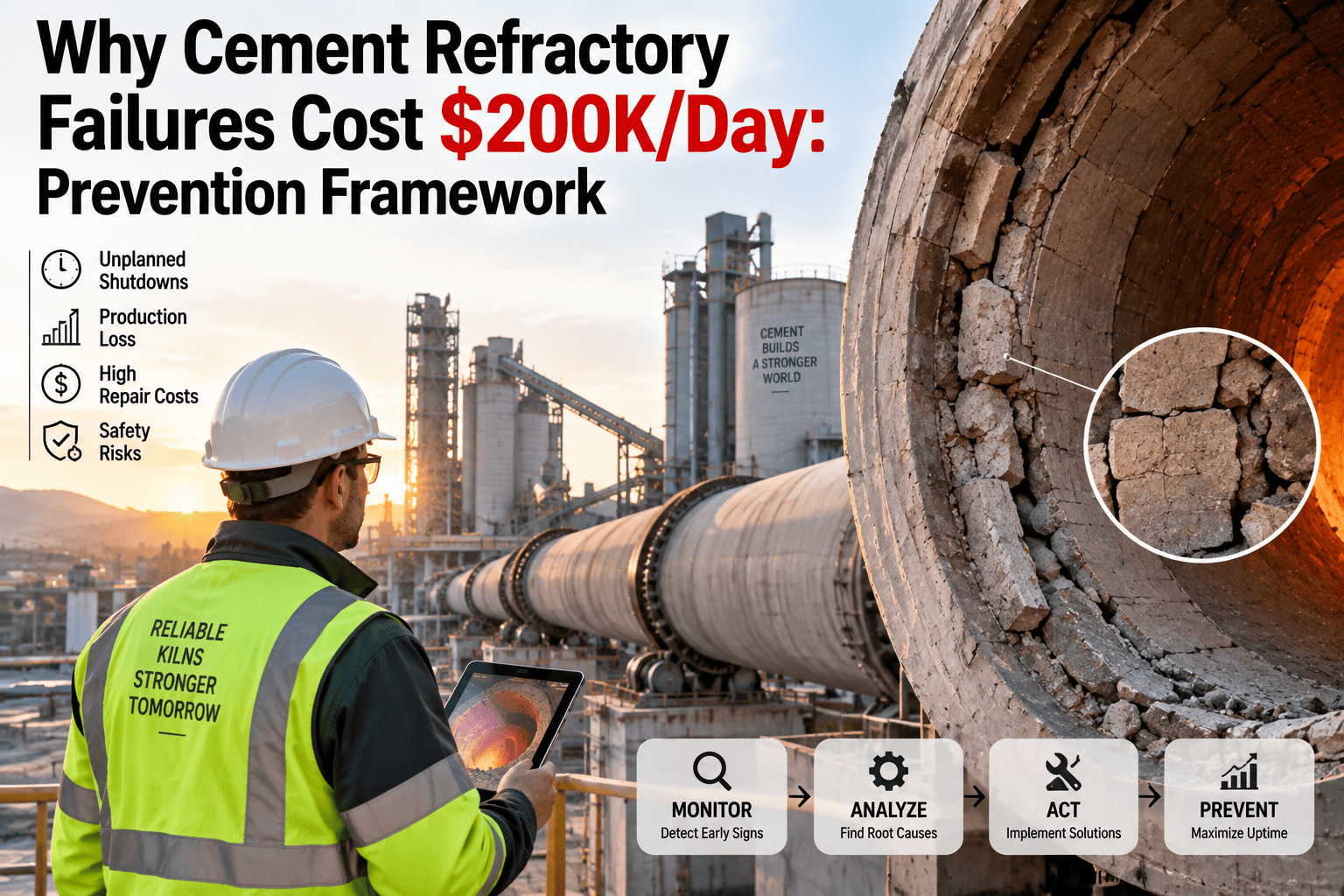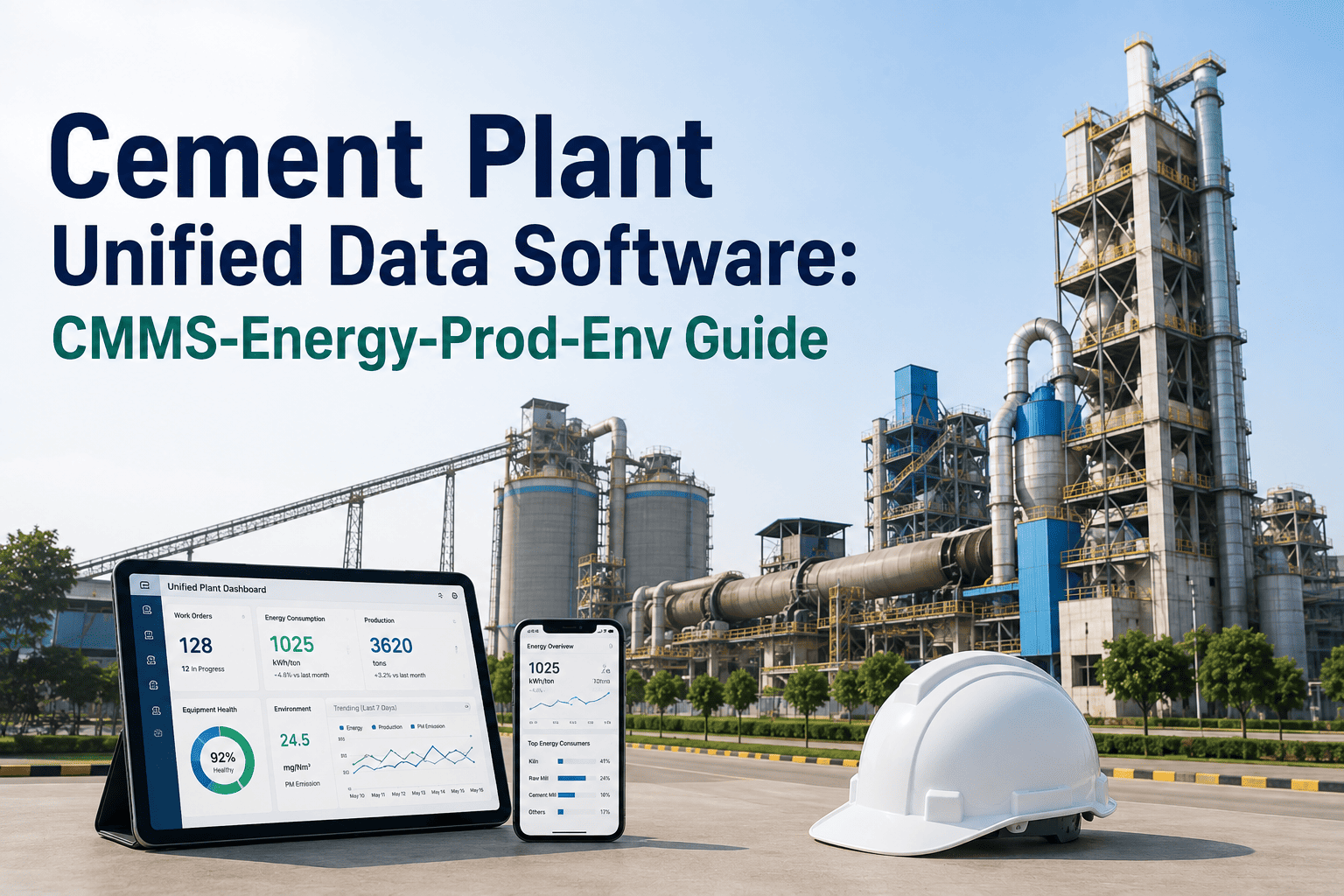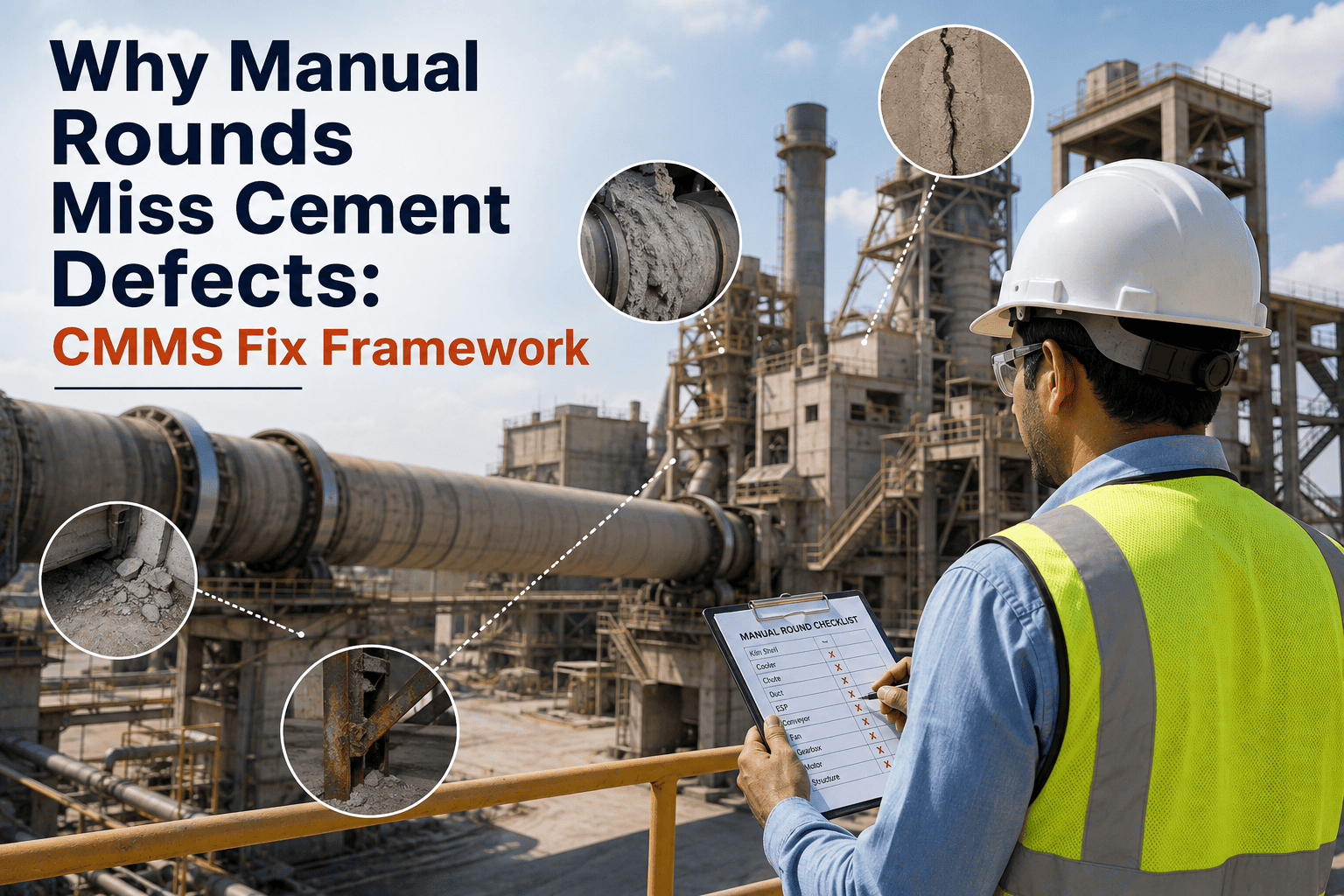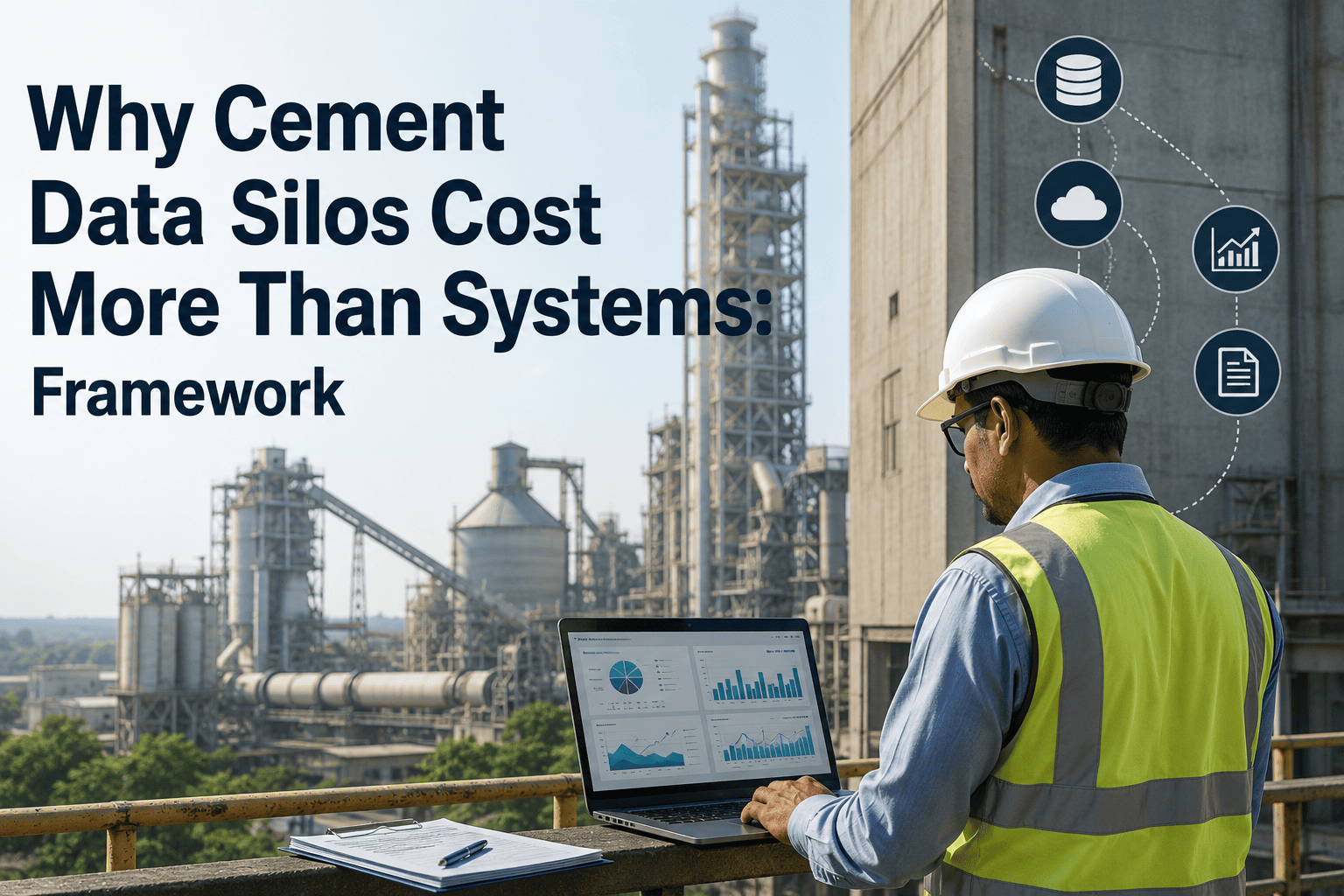
A typical cement plant runs 20 or more disconnected systems: DCS on the kiln, SCADA on the mills, an ERP for spares and finance, a lab system for quality, and a stack of spreadsheets and paper logs filling the gaps nobody built software for. Each system tells the truth about its own corner of the plant and nothing about anyone else's, which is why production reports one downtime number, maintenance reports another, and finance closes the month with a third number that matches neither. Every reconciliation meeting that follows is a symptom of a cost that never appears on a line item: the plant paid twice, in different currencies, for the same failure. Quantifying that cost, not just noticing it, is what finally unlocks budget for integration instead of another point solution. Book a demo to see how Oxmaint turns your plant's disconnected systems into one cost number leadership can act on.
Cement plant data silos cost more than the systems that create them because every disconnected system generates a decision delay, and every decision delay produces a cascading cost that rarely gets traced back to its root cause. A structured cost framework quantifies that cost across four categories: decision latency, cross-system reconciliation, emergency procurement premiums, and duplicate data entry, giving leadership a real number instead of a vague sense that "our systems don't talk to each other."
Five Silo Pairs Every Cement Plant Has
A silo rarely announces itself as a technology problem. It shows up as two departments arguing over whose number is correct, because each is reading a different system that was never designed to agree with the other.
Process control systems know equipment condition in real time. Maintenance often finds out through a phone call, not a data feed.
Two departments describing the same stoppage from two different systems, neither of which matches what finance eventually reports.
Without a live two-way sync, spares consumption and purchase orders drift apart until the next physical stock count exposes the gap.
Lab results and mill or classifier trend data live in separate systems, so nobody connects the failure back to the setpoint that caused it.
Findings that never make it into a digital system cannot trigger a work order, cannot be trended, and cannot be audited later.
Stop Debating Whose Number Is Right
Oxmaint connects DCS, SCADA, ERP, and lab data into one work order and cost record, so every department is reading the same truth.
The Four-Part Cost Framework
Every hour between a system detecting a condition and a person acting on it is a cost multiplier. A kiln alert that sits unseen for two shifts turns a planned adjustment into an unplanned stop.
Every meeting spent agreeing on whose downtime number is correct is time not spent solving the downtime itself. This cost rarely appears on a budget line, but it consumes real management hours every month.
Parts ordered hot because a stock discrepancy went unnoticed cost 20 to 50% more than the same part ordered on a planned schedule, compounding across every reactive purchase order in a year.
Technicians and clerks re-typing the same reading into two or three systems is paid labor spent on data movement instead of maintenance, inspection, or analysis work.
How One Silo Turns Into a Quarter of Losses
A vibration sensor on a mill bearing crosses its alert threshold inside the SCADA system.
Maintenance learns about it through a shift handover conversation, not a system notification, and opens a work order.
The needed bearing shows as in-stock in the ERP, but the CMMS work order history shows it was consumed on a different job weeks earlier.
The part is ordered hot at a 20 to 50% premium, and the mill runs degraded until it arrives.
Production, maintenance, and finance each report a different downtime and cost figure for the same event, and a reconciliation meeting gets scheduled instead of a root cause review.
See Your Own Silo Cascade Before It Repeats Next Quarter
Oxmaint maps the real chain from sensor alert to reactive spend so leadership sees the cost as one number, not five disputed ones.
Connected Data vs Siloed Systems
| Metric | Connected CMMS-Centered Data | Siloed Systems |
|---|---|---|
| Time From Alert to Work Order | Under 2 hours, automated | 24 to 72 hours, via shift handover |
| Downtime Number Agreement | One shared figure across production, maintenance, finance | Two to three conflicting figures per event |
| Emergency Procurement Rate | Under 10% of purchase orders | 30 to 45% of purchase orders |
| Duplicate Data Entry Hours | Near zero, single entry point | 4 to 8 hours per week per role |
| Maintenance Cost Trend | 25 to 43% reduction reported after integration | Flat or rising, masked by unattributed reactive spend |
What the Framework Actually Connects
Sensor thresholds from process control systems generate condition-based work orders automatically, removing the shift-handover delay between alert and action.
Parts consumption, purchase orders, and cost data flow both ways with SAP, Oracle, and other major ERPs, so stock levels and spend match reality.
Downtime is logged once, tagged by cause and duration, and shared across production and maintenance views instead of tracked twice in two systems.
Quality results connect to the equipment setpoint history that produced them, so a residue or Blaine failure points back to a cause instead of a mystery.
Shift inspections and readings are entered once from a mobile device on the floor, replacing paper logs that never reach a system that can act on them.
Decision latency, reconciliation time, procurement premiums, and duplicate entry are rolled into one dashboard leadership can use to justify further integration budget.
Where Most Plants Stand Today
Outcomes After Oxmaint Deployment
Investment vs Return
| Component | Cost | Annual Savings | Payback |
|---|---|---|---|
| SCADA/DCS to Work Order Integration | $15K one-time configuration | $180K from faster response to alerts | Under 5 weeks |
| ERP Two-Way Sync | $13K per year | $150K from reduced emergency procurement | Under 6 weeks |
| Mobile Field Capture Rollout | $8K per year | $70K from eliminated duplicate entry | Under 6 weeks |
| Full Data Integration Framework | $36K per year | $400K+ combined avoidance | Under 5 weeks |
Frequently Asked Questions
Your Systems Aren't the Cost. The Gap Between Them Is.
Connect DCS, SCADA, ERP, and field data into one work order and cost record, and turn your silo cost into a number leadership can act on, live in under three months.