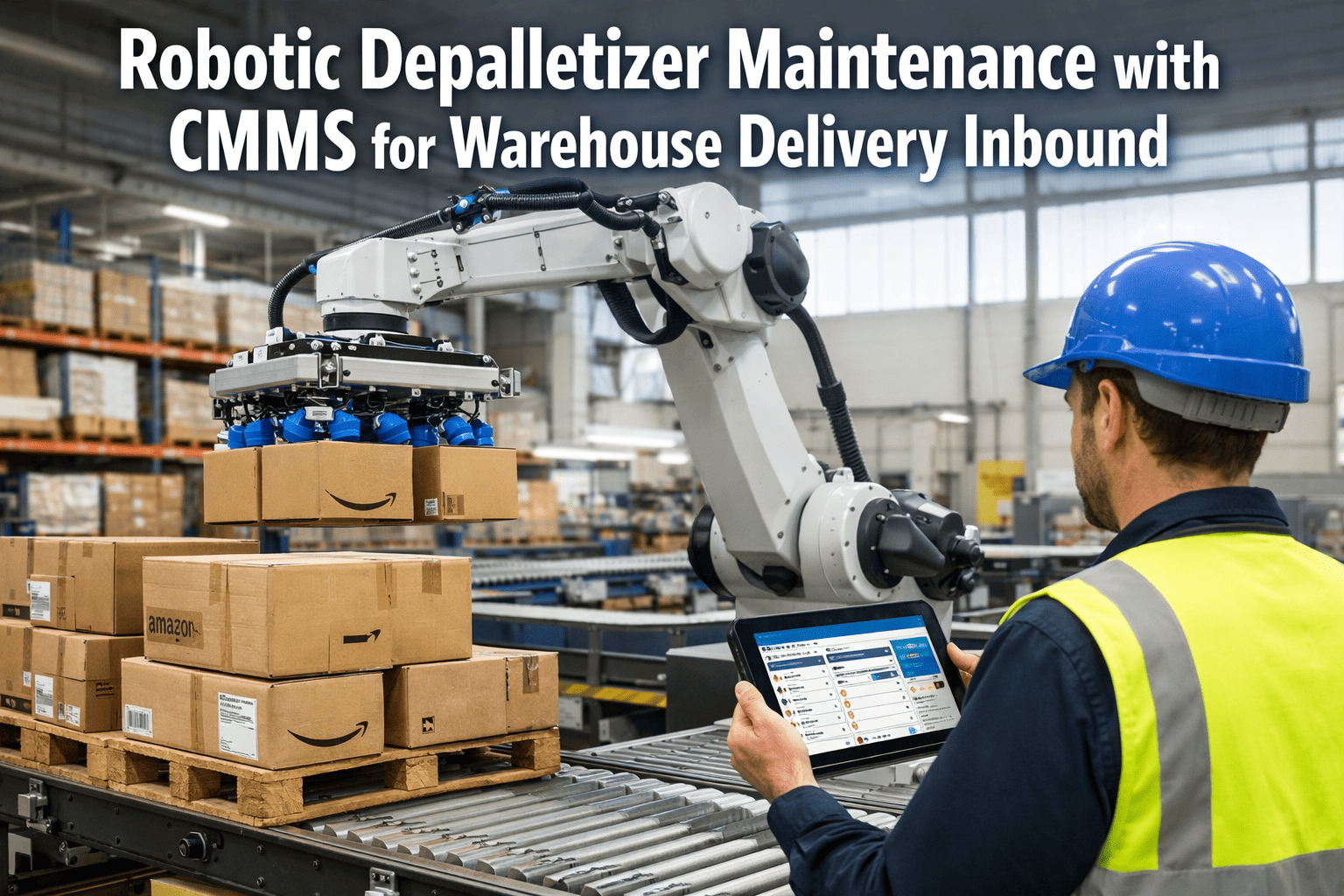
Warehouse operators running autonomous sorting robots face a brutal reality: a single unplanned breakdown during peak fulfillment hours can cost $15,000–$40,000 in delayed shipments and missed SLAs. OxMaint's CMMS platform automates preventive maintenance scheduling for your entire robot fleet, from sensor calibration intervals to drive belt replacements, so your sorting systems stay online when it matters most. Book a 15-minute demo to see how leading warehouse operators cut robot downtime by up to 38% using data-driven maintenance workflows.
Autonomous Sorting Robot Maintenance Guide
Everything warehouse and maintenance managers need to know about keeping sorting robots running at full capacity — preventive schedules, sensor calibration, predictive alerts, and CMMS integration.
The Hidden Cost of Robot Downtime in Warehouse Operations
Autonomous sorting robots are the backbone of modern fulfillment centers. A fleet of just 10 robots handling 5,000 parcels per hour means every hour of downtime directly translates to missed orders, labor scrambles, and customer churn. Yet most facilities still rely on reactive maintenance — fixing robots after they fail, not before.
Four Critical Systems That Require Scheduled Maintenance
Autonomous sorting robots are complex mechatronic systems. Maintenance must address four distinct subsystems — each with different failure modes, service intervals, and inspection requirements.
Cameras, LiDAR, barcode scanners, and proximity sensors degrade with dust accumulation, vibration, and ambient light shifts. Lens contamination alone causes 22% of mis-sort events.
Wheels, belts, gearboxes, and motors bear the full mechanical load of continuous operation. Belt wear and bearing fatigue are the top causes of unplanned stoppages in AMR fleets.
Lithium-ion battery packs degrade with charge cycles, temperature extremes, and incomplete discharge events. A degraded battery reduces operational range and causes mid-shift failures.
Fleet management software, Wi-Fi antennas, onboard processors, and emergency stop circuits require firmware validation and physical inspection to maintain safe, coordinated operation.
Automate Every Maintenance Interval Across Your Robot Fleet
OxMaint tracks operating hours, cycle counts, and sensor health across every robot in your warehouse. Preventive work orders trigger automatically so nothing gets missed — even across a 50-robot fleet running three shifts.
Master PM Checklist for Autonomous Sorting Robots
A structured preventive maintenance checklist reduces technician variability and ensures no critical inspection step is skipped across shifts or team changes. Use this framework as the foundation for your CMMS work order templates.
Shifting From Scheduled to Condition-Based Maintenance
Preventive schedules are effective, but predictive maintenance takes robot uptime to the next level by monitoring real-time sensor data to catch failures before they happen — not just at fixed intervals.
Vibration sensors, current draw monitors, and temperature probes feed live data from robot subsystems into your CMMS or IoT platform continuously during operation.
AI-driven thresholds identify abnormal patterns — motor current spikes indicate bearing wear, vibration increases signal belt misalignment, temperature rise flags battery cell degradation.
CMMS automatically creates a prioritized work order when thresholds are crossed, assigns the right technician, and pulls the correct parts list — all before the robot fails.
Maintenance is performed during low-traffic windows, eliminating unplanned shutdowns and ensuring the robot returns to full operation before peak fulfillment hours begin.
Common Failures, Root Causes, and Maintenance Response
Understanding failure patterns across your robot fleet allows maintenance teams to build targeted PM tasks and stock the right spare parts inventory to minimize mean time to repair.
| Failure Type | Primary Root Cause | Detection Method | Preventive Action | MTTR Impact |
|---|---|---|---|---|
| Mis-sort errors | Contaminated barcode scanner or camera lens | Sort accuracy KPI drop in fleet software | Weekly lens cleaning, bi-annual calibration | High — requires recirculation of parcels |
| Unexpected stop mid-route | Drive belt wear or motor bearing failure | Vibration sensor alert, current spike | Belt replacement at 500-hour interval | Medium — 45–90 min repair window |
| Battery not holding charge | Cell degradation from overcharge cycles | Battery management system cycle data | Cycle count tracking, replace at 80% capacity threshold | Low — planned swap during shift change |
| Navigation drift | LiDAR or floor marker sensor drift | Fleet map deviation alert in software | Monthly full sensor calibration with target boards | High — requires full recalibration of floor map |
| Wi-Fi communication drop | Antenna wear or floor zone interference | Connectivity loss log in fleet manager | Quarterly antenna inspection and signal mapping | Medium — affects all robots in zone |
| Emergency stop fault | E-stop circuit degradation or mechanical jam | Safety system self-test failure | Daily E-stop functional test, monthly circuit inspection | Critical — robot out of service until cleared |
How CMMS Transforms Robot Fleet Maintenance From Reactive to Proactive
Managing a warehouse robot fleet without a CMMS means relying on spreadsheets, memory, and reactive fixes. CMMS brings structure, accountability, and data-driven decision making to every aspect of robot care.
PM tasks auto-trigger based on operating hours logged per robot. No manual tracking required. Technicians receive mobile notifications with full task instructions, part requirements, and safety procedures.
CMMS links maintenance tasks to spare parts inventory. When a belt replacement work order fires, the system checks stock and auto-generates a purchase order if below minimum levels — no more last-minute part shortages.
Every service event is logged against the specific robot asset. Historical data reveals chronic failure patterns, helps negotiate better OEM service contracts, and supports warranty claims with documentation.
Fleet-wide OEE, MTBF, and MTTR dashboards give operations managers real-time visibility into robot performance. Identify which units are underperforming before they become critical liabilities.
Sorting Robot Maintenance Questions Answered
Stop Guessing. Start Predicting. Keep Every Robot Running.
OxMaint gives warehouse and maintenance managers a single platform to schedule preventive care, automate work orders, track parts inventory, and monitor fleet health — across every robot, every shift, every day. Join hundreds of warehouse operators who have already eliminated reactive robot maintenance.