A delivery hub lives or dies by dispatch readiness — and in an electrified fleet, dispatch readiness starts the night before, when every vehicle needs to finish charging before the morning shift begins. A single malfunctioning charger at a 40-vehicle depot does not just inconvenience one driver; it creates a queue collision that delays the entire first wave. The failure modes — connector wear, cooling system faults, firmware freeze, communication dropouts — are not random; they follow patterns that structured inspection and condition tracking can catch days ahead. Yet most hub operators still discover charger faults when a driver plugs in at 5 AM and nothing happens. OxMaint's CMMS brings scheduled inspection workflows, fault history tracking, and AI-powered maintenance alerts to depot charging infrastructure — turning reactive scrambles into planned interventions. Start managing your depot chargers in OxMaint — free trial, no credit card required.
EV Fleet Operations · Charger Uptime · CMMS
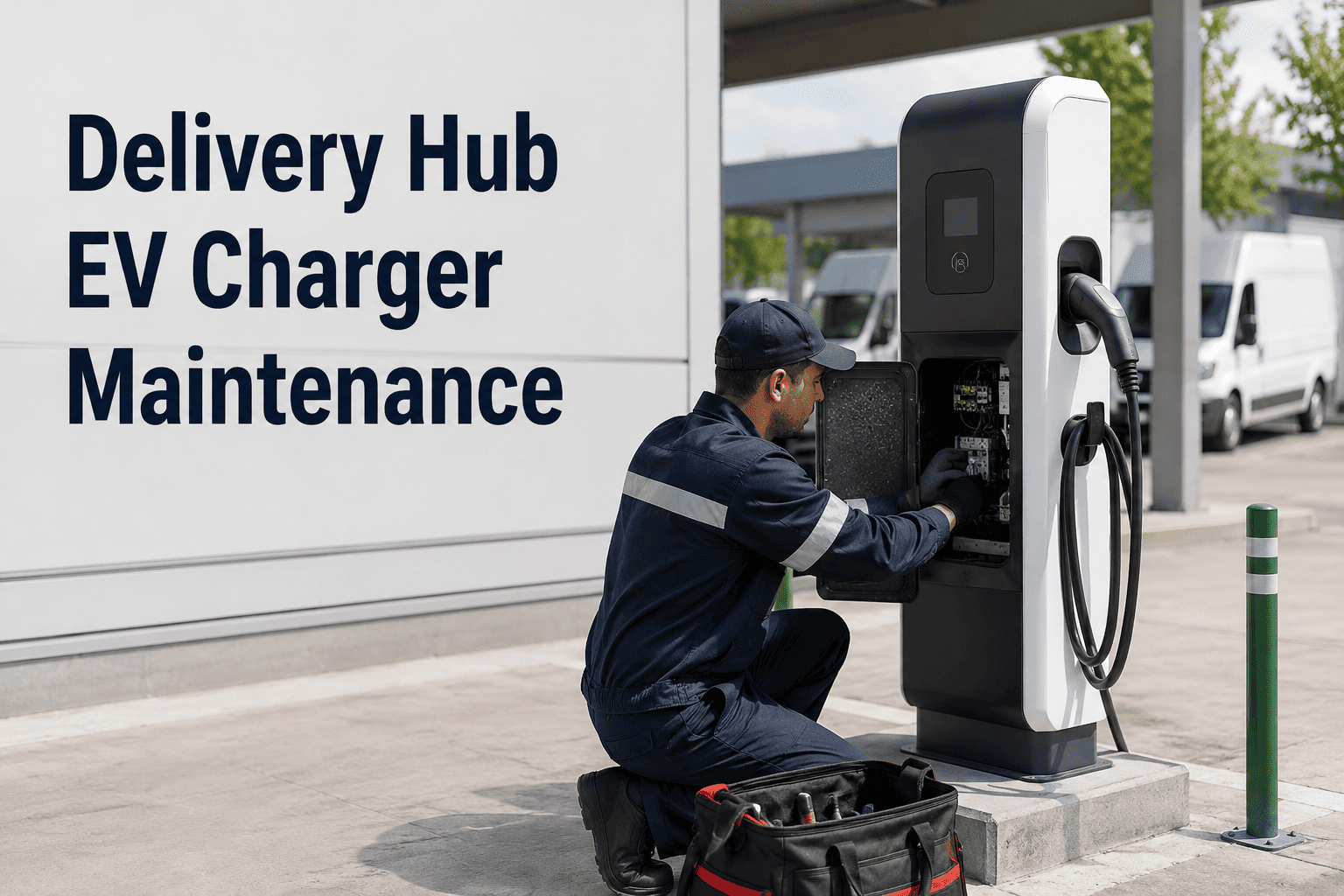
Delivery Hub EV Charger Maintenance
Keep every bay live. Every vehicle charged. Every dispatch on time — with predictive maintenance built for depot-scale EV infrastructure.
Live Depot — Bay Status
Bay 01VAN-204Charging 84%
Bay 02VAN-211Temp Alert 68°C
Bay 03VAN-198Connector Fault — WO Open
Bay 04VAN-223Charging 61%
Bay 05VAN-207Charging 92%
Active
Warning
Fault WO
1 in 3
EV charging attempts fail at stations older than 3 years without structured maintenance
15-pt
Drop in charge success rate from new charger to year 3 — without proactive maintenance
36%
Projected commercial fleet electrification rate by mid-2025 — reliability gaps are multiplying
3.9x
Impact multiplier — a charger fault in a 50-vehicle depot vs a 5-vehicle depot
The Failure Modes Killing Your Morning Dispatch
01
Connector & Cable Wear
Early Warning
Increased plug resistance; intermittent charge-start failures; physical fraying at strain relief point
OxMaint tracks connector cycle counts per bay and triggers inspection WO at configured thresholds
02
Thermal System Faults
Early Warning
Rising cabinet temperature readings; cooling fan speed deviations; automatic power-down events
OxMaint logs thermal readings per unit; alerts maintenance team before thermal shutdown triggers
03
Communication Dropouts
Early Warning
Intermittent network timeouts; OCPP session failures; backend sync errors logged in charger console
OxMaint captures error event history per unit; recurring dropout patterns trigger firmware review WO
04
Power Module Degradation
Early Warning
Reduced output power vs rated capacity; longer charge times for same battery state; voltage sag events
OxMaint PM schedule includes output power verification at monthly intervals per charger asset
05
Ground & Cable Insulation
Early Warning
Insulation resistance trending down; earth leakage events; RCD nuisance tripping at the distribution board
OxMaint schedules quarterly insulation resistance tests per bay and tracks trend over equipment lifetime
06
Display & Payment Module
Early Warning
Frozen or unresponsive HMI; NFC reader failures; payment processing errors blocking session start
OxMaint logs UI fault codes from technician walkdowns; correlates with session failure rates per unit
Every Charger. Every Bay. Every Fault History — One Dashboard.
OxMaint registers each charging unit as an individual asset with its own PM schedule, fault log, and maintenance history. Your team gets the right work order at the right bay before the morning fleet needs to roll out.
Depot Charger PM Schedule — Auto-Generated by OxMaint
Before vs After — What Structured Charger Maintenance Changes
Without OxMaint
Driver reports charger fault at 05:15 AM — vehicle cannot dispatch on time
No fault history available — technician starts diagnosis from zero
Connector wear discovered after cable jacket split — safety incident logged
Three bays showing reduced output — fleet manager learns from driver complaints, not maintenance data
No record of last insulation test — quarterly compliance audit failed
With OxMaint
Thermal alert generated at 22:00 — technician resolves fault before first shift arrives
OxMaint fault log shows 4 recurring communication errors in 30 days — firmware update scheduled
Bi-weekly cable walkdown flags fraying at Bay 07 — replaced before it fails
Monthly power output check shows Bay 03 at 78% rated kW — planned service before dispatch impact
Quarterly IR test WO auto-generated per bay — compliance record maintained digitally
How OxMaint Connects Charger Inspection to Dispatch Readiness
01
Asset Registration
Each charger unit registered in OxMaint as an individual asset — manufacturer, model, rated output, installation date, bay number, and communication module type all recorded once and linked to every future WO and inspection.
02
PM Schedule Auto-Generation
OxMaint auto-generates PM work orders by charger ID on configurable intervals. Technicians receive batched bay walkdown tasks for efficient inspection routing across the depot.
03
Fault Logging and Alert
Any inspection finding — thermal deviation, output drop, connector damage — is logged against the asset record and can trigger an immediate alert to the maintenance team, closing the gap between finding and fix.
04
Trend Analysis and Reporting
OxMaint tracks fault frequency, PM compliance rate, mean time between failures, and session reliability per charger — giving depot managers the data to prioritize refurbishment and demonstrate uptime to fleet operations leadership.
Frequently Asked Questions
How does OxMaint handle PM scheduling across chargers from different manufacturers?
Each charger is registered as an individual asset with its own PM task template — intervals and inspection steps are configured per model, not applied identically across all units. Mixed-manufacturer depots run different PM checklists per asset type from the same dashboard.
Configure your charger asset register in OxMaint.
Can OxMaint track charger fault history for compliance audits?
Every inspection result, fault finding, and repair action is stored against the charger asset record with technician name, timestamp, and photo evidence where captured. This gives depot operators a complete, retrievable maintenance history for each unit — ready for any compliance review.
How do technicians log inspection results in the field?
OxMaint's mobile app delivers bay-by-bay inspection checklists to technicians on any smartphone. Pass/fail responses, readings, and photos are captured on-device and synced to the asset record in real time — no paper, no back-office data entry.
See the mobile walkdown workflow in a live demo.
What reports does OxMaint generate for depot charging performance?
OxMaint generates per-charger reliability reports covering PM compliance rate, fault frequency by unit, mean time between maintenance events, and open WO aging. These are used by depot managers to make refurbishment decisions and report charger uptime to fleet operations leadership.
Can OxMaint integrate with existing charger management platforms?
OxMaint supports data import via CSV and API, allowing fault event logs and session data from charger management systems to be imported against asset records. This connects electrical performance data to maintenance history without replacing the existing charger platform.
Charger Downtime at 05:15 AM Is Not Bad Luck. It's a Missed PM.
OxMaint gives depot maintenance teams per-charger asset tracking, scheduled PM workflows, fault history logging, and reliability reporting — so your EV fleet is ready to roll when the first driver arrives.