Cold Chain Delivery Fleet Maintenance for Refrigerated Vehicle Monitoring and Compliance
By Alex Jordan on March 24, 2026
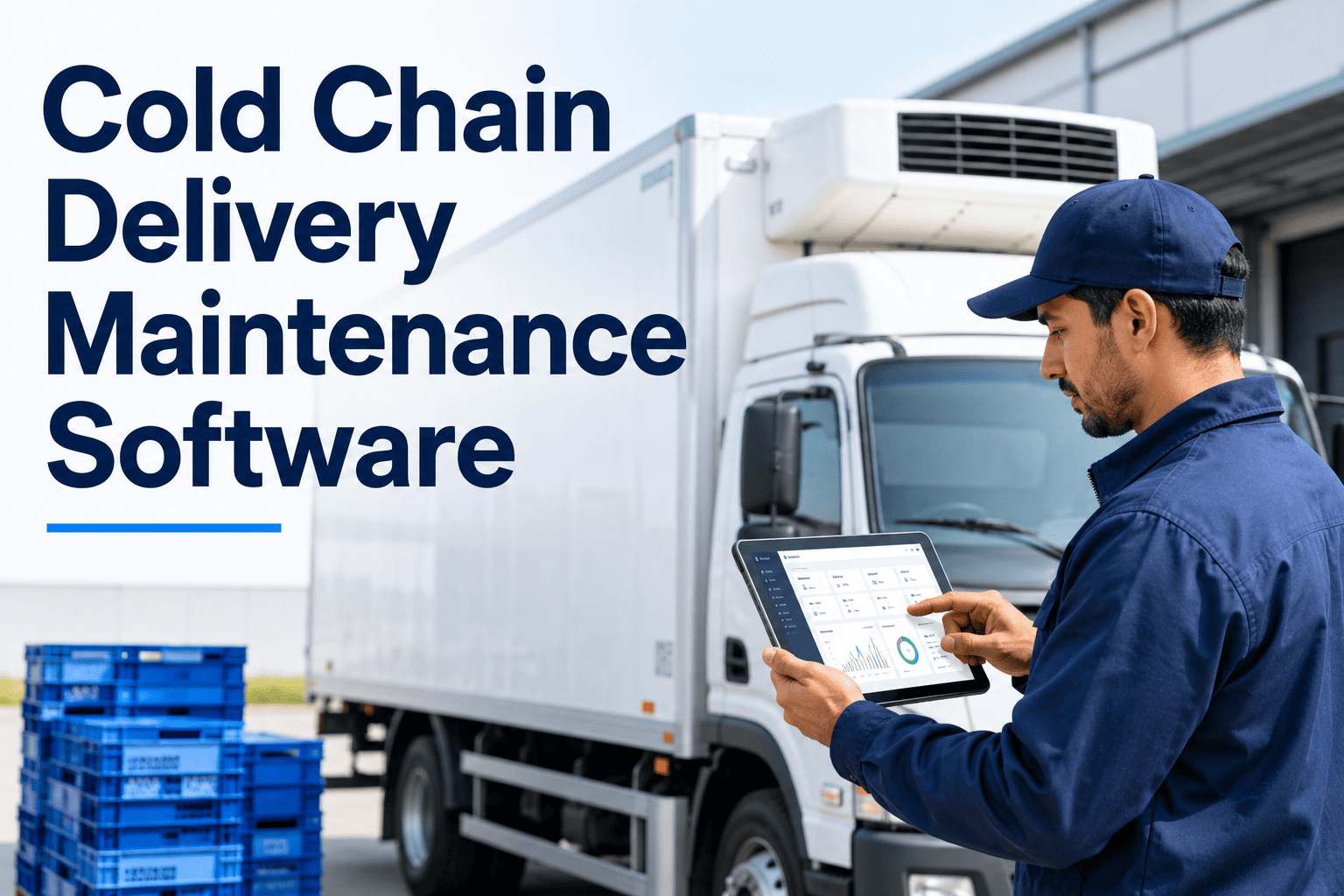
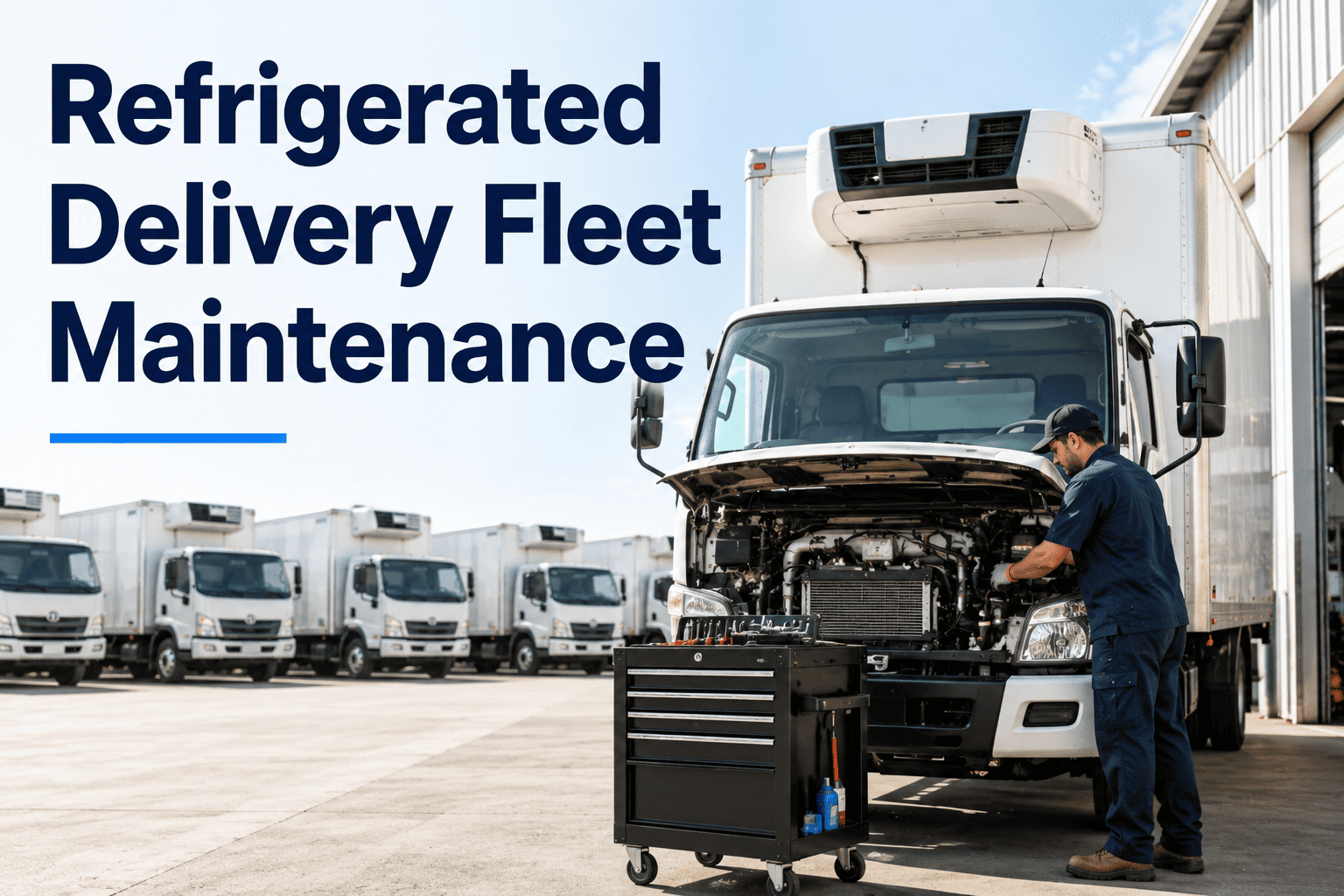
A standard van failure costs $700 and delays parcels. A refrigerated vehicle failure costs the same — plus spoiled cargo, a food safety audit, and a customer contract at risk. Cold chain fleet maintenance means managing two mechanical systems simultaneously: the road vehicle and the reefer unit, each with its own failure modes and compliance requirements. OxMaint monitors both in one platform — connecting OBD vehicle diagnostics with reefer unit sensor data, temperature compliance logging, and predictive maintenance for compressors, condensers, evaporators, and door seals. For cold chain operators in the USA, UK, Canada, Germany, Australia, and UAE, this is not an upgrade. It is the difference between a fleet that protects cargo and one that creates liability.
Two Systems. One Failure Risk. One Platform to Monitor Both.
Real-time reefer unit monitoring, temperature compliance alerts, predictive maintenance for refrigeration components, and automated compliance records — all connected to your vehicle health data.
The Cold Chain Maintenance Challenge That Standard Fleet Software Misses
Standard fleet maintenance software is designed around a single failure domain — the road vehicle. Reefer units are a separate mechanical system with separate failure modes that standard fleet software ignores entirely. A compressor that is running 12% below optimal efficiency will not trigger an engine fault code — it will just lose temperature setpoint reach over several weeks until a route fails a cargo inspection. A door seal leak shows no OBD signal at all — just a subtle increase in compressor cycle frequency that an ML model can detect but a fixed-interval service schedule will miss entirely. OxMaint connects both domains — vehicle OBD diagnostics and reefer unit sensor data — into a unified health model per vehicle that tracks refrigeration performance continuously and flags degradation patterns before they become temperature excursions or compliance failures. Start your free OxMaint trial and connect your refrigerated fleet — vehicle and reefer unit health monitoring from day one.
WHAT OXMAINT MONITORS — ROAD VEHICLE + REEFER UNIT IN ONE PLATFORM
Inlet/outlet delta-T, fan current, head pressure, coil fouling
04
Evaporator & Airflow
Airflow velocity, defrost cycle frequency, return air delta
05
Door Seal Integrity
Compressor cycle frequency, recovery time, setpoint recovery rate
06
Refrigerant Level
System pressure, refrigerant loss indicators, leak detection
Temperature Monitoring: Three Zones, One Compliance Record
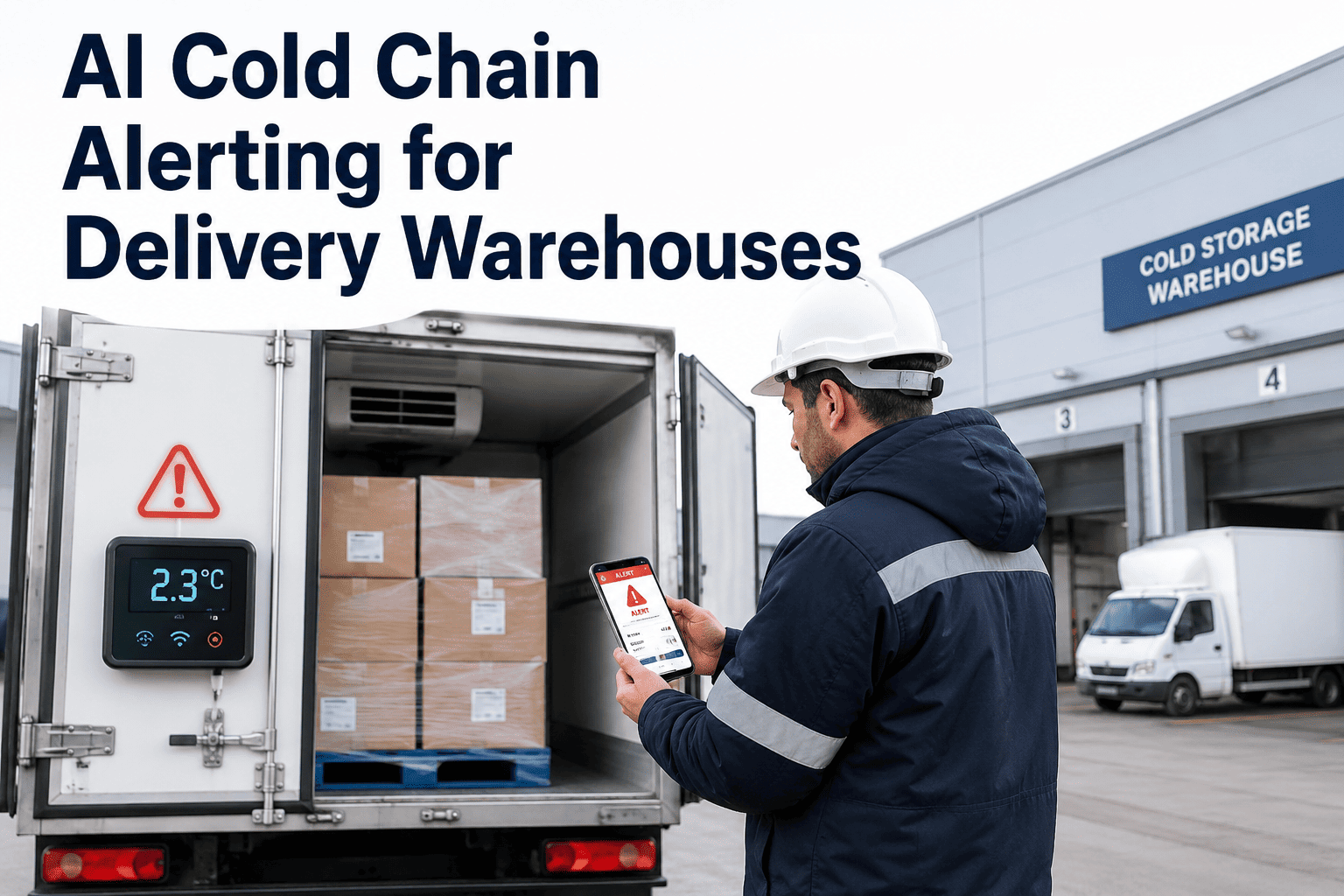
Every refrigerated vehicle operates within a required temperature band — typically –25°C to +15°C depending on cargo type and regulatory framework. OxMaint monitors cargo temperature continuously, categorises every reading against the required setpoint, and logs every excursion with timestamp, duration, deviation magnitude, and the reefer unit sensor data from that period. For FDA 21 CFR, HACCP, EU Regulation 853/2004, and Australian FSANZ cold chain compliance, this produces an unbroken temperature evidence record per journey that is exportable for audit, inspection, or customer verification. Book a demo to see OxMaint's temperature compliance dashboard configured for your specific cargo categories and regulatory framework.
CARGO TEMPERATURE ZONES — OXMAINT CONTINUOUS MONITORING
–25°C to –18°C
Deep Frozen
Ice creamFrozen mealsFish & seafood
FDA 21 CFR · EU 853/2004
0°C to +5°C
Chilled
Dairy productsFresh meatProduce
HACCP · FSANZ · UK FSA
+2°C to +8°C
Pharma & Medical
VaccinesBiologicsDiagnostics
WHO / GDP · GSP Guidelines
+10°C to +15°C
Cool Ambient
Wine & beveragesConfectioneryFlowers
Industry standards
OxMaint monitors all four zones simultaneously. Multi-compartment reefer units are supported with independent temperature logging per compartment.
Your Cargo Temperature Is a Compliance Record. Treat It That Way.
Continuous monitoring, excursion alerts, and auto-generated compliance logs — per journey, per compartment, per cargo type.
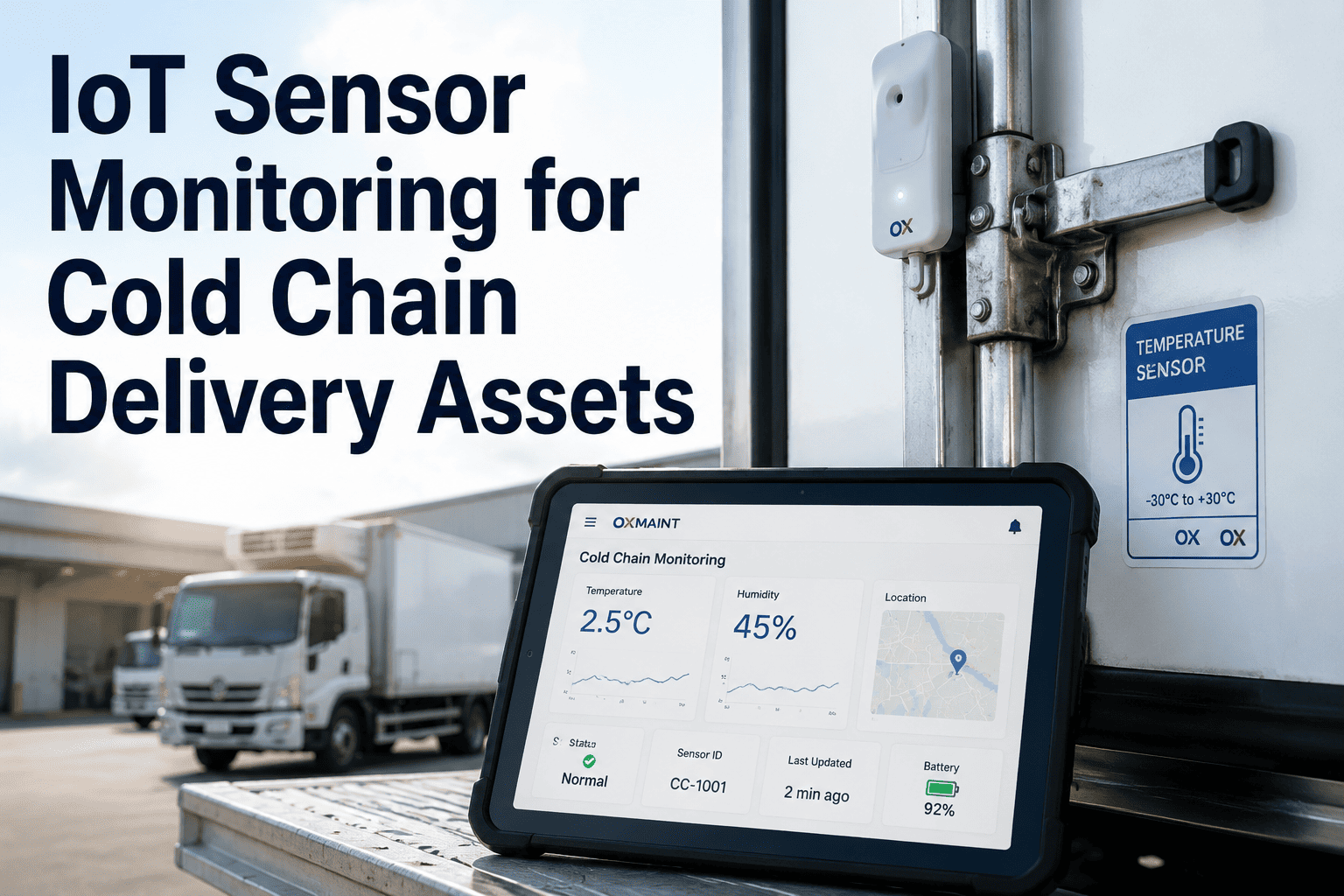
Refrigeration unit failures do not happen without warning — they degrade progressively across measurable performance indicators that are detectable weeks before the failure event. A compressor losing efficiency will show rising discharge temperature, increasing run-time ratio, and declining pressure differential over days or weeks before it stops cooling entirely. OxMaint's predictive maintenance engine monitors all four primary reefer unit components continuously — compressor, condenser, evaporator, and door seals — building a degradation model per component per vehicle that identifies the point at which a planned repair is warranted, and generates a work order automatically. The result is a shift from reefer unit servicing on a fixed calendar schedule — which over-services some units and under-services others — to condition-based maintenance that responds to what the sensor data actually shows. OxMaint's reefer predictive maintenance connects via IoT sensor integration or direct connection to Thermo King and Carrier reefer unit data interfaces.
REEFER UNIT COMPONENT HEALTH — WHAT OXMAINT MONITORS PER VEHICLE
Compressor
Discharge temperature trend
Run-time ratio per cycle
Suction/discharge pressure delta
Oil pressure and temperature
Predicts: bearing failure, valve wear, refrigerant loss
Condenser
Condenser inlet/outlet delta-T
Fan motor current draw
Head pressure trend
Coil fouling indicator
Predicts: fan failure, coil fouling, pressure overload
Evaporator
Airflow velocity trend
Defrost cycle frequency
Return air temperature delta
Evap fan motor draw
Predicts: ice blockage, fan failure, airflow restriction
Door Seals & Gaskets
Compressor cycle frequency
Temperature recovery time
Door open event log
Setpoint recovery rate
Predicts: seal degradation, load door failure, heat leak
Compliance Coverage: FDA, HACCP, DVSA, and Beyond
Cold chain compliance is a dual requirement — the vehicle must meet road transport maintenance standards, and the reefer unit must produce an unbroken temperature evidence record that satisfies food safety and pharmaceutical regulations. OxMaint generates both records automatically from the same monitoring infrastructure. The temperature compliance record for FDA 21 CFR or EU 853/2004 is produced from the same sensor data that drives predictive maintenance decisions — no separate logging system, no manual data assembly, no gaps during route changes or overnight parking. For UK operators facing DVSA and FSA requirements simultaneously, US operators under FDA and DOT, or Australian operators managing NHVL and FSANZ obligations, OxMaint generates the correctly formatted record for every applicable framework from one monitoring setup — book a demo to confirm your specific regulatory requirements are covered.
REGULATORY COMPLIANCE COVERAGE BY REGION
USA
FDA 21 CFR · DOT
FSMA transport ruleTemperature loggingSanitary transportVehicle maintenance records
United Kingdom
DVSA · UK FSA
Daily walk-around recordsTemperature evidenceReefer maintenance logATP certification data
Canada
CFIA · NSC Std 13
Safe food transportTemperature recordsPM documentationChain of custody
Germany
StVZO · BVL
ATP temperature regulationHU periodic inspectionFood hygiene recordsMaintenance log books
Australia
FSANZ · NHVL
FSANZ cold chain codeChain of responsibilityTemperature monitoringMaintenance management
Technology Stack: OBD, IoT, SAP, PLC, Digital Twin, AI Camera
Cold chain fleet maintenance requires more data layers than standard fleet operations — the vehicle diagnostic layer, the reefer unit sensor layer, the depot infrastructure layer, and the enterprise record layer all need to be connected and reconciled. OxMaint integrates all five. OBD provides the road vehicle diagnostics. IoT sensors and direct reefer unit data interfaces provide the refrigeration health layer. SAP bidirectional integration keeps enterprise asset and compliance records current without double entry. PLC integration connects depot refrigerated loading bay and pre-cooling infrastructure. The AI digital twin simulates the impact of reefer unit maintenance decisions before they are applied. AI camera vision at the depot gate adds visual inspection data for door seal condition and cargo load security that no sensor can capture. OxMaint deploys all six integration layers from a single platform — connect the layers relevant to your infrastructure today, add more as your operation scales.
Temperature, pressure, airflow, and defrost cycle data from Thermo King, Carrier, and third-party reefer unit interfaces.
Thermo King + Carrier compatible
SAP
Enterprise Sync
Every maintenance event and temperature compliance record writes to SAP PM and MM automatically. No double entry across vehicle and reefer records.
SAP PM/MM bidirectional
PLC
Depot Infrastructure
Pre-cooling bay PLC feeds pre-departure temperature records into the compliance log. Loading bay door open/close events tracked against setpoint.
Pre-cooling records auto-logged
Digital Twin
Reefer Simulation
Virtual reefer unit model tests compressor service intervals, route temperature profiles, and repair deferral risk before decisions are applied to live vehicles.
Test decisions on virtual reefer
AI Camera
Visual Inspection
Depot gate cameras inspect door seal condition, cargo load security, and reefer unit exterior damage — catching what sensors cannot detect before departure.
Door seal + cargo visual check
"Before OxMaint, our reefer and vehicle maintenance records were in two separate systems and never talked to each other. We had a compressor failure in April that came with zero warning. After deploying OxMaint, we caught the same degradation pattern in a second unit six weeks later — the work order was generated before the driver even noticed anything. We haven't had a temperature excursion in nine months."
Fleet & Compliance Manager
Cold Chain Logistics — 28 refrigerated vehicles · UK
Frequently Asked Questions
Q1
Does OxMaint work with Thermo King and Carrier reefer units?
Yes — OxMaint integrates with Thermo King's TracKing telematics and Carrier's Fleet Intelligence system via API, receiving real-time reefer unit performance data including temperature, compressor status, and fault codes. For units without direct telematics, IoT sensor retrofits are supported. Both approaches feed the same predictive maintenance model.
Q2
Can OxMaint produce FDA FSMA-compliant temperature records automatically?
Yes — OxMaint generates temperature logs per journey that include all FDA FSMA Sanitary Transportation Rule required elements: shipper and carrier identification, temperature setpoint, continuous temperature readings, excursion events with timestamps and duration, and corrective actions. Records are exportable on demand for inspection or audit. Book a demo to confirm your specific compliance framework is covered.
Q3
How does OxMaint handle multi-compartment refrigerated vehicles?
Multi-compartment vehicles are supported with independent temperature monitoring per compartment, separate setpoint compliance tracking, and individual excursion alerts per zone. Each compartment generates its own compliance record — critical for vehicles carrying mixed cargo categories (fresh, chilled, and frozen simultaneously) under different regulatory frameworks.
Q4
Does OxMaint integrate with SAP for cold chain compliance reporting?
Yes — OxMaint integrates bidirectionally with SAP PM and MM. Vehicle maintenance records, reefer unit service events, and temperature compliance records all write to SAP automatically — keeping enterprise asset records current without manual entry. Essential for US, UK, German, and Australian cold chain operations where SAP is standard infrastructure.
Q5
How quickly does OxMaint deploy across a cold chain fleet?
A 20-vehicle cold chain fleet is typically fully live within one week. Day 1–2: vehicle OBD connected, reefer unit telematics integrated. Day 3–4: compliance templates configured for applicable regulations (FDA, DVSA, FSANZ, etc.). Day 5–7: dashboard live, alerts configured, SAP integration active. First AI-generated reefer maintenance prediction typically within 14–21 days. Start your free trial — deployment support included from day one.
Protect Your Cargo. Protect Your Compliance. One Platform for Both.
Reefer monitoring, temperature compliance records, and predictive maintenance — connected to your vehicle health data.