When a reefer unit quits on a loaded van, the clock starts immediately. Product temperature climbs, the driver calls dispatch, and someone has to decide whether the load is still safe to deliver. The repair bill is usually the smaller number. Spoiled product, rejected deliveries, and documentation for food safety audits add up fast. This guide covers refrigerated vehicle maintenance, from pre-trip checks to planned service, and shows how Oxmaint helps fleets keep the cold chain unbroken on the road.
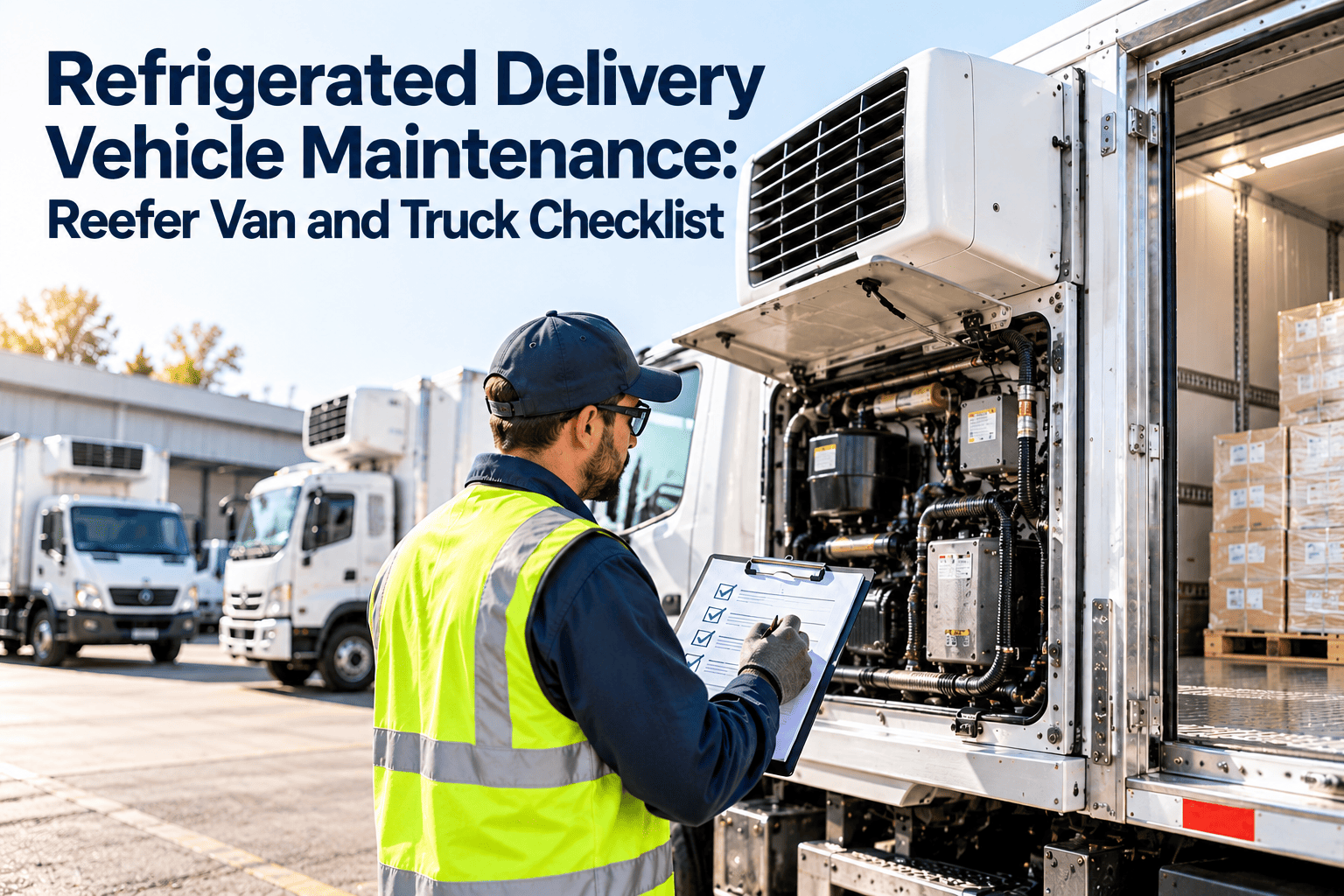
Refrigerated Delivery Vehicle Maintenance: Reefer Van and Truck Checklist
Reefer Vehicle Maintenance Checklist: Pre-Trip to Annual
- Controller alarms. Unit powers on with no active alarms and the setpoint matches the load.
- Fuel and power. Fuel suits the route, battery is sound, standby connection works.
- Belts and fans. Belts intact and tight, fans turn freely, no unusual noise.
- Leaks. No oil or refrigerant leakage under or around the unit.
- Airflow. Evaporator outlet and return clear, air chute intact.
- Door seals and latches. Gaskets compress evenly and doors latch fully.
- Interior. Clean, dry, drains clear, no standing water or odor.
- Probes. Readings sensible against a reference thermometer.
- Pre-cool. Empty body reaches setpoint before loading starts.
- Product temperature checked. Record the reading at loading against the limit.
- Airflow space left. Load clear of walls, ceiling, and air chute.
- Door open time kept short. Doors closed between pallets when practical.
- Setpoint and mode confirmed. Correct continuous or start-stop mode for the product.
- Logger started. Recorder running with the right route and load details.
- Seal or lock applied. Doors secured and seal number recorded if required.
- Record the alarm. Note the code, time, and location before restarting anything.
- Limit door openings. Avoid opening doors until the problem is understood.
- Try the approved reset. Use only the steps in your written procedure.
- Escalate quickly. Call dispatch or maintenance if the alarm persists.
- Decide on the load. Apply set rules for transfer, delivery, or hold.
- Save evidence. Keep logs and photos, then open a work order.
- Review alarms and logs. Download or print temperature records for the trip.
- Clean the cargo area. Remove spills and debris, check drains.
- Look for new damage. Gaskets, liners, doors, and air chute.
- Check fuel and battery. Refuel and note any starting problems.
- Report defects. Log every defect so a work order is created.
- Park for readiness. Connect standby power where available.
- Coils and drains. Clean evaporator and condenser coils, confirm defrost and drain flow.
- Belts and mounts. Inspect belts, pulleys, and unit mounting.
- Door seals. Replace worn gaskets and adjust latches.
- Battery and fuel system. Test the battery and check filters.
- Probe verification. Compare probes to a reference and calibrate or replace.
- Parts stock. Confirm belts, filters, gaskets, and probes are on hand.
- Unit service. Complete full service to the maker's schedule.
- Performance test. Verify pull-down time and holding ability.
- Body and insulation. Inspect floor, walls, and roof for damage and wet insulation.
- Electrical review. Check wiring, connectors, and standby equipment.
- Calibration records. File probe and logger calibration with the asset.
- History review. Review repeat faults and decide repair or replacement.
Sign-off block for each vehicle
Where the Cold Chain Actually Breaks
A failure at any link can ruin a load. Maintenance programs that only cover the refrigeration unit leave the other four exposed.
Why Reefer Failures Cost More Than the Repair
- Product loss can far exceed the cost of the part that failed.
- Rejected deliveries damage customer trust, especially with grocery, food service, and pharmaceutical customers.
- Temperature excursions trigger investigations, documentation, and sometimes disposal decisions.
- Road service calls on delivery routes cost more than shop repairs.
- Replacement vehicles and rerouted loads disrupt the rest of the day.
Compliance raises the stakes
In the United States, the FDA Sanitary Transportation of Human and Animal Food rule requires carriers and shippers to maintain temperature control for foods that need it. Customers also add their own audit requirements, so confirm what applies to your operation.
Preventive Maintenance Structure
Follow the manufacturer, then adjust with your data
Thermo King, Carrier Transicold, and other makers publish service intervals, often tied to unit run hours. Start with those, then tighten intervals on units with repeat faults.
Common Reefer Failure Modes and Early Warnings
Alarm Response: What Drivers and Dispatch Should Do
Cold Chain Records That Auditors and Customers Ask For
- Pre-trip inspection results with date, driver, and vehicle.
- Pre-cool confirmation before loading.
- Temperature logs for the full route, with alarm events noted.
- Calibration records for probes and recorders.
- Cleaning and sanitation records for the cargo area.
- Maintenance history for the unit and the body.
- Corrective actions after any excursion.
Before and After: Reactive Reefer Care Versus a Planned Program
- Service happens after an alarm or failure.
- Pre-trip checks live on paper, and some are skipped.
- Repeat faults are not tracked by unit.
- Audit prep means searching for logs.
- Service follows hours and intervals.
- Digital checklists enforce required steps.
- Fault history shows weak units before they fail.
- Records are searchable by vehicle and date.
Cargo Body and Door Care: The Overlooked Half
| Component | Why it matters | What to inspect |
|---|---|---|
| Door gaskets | Warm air leaks force the unit to run harder | Cracks, flattening, gaps at corners |
| Door hinges and latches | Poor closure breaks the seal | Wear, play, and fully engaged locks |
| Floor and T-bar channels | Airflow under the load depends on them | Damage, debris, and blocked channels |
| Wall liners and insulation | Punctures and moisture reduce insulating value | Dents, holes, wet spots, and delamination |
| Air chute | Directs cold air along the load | Tears, sagging, and loose fasteners |
| Drain lines | Blocked drains cause pooling and ice | Free flow and intact flaps |
Small body damage becomes a recurring alarm
A torn gasket or punctured liner can look cosmetic. In practice it raises unit run time, delays pull-down, and wears components faster.
Operating Practices That Reduce Maintenance Load
- Pre-cool the body to setpoint before loading, and confirm it with a reading.
- Load product at the right temperature, since reefers hold temperature but are not designed to pull it down.
- Leave airflow space around the load and keep product off the walls and the air chute.
- Limit door open time at each stop, especially in hot or humid weather.
- Choose the correct continuous or start-stop mode for the product and route.
- Do not store loose items where they can block return air or damage the chute.
Technician Skills and Safety
- Refrigerant handling requires certified technicians in many jurisdictions.
- Reefer work involves electrical, engine, and moving parts hazards, so lockout and tagout procedures apply.
- Confined spaces and ice buildup in cargo areas add slip and entrapment risks.
- Cleaning chemicals around food-contact surfaces need approved products and rinse steps.
- Keep training records alongside maintenance records.
Parts Strategy for a Reefer Fleet
Using Repair History to Decide Repair, Retire, or Replace
How Oxmaint Supports a Reefer Maintenance Program
Oxmaint is maintenance management software for fleets and facilities. It manages the work, history, and records around your reefer fleet.
- Asset records for each tractor, van, trailer, and refrigeration unit, with separate histories.
- Preventive maintenance based on calendar dates or hour and mileage readings.
- Mobile pre-trip and post-trip checklists that create work orders when a defect is recorded.
- Corrective work orders with priority levels, so cold chain defects are repaired first.
- Parts inventory for belts, filters, gaskets, probes, and batteries.
- Reports on repeat failures, downtime, and cost by unit.
Link the unit and the vehicle
Track the refrigeration unit and the vehicle as related assets. A recurring alarm may belong to the unit, the battery system, or the body, and separate histories help isolate the cause.
KPIs for a Reefer Fleet
Seasonal Considerations
- Summer: heavier cooling load, so check condensers, airflow, and door seals before peak heat.
- Winter: cold starts stress batteries, fuel systems, and glow plugs, and some loads need protection from freezing.
- Peak delivery seasons: shorten intervals on units with a history of faults and keep spare parts ready.
Getting Started in 30 Days
Last-Mile Reefer Challenges
- Frequent door openings on multi-drop routes.
- Stop-start driving and long idle periods.
- Hot parking lots and heat from loading docks.
- Rushed loading during peak delivery windows.
- Strip curtains or partitions where they suit the product and route.
- Pre-cooling on standby power before the route starts.
- Load plans that place early stops near the doors.
- Shorter service intervals on multi-drop vans.
Temperature Monitoring Maintenance
- Verify probes against a reference thermometer on a set schedule.
- Replace damaged or drifting sensors rather than adjusting around them.
- Check recorder batteries, printouts, and data downloads before each route.
- Test remote alerts so dispatch actually receives them.
- Store calibration records with the asset, not in a separate binder.
Monitoring is part of maintenance
If the sensor is wrong, every alarm decision is wrong. Treat probes and loggers as assets with their own schedule.
Driver Ownership: Small Habits, Big Effect
- Complete the pre-trip honestly, and report anything unusual even if it seems minor.
- Keep doors closed during loading pauses and between stops.
- Note alarm codes with a time and location before restarting anything.
- Keep the cargo area clean and report spills or odors.
- Return keys, logs, and paperwork so the next shift starts clean.
Reefer Maintenance Mistakes to Avoid
- Servicing only after an alarm, so small problems grow into route failures.
- Skipping the empty pre-cool check because the schedule is tight.
- Treating door gaskets and body damage as cosmetic issues.
- Keeping records for the vehicle but not for the refrigeration unit.
- Letting calibration lapse on probes and loggers.
- Ordering parts only after a failure, which turns short repairs into long outages.
- Failing to review repeat faults across the fleet each month.
Monthly Fleet Review Agenda
| Review item | Question to answer | Owner |
|---|---|---|
| Alarms and excursions | Which units, routes, or drivers show a pattern? | Fleet manager |
| Overdue PM | Which services slipped and why? | Maintenance supervisor |
| Repeat repairs | Which faults came back within the review period? | Lead technician |
| Parts usage | Which parts ran short or sat unused? | Parts coordinator |
| Calibration | Which probes and loggers are due? | Quality or safety lead |
Choosing What to Digitize First
- Start with the pre-trip checklist, since it creates the most useful daily data.
- Add recurring service tasks for each reefer unit, using hour or calendar triggers.
- Link defects to work orders so nothing is lost between shifts.
- Load existing service history for the oldest and most problematic units first.
- Expand to calibration, parts inventory, and cost reporting once the daily routine is stable.