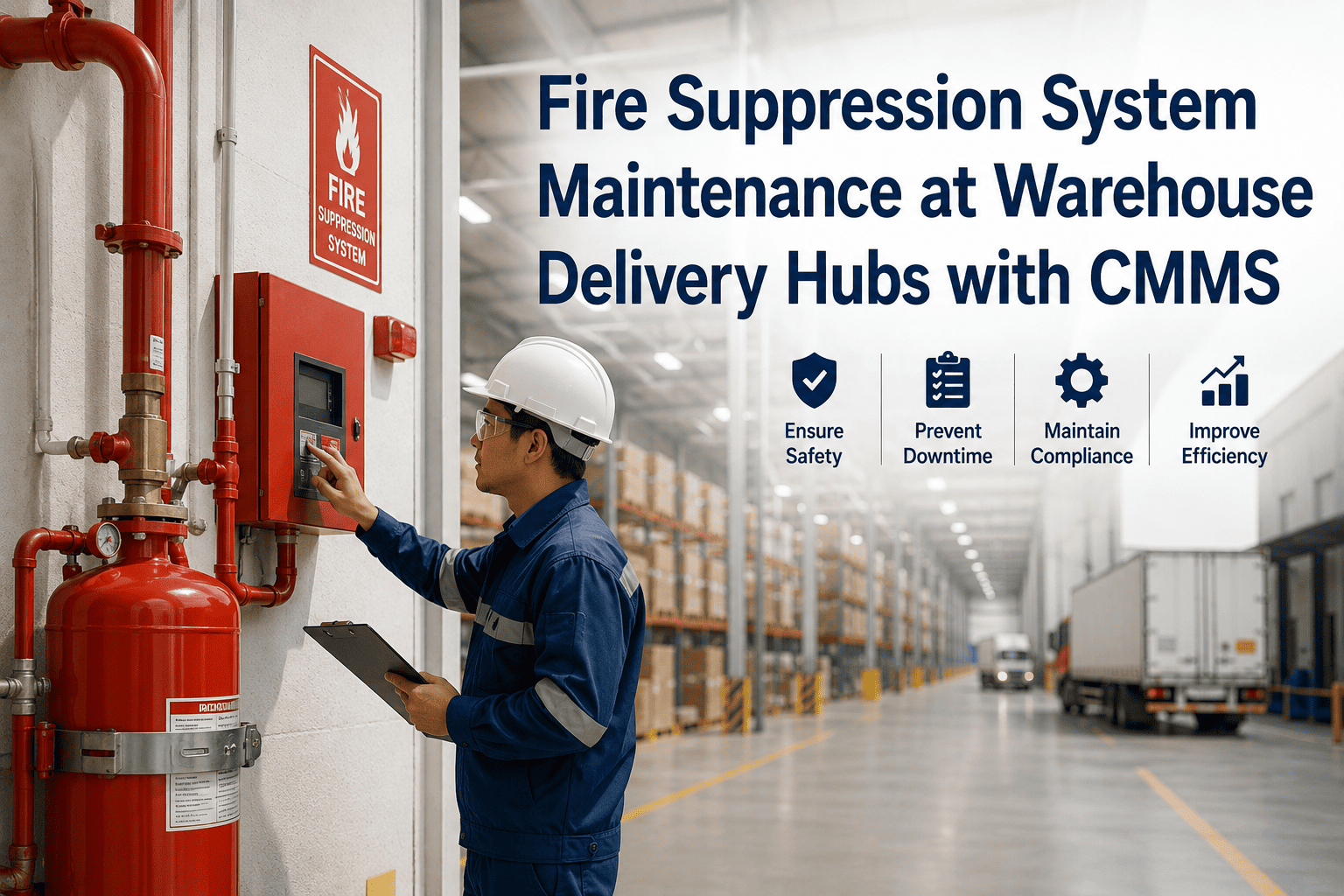
Distribution Center Fire Protection System Inspections
By Alice Walker on February 20, 2026
On March 15, 2022, a fire ignited on the second level of a pick module inside a 1.4-million-square-foot order fulfillment warehouse in Plainfield, Indiana. The sprinkler system activated and firefighters arrived quickly — extinguishing visible flames within minutes. Then the fire pumps were shut down. Within the hidden spaces above the pick module, smoldering combustibles that had been burning undetected for 30 to 40 minutes reignited. With the sprinklers now offline, the fire spread unchecked. The defensive strategy that followed could not save the building. Total loss: the entire facility and over $500 million in property damage. The investigation revealed a chain of compounding failures — not in the building's fire protection design, which met code, but in the operational decisions made during the event and the inspection gaps that preceded it. A fire pump that gets shut down during a live fire is a procedural failure. A fire that smolders undetected for 40 minutes in a monitored facility is a detection gap. Both are preventable with rigorous, documented, CMMS-tracked fire protection inspection programs. Every distribution center has the same sprinkler heads, the same alarm panels, and the same suppression systems. The ones that survive fires are the ones that inspect them.
Distribution centers concentrate massive inventory value — $50 million to $500 million or more — under a single roof with high-rack storage, automated conveyors, lithium-ion battery charging stations, and 24/7 operations. Fire protection systems in these environments are not optional accessories. They are the single layer between a controlled incident and a total loss. NFPA 25 governs sprinkler and water-based system inspections. NFPA 72 governs fire alarm and detection systems. NFPA 10 covers portable extinguishers. Together, these standards define exactly what must be inspected, how often, and what documentation is required. Yet the majority of distribution centers track these inspections on paper logs, spreadsheets, or memory — creating the documentation gaps that insurers exploit to deny claims and AHJs cite during violations. This guide covers every fire protection inspection required in a distribution center, the frequencies mandated by code, and how CMMS integration turns compliance from a paperwork burden into an automated, audit-ready system.
1,210+
Warehouse fires reported annually in the U.S. — averaging $155M+ in property damage
$500M
Single-incident loss from the 2022 Plainfield mega-warehouse fire despite code-compliant systems
96%
Of sprinkler systems operate effectively in fires when properly inspected and maintained per NFPA 25
Fire Protection Systems in a Distribution Center
A typical distribution center over 100,000 square feet contains four to six distinct fire protection systems, each governed by different NFPA standards and inspection frequencies. Missing an inspection on any single system creates a gap that compromises the entire fire protection chain.
Wet Sprinkler Systems
NFPA 13 / NFPA 25
Pressurized water pipes with automatic sprinkler heads. The primary defense in occupied, heated spaces. Covers general storage, office, and shipping areas.
Fire Alarm and Detection
NFPA 72
Smoke detectors, heat detectors, pull stations, notification appliances, and the fire alarm control panel (FACP). Initiates evacuation and suppression activation.
ESFR / High-Pile Sprinklers
NFPA 13 / NFPA 25
Early Suppression Fast Response heads designed for high-rack storage. Higher water flow, faster activation. Critical for warehouse areas with racking above 12 feet.
Fire Pump Systems
NFPA 20 / NFPA 25
Electric or diesel-driven pumps that boost water supply pressure. Without the fire pump, sprinkler heads in large DCs cannot deliver required water density.
Portable Extinguishers
NFPA 10
First-response suppression for incipient-stage fires. Required at maximum 75-foot travel distance throughout the facility. Monthly visual, annual maintenance.
Dry / Pre-Action Systems
NFPA 13 / NFPA 25
Air-pressurized systems for unheated dock areas, freezer storage, and cold chain zones where wet pipe would freeze. Requires additional trip testing.
Every system above must be inspected at different intervals — some weekly, some monthly, some quarterly, some annually. A CMMS automates every schedule and documents every inspection. Sign up free to start building your fire protection inspection program today.
Complete Inspection Frequency Matrix
This matrix consolidates NFPA 25, NFPA 72, and NFPA 10 inspection requirements into a single reference for distribution center fire protection compliance. Every line item below should be a scheduled work order in your CMMS.
Component
Inspection Type
Frequency
NFPA Standard
What to Check
SPRINKLER SYSTEMS (NFPA 25)
Sprinkler heads
Visual
Monthly / Quarterly
NFPA 25 5.2
No obstructions, damage, corrosion, paint, or loading within 18" clearance
Control valves
Visual + position
Weekly / Monthly
NFPA 25 13.1
Locked open, tamper switch functional, accessible, no leaks
Gauges (wet system)
Visual
Monthly
NFPA 25 5.3
Normal pressure reading, no damage to gauge face
Waterflow alarms
Functional test
Quarterly
NFPA 25 5.3
Open inspector test valve, confirm alarm at FACP within 90 seconds
Normal condition indicators, no trouble/supervisory signals, power on
Smoke detectors
Sensitivity test
Annually
NFPA 72 14.4
Functional test per listed sensitivity range, clean if needed
Heat detectors
Functional test
Annually
NFPA 72 14.4
Test per manufacturer method, verify alarm at FACP
Pull stations
Functional test
Annually
NFPA 72 14.4
Activate each station, verify alarm signal received at FACP
Notification appliances
Functional test
Annually
NFPA 72 14.4
Verify audible and visible alarms in all required zones
PORTABLE EXTINGUISHERS (NFPA 10)
All extinguishers
Visual
Monthly
NFPA 10 7.2
In place, accessible, charged, pin/seal intact, no visible damage
All extinguishers
Maintenance
Annually
NFPA 10 7.3
Full internal examination by certified technician, tag updated
Stored-pressure units
Hydrostatic test
Every 5-12 years
NFPA 10 7.4
Hydrostatic test per DOT requirements based on extinguisher type
DRY / PRE-ACTION SYSTEMS (NFPA 25)
Dry pipe valve
Trip test
Annually
NFPA 25 11.4
Full trip test — verify valve opens, water delivery time within limits
Low-point drains
Drain
Quarterly / as needed
NFPA 25 11.2
Drain all low points to prevent ice formation and internal corrosion
Air compressor
Operational check
Monthly
NFPA 25 11.2
Verify air pressure maintained, compressor cycles properly
Every row above is a work order. A CMMS generates each inspection automatically at the correct frequency, assigns it to the right technician, and stores the completed record for instant AHJ or insurer retrieval.
Inventory loss is only the beginning. The downstream costs of a DC fire cascade through the entire supply chain — and most of them are uninsured or under-insured.
1
Inventory and Building Loss
$5M — $500M+
High-rack storage concentrates enormous value per square foot. A single bay of racking can hold $200K+ in product.
2
Business Interruption
$10M — $100M+
Rerouting fulfillment to alternate DCs takes weeks. Customer SLA violations, retailer chargebacks, and contract penalties compound daily.
3
Insurance Claim Denial or Reduction
20 — 100% of claim
Carriers routinely reduce or deny claims when documented inspection records are incomplete, missing, or inconsistent with NFPA requirements.
4
Regulatory Fines and Enforcement
$10K — $500K+
OSHA citations, AHJ violations, and fire marshal orders. Repeat violations escalate penalties and can force facility closure until remediation.
5
Customer and Contract Loss
Unquantifiable
Major retail and e-commerce clients shift volume permanently after fulfillment disruptions. Recovery takes years if it happens at all.
Paper Logs vs. CMMS-Managed Inspections
Paper / Spreadsheet Tracking
Inspector checks boxes on clipboard — no photo evidence
Logs stored in binder in fire riser room — nobody reviews them
Missed inspections invisible until AHJ audit reveals gaps
Fire pump weekly test documented inconsistently across shifts
No automatic escalation when deficiency is found
Insurer requests records — 3 days scrambling to compile
VS
OXmaint CMMS
Digital checklists with photo capture and GPS timestamp
Records stored centrally — searchable, exportable, audit-ready
Overdue inspections trigger alerts to supervisor and safety manager
Fire pump test auto-scheduled weekly with required data fields
Deficiency auto-generates corrective work order with priority
One-click compliance report exported in under 30 seconds
Compliance is not about doing more inspections — it is about proving you did them. Sign up free to replace paper logs with audit-ready digital fire protection records.
ROI of CMMS-Managed Fire Protection Compliance
Based on a 500,000 sq ft distribution center with wet sprinkler, ESFR, fire pump, alarm, and extinguisher systems — a typical mid-to-large e-commerce or retail DC.
$185,000
Insurance Premium Savings
Documented NFPA compliance program secures 12-18% premium reduction
$340,000
Claim Denial Prevention
Complete inspection records eliminate "lack of maintenance" exclusions
$75,000
Avoided Regulatory Fines
Zero AHJ violations from automated scheduling and deficiency tracking
$48,000
Labor Efficiency Gains
40% reduction in inspection admin time — digital vs. paper documentation
Total Annual Value of CMMS Fire Protection Management
$648,000
Against platform cost of $8,000-$15,000 annually — ROI exceeds 40x
Book a demo to see how OXmaint models fire protection compliance value for your distribution network.
Common Inspection Failures That Lead to Losses
Sprinkler Obstruction
Product stacked within 18 inches of sprinkler heads blocks spray pattern. The most cited NFPA 25 violation in warehouse inspections. ESFR heads require 36 inches of clearance.
Result: Sprinklers activate but cannot suppress fire at point of origin
Closed Control Valve
Valve accidentally left closed after maintenance or testing. Without weekly valve position verification, the entire sprinkler zone is offline — with no alarm indication.
Result: Sprinklers never activate — total loss of protected area
Fire Pump Failure to Start
Diesel pump battery dead, fuel contaminated, or electric pump controller fault. Weekly no-flow testing catches 95% of startup failures before they matter.
Result: Insufficient water pressure — sprinklers dribble instead of suppress
Detector Contamination
Dust, debris, and warehouse environment contaminate smoke detector chambers over months. Sensitivity drifts outside listed range. Annual sensitivity testing per NFPA 72 catches drift.
Result: Delayed detection — fire grows beyond incipient stage before alarm
Missing or Discharged Extinguishers
Extinguishers removed for forklift access, relocated without updating records, or found discharged during monthly visual inspection. Monthly checks per NFPA 10 prevent this.
Result: Workers cannot respond to incipient fire — small event becomes large
Case Study: 780,000 Sq Ft DC Achieves Zero Violations in 3 Years
A third-party logistics provider operating a 780,000-square-foot distribution center in Atlanta — servicing three major retail clients — had accumulated four AHJ violations over two consecutive annual inspections. Violations included missed fire pump weekly tests, incomplete extinguisher documentation, and two sprinkler zones where rack storage was within 12 inches of ESFR heads. Insurance carrier issued a warning letter: resolve violations or face 22% premium increase at next renewal.
They deployed OXmaint CMMS to manage the complete fire protection inspection program. Every NFPA-required inspection became an auto-scheduled work order with digital checklists, photo documentation, and supervisor sign-off. Fire pump weekly tests were assigned to Monday first shift with mandatory pressure readings logged. Sprinkler clearance inspections were added as monthly zone-by-zone walkthroughs. Extinguisher monthly checks were distributed across dock supervisors with CMMS mobile app completion.
4 violations
0 violations
AHJ Findings (3 consecutive years)
62% completed
99.7%
Inspection Completion Rate
3 days to compile
30 seconds
Compliance Report Generation
+22% warning
-14% actual
Insurance Premium Change
Frequently Asked Questions
What NFPA standards apply to distribution center fire protection inspections?
Three primary standards govern DC fire protection inspections. NFPA 25 covers all water-based systems including wet sprinklers, dry pipe, ESFR, fire pumps, and standpipes. NFPA 72 covers fire alarm and detection systems including smoke detectors, heat detectors, pull stations, and notification appliances. NFPA 10 covers portable fire extinguishers. Each standard specifies exact inspection types, frequencies, and documentation requirements. The CMMS should be configured to generate work orders matching each standard's intervals.
How often must fire pumps be tested in a warehouse?
NFPA 25 requires weekly no-flow (churn) testing where the pump is started and run for a minimum of 10 minutes while recording suction pressure, discharge pressure, and pump speed. Annual flow testing at 100% and 150% of rated capacity is required to verify pump performance against the original acceptance test curve. Diesel-driven pumps also require weekly fuel, battery, oil, and coolant checks. The weekly test is the most commonly missed fire protection inspection in distribution centers.
What is the 18-inch rule for sprinkler clearance?
NFPA 25 requires a minimum 18 inches of clear space below standard sprinkler deflectors to allow proper spray pattern development. ESFR sprinkler heads — common in high-rack warehouse storage — require 36 inches of clearance. Product, boxes, and inventory stored closer than these minimums obstruct the spray pattern and prevent effective fire suppression. This is the single most commonly cited violation in warehouse fire inspections and requires regular zone-by-zone walkthroughs to verify.
Can a CMMS help with fire protection insurance documentation?
Yes — this is one of the highest-value applications. Insurance carriers increasingly require documented evidence of NFPA-compliant inspection programs. A CMMS stores every inspection with timestamp, inspector name, photo documentation, readings, and deficiency tracking. When the carrier or broker requests compliance records, the facility exports a complete history in seconds rather than days. Properties with documented CMMS-managed programs routinely secure 10-18% premium reductions and prevent claim denials based on maintenance documentation exclusions.
What happens if we fail an AHJ fire inspection?
The Authority Having Jurisdiction can issue violations requiring correction within a specified timeframe — typically 30 to 90 days depending on severity. Critical violations like closed control valves or non-functional fire pumps may require immediate correction. Repeat violations escalate to fines starting at $10,000 and can result in occupancy restrictions or forced closure until remediation is verified. A CMMS prevents this cycle by ensuring every required inspection is completed on time and every deficiency generates a tracked corrective work order.
Your Sprinklers Were Inspected Last... When Exactly?
That $500 million warehouse in Plainfield had code-compliant fire protection systems. What it lacked was the operational rigor to keep them working when it mattered. Let OXmaint automate every NFPA-required inspection, document every test, and make your next AHJ audit the easiest meeting on your calendar.