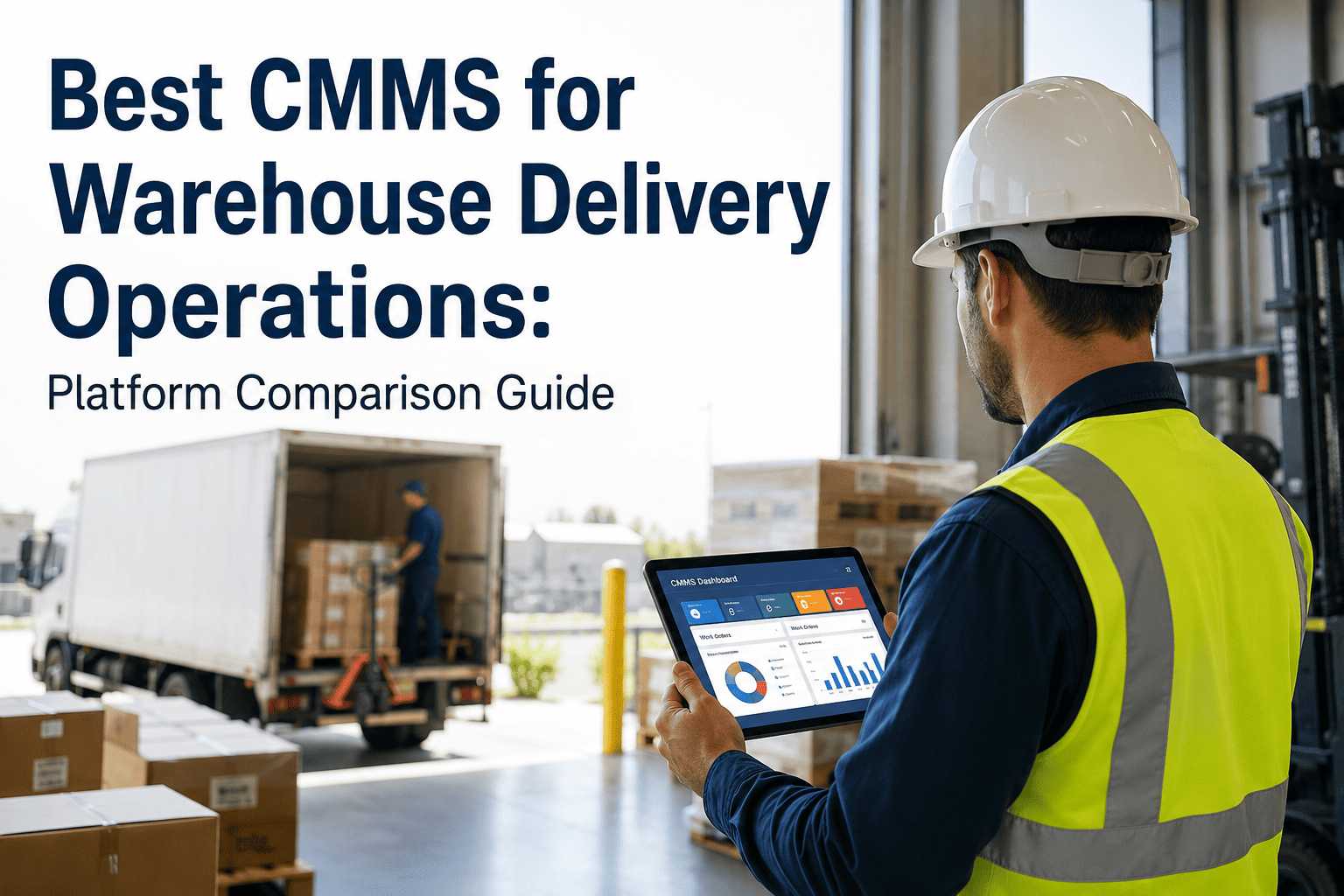
Choosing fleet maintenance software for a delivery company is not the same as choosing it for a trucking carrier, a construction fleet, or a field service operation. Delivery fleets have a specific combination of requirements — daily dispatch cycles, SLA-linked commercial consequences, high stop-count vehicle degradation, and multi-depot operational structure — that make generic fleet management tools the wrong fit. This 2026 comparison cuts through the market noise and focuses on what actually matters for delivery operations: which platforms prevent the breakdowns, compliance failures, and maintenance cost overruns that directly affect your ability to win and keep delivery contracts.
Comparison + Buyer Intent · 2026 Guide
Fleet Maintenance Software for Delivery Companies: Complete 2026 Comparison
An honest, delivery-focused comparison of the leading fleet maintenance platforms — features, AI capabilities, and which type of operation each one actually fits in 2026.
2026 Fleet Software Market — Delivery Operations Context
Delivery Fleets on Spreadsheets
47%
Annual Downtime Cost (100 vehicles)
$480K
Preventable Breakdowns (AI)
78%
Avg. Software ROI (2 yr)
300–450%
SLA Breaches from Breakdowns
38%
The 5 Platforms Delivery Companies Compare Most in 2026
These are the platforms delivery fleet operators most frequently evaluate. Each fits a different fleet size, operational complexity, and maintenance maturity level — understanding the differences prevents expensive mis-buys.
Head-to-Head Scorecard — Delivery-Critical Features
These are the nine capabilities that determine whether fleet maintenance software actually moves the needle for delivery operations. Generic feature lists do not show these gaps — the scorecard does.
Delivery Fleet Feature Scorecard — 2026
Scored on actual capability for delivery operations — not marketing descriptions
Full capability
Partial / limited
Not available
| Delivery-Critical Feature |
Oxmaint |
Fleetio |
Whip Around |
Fleet Complete |
ManagerPlus |
| AI Pre-Failure Detection (15–60 days) |
Full |
Limited |
None |
None |
None |
| Pre-Dispatch Health Scoring |
Full |
None |
Inspection |
None |
None |
| Dynamic Per-Vehicle PM Scheduling |
Full |
Calendar only |
Calendar only |
Calendar only |
Calendar only |
| Parts Demand Forecasting + Auto PO |
Full |
Basic tracking |
None |
None |
Inventory only |
| Live Multi-Depot Dashboard |
Full |
Reports only |
Basic |
GPS focus |
Custom reports |
| SLA Breach Root Cause Analytics |
Full |
None |
None |
None |
None |
| Telematics Integration (No New HW) |
Full |
Full |
Selected only |
Own HW preferred |
Limited |
| Mobile Technician App |
Full |
Full |
Full |
Driver focus |
Limited |
| Scales to 500+ Vehicles |
5,000+ |
Up to ~500 |
Under 150 |
Enterprise |
Enterprise |
Only Oxmaint scores Full on SLA breach analytics and pre-dispatch health scoring.
These are the two capabilities that directly connect fleet maintenance to delivery contract performance — and neither is available in any other mid-market platform.
Start Free Trial →
Decision Matrix — Which Platform Fits Your Fleet?
Fleet size and operational complexity are the two variables that determine which platform tier is the right fit. Use this decision matrix before shortlisting platforms for evaluation.
Fleet Maintenance Software Selection Matrix — 2026
Match your fleet profile to the right platform tier before evaluating
Under 75 vehicles
Single depot, compliance-focused, basic PM
Recommended Platform
Whip Around
DVIR compliance, digital inspections, and basic scheduling are sufficient for this fleet profile. Budget-efficient entry point.
Upgrade trigger: fleet grows past 75 vehicles or SLA compliance becomes a commercial KPI
75–300 vehicles
1–3 depots, digital work orders needed, growing PM compliance requirement
Recommended Platform
Fleetio or Oxmaint
Fleetio covers work order management well at this scale. Choose Oxmaint if predictive fault detection and pre-dispatch health scoring are priorities — the ROI case is clear above 100 vehicles.
Upgrade trigger: SLA penalties, mid-route breakdowns, or multi-depot visibility gaps emerging
300–5,000+ vehicles
Multi-depot, SLA-linked contracts, maintenance cost as operational KPI
Recommended Platform
Oxmaint
At this scale, AI pre-failure detection, dynamic scheduling, and SLA analytics are not optional features — they are operational requirements. The maintenance cost reduction alone (25–35%) justifies the platform investment within the first quarter.
Scale advantage: AI model improves fleet-wide as more vehicle data accumulates
Where Fleetio Falls Short for High-Volume Delivery Operations
Fleetio is a well-built CMMS platform and a legitimate choice for many mid-size fleets. But three specific gaps emerge consistently when delivery companies scale past 200 vehicles or when SLA compliance becomes a contract-critical metric.
Gap 1
No Pre-Failure Detection — Only Fault Code Alerts
Fleetio's telematics integration surfaces fault codes and engine alerts — which means the system notifies you after a fault has already occurred. For delivery fleets, this is too late. The vehicle is already symptomatic, the risk is already on-route. AI pre-failure detection catches fault signatures 15–60 days before any code triggers.
Cost of this gap: Breakdown events that Fleetio cannot prevent, Oxmaint can
Gap 2
Calendar PM Scheduling Creates Over and Under-Servicing
Fleetio's PM scheduling is calendar and mileage-based — the same interval applied uniformly across the fleet regardless of actual vehicle condition. High-intensity delivery vehicles are under-serviced between fixed intervals. Low-intensity vehicles receive unnecessary services. Dynamic per-vehicle scheduling based on actual usage and condition eliminates both problems simultaneously.
Cost of this gap: 18–22% PM budget spent on unnecessary services
Gap 3
No SLA Breach Attribution or Commercial Analytics
Fleetio generates maintenance performance reports but does not connect vehicle fault events to on-time delivery misses or SLA breach counts. Delivery companies running SLA-linked contracts cannot use Fleetio data to attribute breach costs to specific vehicle faults, depot performance gaps, or maintenance program failures — the link between maintenance operations and commercial outcomes is invisible.
Cost of this gap: No data to defend performance at contract renewals
The Oxmaint Advantage — Built Specifically for Delivery Operations
Delivery-Specific
Pre-Dispatch Screening Built into the Dispatch Workflow
Vehicle health scoring is integrated at the dispatch decision point — not a separate report dispatchers have to check manually. Route-Ready, Monitor, and Grounded status for every vehicle is visible on the dispatch console before any route assignment. Critical faults are grounded before drivers report for shifts. No other mid-market platform connects health scoring to dispatch in this way.
AI Intelligence
Fault Detection 15–60 Days Before Breakdown — 8 Vehicle Systems
Oxmaint's ML models monitor engine, transmission, brakes, cooling, electrical, tyres, exhaust, and suspension — detecting fault signatures from telematics and OBD-II data before any fault code triggers. Severity-graded alerts give maintenance teams weeks of lead time to schedule planned repairs during depot windows rather than scramble for roadside recovery.
Commercial Link
SLA Breach Analytics That Support Contract Conversations
Oxmaint's analytics module attributes on-time delivery misses to specific vehicle fault events — giving commercial teams documented evidence that SLA breaches were caused by vehicle failures now resolved through AI maintenance. Operations directors can show customers a declining breach trend driven by specific maintenance interventions. No other platform in the mid-market provides this link.
Scalable
Same Platform from 50 to 5,000 Vehicles Across Any Depot Count
Oxmaint deploys on one platform architecture regardless of fleet size or depot count — no tier upgrades, no separate enterprise contracts for multi-depot visibility, no re-implementation when fleets grow through acquisitions. Fleets that start at 120 vehicles and grow to 800 across 6 depots do not face a platform switch at scale.
87%
Fewer Mid-Route Breakdowns
AI pre-failure detection and pre-dispatch health screening eliminate the breakdown-to-SLA-breach cascade that reactive and CMMS-only platforms cannot prevent.
25–35%
Maintenance Cost Reduction
Eliminating emergency repair premiums, over-servicing waste, and parts stockout delays delivers 25–35% lower total maintenance spend — typically within 6 months of deployment.
14 Days
Deployment Timeline
No new hardware. Integrates with Samsara, Geotab, Verizon Connect, and Omnitracs. Full fleet deployment in 14 days with measurable uptime improvement visible in 30 days.
Migrating from Fleetio, Whip Around, or spreadsheets?
Oxmaint migrates your existing asset records and work order history at no additional cost. No data loss, no starting from zero.
Book a Demo →
Comparison Summary — How to Make the Right Call in 2026
→
Match platform capability to operational consequences: If a breakdown costs you $150 and a missed inspection, Whip Around is fine. If a breakdown costs you $6,200 in SLA penalties, recovery costs, and customer escalations, you need AI pre-failure detection. Platform selection should start with the cost of the failures the platform is expected to prevent.
→
Fleetio is a solid CMMS — but it is not an AI platform: Fleetio digitises and organises maintenance operations effectively. It does not detect faults before they occur, does not provide pre-dispatch health scoring, and does not connect vehicle fault data to SLA breach attribution. For delivery fleets where these capabilities matter commercially, Fleetio is an incomplete solution at scale.
→
Pre-dispatch health scoring is the capability that separates delivery from generic fleet software: Every fleet needs work order management. Only delivery fleets need a daily vehicle health check integrated into the dispatch workflow. This single capability — grounding vehicles with critical faults before routes start — prevents the majority of mid-route breakdowns and their cascading consequences.
→
Choose a platform you will not need to replace as you grow: Switching fleet maintenance software mid-growth is expensive, disruptive, and results in data loss. The right choice in 2026 is a platform that scales from your current fleet size to 5–10x growth across multiple depots — without requiring re-evaluation in 3 years.
See How Oxmaint Compares for Your Specific Fleet
Every delivery fleet has a different size, depot structure, telematics setup, and SLA profile. Start a free trial to explore Oxmaint's full capability — or book a demo and we will show you exactly how the platform fits your specific operational setup, including how it compares to your current software.
Frequently Asked Questions
What is the best fleet maintenance software for delivery companies in 2026?
The best fleet maintenance software for delivery companies depends on fleet size and operational complexity. For fleets under 75 vehicles with basic compliance needs, Whip Around offers a cost-effective starting point. For mid-size fleets in the 75–300 vehicle range, Fleetio provides solid work order management and PM scheduling. For high-volume delivery fleets above 100 vehicles where SLA compliance, mid-route breakdown prevention, and maintenance cost reduction are commercial priorities, Oxmaint's AI-powered platform delivers capabilities that no other mid-market platform provides — particularly AI pre-failure detection with 15–60 day lead time, pre-dispatch health scoring, and SLA breach attribution analytics.
How does Oxmaint compare to Fleetio for a delivery fleet of 200 vehicles?
At 200 vehicles, both Fleetio and Oxmaint offer full work order management and PM scheduling. The decisive differences emerge in three areas. First, Oxmaint detects vehicle faults 15–60 days before failure through AI anomaly detection — Fleetio only surfaces fault codes after they trigger. Second, Oxmaint provides pre-dispatch health scoring integrated into the dispatch workflow — Fleetio does not offer this capability. Third, Oxmaint generates SLA breach analytics attributing on-time delivery misses to specific vehicle fault events — Fleetio's analytics are limited to maintenance operations metrics without the commercial connection. For a 200-vehicle fleet, these differences typically translate to $300K–$500K in annual savings through prevented breakdowns, reduced SLA penalties, and lower emergency repair costs.
Is Oxmaint a good Whip Around alternative for a growing delivery fleet?
Yes — and it is worth making the switch earlier than most fleets do. Whip Around is purpose-built for driver inspection and DVIR compliance. As fleets grow past 75 vehicles and SLA-linked delivery contracts become standard, the absence of AI fault detection, pre-dispatch health scoring, automated PM scheduling, and parts demand forecasting creates maintenance gaps that cost significantly more than the platform upgrade. Oxmaint covers all of Whip Around's inspection and compliance functionality while adding the full AI maintenance intelligence layer — and deploys in 14 days without requiring new hardware. Most fleets that migrate from Whip Around to Oxmaint see the incremental cost recovered within 60 days through prevented breakdown events alone.
Can Oxmaint integrate with telematics hardware already installed on delivery vehicles?
Yes. Oxmaint integrates directly with the major telematics providers used by US delivery fleets — Samsara, Geotab, Verizon Connect, Omnitracs, and most OBD-II compatible devices. No new hardware installation is required. The integration connects existing telematics data streams to Oxmaint's AI anomaly detection models, which begin building vehicle health baselines from day one of data ingestion. For fleets with mixed telematics hardware across different depots or vehicle classes, Oxmaint consolidates all data streams into a single platform — eliminating the fragmented visibility problem that often affects multi-depot operations running different tracking systems at different sites.