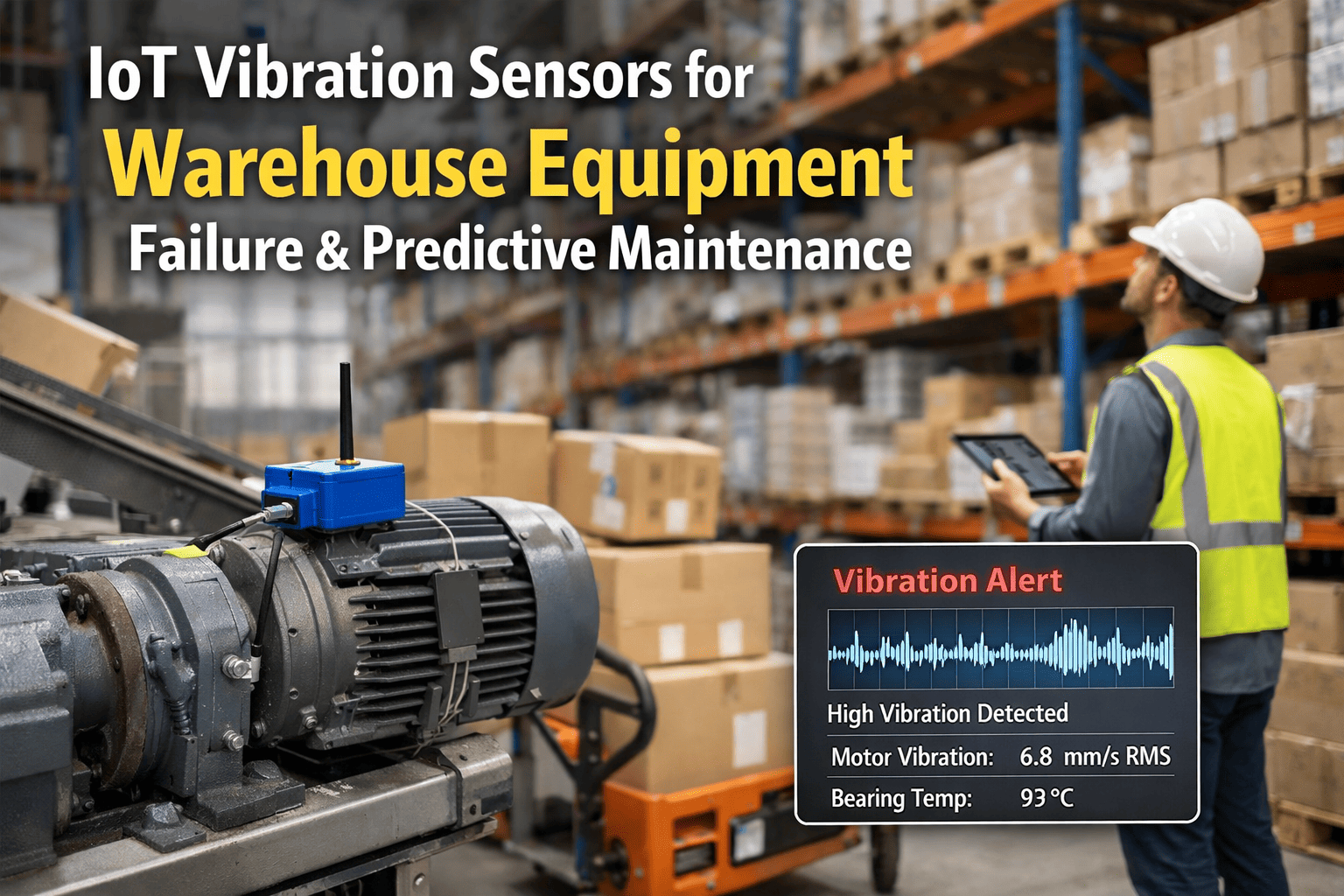
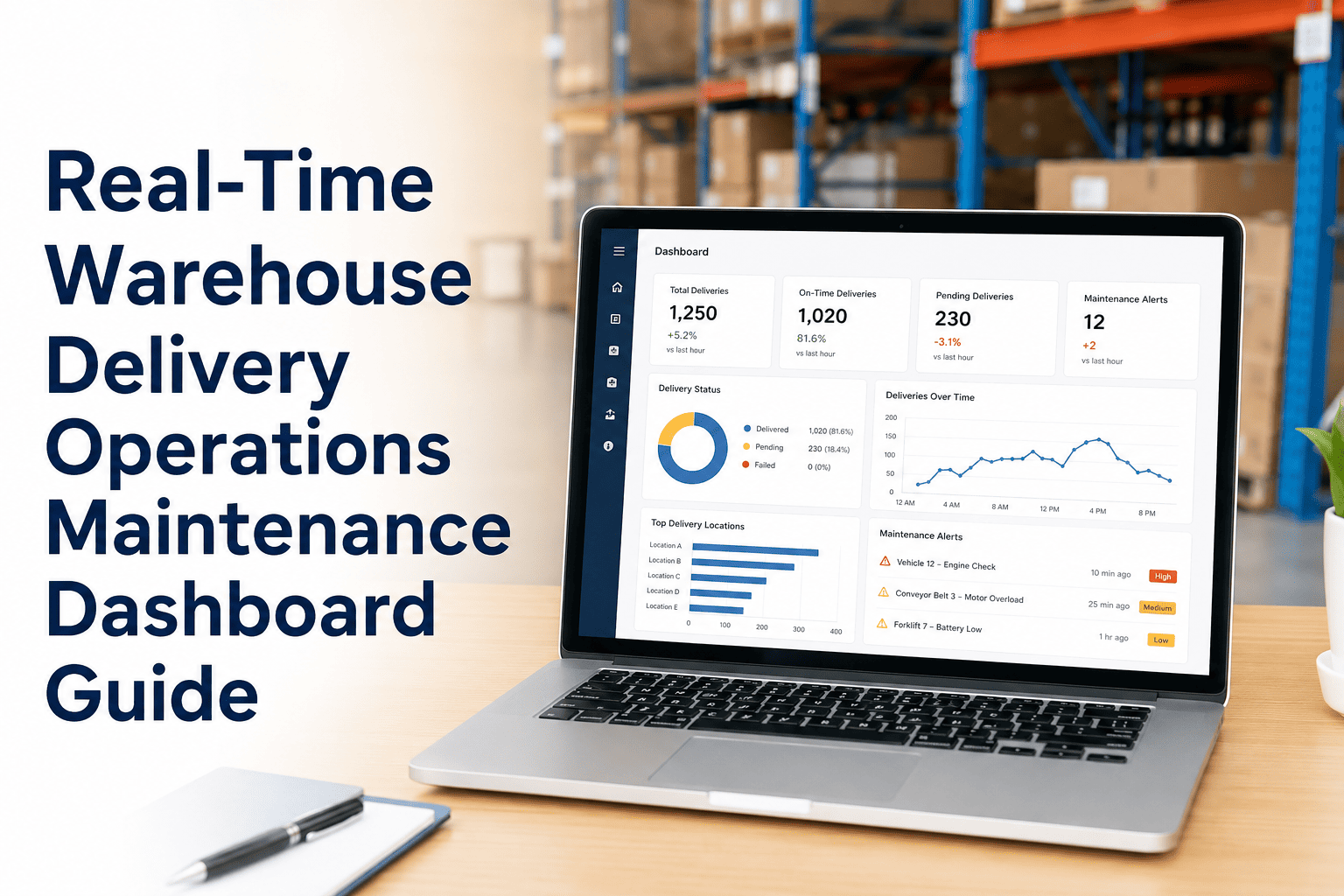
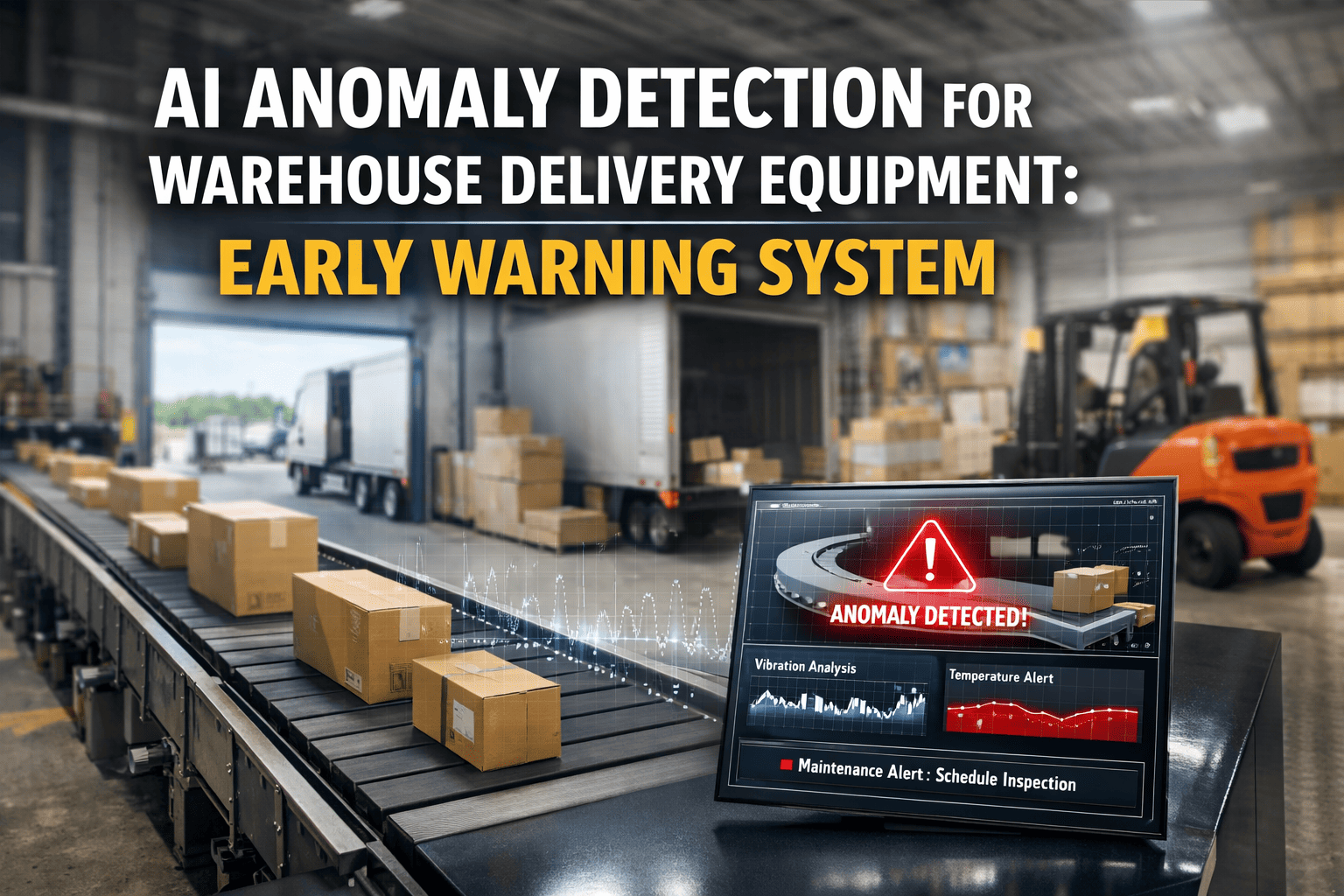
Every warehouse runs on rotating equipment — conveyor motors, sortation drives, dock leveller hydraulics, packaging line gearboxes — and every one of those assets is producing a vibration signature right now that tells you exactly how close it is to failure. The problem is that most warehouse teams are not listening. Without IoT vibration sensors feeding real-time data into a predictive maintenance system, bearing wear goes undetected, motor imbalance escalates unchecked, and the first sign of trouble is a conveyor shutdown that costs thousands per hour in lost throughput. IoT vibration sensors change this equation entirely — detecting microscopic changes in frequency, amplitude, and temperature weeks before failure occurs, and routing automated alerts directly into your CMMS as prioritised work orders. Start free on OxMaint or book a live demo to see how real-time vibration monitoring integrates with automated maintenance workflows for warehouse operations.
Blog · Warehouse IoT · Predictive Maintenance · Vibration Sensors
IoT Vibration Sensors for Warehouse Equipment: Detect Failure Before It Stops Your Operation
How wireless vibration sensors integrated with CMMS-based predictive maintenance detect bearing wear, motor imbalance, and gearbox degradation in warehouse equipment — weeks before breakdown — enabling automated alerts, scheduled interventions, and near-zero unplanned downtime.
82%
of bearing failures in warehouse equipment are detectable through vibration analysis before operational impact
2-6 wk
advance warning window that IoT vibration sensors provide before critical failure in motors and gearboxes
70%
reduction in unplanned conveyor downtime when continuous vibration monitoring replaces periodic manual checks
Why Warehouse Equipment Fails Without Warning
Warehouse equipment operates under punishing conditions — high duty cycles, heavy loads, temperature variation, dust, and 24/7 demand. Bearings degrade, shafts go out of alignment, lubrication dries out, and gears wear down. By the time a human operator hears unusual noise or feels excessive vibration, the failure curve has already moved past the early detection window and into the emergency repair zone. Manual spot checks capture only a snapshot in time, and faults can develop and escalate rapidly between inspections. The result is a reactive maintenance cycle where problems are addressed only after they have already caused costly downtime.
The Equipment Failure Timeline — Where Vibration Sensors Intervene
Stage 1 — Subsurface Defect
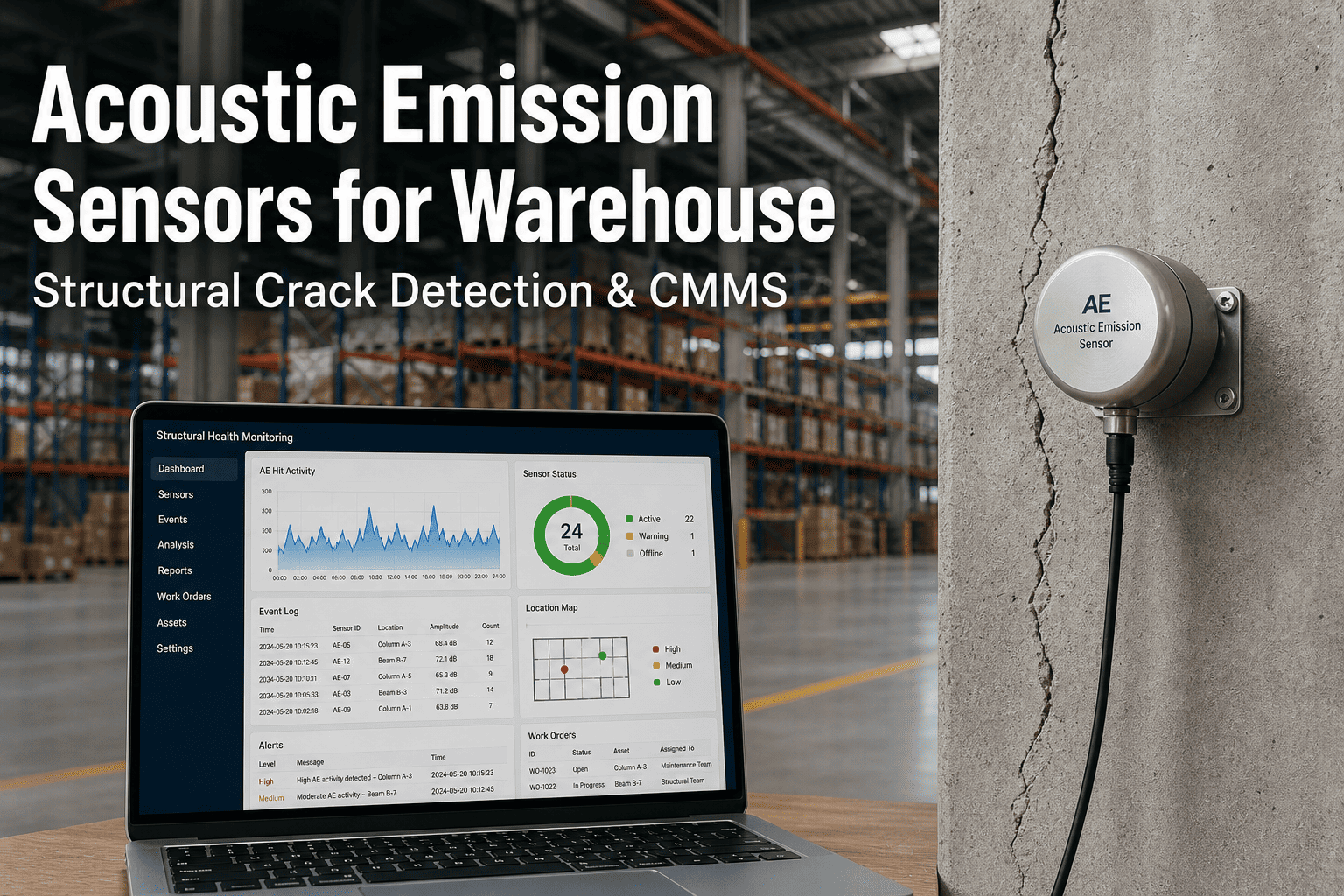
Micro-cracks or lubrication film breakdown begin at the molecular level. No human-detectable symptoms. IoT vibration sensors with high-frequency enveloping detect acoustic emission changes at this stage.
Detectable by IoT sensors
Stage 2 — Measurable Vibration Change
Bearing defect frequencies appear in the vibration spectrum. RMS velocity begins trending upward. Still invisible and inaudible to human operators. CMMS work order auto-generated at this stage.
Automated alert triggered
Stage 3 — Audible Noise and Heat
Friction generates detectable heat and audible changes. Manual inspection would catch this — but the optimal intervention window is already narrowing. Repair complexity and cost increase significantly.
Human detection begins here
Stage 4 — Functional Failure
Bearing seizure, motor burnout, or gearbox collapse. Conveyor line stops. Emergency repair required. Throughput loss begins accumulating at thousands per hour. This is where reactive maintenance operates.
Unplanned downtime
Stop reacting to equipment failures — start predicting them
OxMaint integrates IoT vibration sensor data directly into automated work order workflows — so your maintenance team gets actionable alerts, not raw data.
What IoT Vibration Sensors Actually Detect in Warehouse Equipment
A triaxial accelerometer mounted on a bearing housing captures the complete vibration signature of a rotating asset — and frequency analysis isolates individual fault types from the composite signal. Each failure mode produces a distinct vibration pattern that AI algorithms classify with high confidence.
Signal
Defect frequencies (BPFO, BPFI, BSF) appear in the vibration spectrum, detectable via envelope analysis
Equipment
Conveyor motors, sortation drives, dock levellers, packaging line actuators
Warning
2 to 6 weeks before functional failure
Signal
Elevated vibration at 1x and 2x shaft speed, with axial component dominant in angular misalignment
Equipment
Belt conveyors, chain drives, pump motors, HVAC fan assemblies
Warning
Progressive degradation detectable within days of onset
Signal
High vibration amplitude at 1x shaft speed, proportional to imbalance severity
Equipment
Fan motors, centrifugal pumps, high-speed sortation drives, compressors
Warning
Immediate detection — vibration increases proportionally with speed
Signal
Sidebands around gear mesh frequency and its harmonics indicate tooth wear or damage
Equipment
Gearboxes on conveyors, palletisers, robotic arms, automated storage systems
Warning
Weeks to months depending on load and operating conditions
Sensor-to-Work Order: How IoT Data Flows Into Your CMMS
Installing sensors without connecting them to a structured maintenance workflow creates data without action. The real value of IoT vibration monitoring is realised only when sensor alerts automatically trigger the right maintenance response through your CMMS — with the right priority, the right technician, and the right parts.
01
Sensor Captures Signal
Triaxial accelerometer on bearing housing captures vibration waveform at 25.6 kHz sampling rate. Edge gateway extracts RMS, FFT spectrum, and fault frequencies locally.
02
AI Classifies the Fault
Machine learning model compares extracted features against baseline signature. Fault type (bearing, misalignment, imbalance, looseness) classified with confidence score and estimated failure horizon.
03
Alert Triggers CMMS Work Order
IoT platform sends webhook to OxMaint API with asset ID, fault classification, severity level, and recommended intervention timeline. Work order created automatically with priority assignment.
04
Technician Executes Repair
OxMaint mobile app notifies assigned technician with work order details, asset location, part specification, and step-by-step procedure. Repair scheduled during planned downtime window.
05
Feedback Loop Closes
Technician confirms completion with photos in OxMaint. Post-repair vibration data validates the fix. AI model learns from the outcome, improving diagnostic accuracy for future alerts.
Warehouse Equipment Monitoring Priority Matrix
Not every warehouse asset needs continuous vibration monitoring. Prioritise sensor deployment based on failure consequence, replacement lead time, and criticality to throughput.
| Warehouse Asset |
Primary Failure Mode |
Vibration Detection |
Monitoring Priority |
Downtime Impact |
| Conveyor Drive Motors |
Bearing wear, shaft misalignment |
Triaxial accelerometer on drive-end and non-drive-end bearings |
Critical |
Entire sort line stops |
| Sortation System Drives |
Rotor imbalance, belt slippage |
Velocity RMS trending with 1x shaft speed tracking |
Critical |
Order fulfilment halts |
| Dock Leveller Hydraulics |
Pump bearing failure, valve cavitation |
High-frequency enveloping for pump bearing defects |
High |
Loading bay offline |
| Packaging Line Gearboxes |
Gear tooth wear, output shaft looseness |
Gear mesh frequency analysis with sideband monitoring |
High |
Packing throughput drops |
| HVAC and Ventilation Fans |
Fan blade imbalance, bearing degradation |
1x velocity amplitude with temperature correlation |
Medium |
Climate control loss |
| Forklift Mast Hydraulics |
Pump cavitation, cylinder seal wear |
Pressure and vibration correlation on pump unit |
Medium |
Single vehicle offline |
Connect your vibration sensors to automated maintenance workflows
OxMaint receives IoT sensor alerts via API and converts them into prioritised work orders — with technician assignment, parts reservation, and mobile notification built in.
Reactive vs. Predictive: The Measurable Difference
Reactive Maintenance
Equipment runs to failure — no early warning system in place
Emergency repairs at premium cost — overtime, expedited parts, lost production
Manual spot checks capture a snapshot — faults develop between inspections
No failure data — same problems repeat on the same assets indefinitely
Average unplanned downtime: 3 to 8 hours per incident on critical conveyors
IoT Predictive Maintenance
24/7 continuous monitoring detects faults at the earliest possible stage
Planned repairs during scheduled downtime — standard parts, standard cost
Automated alerts route directly to CMMS as prioritised work orders
Every repair feeds data back into AI models — accuracy improves continuously
Planned intervention time: 10 to 30 minutes during next maintenance window
70%
reduction in unplanned downtime when IoT vibration monitoring replaces periodic manual checks
25%
lower total maintenance cost by eliminating emergency repairs and extending component life
11%
increase in asset availability as published benchmarks from predictive maintenance implementations
Frequently Asked Questions
What types of warehouse equipment benefit most from IoT vibration sensors?
Conveyor drive motors, sortation system drives, packaging line gearboxes, and dock leveller hydraulic pumps — any rotating equipment where bearing wear, shaft misalignment, or rotor imbalance is a primary failure risk.
Start free on OxMaint to build your monitoring priority list.
How far in advance can vibration sensors predict equipment failure?
Typically 2 to 6 weeks for bearing defects and gear wear — enough time to plan a repair during scheduled downtime rather than reacting to a breakdown. Early-stage faults are detected through frequency analysis well before human operators notice any symptoms.
Book a demo to see real detection timelines.
How do IoT vibration sensors integrate with a CMMS like OxMaint?
Sensor platforms send alerts via API webhook to OxMaint, which auto-generates a work order with asset ID, fault type, severity, and recommended intervention. The assigned technician receives a mobile notification with full repair details.
Try the integration free.
Do we need a data scientist to interpret vibration sensor data?
No. Modern IoT platforms use AI to classify fault types and severity automatically — your maintenance team receives plain-language alerts and pre-built work orders, not raw frequency spectra. The intelligence is in the system, not the operator.
Book a demo to see the workflow.
How many sensors do we need to start a pilot programme?
Start with 5 to 10 sensors on your most critical rotating assets — conveyor drive motors and sortation drives are the highest-impact starting point. Run for 30 days to establish baselines before expanding.
Start your free trial and configure your pilot today.
Turn Every Vibration Into an Early Warning.
OxMaint connects your IoT vibration sensors to a structured maintenance workflow — automated alerts become prioritised work orders, technicians get mobile notifications with repair instructions, and every intervention feeds data back into smarter predictive models. Stop reacting to equipment failure. Start predicting it.