On a Tuesday morning in March, a forklift operator at a distribution center in Charlotte backed a loaded pallet jack off the edge of a dock where a trailer had pulled away 90 seconds earlier. The trailer restraint had been released manually by a driver who did not communicate with the warehouse team. The dock leveler was still in the extended position, bridging a gap to a trailer that was no longer there. The forklift operator drove onto the leveler, the lip tilted into open air, and the pallet jack dropped four feet to the concrete apron below. The operator fractured two vertebrae. The pallet carried $14,000 in electronics that were destroyed on impact. The OSHA investigation that followed found seven deficiencies across the facility's loading bays: two dock levelers with non-functional lip hinges, one trailer restraint with a severed communication cable to the interior light system, three dock bumpers compressed beyond functional depth, and zero documented inspection records for any loading bay equipment in the previous 16 months. The total cost of that single incident reached $847,000, including the worker's compensation claim, OSHA penalties, equipment damage, product loss, legal fees, and the operational shutdown during investigation. The facility manager later stated that a structured daily dock inspection would have identified every one of the seven deficiencies before the accident occurred.
Loading bays are the most dangerous zones in any warehouse or distribution center. Forklifts, heavy pallets, moving trailers, hydraulic equipment, and elevation changes converge in a space where a single equipment failure or procedural gap creates immediate risk of serious injury or death. This guide covers every critical loading bay equipment inspection and safety protocol across dock levelers, trailer restraints, dock bumpers, overhead doors, vehicle interface systems, and communication lights, structured to meet OSHA loading dock safety requirements and give operations teams the knowledge to prevent the incidents that shut facilities down. Sign up for Oxmaint free to digitize your dock safety program with automated scheduling, mobile inspections, photo documentation, and timestamped audit records that prove compliance during any investigation.
$847K
Total cost of a single loading dock accident including OSHA fines, workers comp, legal, and lost operations
26,000
Dock-related injuries reported annually in U.S. warehouses, making loading bays the highest-risk zone
79%
Of loading dock accidents involve equipment that would have failed a routine pre-shift safety inspection
Anatomy of a Loading Dock Incident
Loading dock accidents are never caused by a single failure. They are caused by a chain of equipment deficiencies, procedural gaps, and communication breakdowns that align at the worst possible moment. Understanding how these chains form is the foundation of effective loading dock accident prevention.
What HappensTrailer pulls away from dock while forklift is inside, creating a 4-5 foot gap between dock edge and trailer floor
Root CauseRestraint not engaged, restraint malfunction, driver-warehouse miscommunication, missing wheel chocks
Injury SeverityCatastrophic -- spinal fractures, traumatic brain injury, fatalities from forklift falls
PreventionDaily restraint engagement test, communication light verification, mandatory chocking protocol
What HappensLeveler drops suddenly during loading, trapping or dropping forklift into the leveler pit or creating a ramp failure
Root CauseHydraulic failure, broken lip hinge, overloaded beyond capacity, corroded hold-down mechanism
Injury SeveritySevere -- crush injuries, forklift tipover, operator ejection, cargo impact injuries
PreventionWeekly hydraulic inspection, lip hinge wear monitoring, load capacity verification, cycle testing
What HappensDock door descends onto personnel or equipment due to failed safety sensor or broken auto-reverse mechanism
Root CauseDisabled or non-functional photo-eye sensors, broken torsion spring, frayed lift cables
Injury SeverityModerate to severe -- crush injuries, head trauma, equipment damage
PreventionDaily auto-reverse test, weekly spring and cable inspection, sensor alignment verification
What HappensPersonnel or equipment falls from open dock door with no trailer present and no fall protection barrier in place
Root CauseOpen dock doors left unguarded, worn edge markings, poor lighting, housekeeping failures
Injury SeverityModerate to catastrophic -- fractures, head injuries from 4-5 foot falls to concrete apron
PreventionDock barrier gates at open positions, edge marking maintenance, area lighting standards
Every incident on this list is preventable with documented inspection. Oxmaint gives your team mobile dock safety inspections with photo capture, timestamps, and OSHA-ready compliance reports.
Sign Up Free
The Six Safety Zones of a Loading Dock
A loading bay is not a single piece of equipment. It is a system of six interconnected safety zones, each with distinct equipment, failure modes, and inspection requirements. A breakdown in any single zone compromises the safety of the entire dock position. Effective loading bay safety inspection requires understanding each zone independently and as part of the integrated dock system.
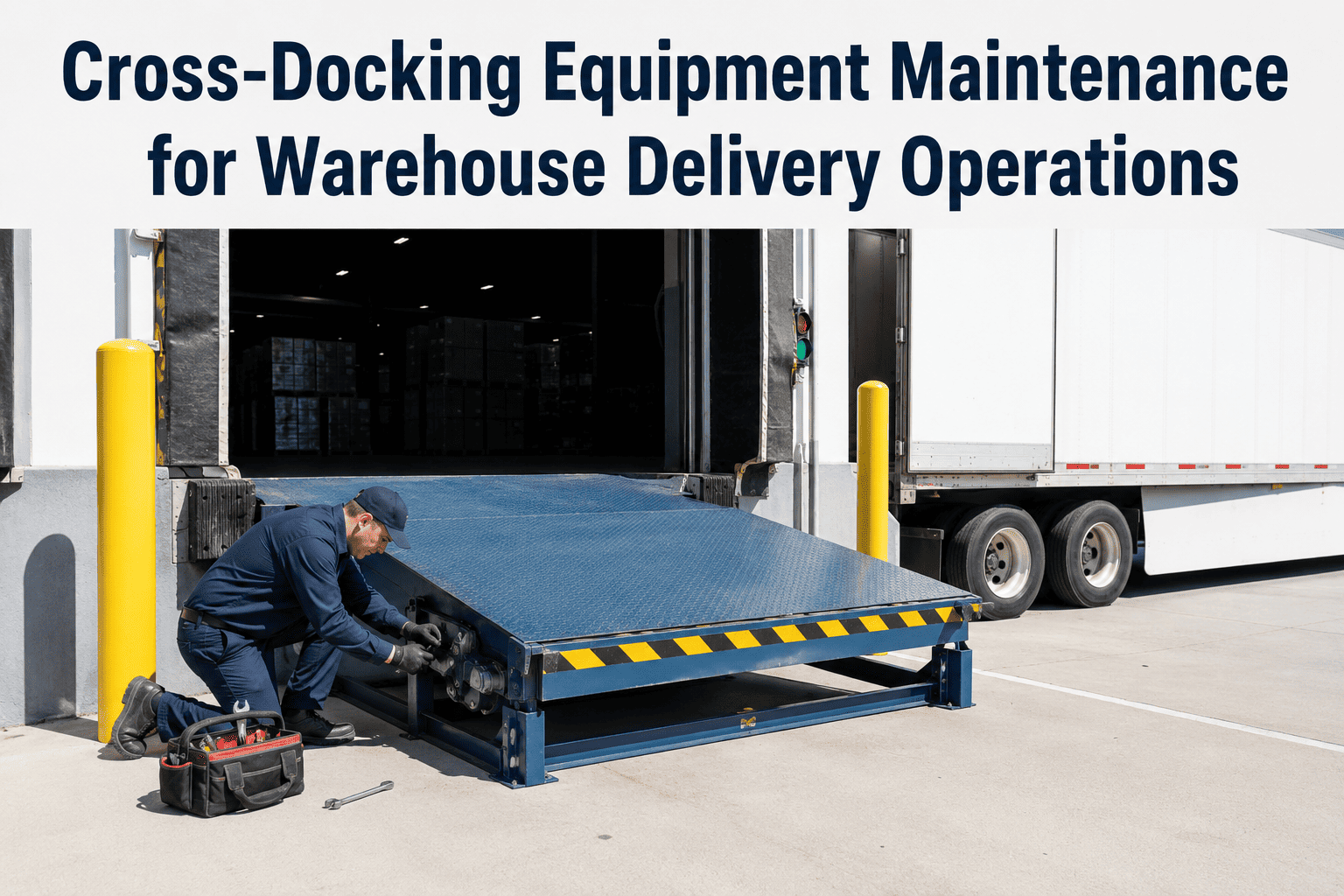
EquipmentHydraulic, mechanical, or air-powered dock levelers with extending lip that bridges the gap between dock floor and trailer bed
Failure ModesHydraulic leak causing slow descent, lip hinge failure dropping lip unexpectedly, hold-down corrosion, overload beyond rated capacity
InspectionDaily: cycle test and leak check | Weekly: hydraulic fluid, hinge pins, cycle time measurement | Monthly: structural integrity and calibration
Critical -- #1 cause of forklift falls at docks
EquipmentHook-style or wheel-lock restraints that physically prevent trailer creep or premature departure while forklifts operate inside
Failure ModesHook wear or deformation, communication cable severed to light system, mounting anchor failure, engagement spring fatigue
InspectionDaily: engagement/release test with light verification | Weekly: hook condition, mounting bolts, engagement force | Monthly: full mechanical overhaul
Critical -- restraint failure enables trailer separation incidents
EquipmentRubber, molded, or laminated dock bumpers mounted to dock face that absorb trailer backing impact and protect building structure
Failure ModesCompression beyond 50% depth, tearing, separation from mounting hardware, concrete spalling around anchor bolts
InspectionDaily: visual check for damage | Weekly: compression depth measurement, mounting integrity | Monthly: replacement assessment for worn units
High -- failed bumpers allow direct trailer-to-building impact
EquipmentSectional or rolling dock doors with torsion springs, lift cables, safety photo-eye sensors, and auto-reverse mechanisms
Failure ModesAuto-reverse sensor disabled or misaligned, torsion spring fatigue or fracture, cable fraying, track misalignment, panel damage
InspectionDaily: open/close test with obstruction check | Weekly: spring, cable, and track condition | Monthly: full mechanical service and lubrication
Critical -- door without auto-reverse creates crush hazard
EquipmentInterior dock lights, exterior traffic lights (red/green), restraint status indicators, and audible alarms communicating dock state
Failure ModesBulb or LED failure, severed wiring between restraint and light panel, incorrect state display, faded or obscured exterior lenses
InspectionDaily: function test of all lights in both states | Weekly: wiring and connection check | Monthly: lens cleaning and alignment verification
High -- miscommunication between driver and warehouse causes premature departure
EquipmentWheel chocks, dock plates, dock boards, trailer alignment guides, approach ramp surfaces, and dock edge markings
Failure ModesMissing or damaged chocks, dock plate bending or cracking, worn anti-slip surfaces, invisible edge markings, approach ramp settlement
InspectionDaily: chock presence and condition, edge marking visibility | Weekly: dock plate structural check | Monthly: approach surface and drainage assessment
High -- missing chocks remove secondary restraint against trailer movement
OSHA Compliance Framework for Loading Docks
Loading dock operations fall under multiple OSHA standards that carry significant penalties when violated. The difference between a correctable citation and a willful violation often comes down to a single factor: whether the facility can produce documented inspection and maintenance records. A dock equipment compliance checklist executed consistently through a CMMS creates the audit trail that determines whether a fine is $16,000 or $160,000.
| OSHA Standard | Requirement | Common Violation at Docks | Penalty Range |
| 29 CFR 1910.28 |
Fall protection at walking-working surfaces with unprotected edges above 4 ft |
Open dock doors without barriers or gates when no trailer is present |
$16,131 per instance |
| 29 CFR 1910.147 |
Lockout/tagout procedures for energy-isolating equipment |
Dock levelers and doors serviced without LOTO; missing locks or tags at stations |
$16,131 - $161,323 |
| 29 CFR 1910.176 |
Safe handling and storage of materials at docks |
Overloaded dock plates, unsecured cargo on levelers, blocked emergency exits |
$16,131 per instance |
| 29 CFR 1910.178 |
Powered industrial truck operation near docks |
Forklift operation on unverified levelers, no pre-operation dock position check |
$16,131 - $161,323 |
| General Duty Clause |
Employer must provide workplace free of recognized hazards |
No documented dock inspection program, known equipment deficiencies left unrepaired |
Up to $161,323 willful |
The pattern in every serious OSHA dock citation is the same: the equipment deficiency existed for weeks or months before the incident, and the facility could not produce a single record showing they had ever inspected it. Book a demo to see how Oxmaint generates the timestamped inspection records that change the outcome of every OSHA investigation.
Reactive Dock Management vs Structured Safety Program
Most facilities operate loading bays reactively, addressing dock equipment only when something breaks or someone gets hurt. This comparison quantifies what that approach actually costs versus a structured loading dock compliance procedure powered by a CMMS.
| Criteria | Reactive / No Program | Structured Inspection + CMMS |
| Equipment hazard awareness |
X Zero visibility until incident or complaint |
✓ Every hazard identified before first trailer of the day |
| OSHA audit readiness |
X No records to produce during investigation |
✓ Timestamped photo-documented trail for every dock |
| Trailer restraint reliability |
X Failures discovered when trailer departs during loading |
✓ Tested daily, mechanical condition verified weekly |
| Leveler condition |
X Repaired after forklift incident has occurred |
✓ Hydraulics monitored weekly, repairs scheduled proactively |
| Post-incident documentation |
X Scramble to reconstruct maintenance history |
✓ Complete inspection and repair history available instantly |
| Annual dock incidents (20-dock facility) |
X 3-8 incidents per year |
✓ 0-1 incidents with documented PM program |
| Total annual cost |
X $180,000 - $850,000 (repairs + injuries + fines) |
✓ $22,000 - $45,000 (PM labor + parts + platform) |
Every loading dock injury investigation asks the same first question: "Where are your inspection records?" Start free with Oxmaint and have the answer ready before the question is ever asked.
ROI of a Structured Loading Bay Safety Program
These savings are modeled on a 20-dock distribution center operating two shifts per day with hydraulic levelers, hook-style trailer restraints, and sectional overhead doors.
| Savings Category | Annual Impact | Calculation Basis |
| Avoided worker injury claims |
$340,000 |
1 serious dock injury prevented at avg workers comp + legal |
| OSHA penalty avoidance |
$78,000 |
Documented compliance eliminates repeat and willful penalties |
| Reduced emergency equipment repairs |
$52,000 |
Planned leveler, door, restraint repairs at 35% of emergency cost |
| Product damage prevention |
$38,000 |
Fewer trailer separation and leveler drop events damaging cargo |
| Extended dock equipment lifespan |
$24,000 |
Components last 30-50% longer with PM vs run-to-failure |
| Total Estimated Annual Savings |
$532,000 |
Against program cost of $22K-$45K/yr | ROI: 12-24x |
At $532,000 in annual savings against a safety program cost of $22,000-$45,000, the payback period is under 4 weeks. The single largest line item, avoided worker injury claims, represents just one prevented serious dock incident per year, which is a conservative estimate for a 20-dock facility with no inspection program. Book a demo and we will model the safety ROI for your specific dock configuration.
Frequently Asked Questions
What are the most dangerous loading bay equipment failures?
Trailer restraint failure while a forklift is operating inside the trailer is statistically the most dangerous dock equipment failure. When a trailer separates during loading, the operator faces a sudden 4-5 foot gap between the dock edge and the trailer floor. At typical forklift speeds there is insufficient stopping distance to avoid the gap. This failure mode causes the most severe injuries including spinal fractures, traumatic brain injuries, and fatalities. Dock leveler collapse is the second most dangerous, causing crush injuries, forklift tipover, and operator ejection into the leveler pit.
What are the most common OSHA citations at loading docks?
The most frequently cited violations include lack of fall protection at open dock doors (29 CFR 1910.28), missing or non-functional trailer restraints, failure to implement lockout/tagout on dock equipment (29 CFR 1910.147), inadequate lighting for safe forklift operation, and absence of documented inspection records. The documentation gap is particularly consequential because it converts equipment-related incidents from correctable deficiencies into willful violations, multiplying penalty amounts 5-10x.
Sign up free to build the documentation trail that changes the outcome of every citation.
How often should loading bay equipment be inspected?
Dock levelers, trailer restraints, overhead doors, communication lights, wheel chocks, and dock area housekeeping should be inspected before the first trailer arrival of every shift (6-8 minutes per dock position). Hydraulic systems, mechanical wear, electrical connections, and structural condition require weekly deep inspection (25-35 minutes per dock). Monthly inspections add comprehensive structural assessments, weatherseal evaluation, and leveler calibration. Facilities running 24-hour operations should inspect at every shift change.
Book a demo to see automated multi-frequency scheduling across all dock positions.
How does a CMMS help with loading dock safety compliance?
A CMMS creates the documented inspection and maintenance trail that OSHA requires during investigations and audits. Every inspection completion is timestamped with the inspector's identity, detailed results, photos of any deficiency found, and the corrective work order generated in response. This documentation proves that the facility actively monitors and maintains dock safety equipment, which is the primary factor in penalty severity determination and insurance claim outcomes. Properties with documented dock equipment preventive maintenance programs also see 15-25% lower liability insurance premiums.
What training do dock workers need for loading bay safety?
All personnel operating in or around loading bays should receive training on trailer restraint operation and verification, dock leveler proper use and weight limits, dock door safety sensor function, wheel chocking procedures, communication light interpretation, emergency stop locations, and fall protection awareness at open dock edges. OSHA requires this training to be documented and refreshed annually. Maintenance personnel performing dock equipment inspections need additional training on hydraulic system evaluation, electrical safety, and lockout/tagout procedures specific to dock equipment.
Seven Deficiencies. Zero Inspections. $847,000.
That Charlotte facility had seven preventable equipment failures across its loading bays. Every one was visible. Every one was catchable. None were checked because nobody had a system to check them. Your docks have the same levelers, the same restraints, and the same invisible hazards right now.