Warehouse Racking Inspection & Maintenance for Safety Compliance
By Johnson on April 13, 2026
Most warehouse racking collapses don't announce themselves — they build quietly through ignored dents, skipped inspections, and overloaded bays until one day the structure fails. Start your free racking inspection program on OxMaint today, or book a 30-minute demo to see how CMMS-driven audit trails keep your facility OSHA-compliant without the paperwork chaos.
Checklist / Warehouse Safety
Warehouse Racking Inspection & Maintenance: The Complete Safety Compliance Checklist
Prevent structural failures, pass OSHA surprise inspections, and protect your workforce with a structured racking inspection program backed by CMMS audit trails.
$161K
Max OSHA fine per repeated racking violation
2026
OSHA NEP surprise inspections active through July
3×
Higher injury rate vs other industries — warehouses lead all sectors
78%
Of rack failures are preventable with routine inspection
Why It Matters Now
OSHA Is Watching — And the Stakes Are Higher Than Ever
In 2023, OSHA launched a National Emphasis Program targeting warehouses and distribution centers — meaning surprise inspections are actively happening through July 2026. Inspectors focus on three things: racking condition, forklift safety, and hazard documentation. If your racks aren't regularly inspected and your records aren't centralized, you're exposed.
Structural Failure
A single bent upright can reduce load capacity by up to 50%. Left uninspected, minor forklift impact becomes a collapse risk — injuring workers and destroying inventory in seconds.
OSHA Citations & Fines
Violations categorized as "willful" or "repeated" carry fines up to $161,000 per incident. OSHA inspectors can also halt warehouse operations immediately for imminent danger conditions.
Inventory Loss
Rack collapses don't just injure people — they destroy product, trigger insurance claims, halt fulfillment operations, and damage client relationships in ways that take months to recover from.
No Audit Trail = No Defence
When OSHA audits your facility, verbal assurances mean nothing. Without documented inspection records in a CMMS, you have no evidence of due diligence — and that's where liability begins.
Is Your Racking Inspection Program OSHA-Ready?
OxMaint helps warehouse managers run structured racking inspections, capture photo evidence, and maintain digital audit trails — all from a mobile device on the warehouse floor.
OSHA doesn't specify a single inspection frequency — but industry best practice (aligned with ANSI MH16.1 and RMI standards) defines three levels of inspection that every warehouse should operate.
Daily
Visual Walk-Through
Conducted by: Warehouse Supervisor or Team Lead
✓ Check for obvious forklift impact on uprights and beams
✓ Verify aisle clearances are free of debris and pallets
✓ Confirm no overloaded bays (check against load capacity placards)
✓ Look for any items stored unsafely above designated zones
✓ Log any flagged issues into OxMaint mobile app immediately
Monthly
Structured Internal Audit
Conducted by: Trained Safety Officer or Facilities Manager
✓ Inspect all uprights for bending, cracking, or corrosion
✓ Check beam welds and connections for signs of overload stress
✓ Verify anchor bolts at rack bases are secure and undamaged
✓ Confirm load capacity labels visible on all rack sections
✓ Check safety clips and beam locks are in place
✓ Photograph and document all damage in CMMS with location tags
✓ Escalate red-risk damage — unload bay and mark out of service
Annual
Certified Professional Inspection
Conducted by: Certified Rack Inspector (external)
✓ Full structural assessment of all uprights, bracing, and anchor systems
✓ Engineering review of load configuration vs. rated capacity
✓ Measurement of upright deflection vs. manufacturer tolerances
✓ Damage classification (green / amber / red risk per RMI categories)
✓ Repair vs. replace recommendations with engineering basis
✓ Formal inspection report stored in CMMS for OSHA audit readiness
Damage Classification
RMI Damage Categories: What to Do at Each Level
The Rack Manufacturers Institute classifies rack damage into three categories. OSHA inspectors reference RMI standards when evaluating your facility. Knowing these categories — and acting on them correctly — is the difference between a passed audit and an immediate shutdown order.
Damage Category
Visual Indicators
Risk Level
Required Action
CMMS Action
Green — Minor
Surface scratches, light paint damage, minor cosmetic marks
Low
Monitor at next scheduled inspection; no load reduction required
Log observation with photo; set next inspection reminder
Unload bay immediately; mark out of service; do not use until engineer-approved repair or replacement complete
Priority P1 work order; notify facilities manager; block bay from operations; track repair to completion
Common Violations
Top 6 OSHA Rack Violations That Get Warehouses Cited
01
Improper Installation
Racks not anchored to floor per manufacturer specification. Every rack must be secured — unanchored systems are an immediate citation risk during forklift operation.
02
Missing Load Capacity Labels
Every rack section must display maximum load weight. OSHA inspectors check this on every visit. Missing or illegible labels result in citations even when racks are otherwise undamaged.
03
Unaddressed Forklift Damage
Small bends from minor impacts are the most cited violation. Many warehouse teams log the damage but fail to escalate it — which is itself an OSHA violation under the General Duty Clause.
04
Blocked Aisle Clearances
OSHA mandates clear aisles for forklift operation and emergency egress. Pallets placed in aisles, even temporarily, constitute a violation if documented during an inspection.
05
Makeshift Repairs
Using unapproved materials to repair damaged rack components — including "bending it back" — is never acceptable under OSHA or RMI standards. Only engineered repair kits or replacement components are valid.
06
No Inspection Documentation
Without written records, OSHA assumes inspections didn't happen. A centralized CMMS audit trail is the most defensible proof that your inspection programme is active and consistent.
CMMS Role
How CMMS Turns Inspections Into Compliance Evidence
A clipboard and spreadsheet inspection programme creates records — but not audit trails. OSHA investigators distinguish between the two. A CMMS like OxMaint creates time-stamped, photo-supported, role-assigned records that demonstrate systematic compliance — not just occasional activity.
Digital Checklist Execution
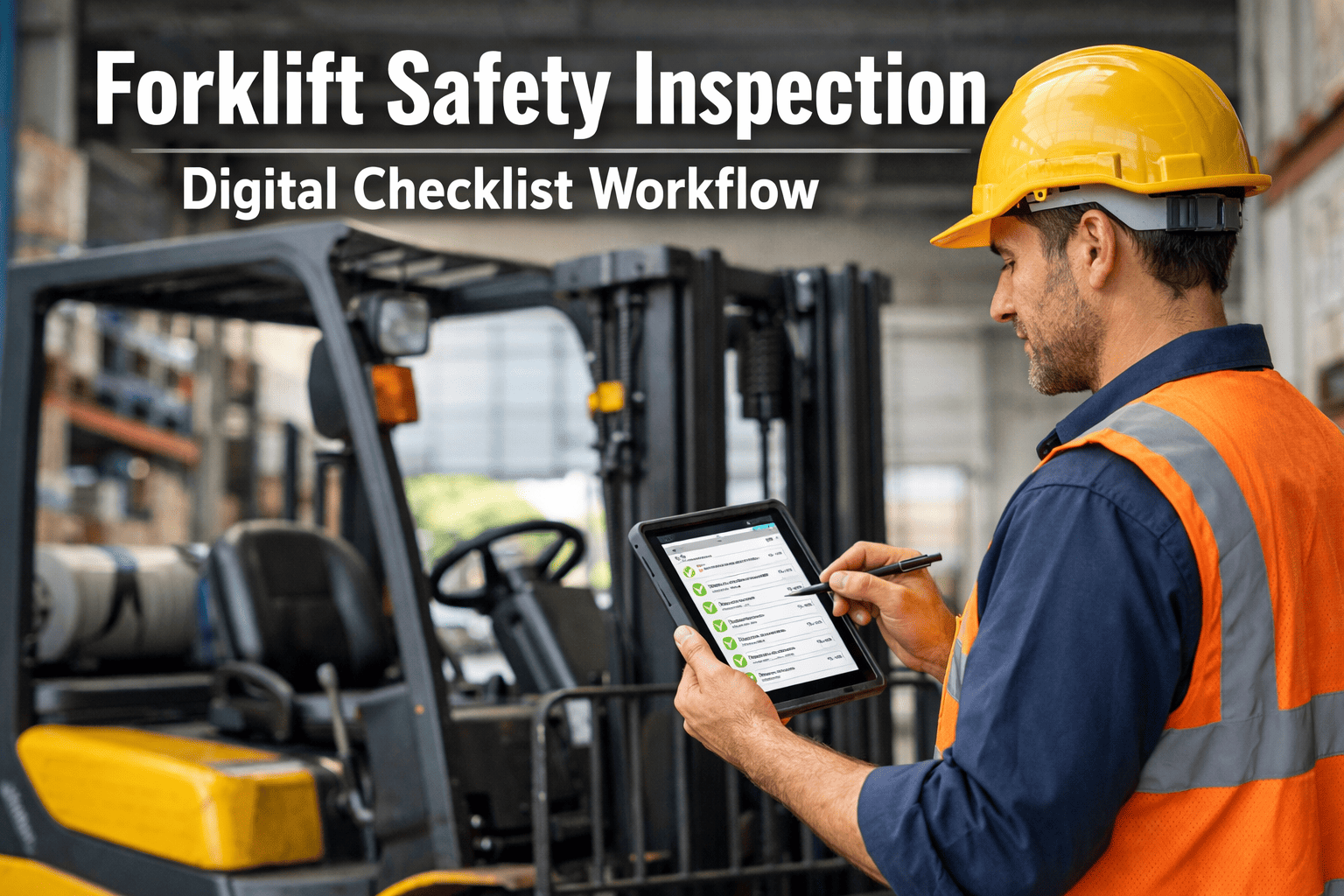
Inspectors complete structured checklists on mobile devices — with mandatory photo capture for flagged items. Every inspection is timestamped and linked to a specific rack location and bay number.
Automatic Work Order Escalation
When a red-risk item is flagged, OxMaint automatically creates a corrective work order assigned to the maintenance team. No manual follow-up required — the system ensures nothing falls through the cracks.
Audit-Ready Reporting
Generate a complete inspection history report for any rack, bay, or facility in under 60 seconds. When an OSHA inspector arrives, your entire compliance record is one export away — not buried in spreadsheets.
Scheduled PM Reminders
Daily, monthly, and annual inspection schedules are enforced automatically. Overdue inspections trigger alerts to facility managers — preventing the silent compliance gaps that lead to citations.
High Bay Specifics
High Bay Racking Systems: Additional Inspection Considerations
High bay systems above 10 meters introduce structural complexity that standard warehouse inspection protocols don't fully address. These systems require additional attention to seismic load considerations, rack-supported building structures, and automated storage retrieval system (ASRS) interaction points.
Column Plumb Tolerance
High bay uprights must maintain plumb within manufacturer tolerance (typically ±H/500 where H = rack height). Deviation beyond this reduces rated capacity and increases collapse risk under dynamic load.
Seismic Zone Assessment
Facilities in seismic zones require additional anchoring assessment per IBC guidelines. High bay systems amplify ground movement — verify rack anchorage meets local seismic design category requirements.
ASRS Interface Points
Where automated cranes or stacker systems interface with racking, inspect guide rail alignment quarterly. Misaligned rail systems create lateral force on uprights beyond design specification.
Fire Suppression Integration
In-rack sprinkler systems must remain unobstructed at all storage levels. Verify that inventory placement doesn't block sprinkler heads — this is both a fire code and OSHA General Duty Clause concern.
FAQ
Frequently Asked Questions
OSHA doesn't mandate a specific interval, but the General Duty Clause requires hazards to be addressed proactively. Industry best practice — daily visual checks, monthly internal audits, and annual certified inspections — is what OSHA inspectors expect to see documented. OxMaint automates this schedule so nothing is missed.
Serious violations carry fines up to $16,131 per violation. Willful or repeated violations reach up to $161,323 per violation. In cases of imminent danger, OSHA can also order an immediate halt to warehouse operations — the real cost extends well beyond the fine itself.
Yes — but only with manufacturer-approved repair kits or engineered replacement components. Field straightening or improvised repairs are never acceptable under OSHA or RMI standards. Book a demo to see how OxMaint tracks repair work orders from damage flag to sign-off.
Inspectors look for dated inspection records, work orders for identified damage, proof that out-of-service bays were properly controlled, and evidence of employee training on racking safety. A CMMS audit trail covers all of these requirements in a single system.
No — a CMMS enhances your inspection programme by structuring daily and monthly checks, capturing evidence, and maintaining records. Annual certified professional inspections remain essential for full structural assessment and OSHA due diligence documentation.
Build an Inspection Programme That Passes Any Audit
OxMaint gives warehouse managers a complete racking inspection and maintenance system — structured checklists, photo evidence capture, automatic work order escalation, and audit-ready reporting — all from a single platform accessible on any device.